16 in Necklace Length: A Buying Guide for Collarbone Chains
Discover how a 16 in necklace length sits on various necklines and body types. Expert buying tips on chain styles, clasps, and pendant pairings.

The Anatomy of a 16-Inch Necklace: Where Does It Actually Sit?
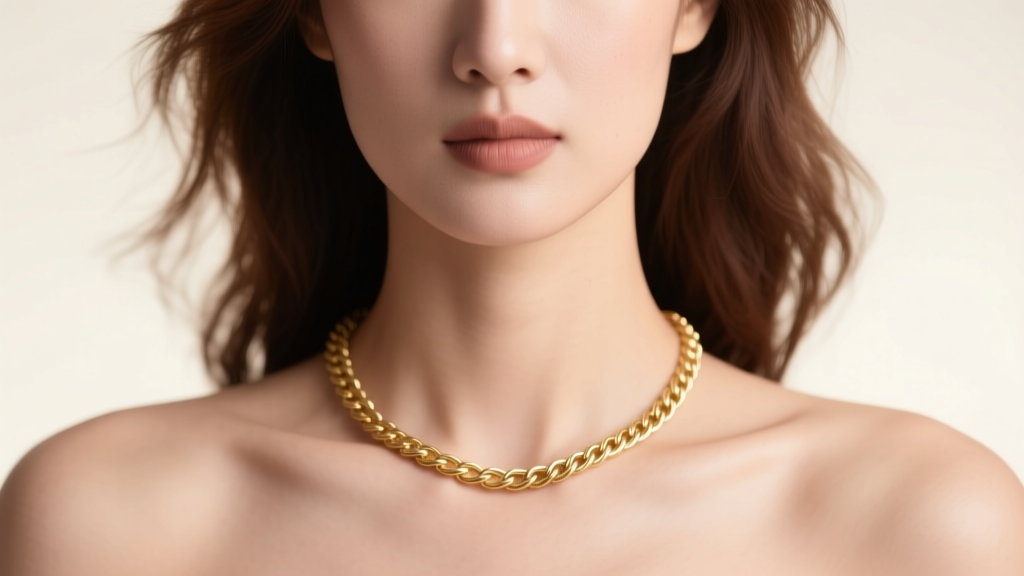
When shopping for fine jewelry, understanding the precise drape of a chain is critical to achieving the desired aesthetic. The 16 in necklace length (approximately 40.6 centimeters) is widely considered the quintessential collarbone length. However, its exact placement depends heavily on the wearer's neck circumference and body type. According to Blue Nile's comprehensive necklace guide, a 16-inch chain will sit snugly at the base of the neck on an average 13.5-inch neck, leaving roughly 1.25 inches of drape. For individuals with a 15-inch or larger neck circumference, this same length will function as a true choker, sitting higher on the neck.
Because this length rests directly over the pulse points and the clavicle, it is highly visible and interacts intimately with the wearer's clothing and skin chemistry. When buying a 16-inch chain, you must prioritize materials that resist tarnish from sweat and friction. For sterling silver (925), always look for rhodium-plated finishes to prevent rapid oxidation at the collarbone. For gold, 14k or 18k solid gold remains the gold standard for longevity, whereas gold vermeil (a thick layer of gold over sterling silver) is an acceptable alternative if the base metal is properly sealed.
Chain Styles That Thrive at 16 Inches
Not all chain links are engineered for shorter, tighter radii. A 16-inch chain experiences more continuous tension and bending around the neck than a 20-inch or 24-inch chain. Therefore, the structural integrity of the link is paramount. Heavy, rigid chains like thick Cuban links or wide Figaros can feel restrictive and stiff at 16 inches, failing to drape naturally into the clavicle hollow.
| Chain Style | Optimal Gauge for 16" | Drape Quality | Kink & Torque Resistance |
|---|---|---|---|
| Cable Chain | 0.8mm - 1.2mm | Excellent, fluid | High; individual links rotate freely |
| Box Chain | 0.9mm - 1.5mm | Very Good, structured | Moderate; can snag if links are stretched |
| Snake Chain | 0.8mm - 1.0mm | Superior, seamless | Low; prone to permanent kinking if bent sharply |
| Rope Chain | 1.0mm - 1.5mm | Good, textured | High; twisted links distribute tension well |
As noted in the Kay Jewelers length education center, the flexibility of the chain directly impacts comfort. If you are purchasing a 16-inch snake chain, be aware that the tight semi-rigid tubing requires careful storage. Hanging it is mandatory; tossing it into a jewelry box will result in irreversible kinks due to the tight 16-inch wearing radius.
Pendant Pairing: Weight, Bail Size, and Proportions
The most common mistake buyers make with a 16 in necklace length is selecting a pendant that is disproportionately heavy. Because a 16-inch chain has less total surface area and weight to act as a counterbalance, heavy pendants trigger the "pendulum effect." This causes the pendant to drag the chain downward, choking the wearer and forcing the back clasp to migrate around the neck to the front.
The Counterweight Formula
- Ideal Pendant Weight: 1.5 grams to 4.0 grams. This provides enough visual weight without compromising the chain's drape.
- Bail Proportions: Ensure the pendant bail (the loop that slides onto the chain) is at least 0.5mm larger than the chain's gauge. A 1.2mm box chain requires a bail with an inner diameter of at least 1.7mm to prevent friction wear on the soldering points.
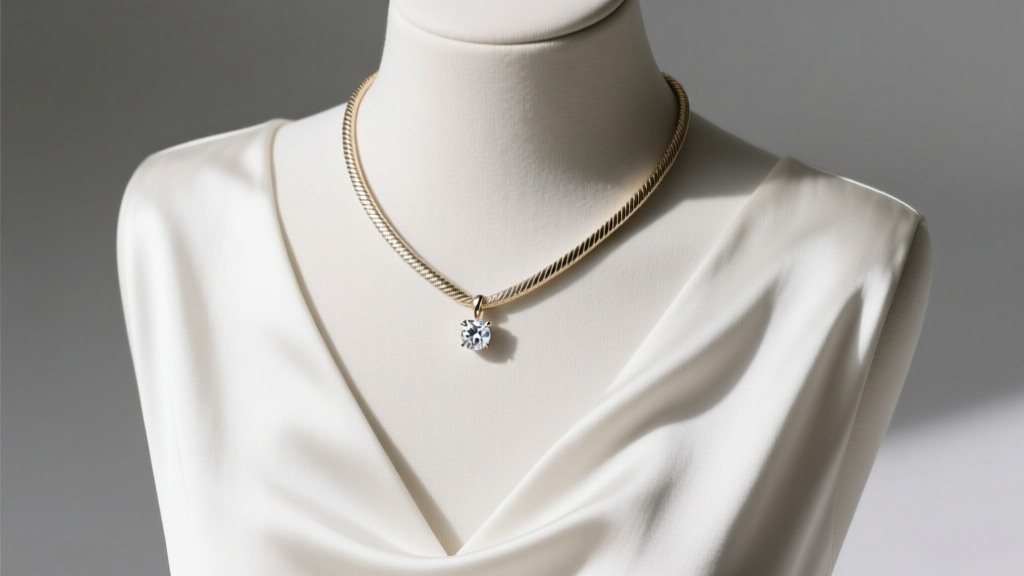
- Visual Scale: Pendants measuring between 8mm and 15mm in diameter offer the best visual harmony for a collarbone-length chain. Anything larger than 20mm will overwhelm the delicate nature of a 16-inch drape.
Clasp and Hardware Considerations for Collarbone Lengths
Hardware failure is disproportionately common in shorter chains due to the increased lateral tension applied when putting the necklace on and taking it off. The standard spring ring clasp (often 4mm or 5mm) is generally inadequate for a 16-inch chain, especially if it features a pendant.
When reviewing product specifications, look for a Lobster Claw clasp measuring at least 5x9mm or 6x10mm. The internal spring mechanism of a lobster clasp is vastly superior for maintaining a secure lock under tension. Additionally, inspect the jump rings (the small circles connecting the clasp to the chain). They should be soldered closed or feature a split-ring design. Open jump rings will inevitably pull apart under the torque of a 16-inch chain catching on a sweater or hair.
Neckline Pairing Matrix
A 16-inch chain is remarkably versatile, but its proximity to the collarbone means it interacts directly with the neckline of your garment. Use this matrix to optimize your styling:
- Scoop Neck: Perfect pairing. The chain echoes the curve of the neckline, sitting roughly one inch above the fabric hem.
- V-Neck: Excellent for pendants. The pendant will naturally rest in the upper third of the V, drawing the eye downward and elongating the neck.
- Crew Neck: Proceed with caution. A 16-inch chain may sit directly on the ribbed collar of a tight crew neck t-shirt, causing friction and visual clutter. Opt for a bare neck or a wider boatneck instead.
- Off-the-Shoulder: Stunning. The chain provides a delicate metallic frame against the exposed skin of the upper chest and shoulders.
Sizing and Adjustability: The 2-Inch Extender Rule
In modern e-commerce, buying a fixed 16-inch chain can be a gamble if you haven't measured your exact neck circumference with a soft tailor's tape. To mitigate this, the industry gold standard has shifted toward the 14-inch chain with a 2-inch extender. This configuration allows the wearer to adjust the piece from a tight choker (14") to a standard collarbone length (16"), and even down to a short princess length (16" + 2" = 18").
Pro-Tip from the Bench: If you are buying a vintage or fixed-length 16-inch chain that feels slightly too tight, a local jeweler can add an extender chain for under $30. However, ensure the extender matches the exact metal alloy and karat weight of the original chain to prevent galvanic corrosion where the two dissimilar metals meet.
Ultimately, mastering the 16 in necklace length requires balancing precise millimeter measurements with an understanding of how metal behaves under tension. By prioritizing flexible link structures, appropriately scaled pendants, and robust lobster clasps, you ensure your collarbone chain remains a staple of your jewelry wardrobe for decades.


