Ski Necklace Safety: Breakaway Tech & Material Grades
Discover the engineering behind a safe ski necklace. We analyze breakaway clasp tensile strength, cold-weather alloys, and cord materials.

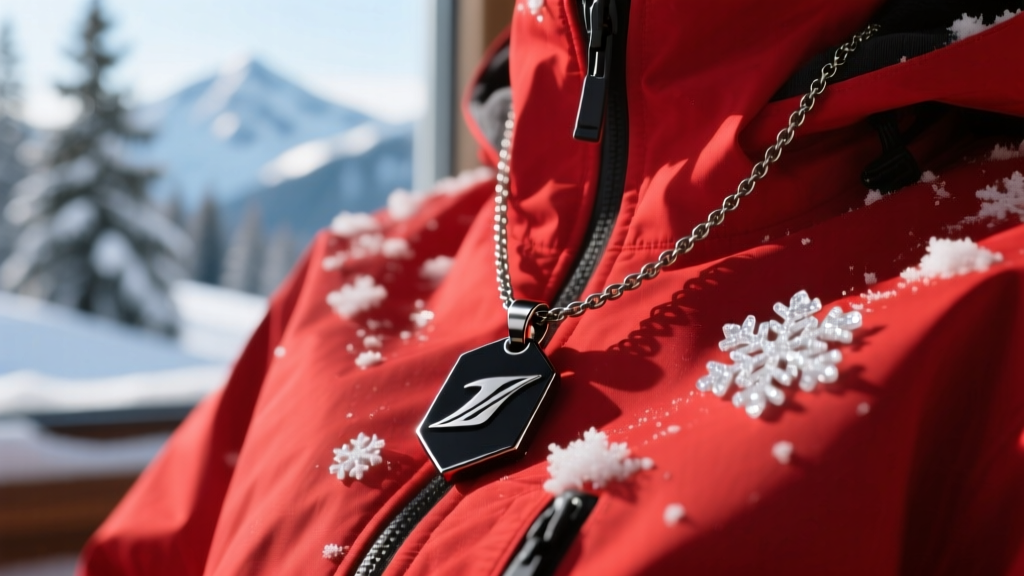
When you are dropping into a backcountry bowl or navigating a crowded resort lift line, jewelry is rarely top of mind. Yet, the modern ski necklace has evolved from a simple fashion accessory into a highly engineered piece of alpine safety gear. As of 2026, the intersection of extreme sports and personal adornment demands rigorous material science. A standard chain necklace on the slopes is not just a fashion faux pas; it is a severe entanglement hazard. In this technical deep dive, we dissect the metallurgy, tensile thresholds, and polymer engineering required to keep a ski necklace both stylish and safe in sub-zero environments.
The Hidden Dangers of Slopeside Jewelry
The primary threat of wearing any neckwear while skiing or snowboarding is lift entanglement. The National Ski Areas Association (NSAA) strictly advises against loose clothing and dangling accessories that can catch on chairlift safety bars or drag lifts. If a traditional necklace snags, the resulting force can easily exceed 150 pounds of tension, leading to catastrophic injury or asphyxiation. Furthermore, standard lobster clasps freeze shut in wet, sub-zero conditions, rendering manual removal impossible in an emergency. Therefore, a true ski necklace must be designed around a single, non-negotiable principle: fail-safe mechanical separation.
Breakaway Clasp Engineering: Tensile Thresholds
The core component of any alpine-rated necklace is the breakaway mechanism. According to safety frameworks adapted from the Consumer Product Safety Commission (CPSC) regarding cord entanglement, a safety release mechanism should disengage before the force reaches a level that could cause cervical trauma. For adult sports gear, this threshold is generally engineered between 5 lbs (22 N) and 15 lbs (66 N) of lateral pull.
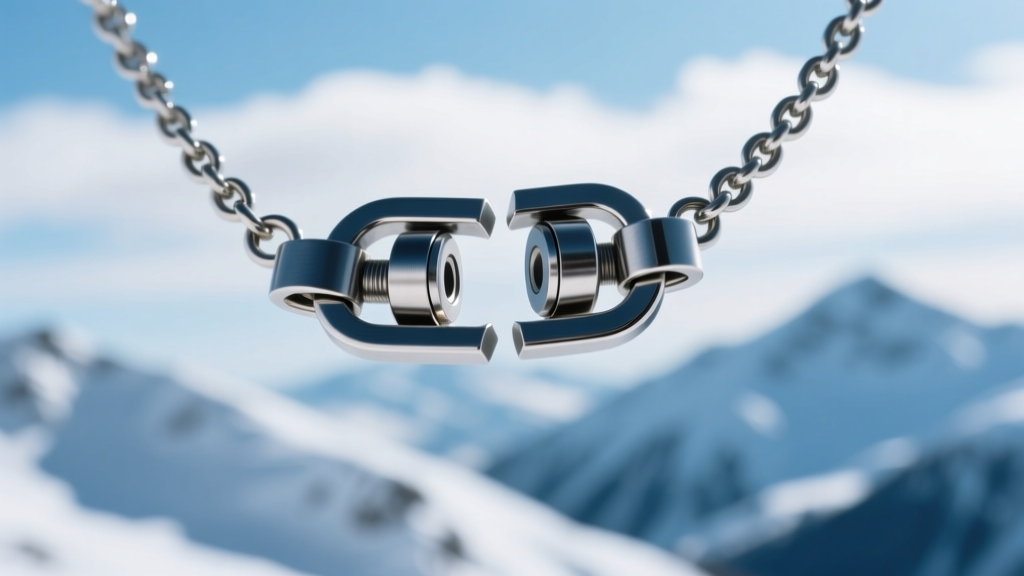
There are three primary breakaway systems utilized in high-performance winter jewelry. Below is a technical comparison of their release forces and environmental reliability.
| Clasp Mechanism | Release Force | Cold Reliability | Best Use Case |
|---|---|---|---|
| N42 Neodymium Magnetic | 4 - 8 lbs | Excellent (No moving parts to freeze) | Backcountry / Freeride |
| Side-Release Polymer | 10 - 15 lbs | Moderate (Prone to icing in wet snow) | Resort / Groomed Runs |
| Elastic Shock Cord | Variable (15+ lbs) | Poor (Elastomers degrade in UV/Cold) | Casual / Après-Ski Only |
Magnetic clasps utilizing N42 or N52 grade neodymium are the gold standard for 2026 ski necklaces. While extreme cold can technically increase the magnetic remanence (making the magnet slightly stronger), the sheer mechanical advantage of a lateral shear-force ensures the magnets will slide apart long before dangerous tension builds on the cervical spine.
Metallurgy & Polymers: What Survives -20°C?
The pendant and hardware of a ski necklace must withstand extreme thermal cycling, high-impact collisions with ice, and exposure to corrosive salt (from sweat and road-salt-contaminated gear bags).
Grade 5 Titanium vs. 316L Stainless Steel
Many commercial jewelry brands default to 316L stainless steel for its low cost and corrosion resistance. However, 316L steel has a relatively high thermal conductivity. In -20°C weather, a steel pendant resting against the skin can rapidly draw heat away, causing localized discomfort or even cold burns if trapped under a base layer. More critically, all steels possess a Ductile-to-Brittle Transition Temperature (DBTT). While 316L's DBTT is well below typical skiing temperatures, micro-fractures from repeated impacts with ski poles or lift towers can propagate faster in cold steel.
Conversely, Grade 5 Titanium (Ti-6Al-4V) is the superior choice. It boasts a strength-to-weight ratio that outperforms steel by nearly 40%, meaning a thicker, more durable pendant can be worn without causing neck fatigue. Titanium also has very low thermal conductivity, meaning it remains relatively neutral to the touch even in freezing conditions. Furthermore, titanium can be anodized to create vibrant, UV-resistant colors without the use of toxic chemical platings that might chip off during a crash.
High-Performance Cordage: UHMWPE vs. Nylon
The cord holding the pendant is just as critical as the clasp. Standard nylon cords are highly hygroscopic—they absorb moisture from snow and sweat. When temperatures drop, the water inside the nylon fibers freezes, turning a flexible cord into a stiff, brittle wire that can snap under dynamic loads.

The industry standard for premium ski necklaces is now UHMWPE (Ultra-High-Molecular-Weight Polyethylene), commonly known by trade names like Dyneema or Spectra. UHMWPE is entirely hydrophobic, meaning it absorbs zero water and will never freeze stiff. It also boasts a tensile strength up to 15 times greater than steel on a weight-for-weight basis. A 2mm UHMWPE cord can easily support 400 lbs of static weight, ensuring that the cord will never break; instead, the engineered breakaway clasp will always be the designated failure point, exactly as intended.
Lift Safety Standards and Compliance
When designing or purchasing a ski necklace, look for compliance references to ASTM International standards, particularly those adapted from ASTM F2923 (Standard Specification for Consumer Product Safety for Children's Jewelry). While originally designed for children, the breakaway tensile thresholds outlined in these standards have been widely adopted by extreme sports gear manufacturers to mitigate liability and ensure user safety.
"Any accessory worn on the upper torso during alpine sports must feature a secondary release mechanism that operates independently of user intervention, requiring less than 15 pounds of force to disengage." — Adapted from alpine safety equipment guidelines.
Maintenance and Cold-Weather Degradation
Even the most advanced ski necklace requires specific maintenance to ensure the breakaway mechanism functions when needed. The most common failure mode in magnetic clasps is the accumulation of ferrous metal shavings or iron-rich dirt on the magnet face, which can cause the clasp to jam or fail to seat properly.
- Post-Ride Cleaning: Wipe the magnetic clasp faces with a microfiber cloth and a mild isopropyl alcohol solution to remove sweat salts and lift-tower grease.
- UV Degradation: If your necklace utilizes a polymer side-release clasp, inspect the plastic for micro-cracking. High-altitude UV exposure degrades standard ABS plastics in as little as two seasons. Look for clasps molded from UV-stabilized Polycarbonate or Delrin (POM).
- Cord Inspection: Check the UHMWPE or silicone cord for abrasions where it rubs against the jacket zipper. While UHMWPE is highly cut-resistant, repeated friction against sharp metal zipper teeth can compromise the outer sheath.
Conclusion
A ski necklace is a masterclass in functional jewelry design. By combining the fail-safe physics of neodymium magnetic breakaways, the cryogenic stability of Grade 5 titanium, and the hydrophobic strength of UHMWPE cordage, modern alpine jewelry offers a way to express personal style without compromising safety on the mountain. When selecting your next piece of slopeside gear, look past the aesthetic and demand the technical specifications that will keep you safe when the unexpected happens on the lift.


