Skull Mens Necklace Care: Cleaning & Maintenance Tips
Learn expert cleaning and maintenance tips for your skull mens necklace. Discover material-specific care, ultrasonic warnings, and chain repair tricks.


The Anatomy of Tarnish: Why Skull Pendants Degrade
A skull mens necklace is more than just a bold fashion statement; it is an intricate piece of metallurgy that requires specialized maintenance. Unlike smooth, minimalist pendants, skull designs feature deep recesses—eye sockets, nasal cavities, cranial sutures, and carved teeth. These crevices act as microscopic traps for sebum, dead skin cells, environmental dust, and sulfur compounds. When these organic materials mix with the copper alloyed in sterling silver or the iron in lower-grade steels, they accelerate oxidation and tarnishing.
According to the Gemological Institute of America (GIA), silver tarnish is primarily caused by hydrogen sulfide in the air reacting with the copper present in 925 sterling silver (which is 7.5% copper). Because a skull pendant rests against the chest—an area prone to sweating and heat—the chemical reactions are amplified. Understanding your necklace's specific material composition is the first step in preserving its aggressive aesthetic without letting it degrade into a dull, compromised state.
Material-Specific Cleaning Protocols
Not all skull necklaces are created equal. The cleaning agent you use must match the metallurgy of your pendant and chain. Using the wrong chemical can strip intentional patinas or pit the surface of alternative metals.
925 Sterling Silver and Oxidized Details
Many high-end skull pendants utilize a technique called 'antiquing' or 'oxidation,' where the jeweler intentionally applies liver of sulfur to blacken the deep crevices, making the skull's teeth and eye sockets pop against the polished high points. Never use silver dip solutions or the aluminum foil/baking soda galvanic bath on antiqued silver. These methods strip all oxidation, leaving your skull looking flat and cheap.
- The Safe Method: Use a few drops of mild, phosphate-free dish soap (like Dawn) in warm water.
- The Tool: An extra-soft baby toothbrush. Gently agitate the bristles over the surface to lift sebum without scrubbing out the intentional blackening in the recesses.
- Polishing: Use a treated silver polishing cloth only on the raised, high-friction areas of the skull (the cranium and cheekbones), avoiding the deep cuts.
Surgical Stainless Steel (316L) and Titanium
Stainless steel and titanium skull necklaces are highly resistant to tarnish and corrosion, making them ideal for daily wear. However, they can still accumulate a cloudy film of body oils and hard water spots.
- The Safe Method: Wipe down with 70% isopropyl alcohol on a microfiber cloth. The alcohol cuts through sebum instantly and evaporates without leaving streaks.
- For Heavy Grime: Submerge the steel pendant in a 50/50 mix of warm water and ammonia-free glass cleaner for five minutes, then rinse and dry.

Brass, Bronze, and Alternative Alloys
Brass and bronze offer a warm, golden-brown hue that naturally develops a patina over time. If you prefer the shiny, new-gold look, you will need to combat copper oxidation aggressively. A paste made of equal parts lemon juice and baking soda applied with a soft cloth will strip the patina and restore the bright finish. Rinse thoroughly, as residual acid will cause rapid re-tarnishing.
Step-by-Step Deep Cleaning for Intricate Crevices
When a baby toothbrush cannot reach the deepest cranial sutures or the back of the skull's jawline, you need advanced cleaning technology. Ultrasonic cleaners are the industry standard for deep-cleaning intricate jewelry, but they come with severe warnings.
Jeweler's Warning: If your skull mens necklace features inlaid gemstone eyes (such as onyx, turquoise, or opal) held in place by adhesive, do not use an ultrasonic cleaner. The 40kHz high-frequency cavitation bubbles will shatter the adhesive bond, causing the gemstones to eject from their settings.
For solid metal skulls without inlays, an ultrasonic cleaner is highly effective. Fill the tank with warm water and a few drops of jewelry-specific surfactant. Run the machine for exactly three minutes. The microscopic implosions will forcefully eject compacted dead skin and lint from the skull's nasal cavity and teeth gaps. Follow up with a distilled water rinse to prevent mineral deposits, and dry immediately with compressed air or a hairdryer on the cool setting.
Chain Maintenance: Preventing Weak Points and Snags
The pendant is only half the equation; the chain bearing its weight requires equal attention. Skull pendants are often heavy, ranging from 25 to over 80 grams, which puts immense tensile stress on the chain's links and clasp.
Cuban Links vs. Rope Chains
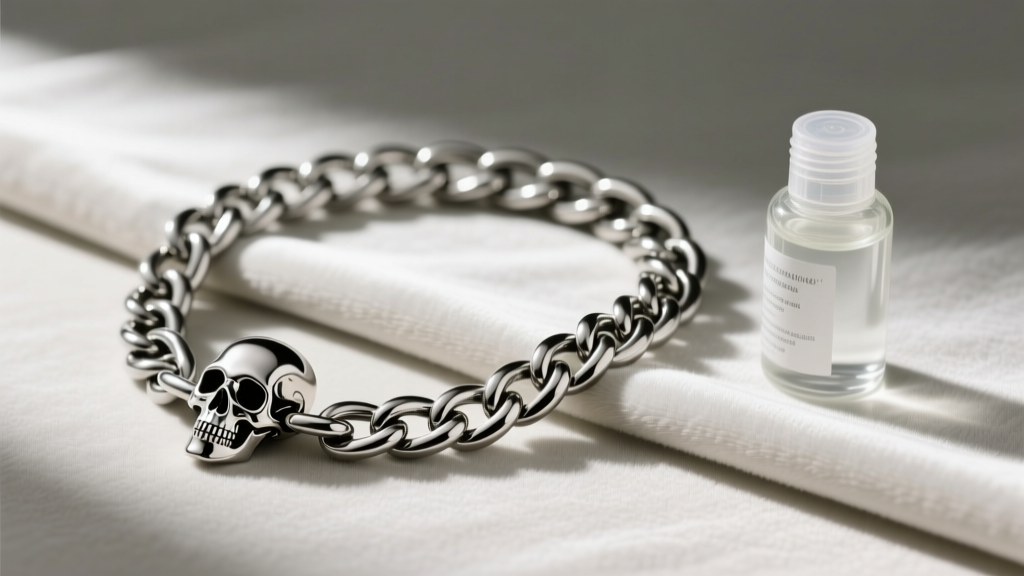
Cuban link chains feature flat, interlocking surfaces that are easy to wipe down with a polishing cloth. Rope chains, however, are notorious for trapping grime in their helical twists. To clean a rope chain, lay it flat on a microfiber towel, spray it lightly with isopropyl alcohol, and use a soft-bristled detailing brush to sweep along the twist pattern.
Clasp Lubrication and Jump Ring Integrity
The lobster clasp is the most common failure point on a heavy necklace. Over time, the internal spring mechanism becomes clogged with lint and sweat, causing the lever to stick or fail to close completely. To fix this, use a needle-point oiler to apply a micro-drop of synthetic watch oil (or a lightweight synthetic household oil) directly into the clasp hinge. Pump the lever a few times to distribute the lubricant, then wipe away any excess.
Additionally, inspect the jump ring connecting the skull pendant to the chain. If the gap in the jump ring has widened due to the weight of the pendant pulling against it, use two pairs of flat-nose pliers to twist it closed. Never pull the jump ring apart laterally, as this weakens the metal's structural memory.
Preventative Care and Storage Solutions
How you store your skull necklace when it is not around your neck dictates how much cleaning it will require later. Tossing a sterling silver skull into a standard jewelry box is a recipe for rapid sulfide tarnishing.
- Use Polyethylene, Not PVC: Store your necklace in zip-top bags made of polyethylene. Avoid polyvinyl chloride (PVC) plastics, as PVC off-gases sulfur and chlorine compounds that will aggressively tarnish silver and corrode brass.
- Anti-Tarnish Strips: Drop a 3M anti-tarnish strip into the storage bag. These strips absorb airborne sulfides and can protect your pendant for up to six months in a sealed environment.
- Silica Gel Packets: Moisture accelerates all forms of corrosion. Include a small silica gel desiccant packet in your storage container to keep the ambient humidity near zero.
Troubleshooting Common Skull Necklace Issues
Even with meticulous care, heavy wear can lead to specific issues. Use this diagnostic table to resolve them quickly.
| Issue | Root Cause | Expert Solution |
|---|---|---|
| Green skin discoloration under pendant | Copper oxidation reacting with acidic sweat | Clean pendant with baking soda paste; apply a thin coat of clear nail polish or Renaissance Wax to the back of the skull. |
| Lobster clasp sticking or failing to snap | Sebum buildup and internal spring corrosion | Flush clasp with 90% isopropyl alcohol, then apply a micro-drop of synthetic watch oil to the hinge. |
| Inlaid gemstone eyes falling out | Thermal shock or solvent degradation of glue | Clean the setting with alcohol, let dry, and re-set using G-S Hypo Cement (avoid super glue, which fogs stones). |
| Chain links stretching or ovaling | Pendant weight exceeds chain's tensile limit | Upgrade to a heavier gauge chain (e.g., move from 3mm to 5mm) or use a thicker, reinforced bail on the skull. |
Summary
Maintaining a skull mens necklace requires moving beyond generic jewelry wipes and understanding the specific geometry and metallurgy of your piece. By respecting the intentional oxidation on silver, utilizing ultrasonic cavitation safely on solid steel, and proactively maintaining your chain's clasp and jump rings, you ensure your necklace retains its bold, aggressive edge for decades. For more detailed metallurgical insights, resources like Connoisseurs Jewelry Care offer excellent supplementary guides on specialized metal polishes and storage environments.


