Troubleshooting Your Snake Bone Necklace: Repairs, Odor, and Care
Is your snake bone necklace smelling, cracking, or fraying its cord? Learn expert troubleshooting, cleaning methods, and repair tips for bone jewelry.

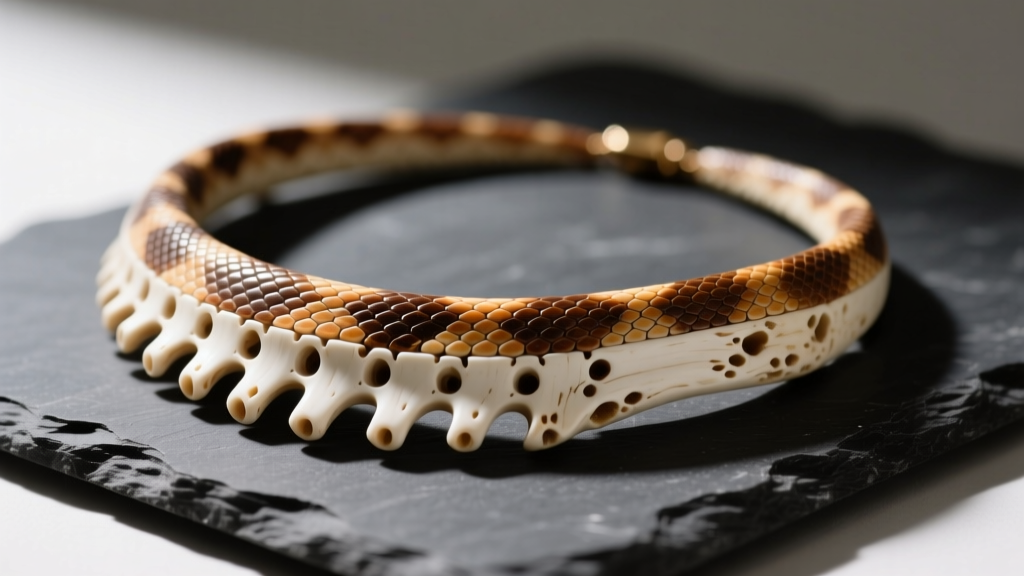
The Unique Vulnerabilities of Organic Bone Jewelry
A genuine snake bone necklace is a striking statement piece, blending tribal, gothic, and bohemian aesthetics into a deeply organic accessory. However, unlike inert metals or faceted gemstones, reptile bone is a porous, biologically active material. With a Mohs hardness rating of just 2.5 to 3.0, it is highly susceptible to environmental degradation, lipid oxidation, and mechanical stress. Whether you have inherited a vintage piece or purchased a newly carved python vertebrae strand, troubleshooting a snake bone necklace requires an understanding of both anatomy and material conservation.
Many wearers encounter three primary failure modes: persistent organic odors, micro-fractures along the neural arches, and severe cord fraying caused by the bone's natural anatomy. Below, we break down the exact diagnostic protocols and museum-grade conservation techniques required to salvage and maintain your organic jewelry.
Diagnostic Checklist: Identifying Your Necklace's Issues
Before applying any chemical or mechanical treatment, you must accurately diagnose the degradation pathway. Organic materials react poorly to generic jewelry cleaners, and using the wrong solvent can permanently ruin the calcium matrix of the bone.
Issue 1: Foul Odor and 'Organic' Smell
If your snake bone necklace emits a sour, earthy, or rotting scent, you are dealing with lipid oxidation. Snake vertebrae are rich in microscopic marrow channels. If the bone was not properly degreased and bleached during the initial curing process, residual body oils, sweat, and environmental humidity will cause trapped fats to go rancid. The Fix: Never use hydrogen peroxide or chlorine bleach, as these destroy the calcium hydroxyapatite structure, turning the bone chalky and brittle. Instead, create a poultice using distilled water and an enzymatic cleaner (like those used for pet stains, which break down proteins and lipids). Apply it with a soft toothbrush, let it sit for five minutes, and wipe it away with a damp microfiber cloth. Allow it to air dry completely in a low-humidity room.
Issue 2: Micro-Fractures and Brittle Vertebrae
Snake vertebrae feature complex ball-and-socket joints (zygapophyses) and delicate neural spines. These thin protrusions are prone to snapping under minor impacts or pressure. If you notice hairline cracks or chipped edges, the bone has dehydrated. The Fix: Avoid standard cyanoacrylate (Super Glue), which dries rigid, shines unnaturally, and can stain the porous bone white. Professional conservators use Paraloid B-72, an archival-grade acrylic resin dissolved in acetone. Apply a micro-drop into the fracture using a fine needle. The acetone evaporates, leaving a stable, reversible, and matte-finish bond that stabilizes the crack without altering the bone's natural texture.
Issue 3: Cord Fraying at the Drill Holes
This is the most common catastrophic failure for snake bone necklaces. The interior edges of drilled vertebrae are often left sharp and unpolished. Over time, the friction of movement acts like a microscopic saw against silk, cotton, or leather cords, leading to sudden snaps and lost pendants.
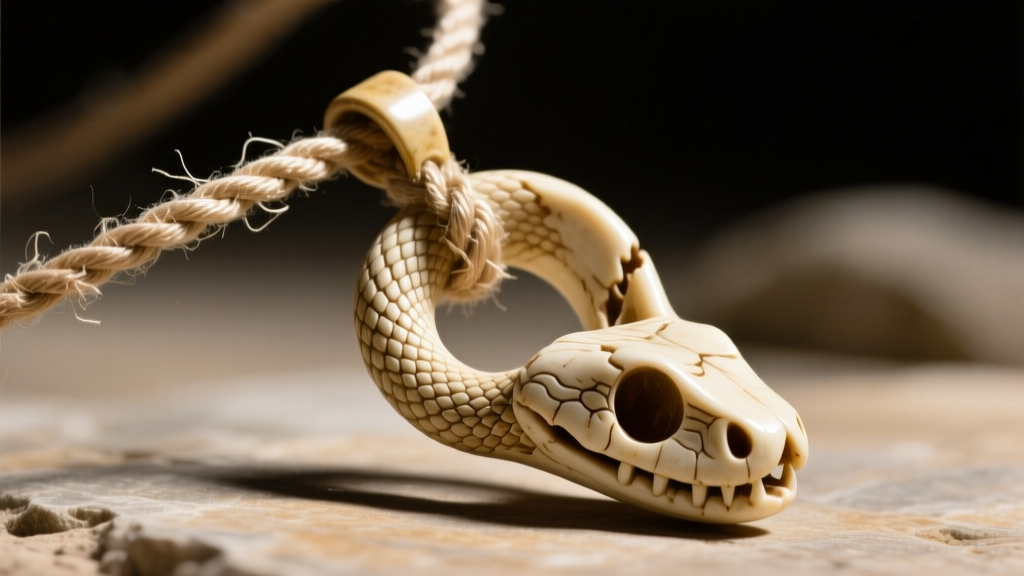
The Fix: First, inspect the drill holes. If they are sharp, gently bevel the interior edges using a diamond-coated bead reamer. Second, abandon organic cords entirely. Re-string the necklace using a 0.6mm to 0.8mm nylon-coated braided stainless steel micro-cable. The nylon coating prevents the metal from reacting with the bone's natural oils, while the steel core ensures the necklace will never snap from friction.
Material Authentication: Real Reptile vs. Carved Resin
The market is flooded with 'faux' snake bone necklaces cast from polyurethane resin or carved from dense bovine bone. Before attempting aggressive cleaning or repairs, you must verify the material. According to the Gemological Institute of America (GIA), organic gems require specific identification protocols to differentiate them from modern synthetics.
| Diagnostic Feature | Genuine Snake Bone | Cast Resin / Faux Bone |
|---|---|---|
| Temperature to Touch | Feels cool initially, warms slowly | Feels room-temperature or slightly warm |
| Pore Structure (10x Loupe) | Visible Haversian canals and irregular pitting | Perfectly smooth or features uniform cast bubbles |
| UV Light Reaction (365nm) | Fluoresces a dull, patchy yellow-white | Often glows bright blue, green, or milky white |
| Hot Pin Test (Hidden Area) | Smells like burnt hair; leaves a tiny black mark | Melts, sticks to the pin; smells acrid/plastic |
| Weight and Density | Lightweight, slightly porous feel | Noticeably heavier and denser |
Step-by-Step Restoration and Deep Cleaning Protocol
If your authenticated snake bone necklace has yellowed from years of absorbing skin oils and UV exposure, follow this conservation-grade restoration framework. These methods are adapted from guidelines used by the American Institute for Conservation (AIC) for organic artifacts.
- Dry Mechanical Cleaning: Use a soft-bristled boar hair brush to dislodge dust from the intricate zygapophyses joints. Never use ultrasonic cleaners; the high-frequency cavitation will shatter the micro-porous structure of aged bone.
- Solvent Wipe: Dampen a cotton swab with mineral spirits (white spirit). Gently roll it over the surface to dissolve oxidized sebum and lotion buildup. Mineral spirits are safe for bone and will not draw out internal moisture like alcohol or acetone would.
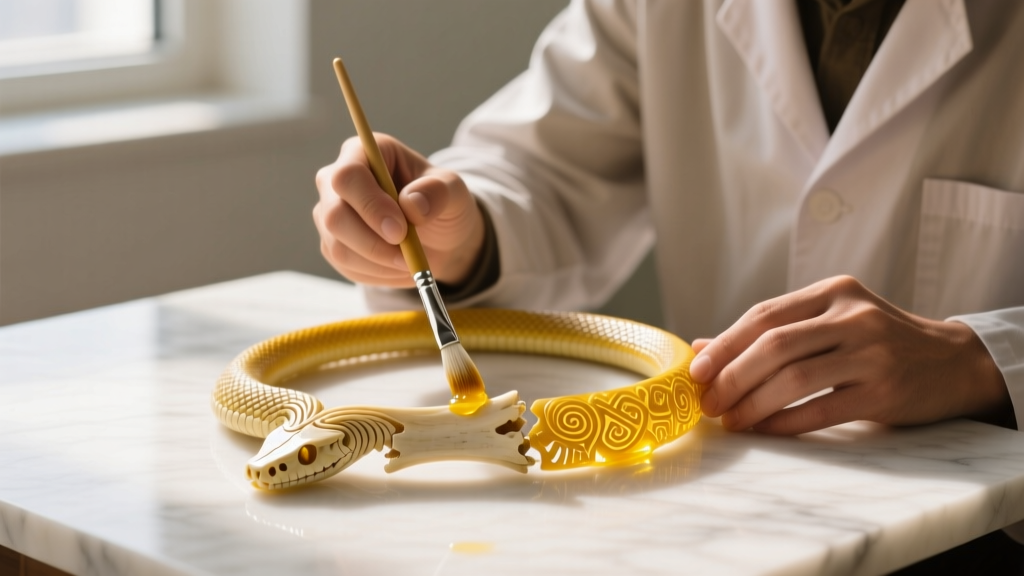
- Micro-Crystalline Wax Sealing: Once clean and dry, the bone must be sealed to prevent future lipid absorption. Apply a micro-thin layer of Renaissance Wax (a museum-standard micro-crystalline wax). Buff it gently with a lint-free cloth after 10 minutes. This creates a breathable, non-yellowing barrier that enhances the bone's natural luster without making it look artificially glossy.
Preventative Maintenance and Storage Framework
Organic jewelry is highly reactive to ambient humidity. If the relative humidity (RH) drops below 30%, the bone will desiccate, shrink, and crack along its grain. If the RH exceeds 65%, the bone will absorb moisture, swell, and become a breeding ground for mold and bacterial odors.
The Storage Solution: Store your snake bone necklace in a sealed polyethylene bag with a two-way humidity control packet (like Boveda 49% or 58% RH packs). Keep it away from direct sunlight, as UV radiation breaks down the collagen matrix within the bone, leading to severe embrittlement and chalky degradation over time.
Ethical Sourcing and CITES Compliance
When troubleshooting or acquiring vintage snake bone jewelry, be aware of international wildlife trade laws. Many large snake species, including Reticulated Pythons and Boa Constrictors, are regulated under the CITES Appendices. While owning a vintage or domestically sourced shed-bone necklace is generally legal, traveling internationally across borders with reptile-derived products without proper documentation can result in confiscation and heavy fines at customs. Always retain your certificate of authenticity and proof of ethical, non-lethal shedding or legal culling sourcing to ensure your piece remains both a beautiful and compliant addition to your collection.


