Snake Necklace Vintage Care: Expert Cleaning Guide
Discover expert care, cleaning, and maintenance tips for your snake necklace vintage piece. Learn how to protect scales, enamel, and articulated joints.

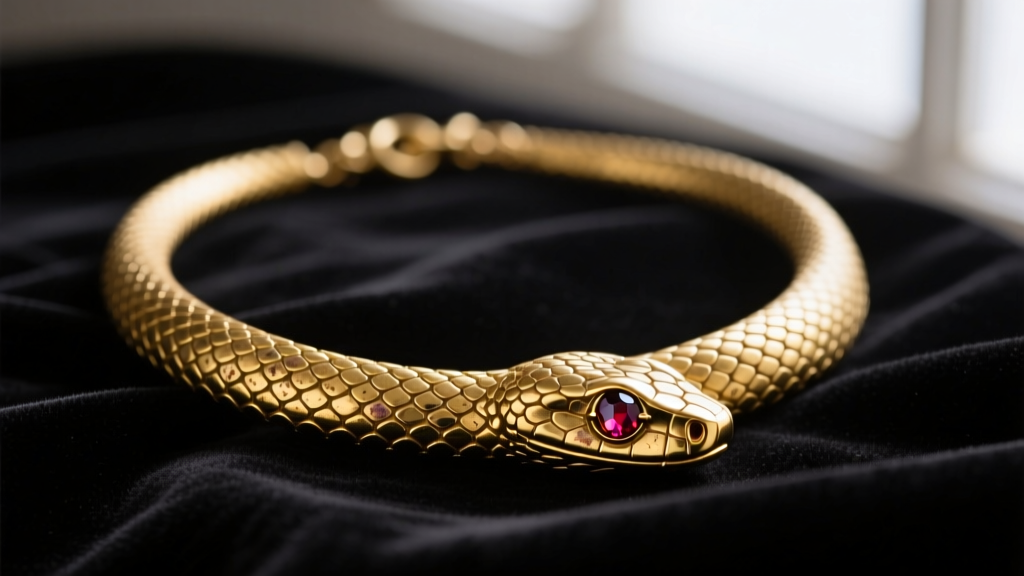
The serpent motif has captivated jewelry designers for centuries, symbolizing eternity, rebirth, and enduring love. When you acquire a snake necklace vintage piece—whether it is a Victorian tubular coil, an Art Nouveau enameled serpent, or a mid-century articulated gold chain—you are not just holding a beautiful accessory; you are preserving a piece of horological and metallurgical history. However, the intricate overlapping scales, delicate guilloché enamel, and internal tension mechanisms make these antique treasures exceptionally vulnerable to standard jewelry cleaning methods.
According to the Victoria and Albert Museum, antique jewelry requires a highly specialized approach to conservation. Harsh chemicals, ultrasonic vibrations, and improper storage can permanently destroy the structural integrity and historical value of a vintage serpent necklace. This comprehensive guide will walk you through the exact protocols used by antique conservators to clean, maintain, and store your vintage snake jewelry safely.
The Anatomy of a Vintage Serpent: Why Special Care is Needed
To properly care for a vintage snake necklace, you must first understand its complex anatomy. Unlike standard cable or curb chains, serpent necklaces are engineering marvels. Victorian and Edwardian pieces often feature overlapping gold or silver scales that are individually soldered or linked to a flexible internal mesh. Many also feature cabochon gemstone eyes (typically garnet, ruby, or turquoise) set in delicate collets, and heads adorned with fragile guilloché enamel.
The primary danger to these pieces is cavitation and chemical erosion. Standard ultrasonic cleaners use high-frequency sound waves to create microscopic bubbles that implode against the jewelry. While effective for modern diamond solitaires, this process will shatter foil-backed antique gemstones, strip away centuries-old enamel, and loosen the microscopic solder joints holding the snake's scales together. Furthermore, many Victorian snake necklaces were crafted in 15k gold or pinchbeck (a copper-zinc alloy); both are highly reactive to modern commercial dips and ammonia-based solutions.
Patina Preservation: To Polish or Not to Polish?
One of the most critical decisions in antique jewelry maintenance is whether to remove tarnish. In the realm of vintage snake necklaces, the darkened recesses between the scales are not merely dirt; they are patina. This natural oxidation provides contrast, giving the serpent its three-dimensional, lifelike texture.
Expert Rule of Thumb: Never use silver dip, polishing wheels, or abrasive pastes (like baking soda or toothpaste) on an antique snake chain. These methods will strip the dark oxidation from the crevices, leaving the necklace looking flat, artificially bright, and significantly devalued. Instead, conservators rely on targeted polishing, using a treated microfiber cloth only on the high points of the scales, deliberately leaving the recesses untouched to maintain the piece's historic character and visual depth.
Step-by-Step Cleaning Protocol for Antique Snake Chains
When your vintage snake necklace requires cleaning to remove accumulated skin oils, cosmetics, and environmental dust, follow this conservator-approved, non-invasive protocol.
Phase 1: Dry Dusting and Scale Debris Removal
Before introducing any moisture, you must remove loose particulate matter. Dead skin cells and cosmetic powders easily become trapped beneath the overlapping scales. If wetted, this debris turns into a stubborn paste that can scratch the soft gold or silver.
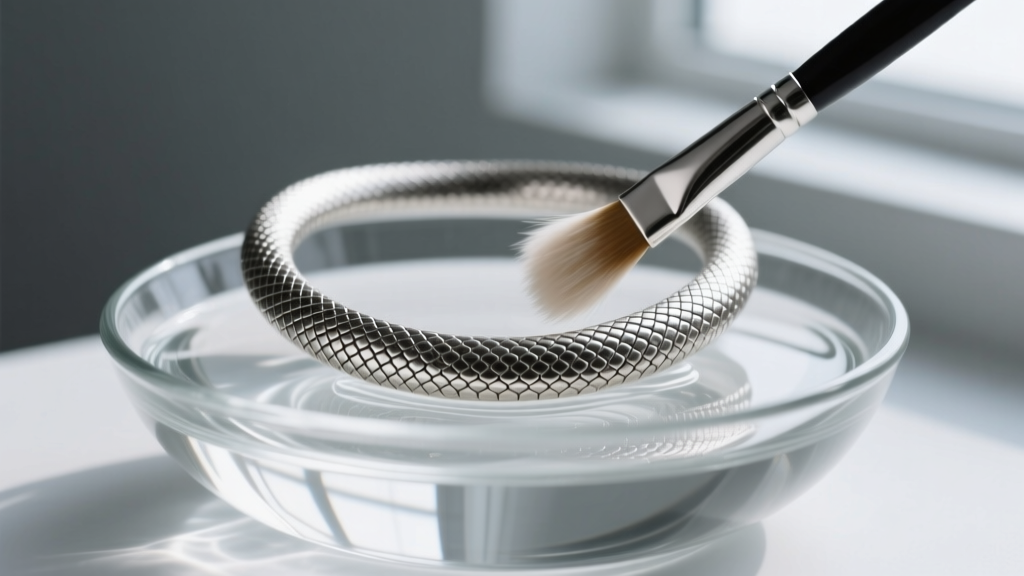
- Tool: Use a soft-bristled goat-hair brush or a clean, dry cosmetic brush. Avoid stiff nylon brushes, which can micro-scratch soft antique alloys.
- Technique: Lay the necklace flat on a microfiber towel. Gently brush in the direction of the scales (from head to tail) to lift debris out from under the overlaps.
- Air Dusting: Use a manual camera lens blower to puff air between the links. Avoid canned compressed air, as the propellant can spray freezing liquids that may cause thermal shock to gemstone eyes or enamel.
Phase 2: The Damp Cloth Method (Avoid Submersion)
Unless you are absolutely certain the piece contains no foil-backed stones, porous gems (like turquoise), or enamel, never submerge a vintage snake necklace in water. Moisture trapped between the tight scales can lead to internal rust (if a steel spring core is present) or green copper verdigris.
- Mix a few drops of pH-neutral, phosphate-free dish soap (such as Orvus WA Paste or a mild, lotion-free Dawn) into a bowl of distilled water. Distilled water is crucial, as tap water contains chlorine and minerals that can react with antique alloys.
- Dip a lint-free cotton swab or a microfiber cloth into the solution and wring it out until it is only barely damp.
- Gently wipe the high points of the snake's body and the head, avoiding direct pressure on the gemstone settings.
- Use a second swab dampened only with plain distilled water to rinse the soap residue.
- Immediately dry the piece using a soft, absorbent towel, and use a hair dryer on the cool, low-air setting to blow moisture out from between the scales.
Chemical Agents: What to Avoid at All Costs
The Gemological Institute of America (GIA) frequently warns against the misuse of household chemicals on antique jewelry. The table below outlines how common cleaning agents interact with the specific materials found in vintage snake necklaces.
| Cleaning Agent | Effect on Antique Gold/Silver | Effect on Enamel & Gemstones | Verdict |
|---|---|---|---|
| Ultrasonic Cleaners | Can loosen microscopic solder joints | Shatters foil-backed stones; chips enamel | Never Use |
| Ammonia / Silver Dip | Strips patina; can cause micro-pitting | Dissolves foil backings; clouds turquoise | Never Use |
| Baking Soda Paste | Highly abrasive; scratches 15k/18k gold | Scratches cabochon garnets and rubies | Never Use |
| Steam Cleaners | Safe for metal, but risky for joints | Thermal shock melts antique setting glues | Never Use |
| Renaissance Wax | Protects against oxidation safely | Safe on metal, avoid applying to gems | Highly Recommended |
Preserving Articulation and Internal Spring Mechanisms
Many vintage snake necklaces, particularly tubular coil styles from the mid-20th century and flexible Victorian mesh styles, rely on internal tension mechanisms. Tubular snakes often feature a continuous internal steel or copper spring that allows the necklace to coil tightly around the neck. Articulated link snakes rely on a series of tiny rivets or interlocking hooks.
Diagnosing Structural Fatigue: Periodically inspect the flexibility of the chain. If an articulated snake necklace feels stiff, or if a tubular coil no longer springs back to its original tight shape, the internal mechanism is suffering from metal fatigue or internal corrosion. Do not attempt to force the chain to bend or stretch. Applying lateral tension to a fatigued vintage snake chain will cause the internal mesh to snap, resulting in a catastrophic failure that is often impossible to repair without replacing the entire antique core. If stiffness occurs, the piece must be evaluated by a master jeweler who specializes in antique restoration.
Storing Your Serpent: Preventing Kinks and Tarnish
How you store your vintage snake necklace is just as important as how you clean it. Gravity and environmental humidity are the silent destroyers of antique serpent chains.
The Rule of Flat Storage
Never hang a vintage snake necklace on a jewelry tree or hook. The sheer weight of the overlapping gold or silver scales, combined with gravity, will slowly stretch the internal links. Over a period of just a few months, hanging the piece will permanently alter its drape, causing it to hang stiffly rather than coiling fluidly against the collarbone.
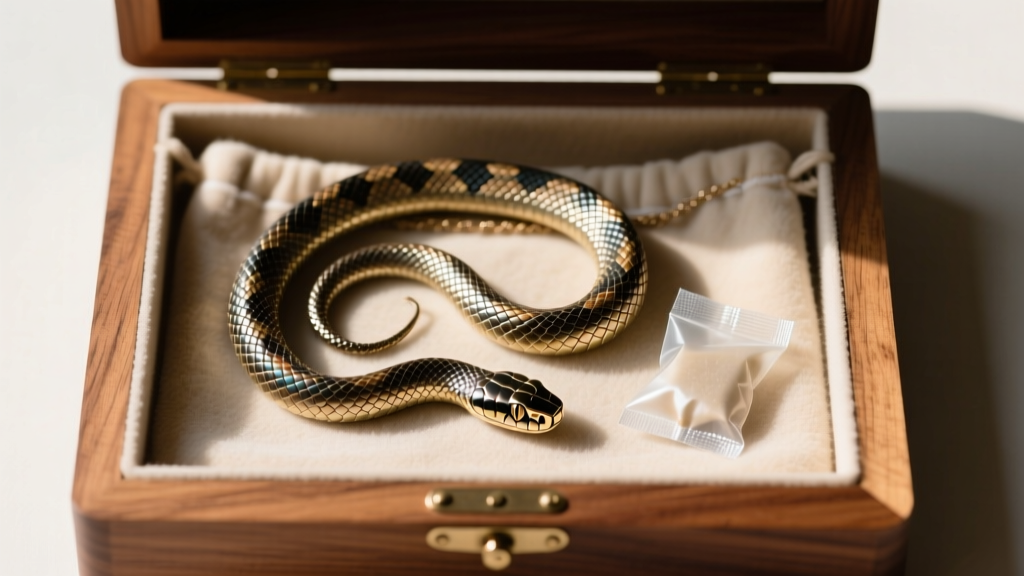
Always store the necklace flat. Coil it gently in its natural resting shape inside a dedicated, anti-tarnish flannel pouch. Flannel treated with silver nitrate or activated charcoal will absorb ambient sulfur compounds in the air, drastically slowing the tarnishing process without the need for chemical polishing.
Humidity Control
Because moisture trapped between the scales can cause internal rusting or verdigris, humidity control is vital. Store the flannel pouch inside a cedar jewelry box or an airtight acrylic container alongside a few silica gel desiccant packets. Replace the silica packets every six months to ensure the micro-environment remains entirely dry.
When to Call a Professional Conservator
While routine dry dusting and gentle damp-wiping can be performed safely at home, certain issues require immediate professional intervention. Seek out an antique jewelry specialist if you notice:
- Flaking Enamel: If the guilloché enamel on the snake's head is lifting or cracking, a conservator can stabilize it with specialized Paraloid B-72 resin.
- Loose Cabochon Eyes: If a garnet or ruby eye wobbles in its collet, stop wearing the piece immediately. Antique settings lack modern prong tension, and the stone can easily fall out and be lost.
- Green Staining (Verdigris): If you see green powdery corrosion emerging from between the scales, this is active bronze disease or copper oxidation. A professional must mechanically remove the corrosion and apply a micro-crystalline wax sealant to halt the chemical reaction.
Owning a snake necklace vintage treasure is a privilege that requires patience and a gentle touch. By abandoning harsh modern cleaning habits and embracing these meticulous, conservator-grade techniques, you ensure that your antique serpent will continue to coil beautifully for generations to come.


