The Beginner's Guide to Buying a Snowflake Diamond Necklace
Discover how to choose your first snowflake diamond necklace. Learn about diamond clarity, metal grades, chain styles, and pricing in this beginner guide.

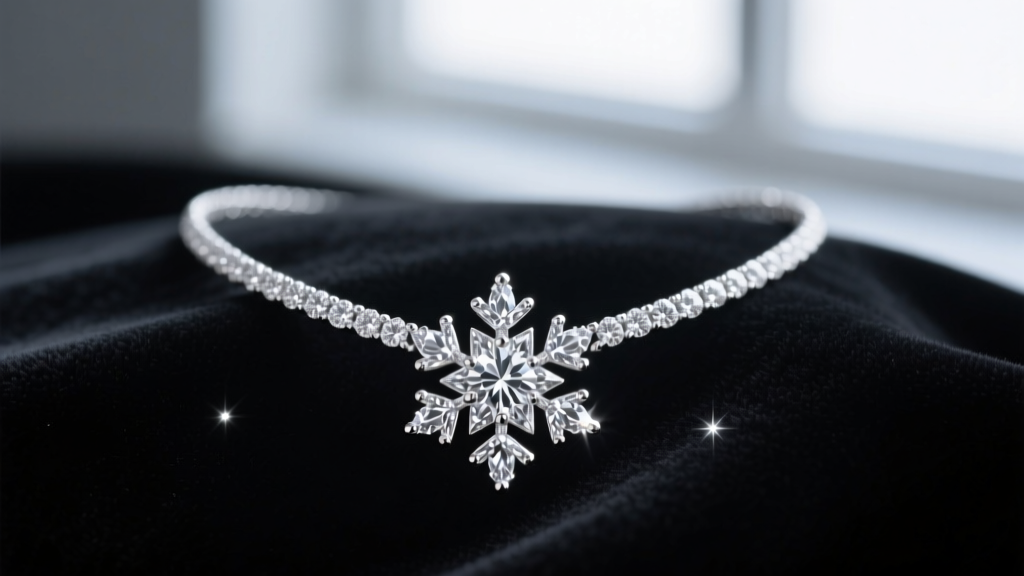
What Defines a Snowflake Diamond Necklace?
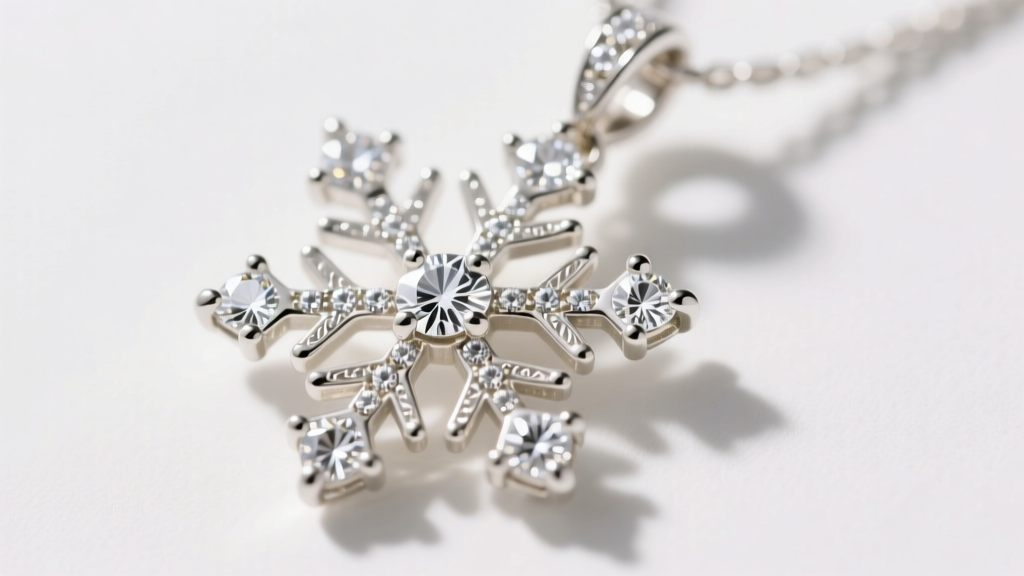
A snowflake diamond necklace is a masterclass in symmetrical jewelry design. Unlike standard solitaire pendants, snowflake motifs rely on six-fold radial symmetry, mimicking the crystalline structure of natural ice. For beginners, understanding the anatomy of this specific design is the first step toward making a smart purchase. The typical snowflake pendant features a central focal point—often a round brilliant or marquise-cut diamond—from which six branches extend. These branches are usually paved with 'melee' diamonds (small diamonds typically weighing between 0.005 and 0.07 carats each) to create a continuous, icy sparkle.
Because the design is highly intricate, the craftsmanship of the setting is just as important as the quality of the diamonds. The tiny metal beads or micro-prongs holding the melee stones must be perfectly aligned. If the symmetry is off by even a fraction of a millimeter, the pendant can look warped or unbalanced. When shopping, always examine high-resolution macro photography or inspect the piece in person to ensure the six branches are uniform in length and width.
Decoding the Diamonds: Quality Standards for Melee Stones
When evaluating a snowflake diamond necklace, beginners often make the mistake of applying the same strict grading standards to the entire piece as they would to a large solitaire engagement ring. According to the Gemological Institute of America (GIA), the visual impact of melee diamonds is dictated primarily by cut and color, rather than flawless clarity.
- Cut: This is non-negotiable. Poorly cut melee diamonds will look dull and gray, ruining the 'icy' effect of the snowflake. Ensure the jeweler uses 'full cut' melee (57-58 facets) rather than 'single cut' (17-18 facets) for maximum light return.
- Color: Aim for G to H color grades. Because the diamonds are small, they reflect the color of the metal setting. Near-colorless grades will face up perfectly white, especially when set in white gold or platinum.
- Clarity: You can safely drop to SI1 or even SI2 clarity for melee stones. Inclusions in diamonds this small are entirely invisible to the naked eye, and paying for VVS clarity in melee is a waste of your budget.
Lab-Grown vs. Natural: A Beginner's Dilemma
The rise of lab-grown diamonds has completely transformed the market for intricate pave jewelry. Because a snowflake design requires dozens of individual melee stones, the cost of sourcing matched natural diamonds can be prohibitive. Lab-grown diamonds offer identical chemical and optical properties at a fraction of the cost. For a beginner buying their first snowflake diamond necklace, lab-grown melee allows you to maximize the total carat weight (CTW) and physical size of the pendant without compromising on sparkle. However, if long-term resale value or traditional rarity is important to you, natural earth-mined diamonds remain the standard.
Metal Selection: Securing the Intricate Pave
The metal you choose dictates both the aesthetics and the structural integrity of your necklace. The American Gem Society notes that different alloys wear differently over time, which is critical for pave settings where tiny prongs hold small stones.
| Metal Type | Pros for Snowflake Pendants | Cons & Maintenance | Ideal For |
|---|---|---|---|
| Platinum (950) | Naturally white; highly durable; prongs bend rather than break. | Heavier; higher initial cost; develops a patina over time. | Heirloom pieces; everyday wear; high-carat designs. |
| 18k White Gold | Bright, reflective rhodium plating enhances diamond sparkle. | Requires re-plating every 1-2 years; prongs can wear thin. | High-end luxury with a bright, mirror-like finish. |
| 14k White Gold | More affordable; slightly harder alloy resists scratching. | Can show a faint yellow tint as rhodium wears off. | Budget-conscious buyers; moderate wear. |
| 14k Yellow Gold | Warm contrast makes white diamonds pop; no plating needed. | Less traditional for 'icy' winter motifs; limits styling. | Vintage aesthetics; warm skin tones. |
Choosing the Right Chain: Gauge and Style
A common beginner error is pairing a heavy, intricate snowflake pendant with a flimsy chain. The chain must support the pendant's weight and complement its geometry. For most snowflake pendants weighing between 2 and 5 grams, a chain gauge between 0.9mm and 1.2mm is ideal. Anything thinner (like 0.6mm) risks snapping under the pendulum motion of daily wear.
Recommended Chain Styles:
- Cable Chain: The classic choice. Its simple oval links don't compete with the intricate snowflake design.
- Box Chain: Offers excellent structural strength and a modern, geometric look that pairs beautifully with the symmetry of a snowflake.
- Avoid Snake Chains: While they look sleek, snake chains are notorious for kinking and trapping hair, and they are nearly impossible to repair once bent.
Always opt for a lobster claw clasp over a spring ring clasp. Lobster clasps provide a much more secure closure, ensuring your investment stays safely around your neck.

Pricing Brackets and Market Expectations
Understanding pricing helps you avoid overpaying for inferior craftsmanship or underpaying for suspiciously low-quality materials. Here is a realistic breakdown of what to expect in the current market for a snowflake diamond necklace:
- Entry-Level ($300 - $700): Typically features lab-grown melee diamonds or very small natural chips (0.05 to 0.15 CTW). Usually set in 10k or 14k gold. The pendant diameter is generally under 12mm.
- Mid-Tier ($1,200 - $2,800): Features high-quality natural or premium lab-grown diamonds (0.25 to 0.50 CTW). Set in 14k or 18k white gold. Expect precise micro-pave work and a pendant size of 15mm to 20mm.
- Luxury / Designer ($3,500 - $8,000+): Platinum settings featuring 0.75+ CTW of exceptionally matched, full-cut natural diamonds. Often includes a larger center stone and meticulous hand-finished prong work.
Care and Maintenance for Pave Settings
The intricate nature of a snowflake design makes it a magnet for lotions, oils, and dust, which can quickly dull the diamonds. Furthermore, the tiny prongs require specific care. Never use an ultrasonic cleaner on a pave snowflake pendant. The high-frequency vibrations can easily shake the micro-prongs loose, causing you to lose small diamonds.
Instead, clean your necklace weekly using a bowl of warm water with a few drops of mild dish soap. Let the pendant soak for 15 minutes, then gently brush the underside of the setting with a soft-bristled baby toothbrush. The underside (the gallery) is where the most grime accumulates, blocking light from entering the diamonds. Rinse thoroughly and dry with a lint-free microfiber cloth. Have a professional jeweler inspect the prongs under magnification once a year to ensure your snowflake remains intact for years to come.


