The Beginner Guide to Finding a Truly Unique Necklace
Discover what makes a unique necklace truly special. Learn about artisan metals, custom chain weaves, and how to avoid mass-produced jewelry traps.

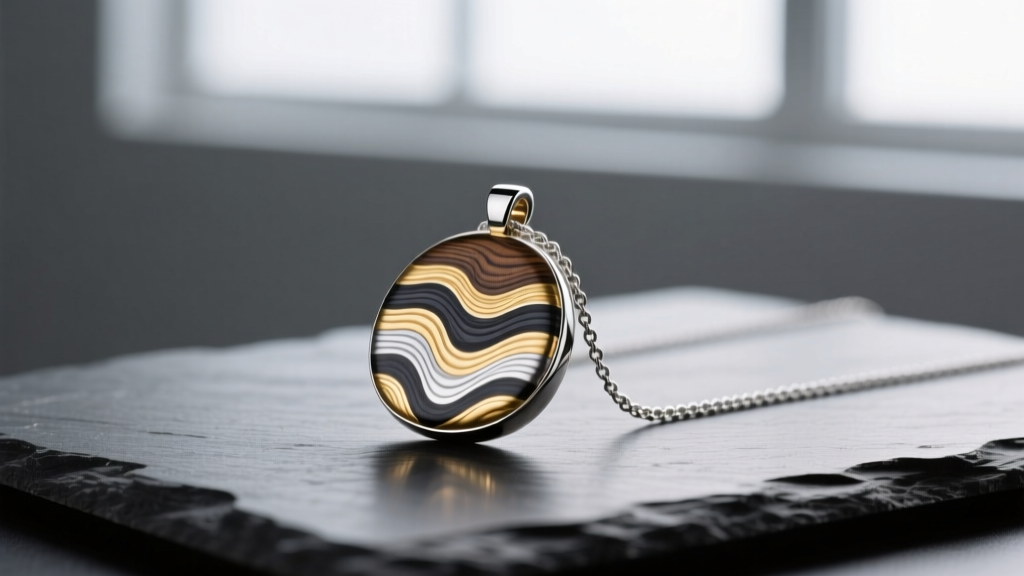
The term unique necklace is frequently hijacked by fast-fashion brands and dropshippers selling factory-stamped pendants by the thousands. But true uniqueness in jewelry is not born from a quirky shape or a bold color; it is rooted in metallurgy, structural engineering, and artisanal craftsmanship. For beginners stepping into the world of fine and artisanal jewelry, navigating the space between mass-produced 'statement' pieces and genuine bespoke art can feel overwhelming.
This guide strips away the marketing buzzwords. We will explore the exact materials, chain-building techniques, and sourcing strategies that define a genuinely unique necklace, giving you the technical knowledge to spot authentic craftsmanship and invest in pieces that are truly one-of-a-kind.
The Anatomy of a Truly Unique Necklace
To understand what makes a necklace unique, you must first understand how standard jewelry is made. The vast majority of commercial pendants are created through lost-wax casting. A master mold is made, and hundreds of identical copies are cast in base metals or standard sterling silver. While efficient, this process often leaves behind subtle 'sprue marks' (where the molten metal entered the mold) and lacks the structural density of hand-forged metal.
A truly unique necklace often bypasses traditional casting entirely. Artisan jewelers frequently use techniques like die-striking, hand-forging, or fabrication from raw sheet metal and wire. Hand-forging compresses the metal's molecular structure, making it significantly more durable and giving it a distinct, organic surface texture that a polishing wheel cannot replicate. When you examine a hand-forged pendant, you are looking at a piece of metal that has been physically shaped by human force, ensuring no two pieces share the exact same topography.
Mass-Produced vs. Artisan: A Material Breakdown
Material choice is the foundation of originality. While 925 sterling silver and 14k gold are industry standards, artisan jewelers often turn to specialized alloys and reactive metals to achieve effects that mass manufacturers cannot easily replicate. Below is a comparison of standard commercial materials versus specialized artisan alternatives.
| Material | Composition / Grade | Avg. Price Range (Pendant) | Uniqueness Factor | Maintenance Profile |
|---|---|---|---|---|
| Standard Sterling | 92.5% Silver, 7.5% Copper | $40 - $120 | Low (Highly commercialized) | Tarnishes quickly due to copper |
| Argentium Silver | 93.5% Silver, Germanium alloy | $120 - $300 | High (Allows seamless fusion welding) | Highly tarnish-resistant |
| Mokume Gane | Laminated Copper, Brass, Silver | $250 - $800+ | Extreme (Wood-grain patterns, no two alike) | Requires gentle polishing, patinas over time |
| Anodized Niobium | Reactive transition metal | $80 - $200 | High (Vivid colors without chemical plating) | Hypoallergenic, color is permanent |
According to The Silver Institute, traditional sterling silver's copper content is what causes rapid oxidation. By contrast, Argentium silver replaces some of that copper with germanium. This not only makes the metal highly tarnish-resistant but also allows jewelers to use fusion welding, joining metal seams without visible solder lines—a hallmark of high-end, unique fabrication.
Chain Maille and Bespoke Weaves: The Ultimate Customization
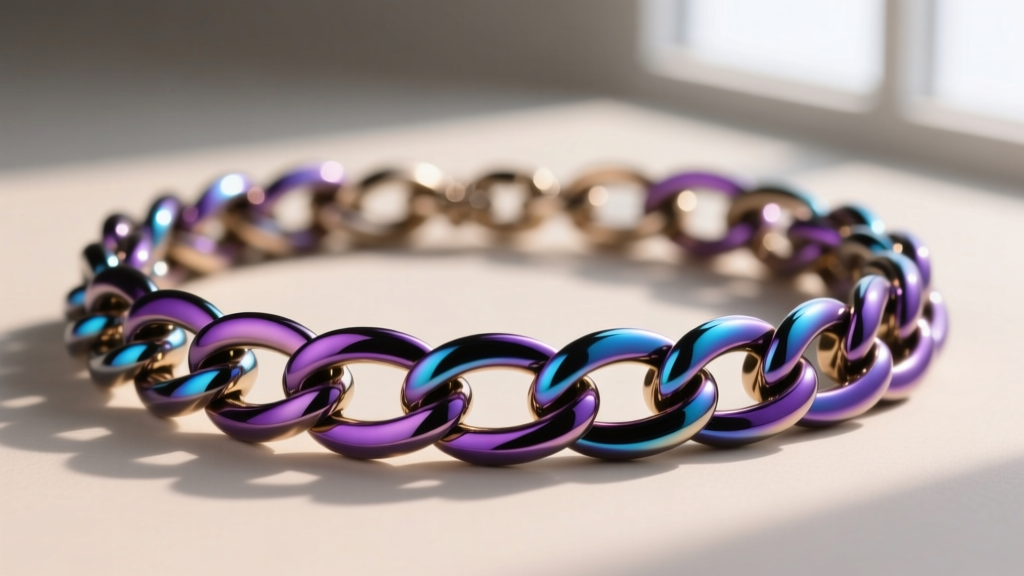
A pendant is only half the story; the chain it hangs from dictates the necklace's overall drape, weight, and character. While commercial brands rely on machine-made cable or curb chains, artisan jewelers often build chains by hand using chain maille techniques. This is where mathematics meets metallurgy.
Understanding Aspect Ratio (AR)
In chain maille, the secret to a successful, unique necklace lies in the Aspect Ratio (AR). The AR is calculated by dividing the Inner Diameter (ID) of the jump ring by the Wire Diameter (WD). If a jeweler uses 18-gauge wire (approx. 1.02mm) and wraps it around a 4.5mm mandrel, the resulting AR is roughly 4.4. Different weaves require highly specific ARs to lock together properly without being too stiff or too loose.
- Byzantine Weave (AR ~3.5 to 5.0): Creates a dense, rope-like, four-in-one pattern that drapes beautifully and catches the light from multiple angles.
- Jens Pind Linkage (AR ~5.5): A complex, spiral-like weave that looks like a flexible metal tube. It requires precise tension and is rarely seen outside of bespoke studios.
- Dragonscale (AR combinations): Uses two different ring sizes (e.g., large 16-gauge rings interlocked with small 20-gauge rings) to create a scaly, textured armor effect.
Hand-weaving a single 18-inch Byzantine chain can take an artisan over 15 hours of precise pliers work, ensuring that your necklace is a structural marvel rather than a factory extrusion.
Sourcing Authentic Pieces: Where to Look (and What to Ask)
Finding a genuinely unique necklace requires looking beyond the mall and the first page of search results. Platforms like Etsy can be treasure troves, but they are also flooded with mass-produced goods disguised as handmade. To vet a jeweler, you need to ask the right technical questions.
Three Questions to Vet an Artisan Jeweler
- 'Do you use liver of sulfur for your patinas?' Liver of sulfur (LOS) is a traditional compound used to oxidize silver, creating deep blacks and rich gunmetal grays in the crevices of a design. Mass manufacturers often use harsh chemical blackeners or rhodium plating to fake this look. An artisan will readily discuss their LOS oxidation and polishing process.
- 'Are your jump rings soldered or saw-cut?' In high-quality chain work, jump rings should be saw-cut (creating a perfectly flush seam) and ideally soldered shut so they never pull apart under the weight of a pendant. Machine-made chains often feature pinched or twisted seams.
- 'Is your gemstone bezel set or glued?' According to the GIA Gem Encyclopedia, proper stone setting requires mechanical tension or metal manipulation. A custom jeweler will fabricate a bezel wall from silver or gold sheet and use a pusher or burnisher to fold the metal over the stone's girdle. Glue is a red flag for cheap, mass-produced imitation jewelry.
Styling Your Statement: Neckline Pairings for Raw and Asymmetrical Pieces
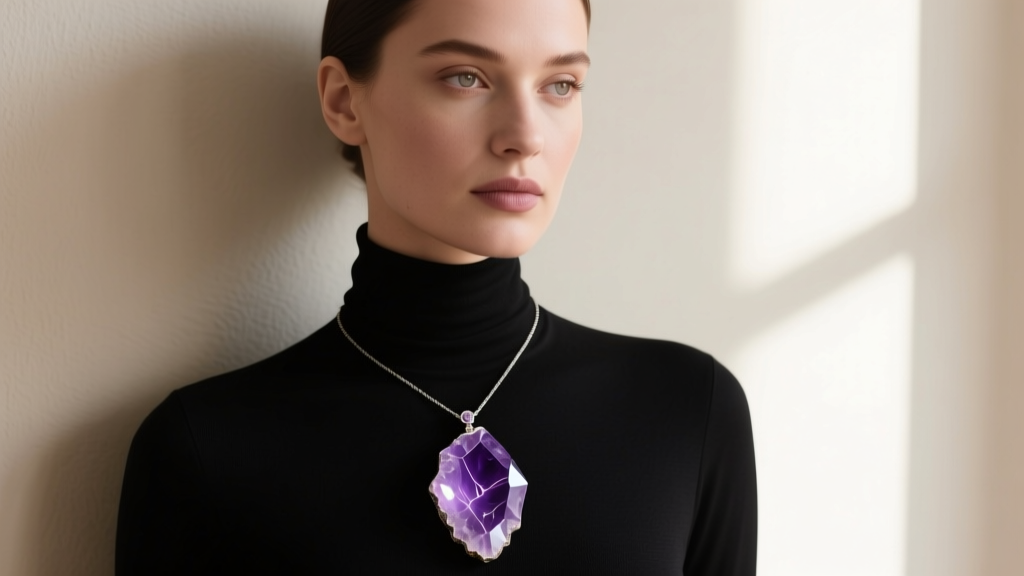
Once you have sourced a truly unique necklace, styling it requires an understanding of visual weight and geometry. Artisan pieces often feature asymmetrical designs, raw uncut gemstones, or heavy geometric metalwork that demands the right canvas.
The Geometric Pairing Framework
- Heavy Mokume Gane or Geometric Pendants: Pair with a high-neck ribbed turtleneck or a structured crew neck. The solid block of fabric provides a high-contrast, distraction-free backdrop that anchors the visual weight of the metal.
- Asymmetrical Raw Geode Pendants: Raw stones (like uncut amethyst or tourmaline) feature jagged, organic edges. These are best styled over a deep V-neck or scoop neck. The V-shape draws the eye downward, following the natural asymmetry of the stone and elongating the neckline.
- Dense Chain Maille Collars: A stiff, woven chain maille collar (usually 14 to 16 inches in length) acts as jewelry and garment in one. Wear it with an off-the-shoulder top or a strapless dress to let the complex metal weave rest directly against the collarbone without competing with fabric folds.
Ultimately, investing in a unique necklace is an exercise in appreciating the slow, deliberate process of metalworking. By understanding the alloys, the mathematics of chain weaves, and the hallmarks of hand-fabrication, you transition from a passive consumer to an informed collector, wearing a piece of art that no one else in the world possesses.


