Southwestern Necklace Guide: Silver, Turquoise & Stone Properties
Compare authentic southwestern necklace materials. Learn to identify sterling silver, natural turquoise grades, coral, and shell properties.

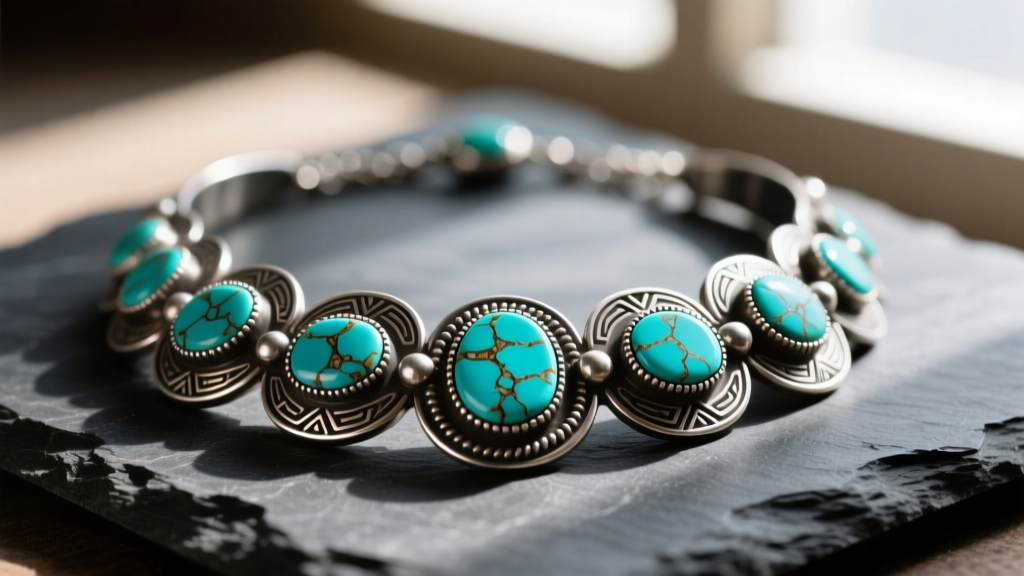
The southwestern necklace is more than a fashion statement; it is a wearable artifact of North American heritage, metallurgy, and lapidary art. As we navigate the jewelry market in 2026, the proliferation of mass-produced, overseas imitations has made material literacy essential for collectors and casual buyers alike. Authentic Southwestern jewelry—rooted in Navajo, Zuni, and Hopi traditions—relies on a specific alchemy of precious metals and porous gemstones. Understanding the exact material properties, grades, and failure modes of these components is the only way to guarantee you are investing in genuine craftsmanship rather than a factory-stamped replica.
The Foundation: Sterling Silver vs. Nickel Silver Alloys
The backbone of any authentic southwestern necklace is its metalwork. Genuine pieces are crafted from .925 sterling silver, an alloy comprising 92.5% pure silver and 7.5% copper. The copper is essential; pure silver is too malleable to hold the intricate stamp work, repoussé, or heavy sandcast bezels required in traditional Navajo and Hopi overlay techniques. However, the copper content is also what causes sterling silver to oxidize and tarnish when exposed to sulfur and humidity.
Conversely, the market is saturated with necklaces labeled as "Nickel Silver," "German Silver," or "Alpaca." Despite the name, these alloys contain exactly 0% silver. They are typically composed of 60% copper, 20% nickel, and 20% zinc. While Alpaca is highly malleable and resists tarnishing better than sterling, it lacks the intrinsic value, the specific acoustic resonance, and the hypoallergenic properties of true silver. Furthermore, the nickel content frequently causes contact dermatitis in sensitive wearers.
Hallmarks and Work-Hardening
Authentic Native American silversmiths stamp their work with a unique hallmark, a practice that gained strict legal backing under the Indian Arts and Crafts Act. When examining a vintage or contemporary piece, look for the artist's initials or clan symbol alongside the ".925" or "Sterling" stamp. Be wary of pieces where the stamp is deeply recessed in a cast piece; traditional Southwestern silver is hand-forged, rolled, and soldered, which work-hardens the metal and gives it a distinct, dense structural integrity that cast Alpaca simply cannot replicate.
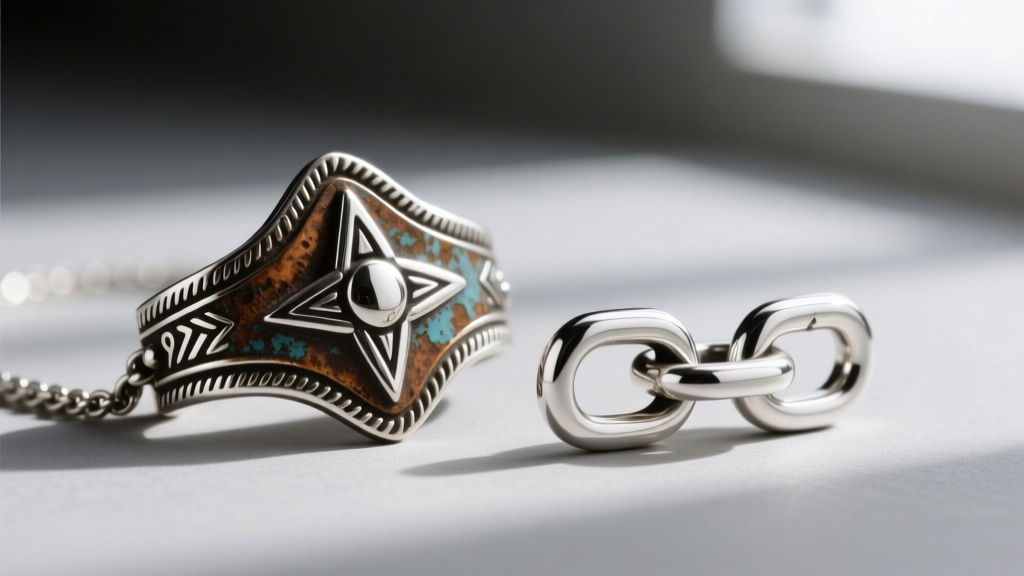
Turquoise: The Heart of Southwestern Pendants
No material defines the southwestern necklace quite like turquoise. A hydrous phosphate of copper and aluminum, turquoise is inherently porous and relatively soft, ranking between 5 and 6 on the Mohs hardness scale. This porosity makes it highly susceptible to discoloration from skin oils, cosmetics, and environmental pollutants. Because of these material properties, the way turquoise is treated dictates its value, durability, and authenticity.
Natural vs. Stabilized vs. Enhanced
In the current 2026 market, understanding turquoise treatments is non-negotiable. Natural turquoise is cut and polished without any chemical alteration. It is rare, expensive, and will naturally change color (developing a greenish patina) as it absorbs oils over decades of wear. High-grade natural stones from closed mines, such as the Sleeping Beauty mine in Arizona (which ceased primary turquoise extraction in 2012), command premium prices exceeding $15 per carat for top-tier, matrix-free sky-blue cabochons.
Stabilized turquoise is not a "fake"; it is a necessary lapidary process for lower-grade, chalky turquoise (Mohs 3-4) that would otherwise crumble during cutting. The stones are placed in a vacuum chamber and infused with a clear epoxy resin or the proprietary Zachery enhancement method. This hardens the stone, deepens the color, and seals the pores, making it highly durable for everyday wear in heavy squash blossom necklaces or bolo ties. Stabilized turquoise is widely accepted in the Southwestern jewelry community, provided it is disclosed by the seller.
What buyers must actively avoid is dyed howlite or magnesite. These are cheap, white, porous stones injected with blue dye to mimic turquoise. They lack the complex matrix (the host rock webbing) of genuine turquoise and will often bleed dye when exposed to acetone or heavy sweat.
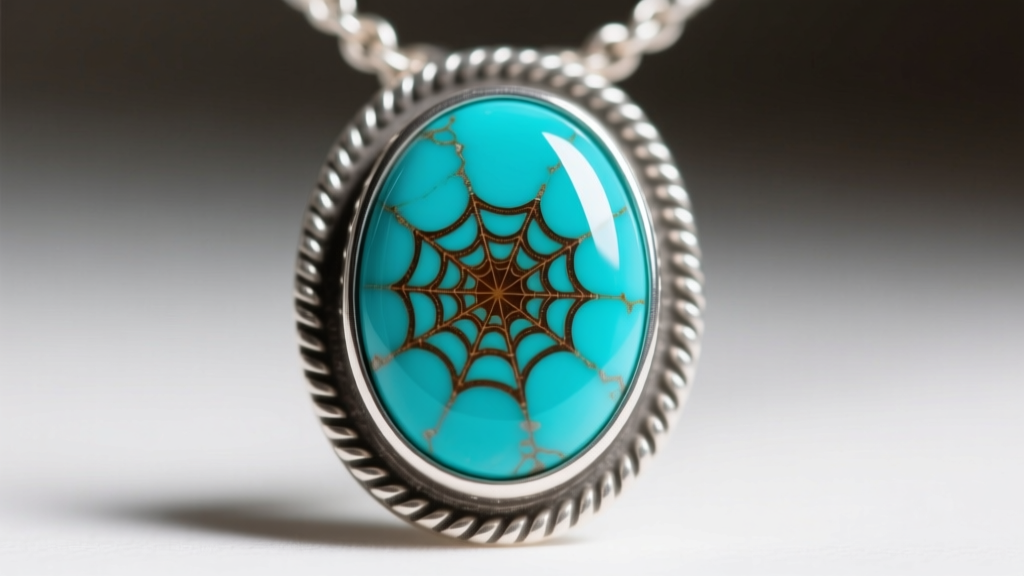
Accent Materials: Coral, Shell, and Lapis Lazuli
While turquoise takes center stage, Zuni and Navajo lapidaries frequently incorporate vibrant accent stones to create striking color contrasts in cluster necklaces and petit point designs.
- Spiny Oyster Shell (Spondylus): Harvested from the Sea of Cortez, this shell is prized for its vivid orange, red, and deep purple hues. Ranking at 3.5 to 4 on the Mohs scale, it is an organic gemstone that requires careful setting. The calcium carbonate structure is highly sensitive to acids, meaning a single drop of citrus juice or vinegar can permanently etch the polished surface.
- Coral: Traditional Southwestern jewelry utilized precious Mediterranean red coral (Corallium rubrum). Due to severe overharvesting and international CITES restrictions, genuine red coral is now exceptionally rare and expensive. Most modern "coral" in mid-tier southwestern necklaces is actually bamboo coral (a deep-sea gorgonian), which is naturally grey and heavily dyed red. While beautiful, bamboo coral lacks the dense, waxy luster of precious red coral and the dye can fade under prolonged UV exposure.
- Lapis Lazuli: Sourced primarily from Afghanistan, high-grade Lapis is a deep, royal blue rock composed of lazurite, calcite, and pyrite. In Southwestern inlay work, the presence of golden pyrite flecks is desirable, but excessive white calcite indicates a lower grade that takes a poor polish and is prone to pitting.
Material Properties and Care Comparison Chart
To make informed purchasing and maintenance decisions, refer to this comparative data matrix detailing the physical properties of common southwestern necklace materials.
| Material | Mohs Hardness | Porosity | Primary Failure Mode | 2026 Avg. Market Price |
|---|---|---|---|---|
| .925 Sterling Silver | 2.5 - 3.0 | Non-porous | Sulfide tarnishing, prong wear | $0.80 - $1.20 / gram (scrap) |
| Natural Turquoise | 5.0 - 6.0 | High | Oil absorption, color shifting | $5.00 - $20.00+ / carat |
| Stabilized Turquoise | 5.5 - 6.5 | Sealed | Resin yellowing (decades) | $1.00 - $4.00 / carat |
| Spiny Oyster Shell | 3.5 - 4.0 | Micro-porous | Acid etching, delamination | $0.50 - $2.00 / carat |
| Dyed Bamboo Coral | 3.0 - 4.0 | High (pre-dye) | UV fading, dye bleeding | $0.10 - $0.50 / carat |
Authenticity Testing and Troubleshooting at Home
When evaluating a southwestern necklace, whether at an estate sale or an online auction, you can perform several non-destructive tests to verify material claims. According to guidelines supported by the Gemological Institute of America (GIA), visual inspection combined with basic physical tests can eliminate 90% of counterfeit stones.
The Acetone and Hot Pin Tests
To test for dyed howlite or magnesite masquerading as turquoise, apply a small drop of pure acetone (nail polish remover) to a cotton swab and rub it gently on an inconspicuous area of the stone's matrix or back. If the swab turns blue, the stone is dyed. For organic materials like coral and shell, the hot pin test is definitive. Heat a sewing needle until it is red hot and touch it to a hidden area of the bead. Genuine coral and shell will not melt and will emit a faint smell of burning bone or hair. Plastic or resin imitations will instantly melt, pit, and smell like acrid chemicals.
Magnet and Ice Tests for Silver
Silver is diamagnetic, meaning it is slightly repelled by magnetic fields. If a heavy silver clasp or naja pendant on a southwestern necklace sticks firmly to a neodymium magnet, it contains a ferromagnetic core (like iron or steel) and is merely silver-plated. Additionally, silver has the highest thermal conductivity of any common metal. If you place an ice cube on a thick sterling silver concho, the ice will begin to melt almost instantaneously, far faster than it would on Alpaca or stainless steel.
"The integrity of a southwestern necklace lies in the transparency of its materials. A master silversmith will never hide the origin of their stones or the purity of their silver. When in doubt, consult the Indian Arts and Crafts Board to verify the legal standards of Native American jewelry authentication."
Ultimately, investing in a genuine southwestern necklace is an investment in geological history and indigenous artistry. By prioritizing .925 sterling silver, understanding the necessity of turquoise stabilization, and recognizing the organic fragility of shell and coral accents, you ensure your collection remains both culturally respectful and materially sound for generations to come.


