Troubleshooting Spiritual Necklaces: Fixing Tarnish & Breakage
Learn how to troubleshoot spiritual necklaces. Expert fixes for tarnished silver amulets, faded porous stones, and broken cords or jump rings.

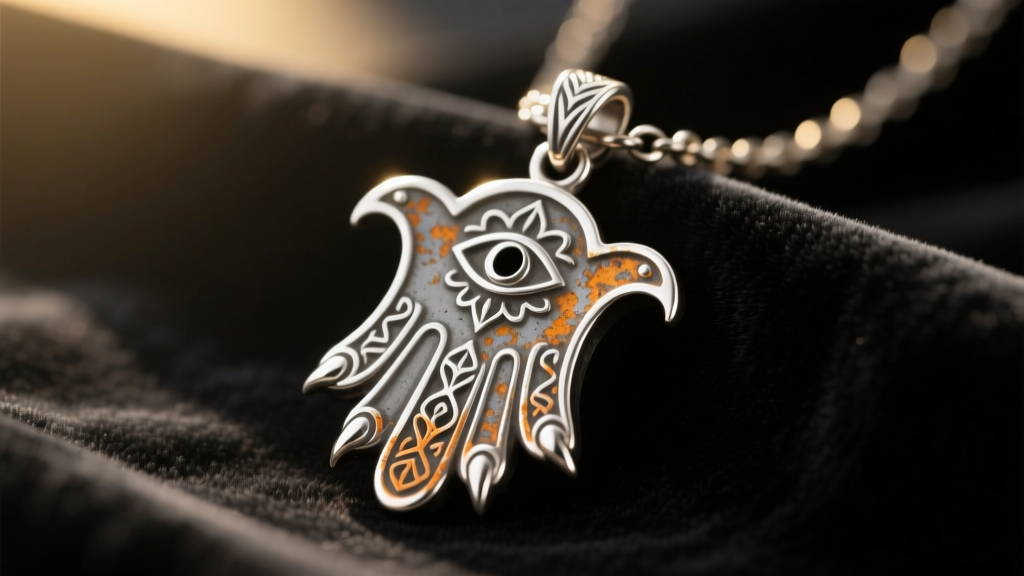
The Unique Vulnerabilities of Spiritual Jewelry
Spiritual necklaces—ranging from mala beads and chakra pendants to evil eye amulets, hamsa charms, and sacred geometry lockets—carry deep personal and cultural significance. However, from a materials science perspective, they present a unique set of maintenance challenges. Unlike standard fashion jewelry, spiritual necklaces are often worn 24/7, exposing them to constant friction, sebum, sweat, and environmental pollutants. Furthermore, they frequently combine mixed media: porous gemstones set in reactive base metals, or heavy metal amulets suspended on delicate organic cords.
When your favorite protective amulet turns black, your turquoise cabochon develops a chalky white haze, or your silk mala cord snaps unexpectedly, it can feel like a bad omen. In reality, these are predictable chemical and mechanical failures. This troubleshooting guide provides actionable, expert-level solutions to restore and protect your most meaningful pieces.
Troubleshooting Matrix: Common Issues & Fixes
Before applying any cleaning solution or attempting a repair, identify the exact material failure. Use the matrix below to diagnose the problem and select the appropriate intervention.
| Component | Symptom | Root Cause | Expert Solution |
|---|---|---|---|
| Silver / Brass Amulets | Black or green surface film | Hydrogen sulfide (tarnish) or copper oxidation | Galvanic aluminum foil bath (silver only) or mild citric acid soak (brass) |
| Turquoise / Lapis Lazuli | Chalky texture, color fading, or dark spots | Absorption of skin oils, lotions, and acidic sweat | Wipe with damp microfiber; avoid ultrasonic cleaners and chemicals |
| Silk / Cotton Cords | Fraying or snapping at the bail | Protein fiber degradation from acidic perspiration | Re-string using bonded nylon (e.g., C-Lon) with a macrame sliding knot |
| Jump Rings / Bails | Pendant detaching or ring pulling open | Insufficient wire gauge for the amulet's weight | Upgrade to 18-gauge or 16-gauge split rings or soldered findings |
Fixing Tarnish on Silver and Brass Amulets
Sterling silver (925) and brass are the most common metals used in spiritual jewelry due to their historical and metaphysical associations. However, both are highly reactive. Silver reacts with sulfur in the air and on the skin to form silver sulfide (black tarnish), while brass (a copper-zinc alloy) oxidizes to form a green or brown patina.
The Danger of Commercial "Dip" Cleaners
Many people reach for commercial liquid dip cleaners (like Tarn-X) to quickly restore a blackened hamsa or evil eye pendant. Do not do this. These chemicals contain thiourea and strong acids that strip away not just the tarnish, but the intentional oxidation (antiquing) applied by the jeweler to highlight the intricate recesses of the design. Furthermore, if your spiritual necklace features glued-in rhinestones, enamel work, or porous stones, the harsh chemicals will dissolve the adhesives and permanently ruin the inlay.
The Galvanic Cleaning Method (For Solid Silver Only)
For solid silver amulets without glued stones or intentional antiquing, use a galvanic reaction to reverse the tarnish safely:
- Line a glass bowl with aluminum foil, shiny side up.
- Place the silver pendant on the foil.
- Add 1 tablespoon of baking soda and 1 teaspoon of salt.
- Pour boiling water into the bowl until the pendant is submerged.
- The sulfur will transfer from the silver to the aluminum foil within 60 seconds. Remove with wooden tongs, rinse, and buff with a jeweler's cloth.
Restoring and Protecting Porous Gemstones
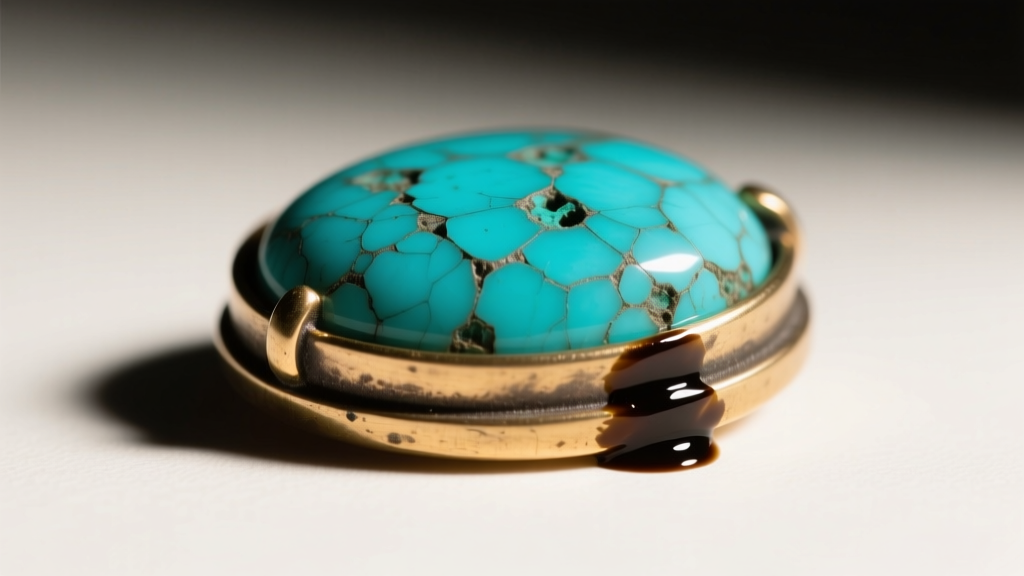
Spiritual necklaces heavily feature chakra stones, mala beads, and protective cabochons like turquoise, lapis lazuli, malachite, and obsidian. According to the Gemological Institute of America (GIA), turquoise is a porous phosphate mineral that ranks between 5 and 6 on the Mohs hardness scale. Its porous nature makes it highly susceptible to chemical absorption.
Why Your Turquoise is Turning Chalky or Dark
When worn against the skin daily, natural turquoise absorbs sebum, sweat, and cosmetics. Over time, this alters the stone's refractive index, making it appear darker or, in extreme cases of dehydration and chemical exposure, chalky and opaque. Lapis lazuli is equally vulnerable; it contains a calcite matrix that will literally dissolve and pit if exposed to mild acids (including the natural lactic acid in human sweat).
The "No-Ultrasonic" Rule
The Jewelers of America strictly advises against using ultrasonic cleaners or steamers on any porous gemstone. The high-frequency vibrations can shatter the internal matrix of stones like malachite (which is a fragile 3.5 on the Mohs scale) and cause stabilized turquoise to craze or crack. Instead, clean your chakra pendants using only a soft, slightly damp microfiber cloth. If a stone has become deeply saturated with oils, a professional lapidary may need to re-polish the cabochon and apply a micro-crystalline wax sealant.
Preventing and Repairing Cord & Chain Failures
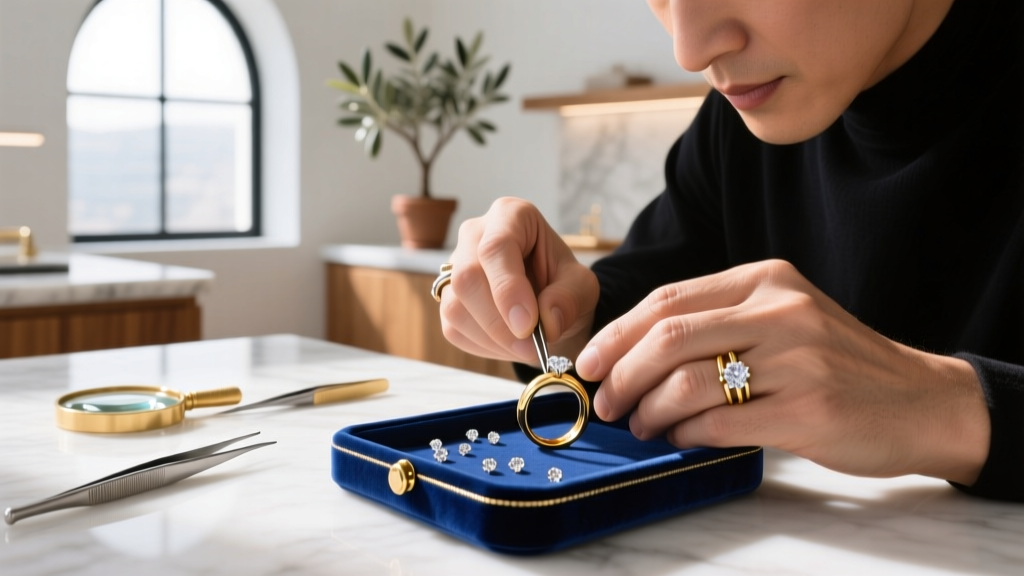
A heavy bronze evil eye or a solid silver Om pendant suspended on a delicate chain or organic cord is a mechanical failure waiting to happen. Troubleshooting hardware requires an understanding of wire gauges and material tensile strength.
Upgrading the Jump Ring
The most common point of failure in spiritual necklaces is the jump ring connecting the pendant bail to the chain. Mass-produced jewelry often uses 22-gauge or 24-gauge open jump rings. A heavy amulet will easily pull a 22-gauge ring open under its own weight if caught on a sweater or subjected to a sudden tug. As noted by jewelry supply experts at Rio Grande, heavy pendants require robust findings. Always upgrade the connection point to an 18-gauge or 16-gauge split ring (which functions like a tiny keyring) or, ideally, a soldered closed ring. This guarantees the pendant will never slip through an open seam.
Replacing Degrading Silk Cords
Traditional mala necklaces and tribal amulets are often strung on silk or cotton cords. Silk is a protein-based fiber; the acidic pH of human sweat breaks down the protein bonds over time, leading to sudden, catastrophic snapping. When re-stringing a spiritual necklace, abandon silk in favor of bonded nylon threads, such as C-Lon or S-Lon. These synthetic alternatives possess immense tensile strength, do not rot from moisture, and mimic the drape of silk. Finish the cord with a macrame sliding square knot rather than a simple overhand knot, securing the very ends with a microscopic drop of GS Hypo Cement to prevent fraying.
When to Seek Professional Intervention
While many maintenance tasks can be performed at home, certain damage requires professional lapidary or bench jeweler intervention. If your sacred geometry pendant features a cracked quartz point, or if the bezel wire holding a fragile piece of moldavite has been pushed back and is exposing the stone's edge, do not attempt a DIY fix. Prying at bezel wire without proper bezel rollers and burnishers will result in scratching the metal or crushing the stone.
"Spiritual jewelry is meant to be lived in, not locked away. The key to preserving its integrity is understanding the specific chemical limits of its materials and upgrading its mechanical weak points before they fail."
Proactive Maintenance Routine
To minimize future troubleshooting, adopt a simple maintenance routine for your spiritual necklaces:
- The Wipe-Down: After wearing a piece heavily during exercise or in high heat, wipe the metal and stones with a dry, lint-free cloth to remove acidic sweat.
- The Last-On, First-Off Rule: Put your spiritual necklaces on after applying perfumes, hairsprays, and lotions, and take them off before showering or swimming (chlorine and saltwater are highly corrosive to brass and copper).
- Anti-Tarnish Storage: When traveling, store silver amulets in a ziplock bag with a 3M anti-tarnish strip to absorb ambient sulfur.
By treating your spiritual necklaces with material-specific care, you ensure that the physical vessel remains as resilient and enduring as the intentions it represents.


