The St Anne Necklace Value Guide: Pricing, Metals & Smart Buys
Discover the true value of a St Anne necklace. Compare pricing tiers, metal grades, and chain types to ensure you pay a fair price for lasting quality.

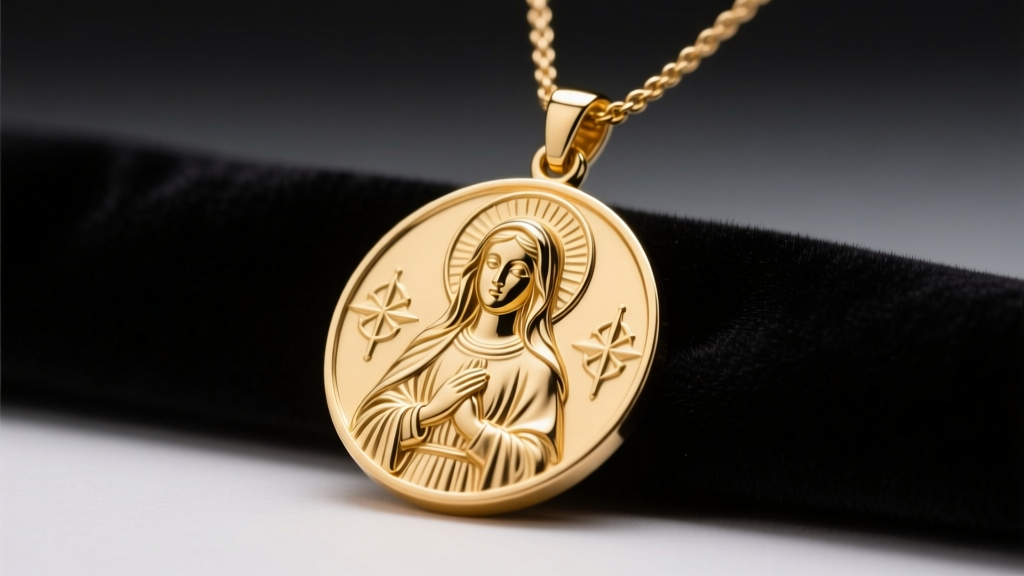
Saint Anne, the mother of the Virgin Mary and patroness of mothers, grandmothers, and women in labor, holds a profound place in the hearts of many. Wearing a St Anne necklace is more than a fashion choice; it is a deeply personal talisman of protection, family heritage, and faith. However, the religious jewelry market is notoriously opaque. From airport gift shops to high-end boutiques, the markup on saint medallions can range from 50% to over 400%. As a consumer in 2026, navigating the true cost of a St Anne necklace requires looking past the packaging and understanding the metallurgy, craftsmanship, and supply chain realities of the piece you are buying.
This comprehensive value assessment breaks down exactly what you should expect to pay for a St Anne necklace, the material grades that dictate longevity, and the structural pitfalls that cause budget chains to snap. Whether you are buying a baptism gift, a Mother's Day heirloom, or a personal daily-wear piece, this guide will ensure your investment matches its intrinsic worth.
Decoding the Price Tiers of St Anne Necklaces
The price of a St Anne medallion necklace is primarily driven by three factors: the base metal, the weight of the pendant, and the retail channel. Below is a realistic breakdown of what you should expect to pay for a standard 15mm to 18mm medallion across different quality tiers.
| Material Grade | Typical Price Range | Expected Lifespan | Tarnish & Allergy Risk |
|---|---|---|---|
| Gold Plated Brass | $25 - $60 | 6 - 12 Months | High (turns skin green, high nickel risk) |
| 925 Sterling Silver | $45 - $120 | 10+ Years | Moderate (tarnishes, easily polished) |
| Gold Vermeil (2.5μm) | $90 - $180 | 2 - 5 Years | Low (if base is strictly 925 silver) |
| 10k Solid Gold | $150 - $250 | Lifetime | Low (highly durable, slight copper tint) |
| 14k Solid Gold | $250 - $450 | Heirloom / Generations | None (hypoallergenic, no tarnish) |
If you are purchasing a piece meant for daily wear—especially for someone who will not take it off to shower or sleep—anything below 925 sterling silver or 10k solid gold is a poor long-term investment. The friction against the skin will wear through thin gold plating in a matter of weeks, exposing the reactive brass or copper base beneath.
Metal Grades and Medallion Crafting Techniques
Beyond the metal itself, the manufacturing technique drastically alters both the price and the visual depth of the St Anne pendant. There are two primary methods used to create religious medallions: die-striking and casting.
Die-Struck (Stamped) Medallions
Die-striking involves using immense hydraulic pressure to stamp a design from a sheet of metal. This process compresses the metal, making it incredibly dense and durable despite being very thin (often less than 1mm thick). Because it uses less raw metal, die-struck St Anne necklaces are significantly cheaper. However, the trade-off is a lack of three-dimensional depth. The facial features of Saint Anne and the lilies she is often depicted holding will appear relatively flat.
Cast Medallions (Lost-Wax Method)
For a premium, heirloom-quality piece, look for cast medallions. Casting allows for a thicker pendant (1.5mm to 2.5mm) with deep, sculptural relief. The intricate folds of St. Anne's robes and the texture of her veil are far more pronounced. Because cast pieces require more raw metal and labor-intensive finishing, a 14k cast St Anne pendant will cost roughly 30% to 40% more than a die-struck equivalent of the same diameter.
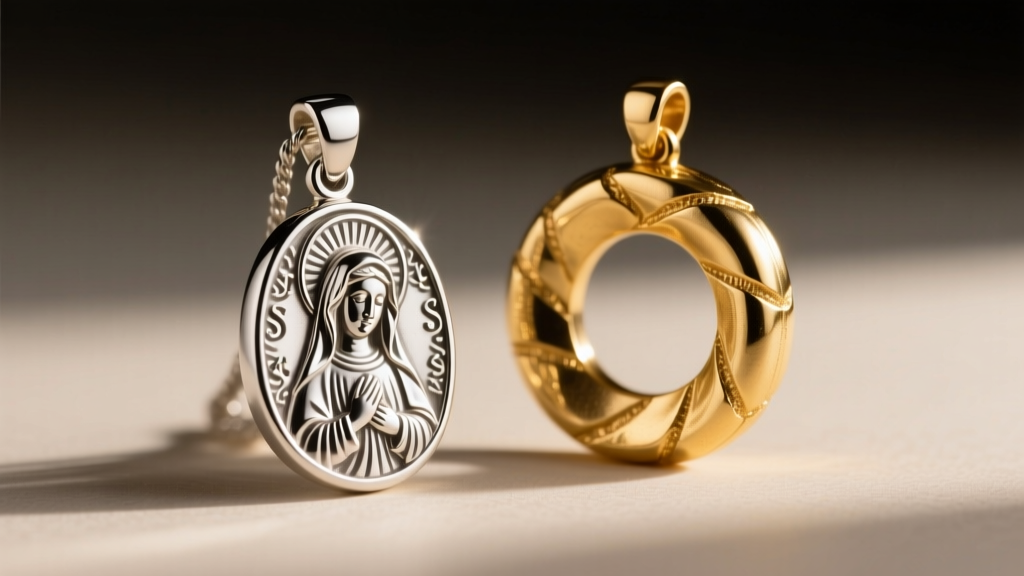
When evaluating vermeil options, it is vital to know the legal standards. According to the Federal Trade Commission Jewelry Guides, a piece can only be legally marketed as 'vermeil' if it consists of a base of 925 sterling silver plated with gold of at least 10 karat fineness, and the gold plating must be at least 2.5 microns thick. Many budget retailers sell 'gold plated silver' that is only 0.5 microns thick, which will wear away rapidly. Always verify the micron thickness before purchasing vermeil.
Chain Selection: Where Budgets Often Fail
A common and costly mistake buyers make is focusing entirely on the St Anne medallion while neglecting the chain. A heavy, cast 14k gold St. Anne pendant weighing 2.5 grams will easily snap a delicate 0.8mm cable chain. The stress concentrates at the solder points of the chain links and the bail (the loop connecting the pendant to the chain), leading to sudden breakage and potential loss of the pendant.
The Weight-to-Thickness Ratio
As a general rule of thumb in jewelry design, the chain should weigh at least 1.5 times the weight of the pendant to ensure structural integrity. For a standard St Anne medallion, consider the following chain recommendations:
- Box Chains (1.2mm - 1.5mm): Excellent for medium-weight medallions. The interlocking square links distribute weight evenly and resist kinking.
- Wheat Chains (1.0mm - 1.5mm): Woven in a continuous pattern, wheat chains offer superior tensile strength and a beautiful, textured aesthetic that complements the ornate nature of religious medallions.
- Rope Chains (1.5mm+): Ideal for larger, heavier 20mm+ St Anne pendants. The twisted links provide immense durability and a high-light-reflective sparkle.
Furthermore, inspect the clasp. Avoid spring-ring clasps for any solid gold or heavy silver pendant; the internal springs fail frequently. Insist on a sturdy lobster clasp or a secure box clasp with a safety figure-eight catch.
Engraving, Customization, and Hidden Markups
Many buyers choose to engrave the reverse side of a St Anne medallion with a baptism date, a child's name, or a short prayer like 'Pray For Us'. The value and cost of this service vary wildly depending on where you shop.
Mall kiosks and tourist shops often charge $25 to $50 for basic machine engraving, which is a massive markup for a service that takes three minutes. Conversely, specialized online religious jewelers and direct-to-consumer gold brands frequently offer complimentary or low-cost ($10-$15) laser engraving as a value-add to secure the sale. Laser engraving is vastly superior to traditional rotary drag engraving for medallions, as it does not remove metal or weaken the structural integrity of a thin die-struck piece. If you are buying a solid gold St Anne necklace, always seek out a jeweler who utilizes fiber-laser engraving for crisp, permanent, and non-destructive personalization.
Where to Buy (and Where to Avoid)
The venue of your purchase heavily influences the price-to-value ratio of your St Anne necklace.
Avoid: Tourist Traps and Generic Mall Kiosks
Gift shops located near major basilicas, shrines, or airports often carry the highest markups in the industry. A 925 silver St Anne necklace that costs $30 to manufacture may be priced at $120 or more in these locations, capitalizing on the emotional and spiritual impulse of the buyer. Furthermore, these venues rarely provide detailed metallurgical disclosures regarding plating thickness or base metals.
Seek: Specialized Religious Jewelers and Direct-to-Consumer Brands
For the best value, purchase from established religious jewelry specialists (such as Invita or Bliss) or modern direct-to-consumer fine jewelry brands that offer customizable saint medallions. These retailers operate with lower overhead and provide transparent spec sheets detailing the exact gram weight, metal purity, and chain origin. The Gemological Institute of America (GIA) consistently advises consumers to buy from retailers who provide transparent, verifiable information regarding gold karatage and alloy compositions, ensuring you are not overpaying for under-karated metals.

The Value Verdict: Cost-Per-Wear Analysis
When assessing the budget for a St Anne necklace, it is highly effective to use a 'cost-per-wear' framework. A $40 gold-plated brass necklace that tarnishes, turns the wearer's skin green, and breaks after four months of daily wear has a high cost-per-wear and ultimately ends up in a landfill. It is a poor financial and sentimental investment.
Conversely, a $350 solid 14k gold cast St Anne necklace with a 1.2mm wheat chain is designed to withstand decades of continuous wear, including exposure to water, sweat, and cosmetics. Over a 20-year period, the cost-per-wear drops to mere pennies. More importantly, a solid gold religious medallion retains intrinsic scrap value and becomes a genuine family heirloom that can be passed down to a daughter or granddaughter. When it comes to honoring the patroness of mothers and grandmothers, investing in the enduring permanence of solid gold or high-grade sterling silver is not just a smart financial decision—it is a deeply meaningful one.


