Troubleshooting Large Necklaces: Fixing Weight and Clasp Issues
Solve common issues with large necklaces. Learn how to fix neck strain, prevent clasp breakage, and balance heavy statement chains for all-day comfort.

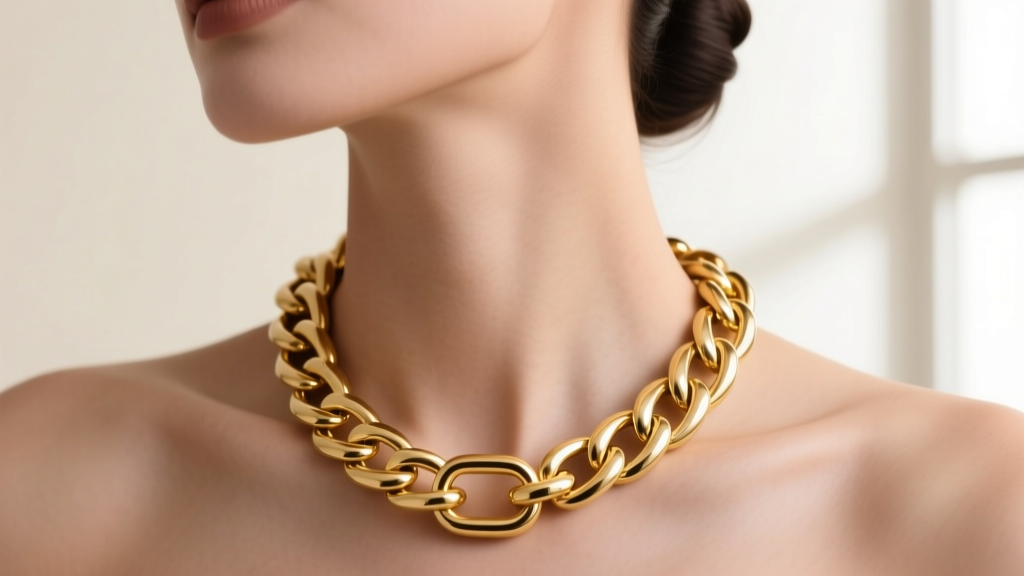
Wearing large necklaces often comes with a hidden tax: physical discomfort and mechanical failure. While an oversized gemstone pendant or a thick, heavy curb chain makes a brilliant style statement, the physics of wearing pieces that exceed 80 grams (roughly 2.8 ounces) introduces a host of structural and ergonomic problems. From the dreaded 'necklace flip' to catastrophic clasp failures and cervical strain, heavy jewelry requires specialized troubleshooting.
In this comprehensive guide, we break down the exact mechanical reasons your favorite statement pieces fail, and provide actionable, jeweler-grade solutions to fix them.
The Physics of the 'Necklace Flip' and Chain Tangle
One of the most frustrating issues with large necklaces is the pendulum effect. You center a heavy pendant on your chest, but within minutes, it slides to your collarbone or flips entirely to the back of your neck. This happens because the center of gravity of the pendant is lower than the anchor points of the chain on your shoulders. As you move, the heavy front acts as a pendulum, seeking the path of least resistance and sliding upward along the sloped curve of your neck.
The Counterweight Solution
To solve this, you must artificially manipulate the necklace's center of gravity. Jewelers use a technique called counterbalancing. By attaching a decorative counterweight to the back of the chain (near the clasp), you anchor the back of the necklace, preventing the heavy front from sliding forward.
- The 20% Rule: Your counterweight should be approximately 15% to 20% of the total weight of the front pendant. If your oversized quartz pendant weighs 100 grams, a 15-20 gram metallic charm or weighted clasp tag at the nape will stabilize the piece.
- Clasp Tags: Instead of dangling a charm, upgrade to an oversized, weighted clasp tag (often called a 'heart tag' or 'logo tag') that naturally rests at the base of the neck.
Clasp Failures: Why Your Heavy Chain Keeps Breaking
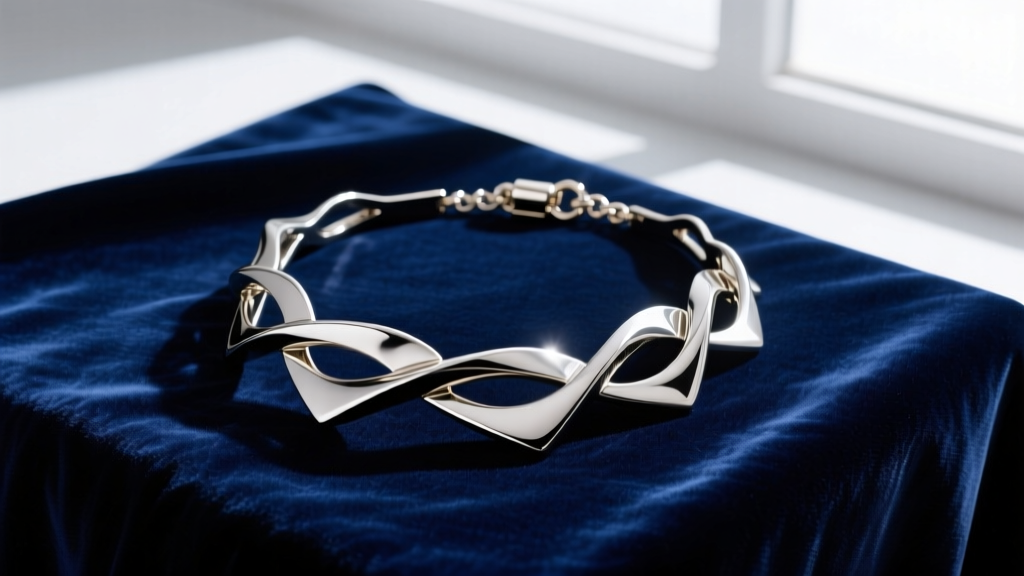
If you have ever lost a valuable piece of jewelry, you likely know that the clasp is the weakest link. Standard jewelry findings are engineered for delicate chains weighing under 30 grams. When you hang large necklaces from inadequate clasps, the metal fatigues, bends, or snaps entirely. According to manufacturing standards outlined by jewelry supply authority Rio Grande, selecting the right clasp requires matching the finding's tensile strength to the static and dynamic load of the chain.
| Clasp Type | Max Weight Capacity | Best For | Primary Failure Mode |
|---|---|---|---|
| Spring Ring (Standard) | Up to 30g | Delicate cable chains | Internal spring fatigue and lever snap |
| Lobster (10mm-12mm) | 30g - 80g | Medium-weight chains | Lever arm bending under dynamic load |
| Lobster (15mm+) | 80g - 150g | Heavy statement chains | Jump ring deformation at the attachment point |
| Toggle (25mm+ bar) | 150g - 300g+ | Oversized bibs and thick chains | Bar slipping through the O-ring if too short |
Upgrading Your Findings
For large necklaces, abandon the spring ring entirely. If you prefer a lobster clasp, you must upgrade to a 15mm or 18mm cast lobster clasp, and crucially, you must solder the jump rings shut. An open jump ring will pull apart under the dynamic stress of a swinging heavy pendant. For pieces exceeding 150 grams, a heavy-duty toggle clasp is the gold standard. Ensure the toggle bar is at least 25mm long; any shorter, and the weight of the necklace will pull the bar vertically, allowing it to slip right through the O-ring.
Ergonomics: Preventing Neck Strain and Fabric Damage
The human cervical spine is not designed to support concentrated, localized weight for extended periods. Wearing large necklaces that exceed 120 grams for more than four hours can lead to trapezius fatigue, tension headaches, and localized skin abrasion. Furthermore, heavy jewelry acts like a wrecking ball against delicate fabrics, causing micro-tears in silk, chiffon, and fine knits.
Optimal Gauge and Link Styles
As noted in metallurgical guides from Halstead Bead, the structural integrity of the chain itself dictates how weight is distributed across the neck. A 1.5mm cable chain will dig into the skin like a wire, concentrating the force on a tiny surface area. To prevent this, you must increase the surface area of the chain.
- Curb and Figaro Chains: These lay flat against the skin, distributing the weight of the necklace across a wider band of the neck. Look for gauges of 3.0mm or thicker.
- Wheat (Spiga) Chains: The woven, multi-directional links of a wheat chain offer exceptional tensile strength and a smooth, rounded profile that prevents skin pinching.
- Avoid Box Chains: While visually substantial, the 90-degree angles inside box chain links act as stress concentrators. Under the weight of a heavy pendant, box chains are highly prone to kinking and permanent deformation.
Protecting Your Wardrobe
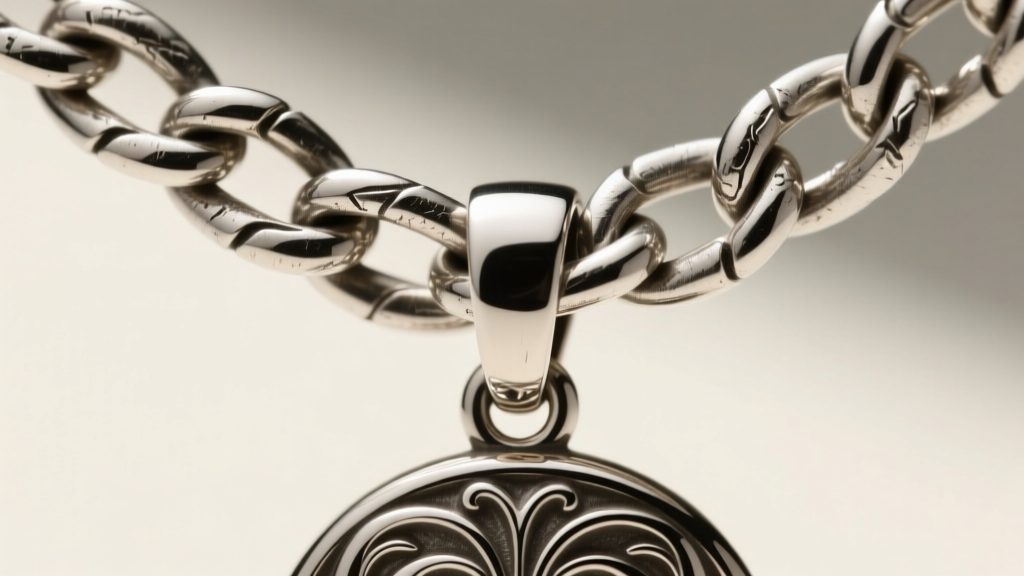
Heavy pendants often feature micro-prong settings or intricate metalwork with microscopic burrs. When a 100-gram pendant swings against a silk blouse, those tiny burrs act like saw blades. To troubleshoot this, have a jeweler run a polishing cloth and a light buffing wheel over the backplate and prongs of the pendant to ensure a glass-smooth finish. Alternatively, opt for bezel-set gemstones, which enclose the edges of the stone in a smooth metal rim, eliminating snag points entirely.
Metallurgy Matters: Work-Hardened vs. Annealed Silver
If you are buying large necklaces in sterling silver, you must understand the difference between annealed and work-hardened metal. Annealed silver is soft and pliable. If a heavy pendant is hung on an annealed silver chain, the links will slowly stretch and oval out over time, eventually snapping. Work-hardened silver has been mechanically stressed (through drawing, hammering, or tumbling) to increase its yield strength. Always ask the jeweler if their heavy chains are work-hardened, or look for descriptions like 'hard-drawn' or 'tumbled' when purchasing online.
Quick Troubleshooting Checklist for Heavy Jewelry
Before wearing your favorite statement piece out for the evening, run it through this quick diagnostic checklist to ensure it will survive the night:
- The Shake Test: Hold the necklace by the clasp and give it a gentle shake. Do the jump rings open? If so, take it to a jeweler to have them laser-welded or soldered shut.
- The Glide Test: Run the back of the pendant across a piece of sheer nylon or a microfiber cloth. If it catches, the prongs or backing need professional polishing.
- The Balance Test: Put the necklace on and walk around for three minutes. If the pendant migrates to the side, attach a 15-gram counterweight charm to the back clasp.
- The Clasp Check: Ensure the clasp lever springs back with a sharp, audible 'snap'. A sluggish lever indicates internal spring fatigue and imminent failure.
By treating your jewelry as a mechanical system rather than just an accessory, you can comfortably wear the most dramatic, oversized pieces in your collection without fear of breakage or discomfort.


