Star of David Gold Necklace Guide: 14k, 18k & 24k Compared
Compare 14k, 18k, and 24k gold for your Star of David gold necklace. Learn about durability, alloy mixes, pricing, and the best karat for daily wear.

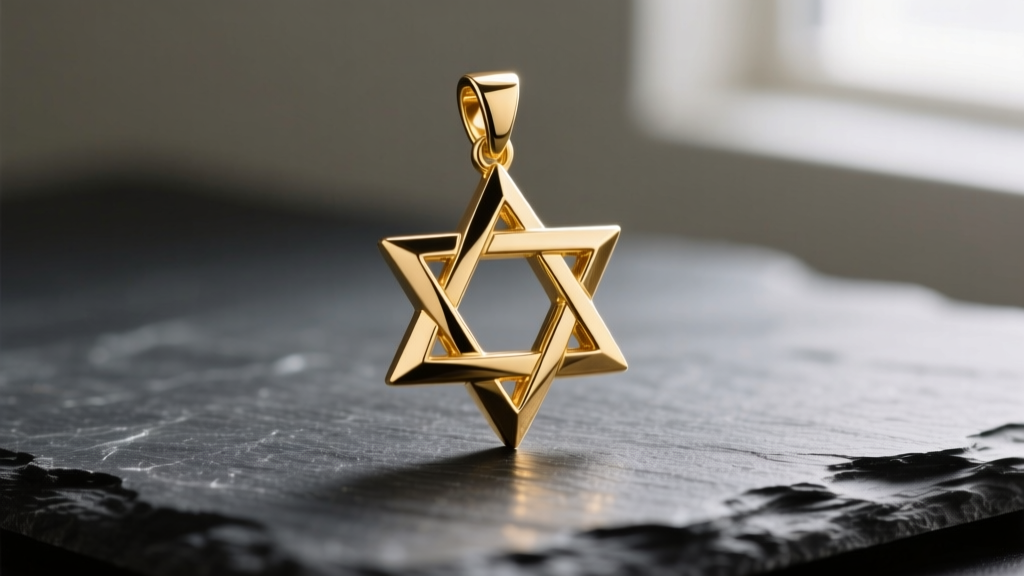
When selecting a Star of David gold necklace, you are choosing more than just a piece of jewelry; you are investing in a profound symbol of Jewish identity, faith, and heritage. Known in Hebrew as the Magen David (Shield of David), this hexagram is often worn daily, passing from generation to generation as a cherished heirloom. Because of its constant contact with the skin and exposure to the elements, the metallurgical properties of the gold you choose are just as important as the design itself.
In 2026, jewelers offer the Star of David in a variety of gold alloys, each with distinct hardness levels, color profiles, and maintenance requirements. Understanding the difference between 14k, 18k, and 24k gold—and how alloying metals like copper, silver, and palladium alter the pendant's behavior—will ensure your necklace withstands the test of time without bending, tarnishing, or losing its luster.
Decoding Gold Karats: 14k vs. 18k vs. 24k
Pure gold is measured in karats, with 24k representing 99.9% gold content. However, pure gold is inherently soft. To create durable jewelry, master jewelers alloy gold with other metals. According to the Gemological Institute of America (GIA), the karatage directly dictates the tensile strength and scratch resistance of your Star of David pendant.
24k Gold: Pure but Fragile
A 24k Star of David gold necklace boasts an unmatched, rich orange-yellow hue that is deeply traditional. However, with a Vickers hardness (HV) of roughly 25, 24k gold is exceptionally malleable. If you opt for a 24k pendant, it must be a thick, solid cast piece. Intricate cutout designs, diamond accents, or thin stamped pendants will quickly warp, bend, or lose their shape if caught on a sweater or pulled. Furthermore, 24k gold is rarely used for chains because the links will stretch and snap under the weight of the pendant.
18k Gold: The Luxury Balance
Comprising 75% pure gold and 25% alloy metals, 18k gold offers a spectacular compromise. It retains the deep, warm saturation of pure gold while achieving a Vickers hardness of approximately 120-130 HV. An 18k Star of David pendant is ideal for heirloom-quality pieces, especially those featuring milgrain detailing, enamel inlays, or small diamond chips. It is durable enough for daily wear, though it will develop a soft patina over years of friction.
14k Gold: The Everyday Workhorse
For those with active lifestyles, a 14k Star of David gold necklace is the ultimate pragmatic choice. Containing 58.3% gold and 41.7% alloy metals, 14k gold reaches a Vickers hardness of 140-160 HV. It is highly resistant to scratching, denting, and deformation. While the color is slightly paler than 18k, modern rhodium plating (for white gold) and precise copper-silver ratios (for yellow gold) make 14k visually stunning and structurally superior for lightweight, delicate chains and pendants.
Material Properties Comparison Chart
To make an informed decision, review the metallurgical data below. This table breaks down the exact properties you can expect from different gold purities when fashioned into a Magen David pendant.
| Karat | Gold Purity | Vickers Hardness (HV) | Tarnish Risk | Best Use Case | Approx. Retail Premium |
|---|---|---|---|---|---|
| 24k | 99.9% | ~25 HV | None | Thick, solid cast pendants; investment pieces | High (Pure gold weight) |
| 22k | 91.6% | ~70 HV | Very Low | Traditional Middle Eastern/Indian designs | High |
| 18k | 75.0% | ~125 HV | Low | Heirloom pendants, diamond-set stars | Medium-High |
| 14k | 58.3% | ~150 HV | Moderate | Active daily wear, lightweight chains | Medium |
| 10k | 41.7% | ~170 HV | High | Budget-friendly, high-impact sports | Low |
Color Variations: Yellow, White, and Rose Gold Alloys
The visual impact of your Star of David gold necklace is heavily influenced by the alloying metals used. According to the World Gold Council, altering the copper, silver, and palladium ratios creates distinct color profiles, each with unique chemical behaviors.
Yellow Gold: The Classic Standard
Yellow gold alloys typically mix pure gold with equal parts silver and copper. In 14k yellow gold, the higher silver content can sometimes lead to minor surface oxidation (tarnish) over decades, requiring occasional polishing. However, it remains the most traditional and recognizable choice for the Magen David, symbolizing warmth and historical continuity.
Rose Gold: The Copper-Heavy Alloy
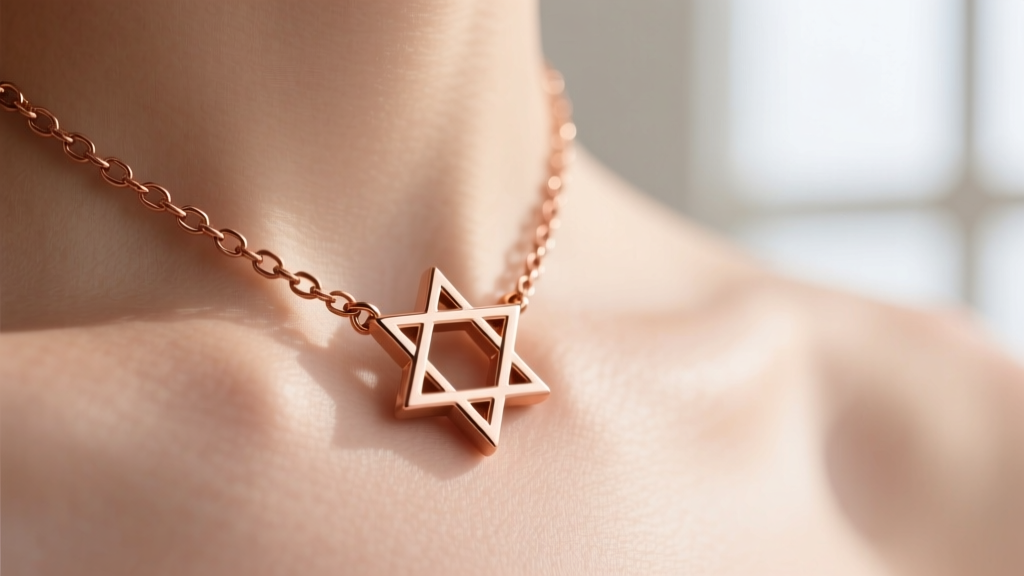
Rose gold achieves its pinkish-red hue by dramatically increasing the copper content while reducing silver. A 14k rose gold Star of David might contain up to 35% copper. Expert Warning: High copper content can react with acidic skin pH or lotions, occasionally leaving a harmless green residue on the chest. If you have highly acidic skin chemistry, stick to 18k rose gold (which uses less copper) or apply a clear jewelry sealant to the back of the pendant.
White Gold: The Rhodium Factor
White gold is created by alloying gold with white metals like palladium, nickel, or manganese. However, natural white gold still has a faint yellowish tint. To achieve a brilliant, mirror-like silver finish, jewelers plate the pendant in rhodium. Failure Mode: Rhodium plating on the high-friction edges of the Star of David will wear off in 1 to 3 years, revealing the pale yellow alloy beneath. Budget for a $50-$100 professional replating every few years to maintain the crisp, modern aesthetic.
Chain Selection: Matching the Karat and Gauge
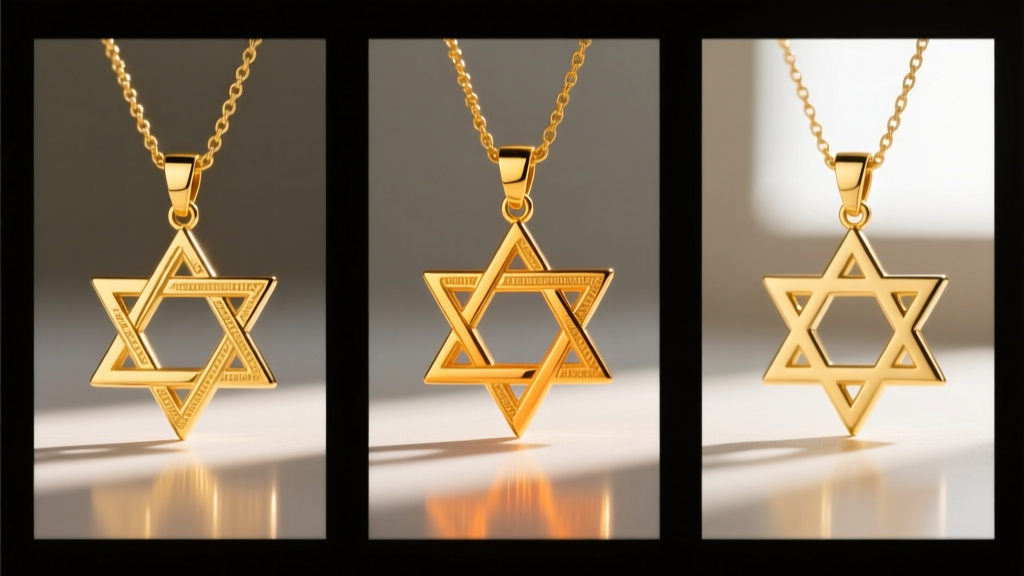
A common mistake buyers make is pairing a heavy, solid 18k Star of David pendant with a delicate, hollow 14k chain. The friction between the pendant's bail (the loop at the top) and the chain links acts like a saw. Over time, a harder or heavier pendant will literally cut through a softer or thinner chain.
Jeweler's Rule of Thumb: The pendant's bail should never rest on a chain link that is thinner than the bail wire itself. Friction is the enemy of precious metals.
Gauge and Weight Ratios
- Pendants under 3 grams: A 1.0mm to 1.2mm cable or box chain is sufficient.
- Pendants between 3 and 8 grams: Upgrade to a 1.5mm to 2.0mm rope or Cuban link chain to distribute the weight and prevent bail friction.
- Pendants over 8 grams: Use a solid 2.5mm+ Figaro or wheat chain with a heavy-duty lobster clasp. Avoid spring-ring clasps entirely, as the internal springs will fail under the pendulum swing of a heavy Magen David.
Pro Tip: Always ensure the chain's karat is equal to or harder than the pendant's karat. A 14k chain will safely support an 18k pendant, but an 18k chain may wear down if paired with a steel or tungsten pendant.
Care, Tarnish, and Skin Sensitivities
Maintaining a Star of David gold necklace requires understanding its specific alloy vulnerabilities. While pure gold does not tarnish, the alloy metals do.
Nickel Allergies in White Gold
If you experience contact dermatitis, redness, or itching where the pendant rests on your sternum, you may be reacting to nickel, a common and inexpensive whitening agent in lower-grade white gold. To avoid this, specifically seek out nickel-free white gold (alloyed with palladium) or switch to platinum for the chain and pendant setting.
Safe Cleaning Protocols
For routine cleaning of your Star of David pendant, avoid harsh chemical dips or ultrasonic cleaners, especially if the piece features enamel, turquoise, or opal inlays. Instead, use a few drops of mild, phosphate-free dish soap in lukewarm water. Gently scrub the crevices of the hexagram with a soft-bristled baby toothbrush, rinse thoroughly, and pat dry with a microfiber cloth. This removes sebum, dead skin cells, and environmental pollutants that dull the gold's refractive properties.
Final Verdict: Which Karat Should You Choose?
The ideal Star of David gold necklace depends entirely on your lifestyle and budget. If you are purchasing a generational heirloom to be worn on special occasions and kept in a safe, 18k yellow gold provides the most breathtaking, rich color and sufficient durability. If you are an active professional, athlete, or someone who never takes their jewelry off, 14k gold is the undisputed champion of longevity, offering superior scratch resistance and structural integrity for both the pendant and the chain. Avoid 24k gold for daily wear unless the piece is exceptionally thick and heavily weighted.
By matching the metallurgical properties of the gold to your daily habits, you ensure that your Magen David remains a brilliant, unyielding symbol of faith for decades to come.


