How to Value a Star of David Necklace: Price & Metal Guide
Discover how to evaluate a Star of David necklace. We break down metal weights, karat pricing, and chain costs to help you find true value.

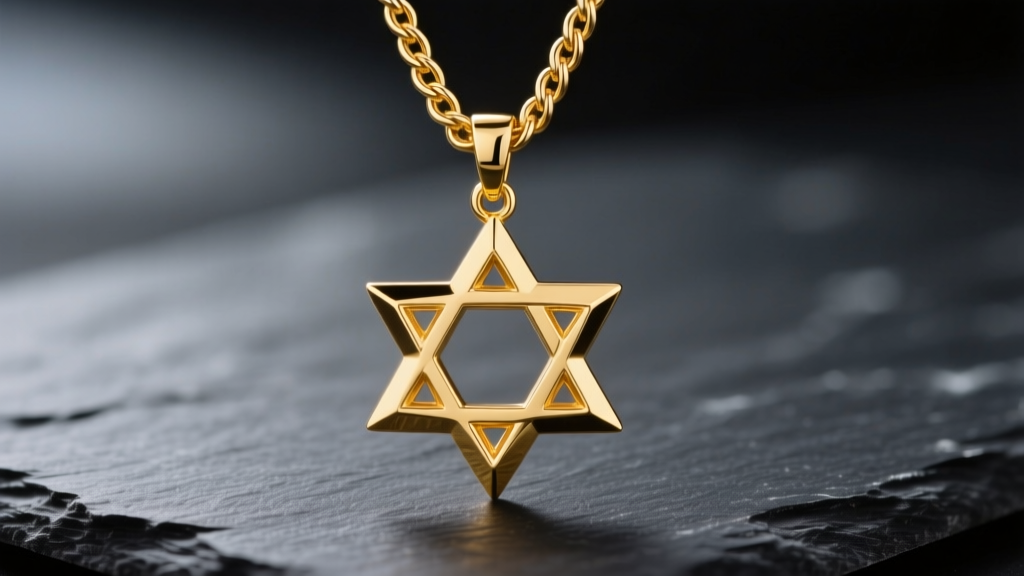
The Economics of Faith: Understanding True Jewelry Value
The Star of David (Magen David) is a profound symbol of Jewish identity, heritage, and faith. When shopping for a star of david necklace, consumers are often confronted with a dizzying array of prices. You can find seemingly identical pendants ranging from $35 at a mall kiosk to over $3,500 at a high-end boutique. This massive price discrepancy is rarely just about brand prestige; it is deeply rooted in metallurgy, manufacturing techniques, and hidden hardware costs.
As a buyer in the 2026 market, where precious metal spot prices have experienced significant volatility, understanding the intrinsic value of your jewelry is more critical than ever. This guide strips away the marketing fluff and provides a rigorous, data-driven framework for assessing the true budget and value of Star of David necklaces, ensuring you pay for quality, not just markup.
The Core Value Drivers: Metal Purity and Melt Math
The foundation of any fine jewelry piece is its raw material. To accurately assess value, you must understand the difference between intrinsic melt value and retail pricing. According to the Gemological Institute of America (GIA), gold purity is measured in karats, which directly dictates both the durability and the baseline cost of the piece.
Sterling Silver (925) vs. Gold Vermeil
Sterling silver is the most budget-friendly entry point. A solid 925 silver Star of David pendant weighing 4 grams has an intrinsic silver value of roughly $3 to $4, based on recent spot prices. Retail prices typically range from $40 to $90, reflecting the design, labor, and overhead. Gold vermeil (a thick layer of gold over sterling silver) offers a gold look at a silver price, but be aware that the gold layer will eventually wear off with daily friction, making it a poor long-term value investment compared to solid gold.
Solid Gold: Calculating the Karat Premium
Solid gold is priced based on weight and purity. Here is the exact math you should use when evaluating a 14k gold necklace:
- 10K Gold (41.7% pure): The most affordable and durable solid gold option. Ideal for active lifestyles, but has a slightly paler yellow hue.
- 14K Gold (58.5% pure): The industry standard for fine jewelry. It offers the perfect balance of rich color, durability, and value retention.
- 18K Gold (75.0% pure): Prized for its deep, saturated yellow color, but softer and significantly more expensive. Often reserved for high-end, heirloom-quality pendants.
The Value Formula: If the spot price of gold is $2,300 per troy ounce, one gram of pure 24k gold costs roughly $73.95. A 14k gold alloy contains 58.5% pure gold, making the intrinsic melt value of one gram approximately $43.26. If a jeweler sells a 4-gram 14k star of david necklace for $850, you are paying roughly $676 in retail markup, design, and overhead. A fair retail markup for cast jewelry is typically 2.5x to 4x the melt value. If the markup exceeds 6x, you are overpaying.
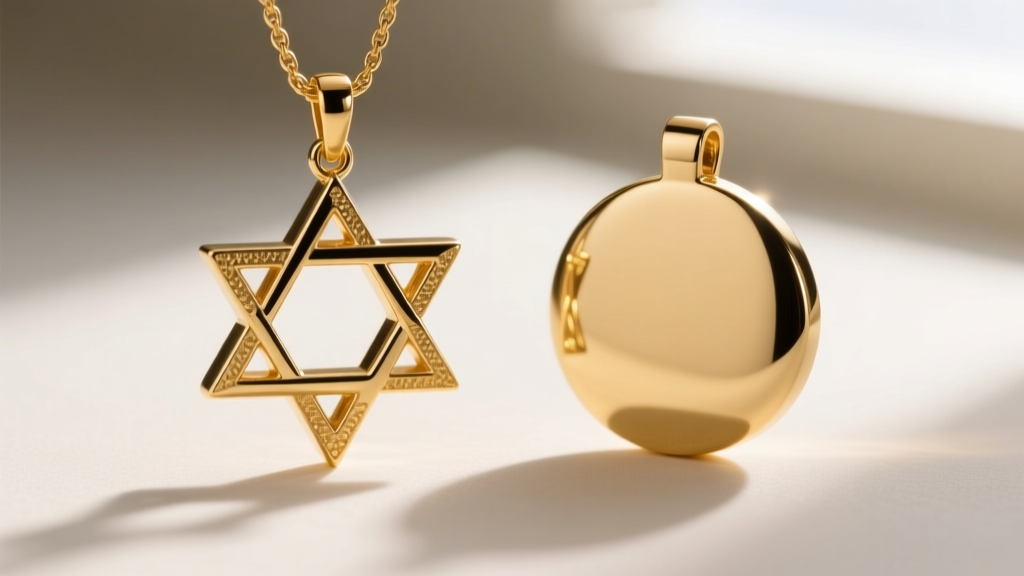
Manufacturing Methods: Solid Cast vs. Hollow Electroforming
Two Star of David pendants can look identical in a display case but have wildly different weights and values. This is where manufacturing methods dictate your budget.
Die-Struck and Solid Cast
Solid cast pendants are created by pouring molten gold into a mold. They are heavy, durable, and can be easily repaired or polished if scratched. A solid 1-inch 14k gold Magen David will typically weigh between 3.5 and 6 grams. You are paying for longevity and heirloom potential.
Hollow and Electroformed Gold
To create large, impressive-looking pendants at a lower price point, manufacturers use hollow casting or electroforming. A 2-inch hollow pendant might weigh only 1.8 grams. While this saves money upfront, hollow jewelry is highly susceptible to denting and is virtually impossible to repair if crushed. Budget Rule: Always ask for the exact gram weight before purchasing. If a large pendant feels suspiciously light, it is hollow, and the price should reflect the minimal gold content.
The Hidden Cost: Chain Selection and Hardware
Many buyers focus entirely on the pendant and forget that the chain often accounts for 40% to 60% of the total gold weight and cost of a star of david necklace. The style, gauge (thickness), and clasp type drastically alter the final price.
| Chain Style | Typical Gauge (mm) | Durability | Price Impact |
|---|---|---|---|
| Cable Chain | 0.8mm - 1.2mm | Moderate (can kink) | Low (Baseline) |
| Box Chain | 0.9mm - 1.5mm | High (resists tangling) | Medium (+20% over cable) |
| Rope Chain | 1.5mm - 3.0mm | Very High (dense weave) | High (+80% to +150% over cable) |
| Wheat (Spiga) Chain | 1.0mm - 2.0mm | High (intricate braiding) | High (+100% over cable) |
Hardware Check: Always inspect the clasp. A sturdy lobster clasp is essential for chains weighing over 10 grams. Spring-ring clasps are cheaper to produce but fail frequently and should only be used on very fine, lightweight chains (under 1.0mm).
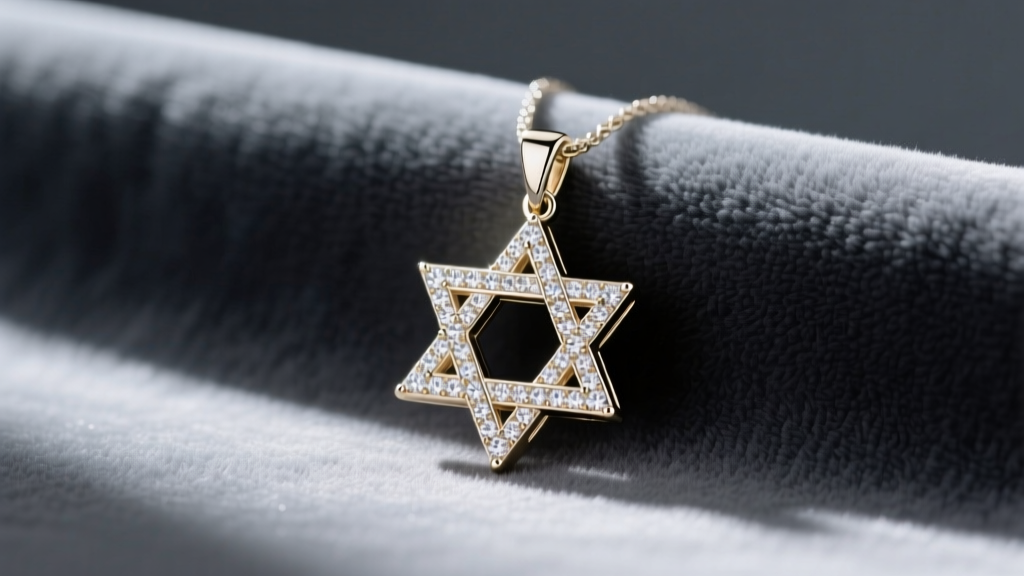
Diamond and Gemstone Accents: Are They Worth the Premium?
Adding diamonds to one or both triangles of the Star of David elevates the aesthetic, but it also complicates the value assessment. Most diamond-accented pendants utilize 'melee' diamonds—small stones weighing less than 0.15 carats each.
Jewelers typically use SI2-I1 clarity and I-J color grades for these accents. While they provide brilliant sparkle from a distance, their wholesale value is relatively low. According to industry pricing data tracked by sources like Kitco and diamond wholesale markets, melee diamonds of this grade cost roughly $150 to $300 per carat. Therefore, a pendant featuring 0.25 total carat weight of melee diamonds should only command a $75 to $150 premium over the plain gold version. If a jeweler attempts to charge a $600 premium for a quarter-carat of ungraded melee diamonds, walk away.
2026 Market Pricing Tiers: What You Should Actually Pay
To help you benchmark your purchase, here is a realistic pricing framework for a standard 1-inch (25mm) Star of David pendant paired with an 18-inch, 1.0mm chain, based on current precious metal averages:
- The Budget Tier ($80 - $150): Solid 925 Sterling Silver or high-quality gold vermeil. Expect a 3-5 gram pendant on a lightweight silver or vermeil cable chain. Excellent for everyday wear on a strict budget.
- The Accessible Fine Tier ($350 - $600): 10K or 14K solid yellow or white gold. The pendant will likely be die-struck or lightly cast, weighing 2.5 to 4 grams, paired with a sturdy 1.0mm box chain. This is the sweet spot for value and longevity.
- The Heirloom Tier ($900 - $1,800): Solid 14K or 18K gold with substantial weight. Expect a fully solid cast pendant weighing 6 to 10 grams, suspended on a 1.5mm to 2.0mm rope or wheat chain. This tier offers exceptional melt value and generational durability.
- The Luxury Diamond Tier ($1,500 - $3,000+): 14K or 18K solid gold featuring 0.50 to 1.00 carat total weight of VS-SI clarity, G-H color diamonds. At this price point, demand a grading report or detailed receipt specifying the exact diamond quality.
Final Verdict: Buying with Confidence
Evaluating a star of david necklace requires looking past the emotional resonance of the symbol and scrutinizing the physical realities of the jewelry. By calculating the gram weight, verifying the manufacturing method, and understanding the true cost of chains and melee diamonds, you transition from a passive shopper to an informed investor. Always demand transparency regarding metal weight and purity, and choose pieces that align not just with your budget, but with the enduring legacy the Star of David represents.


