Stella and Dot Essential Fringe Necklace: Expert Review
An expert technical review of the Stella and Dot Essential Fringe Necklace, analyzing metallurgy, clasp mechanics, and advanced layering frameworks.

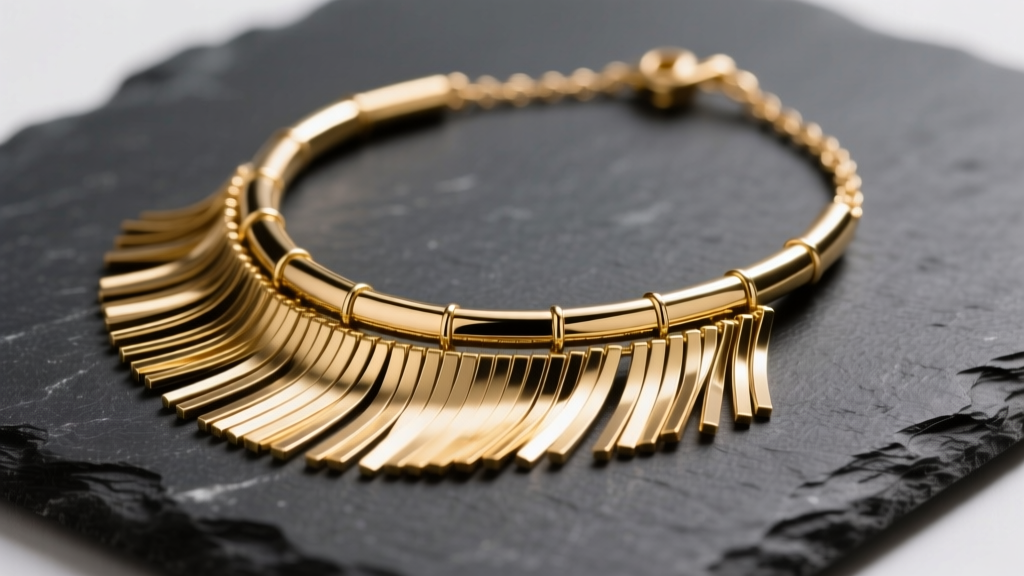
Introduction to the Essential Fringe Silhouette
The fringe necklace occupies a unique space in contemporary jewelry design, bridging the gap between minimalist geometry and bohemian movement. Among the most recognized iterations in the direct-to-consumer market is the Stella and Dot Essential Fringe Necklace. While often categorized simply as 'fashion jewelry,' a technical teardown reveals specific metallurgical choices, weight distribution strategies, and structural vulnerabilities that dictate its longevity. As we evaluate this piece from a horological and gemological perspective, we must look past the aesthetic appeal and examine the exact gauge of the chain, the micron thickness of the plating, and the physics of its layering capabilities. This deep dive will equip you with the technical knowledge required to assess, style, and maintain this specific silhouette.
Metallurgical Breakdown: Heavy Plate vs. Vermeil
To accurately evaluate the Stella and Dot Essential Fringe Necklace, we must first clarify its metallurgical composition. The piece is frequently mistaken for gold vermeil by consumers, but it is technically a heavy gold-plated brass alloy. According to the Federal Trade Commission Jewelry Guides, true vermeil requires a base of sterling silver (92.5% pure silver) plated with a minimum of 2.5 microns of gold.
Instead, this necklace utilizes a jeweler's brass base—typically an alloy of 85% copper and 15% zinc. This specific copper-to-zinc ratio is chosen for its high tensile strength and malleability, allowing the fringe tubes to be drawn and cut without micro-fracturing. The brass is then polished and subjected to a proprietary heavy gold plating process. While the exact micron thickness is a closely guarded trade secret, industry analysis of similar direct-market heavy plates suggests a range between 0.5 and 1.0 microns, often preceded by a palladium or nickel-free barrier layer to prevent the copper from migrating to the surface and causing oxidization (tarnish).
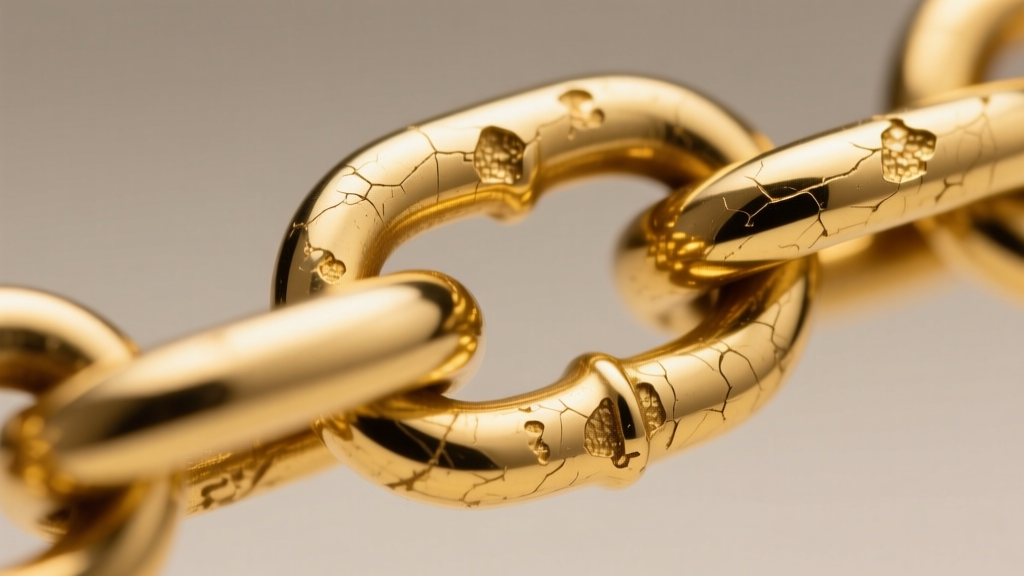
While brass provides excellent structural rigidity for the horizontal fringe bar, it lacks the inherent tarnish resistance of sterling silver. Consequently, once the outer gold layer experiences abrasive wear from friction against the collarbone, the underlying brass will react with ambient moisture and sulfur, necessitating proactive maintenance.
Dimensional Analysis & Weight Distribution
The physical dimensions of a fringe necklace dictate how it drapes and whether the fringe tubes will splay outward or hang in a unified, uniform drop. The Essential Fringe is engineered with a specific center of gravity to maintain a flush lay against the sternum.
| Specification | Measurement / Detail | Technical Impact |
|---|---|---|
| Base Chain Length | 18 inches (plus 2-inch extender) | Positions the fringe bar precisely at the suprasternal notch. |
| Fringe Drop Length | 1.5 to 1.75 inches | Long enough for kinetic movement; short enough to avoid catching on garments. |
| Chain Gauge | Approx. 1.2mm (Cable Chain) | Provides adequate tensile strength to support the 14g fringe bar without stretching. |
| Total Weight | ~16.5 grams | Lightweight enough to prevent clasp fatigue during all-day wear. |
The horizontal bar connecting the fringe tubes to the main chain is the critical load-bearing component. If this bar is too thin, the weight of the individual tubes will cause it to bow downward, creating a 'V' shape that ruins the intended linear geometry. The alloy thickness here is appropriately calibrated to resist bending under standard gravitational loads.
Clasp Mechanics & Structural Failure Points
The closure mechanism on the Stella and Dot Essential Fringe Necklace utilizes a standard cast lobster claw clasp. While functional, lobster clasps in the 8mm to 10mm range present specific mechanical failure points that experts monitor closely. The internal spring mechanism, usually composed of stainless steel or a base metal alloy, is subject to fatigue over thousands of articulation cycles.
Furthermore, the primary vulnerability lies not in the clasp itself, but in the jump ring connecting the clasp to the chain. In mass-produced fashion jewelry, jump rings are frequently left unsoldered to reduce manufacturing time and cost. When the necklace is subjected to lateral tension—such as catching the fringe on a sweater or a seatbelt—the unsoldered gap in the jump ring can pry open, resulting in catastrophic chain separation. To mitigate this, we recommend having a local bench jeweler apply a micro-weld or silver solder to the jump ring gap, a procedure that costs less than $15 and permanently eliminates this failure point.
Advanced Layering Frameworks for Fringe Pendants
Layering a fringe necklace introduces complex mechanical interactions. The individual fringe tubes act as a series of independent pendulums. When layered with chains of similar lengths, the coefficient of friction between the metallic tubes and adjacent chain links causes mechanical locking, commonly known as tangling.
The 2-4-6 Rule for Tangle Prevention
To layer the Essential Fringe Necklace without inducing structural friction, you must adhere to strict spatial separation. We utilize the 2-4-6 inch drop rule to ensure kinetic independence:
- Layer 1 (The Anchor): A rigid 14-inch or 15-inch choker. A solid torque wire or a thick 3mm herringbone chain works best, as it sits above the clavicle and physically cannot interact with the fringe.
- Layer 2 (The Focal Point): The 18-inch Stella and Dot Essential Fringe Necklace. This occupies the mid-sternum zone.
- Layer 3 (The Elongator): A 24-inch to 26-inch pendant chain featuring a heavy, singular focal stone or geometric drop. The 6-inch gap between the bottom of the fringe (approx. 19.75 inches) and the third chain ensures the pendulum effect of the fringe never intersects with the lower chain links.

By maintaining these specific spatial buffers, you preserve the kinetic movement of the fringe while eliminating the friction that leads to both tangling and the accelerated abrasion of the gold plating.
Maintenance Protocols & Ultrasonic Warnings
Cleaning gold-plated brass requires a fundamentally different approach than cleaning solid 14k or 18k gold. The most common error consumers make is utilizing ultrasonic jewelry cleaners. Ultrasonic cleaners operate via cavitation—creating microscopic vacuum bubbles that implode against the surface of the jewelry to dislodge dirt.
Expert Warning: Never place gold-plated or gold-dipped brass jewelry in an ultrasonic cleaner. The sheer force of the cavitation implosions will strip the 0.5-micron gold layer from the brass substrate in a matter of minutes, irreversibly ruining the piece.
Instead, maintenance should be restricted to chemical and gentle mechanical action. Create a solution of warm distilled water and a few drops of pH-neutral dish surfactant. Submerge the necklace for no more than three minutes to loosen sebum and cosmetic residue. Use a dedicated, ultra-soft baby hairbrush to gently sweep between the individual fringe tubes, where skin cells and lotions accumulate. Rinse with distilled water (avoiding tap water, which contains chlorine and trace minerals that can spot the plating) and pat dry immediately with a lint-free microfiber cloth. For long-term storage, keep the piece in an anti-tarnish flannel pouch to neutralize ambient sulfur compounds.
Final Verdict & Value Proposition
The Stella and Dot Essential Fringe Necklace remains a masterclass in accessible, trend-driven geometric design. While it does not possess the generational longevity of solid gold vermeil or karat gold, its engineering—specifically the rigid brass fringe bar and well-calibrated weight distribution—makes it a superior choice within the fashion jewelry tier. By understanding its metallurgical reality, reinforcing the unsoldered jump rings, and applying strict spatial layering frameworks, collectors can maximize both the aesthetic impact and the functional lifespan of this iconic silhouette.


