Sterling Silver Ankh Necklace: A Beginner's Buying Guide
Discover how to choose a sterling silver ankh necklace. Learn about 925 silver grades, chain pairings, sizing, and daily care in our expert guide.

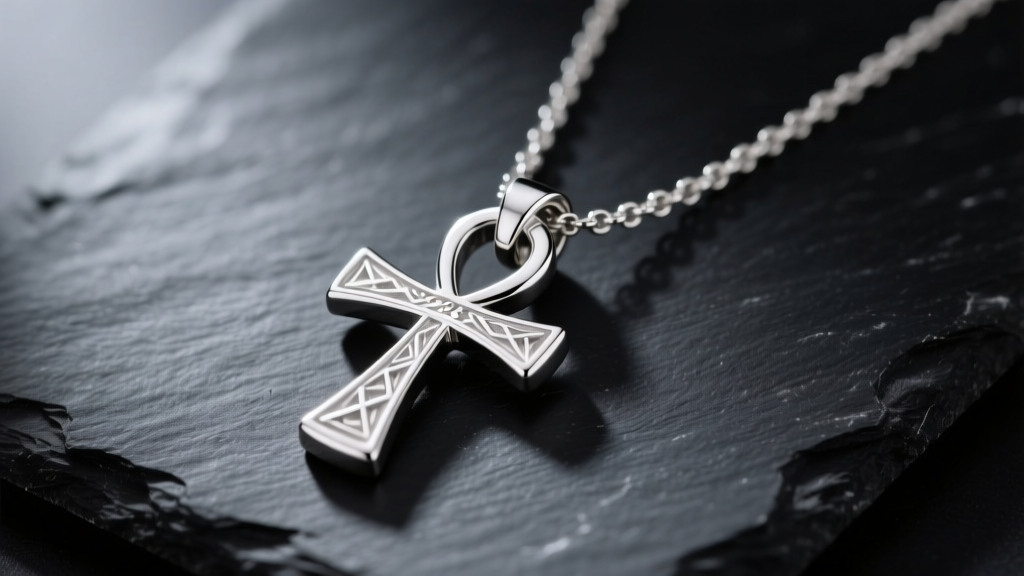
The ankh is one of the most recognizable and spiritually resonant symbols in human history. Often referred to as the 'key of life' or the 'breath of life,' this ancient Egyptian hieroglyph represents eternal life and the union of masculine and feminine energies. For modern jewelry wearers, a sterling silver ankh necklace offers a perfect blend of historical depth, everyday versatility, and accessible luxury. However, navigating the jewelry market as a beginner can be daunting. Between misleading metal stamps, incompatible chain thicknesses, and rapid tarnishing, buying your first meaningful pendant requires a bit of metallurgical know-how.
This guide strips away the marketing fluff and provides a precise, data-driven framework for selecting, pairing, and maintaining a high-quality sterling silver ankh pendant.
The Historical Weight of the Ankh
Before evaluating the metal, it is worth understanding the symbol you are wearing. The ankh features a teardrop-shaped loop (the shen ring) resting atop a T-shaped cross. According to Britannica, the symbol was frequently depicted in the hands of Egyptian deities like Isis and Osiris, signifying their power to grant life to the pharaohs. Wearing this symbol today is not just a fashion statement; it is an alignment with ancient concepts of vitality, protection, and spiritual continuity. Because of its vertical orientation and top-heavy loop, the ankh presents unique structural challenges for jewelry designers, particularly regarding the bail (the loop that connects the pendant to the chain).
Decoding '925': Understanding Sterling Silver Quality
When shopping for a sterling silver ankh necklace, the '925' stamp is your most critical checkpoint. Pure silver (999 fine silver) is too malleable for daily wear; an ankh pendant's protruding crossbar would easily bend or snap under tension. To solve this, metallurgists alloy silver with other metals.
Sterling silver consists of exactly 92.5% pure silver and 7.5% secondary metals, usually copper. The London Assay Office strictly regulates this standard, ensuring that any piece stamped 925 meets this exact metallurgical ratio. The copper adds the necessary tensile strength to support the weight of the pendant and the friction of the chain.
Material Comparison Chart
| Metal Type | Purity | Durability | Tarnish Risk | Best Use Case |
|---|---|---|---|---|
| Fine Silver (999) | 99.9% Ag | Very Low | Very Low | Investment pieces, bezels |
| Sterling Silver (925) | 92.5% Ag | High | Moderate | Everyday pendants, chains |
| Silver Plated | <5% Ag | Low | High (wears off) | Costume jewelry, rare wear |
| Argentium Silver | 93.5%+ Ag | High | Very Low | Premium, low-maintenance pieces |
Beginner Tip: Some 925 pendants are plated with a microscopic layer of rhodium. This delays tarnishing and gives the silver a bright, white-gold-like finish, but it will eventually wear off, revealing the warmer, natural tone of the sterling silver beneath.
Sizing and Proportions: Getting the Right Fit
An ankh pendant that is too large will look costume-like and catch on clothing, while one that is too small will lose the intricate details of the loop. Furthermore, the dimensions of the pendant dictate the chain you must buy.
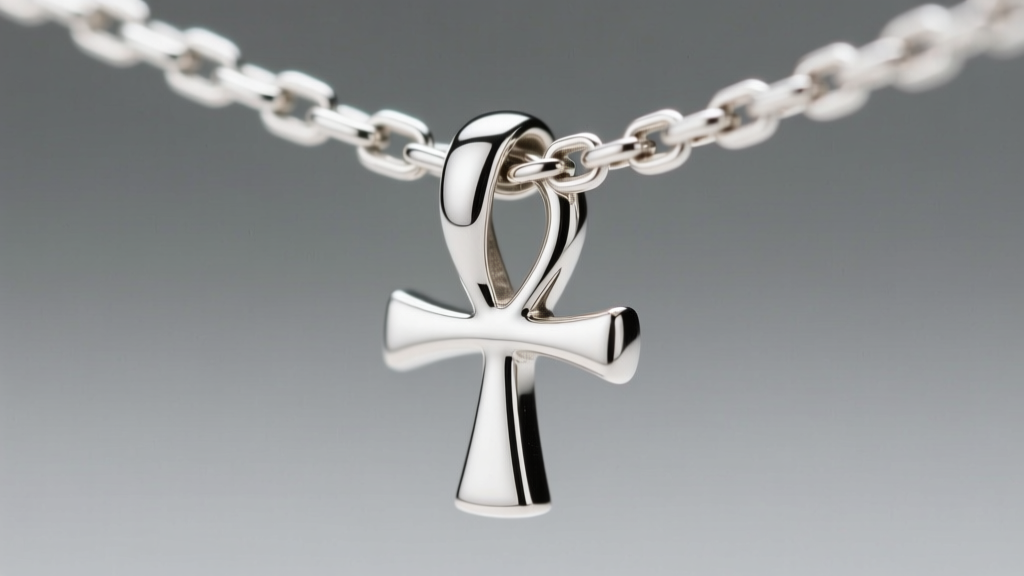
Standard Pendant Dimensions
- Subtle/Minimalist: 12mm x 20mm (Weight: ~2g). Ideal for layering or wearing under collared shirts.
- Standard/Everyday: 18mm x 32mm (Weight: ~4.5g). The sweet spot for visibility and comfort.
- Statement: 30mm x 55mm (Weight: ~10g+). Best worn alone over dark, solid-colored fabrics.
The Bail Bottleneck
The most common beginner mistake is buying a chain that cannot physically pass through the pendant's bail. A standard ankh pendant bail has an inner diameter of roughly 4mm x 6mm. If you purchase a thick 5mm Cuban link chain, it will not fit. Always measure the inner diameter of the bail before selecting your chain gauge.
Chain Pairings: Which Link Style Works Best?
The chain is not just a delivery system for the pendant; it dictates the overall aesthetic and structural integrity of the necklace. Because the ankh is vertically elongated, you want a chain that provides a clean, unobtrusive vertical line.
Box Chains (1.5mm - 2.2mm)
Box chains are composed of square links that create a smooth, continuous surface. They are highly resistant to kinking and provide a modern, geometric contrast to the curved loop of the ankh. A 1.8mm box chain is the gold standard for a 4g to 6g sterling silver ankh pendant, offering enough strength to hold the weight without visually overpowering the symbol.
Cable Chains (1.2mm - 1.8mm)
Cable chains feature uniform oval links. They offer a more traditional, vintage look that pairs beautifully with antiqued or oxidized sterling silver ankhs. However, thin cable chains (under 1.2mm) are prone to snapping if the pendant catches on a sweater.
Rope Chains (2.0mm - 3.0mm)
Rope chains twist together to mimic the look of a woven rope. They catch the light beautifully but can sometimes snag on the bail of the ankh, causing microscopic abrasions over time. If you choose a rope chain, ensure the bail is smoothly polished and devoid of sharp soldering joints.
Real-World Pricing: What Should You Pay?
Understanding the market rate prevents you from overpaying for plated metals disguised as solid silver, or underpaying for suspiciously lightweight pieces. Here is a realistic pricing breakdown for solid 925 sterling silver ankh necklaces in the current market:
- Mass-Market / Fast Fashion ($15 - $35): Usually hollow-cast or silver-plated brass. The silver layer will wear off within months, exposing green-tinged copper beneath.
- Mid-Tier Brands ($45 - $95): Solid 925 sterling silver, often cast from molds. Brands like Mejuri or Gorjana operate in this tier, offering reliable quality, standard polishing, and secure lobster clasps.
- Artisan / Hand-Forged ($110 - $250+): Hand-sawn from solid silver sheet metal or heavily cast. These pieces feature custom soldering, unique texturing (like hammered or matte finishes), and premium chain pairings. You are paying for labor and metallurgical density.
Tarnish Prevention and Daily Care
Sterling silver tarnishes. This is not a defect; it is a chemical inevitability. The 7.5% copper in the alloy reacts with sulfur compounds in the air and on your skin to form silver sulfide, which appears as a dark, dull film on the metal.
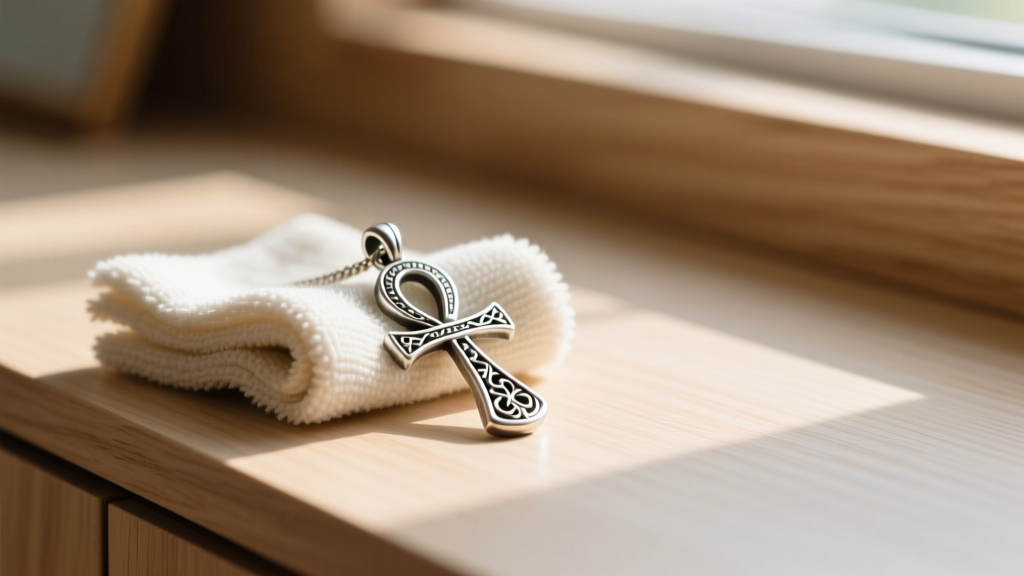
The Daily Care Protocol
- Avoid Chlorine and Salt: Never wear your ankh necklace in swimming pools or the ocean. Chlorine causes rapid, irreversible structural damage to sterling silver, making it brittle.
- The Polish Routine: Keep a treated jeweler's cloth (like a Sunshine Cloth) on your nightstand. Give the pendant a quick 10-second wipe once a week. This removes the microscopic layer of silver sulfide before it builds up into a dark crust.
- Storage is Critical: Do not leave the necklace exposed to humid bathroom air. Store it in an airtight ziplock bag with an anti-tarnish silica strip or a piece of anti-tarnish chalk.
- Skip the Toothpaste: A common internet myth suggests cleaning silver with toothpaste. Toothpaste contains hydrated silica, which is highly abrasive and will leave permanent micro-scratches across the high-polish finish of your ankh.
Final Verdict for Beginners
A sterling silver ankh necklace is a timeless investment that bridges ancient symbolism with modern style. By prioritizing a verified 925 stamp, matching your chain gauge to the pendant's bail dimensions, and adopting a simple weekly polishing routine, your necklace will remain a striking, meaningful staple in your wardrobe for decades. Start with a mid-tier, solid-cast piece on a 1.8mm box chain, and you will have a versatile, durable foundation that can be worn every single day.


