Ultimate Care Guide for Your Sterling Silver Ball Chain Necklace
Discover expert cleaning and maintenance tips to keep your sterling silver ball chain necklace tarnish-free, shiny, and structurally sound.

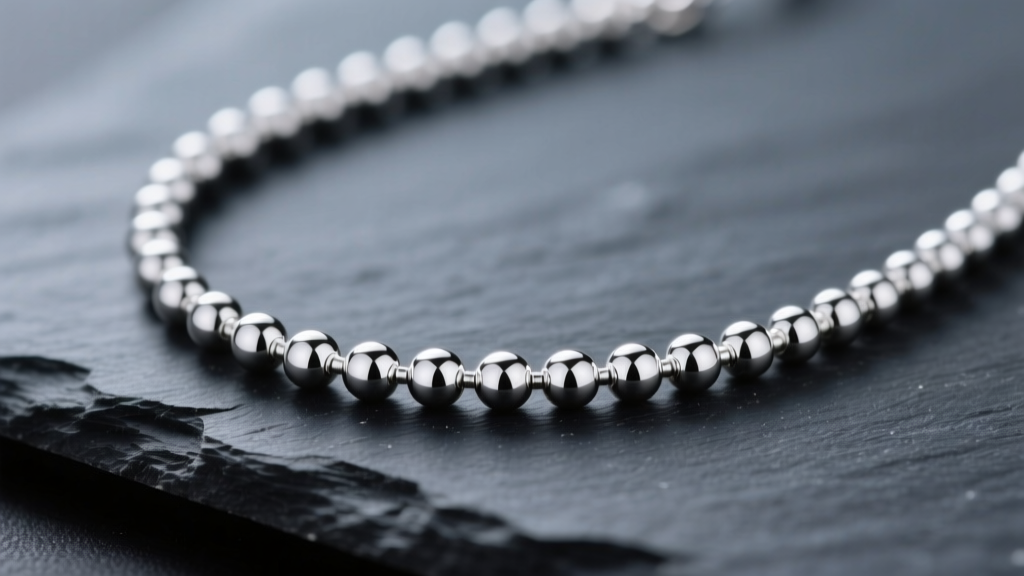
The sterling silver ball chain necklace (often referred to as a bead chain) is a staple of minimalist jewelry, layered streetwear, and military-style dog tag accessories. However, its unique mechanical structure—hollow or solid metal spheres connected by short wire links—makes it fundamentally different to clean and maintain than standard cable, rope, or curb chains. While a standard silver chain can often survive harsh ultrasonic cleaners or aggressive chemical dips, the ball chain requires a nuanced, mechanically sympathetic approach to prevent joint failure, work-hardening, and hidden internal corrosion.
The Chemistry of .925 Tarnish on Ball Chains
To properly care for your jewelry, you must first understand the metallurgy. Authentic sterling silver is an alloy consisting of 92.5% pure silver and 7.5% copper (or occasionally zinc). According to the Gemological Institute of America (GIA), pure silver does not tarnish easily; it is the copper alloy that reacts with hydrogen sulfide and sulfur dioxide in the atmosphere to form silver sulfide—the blackish-yellow film we recognize as tarnish.
On a ball chain, this chemical reaction is accelerated in the micro-crevices where the connector bar enters the hollow sphere. Sweat, sebum, and environmental pollutants pool in these joints, creating a localized acidic environment that rapidly oxidizes the copper. Because the connector bars are often made of brass or lower-grade silver alloys to maintain tensile stiffness, they frequently tarnish and turn green long before the main spherical beads show signs of oxidation.
Structural Vulnerabilities: Gauge Sizes and Tension Joints
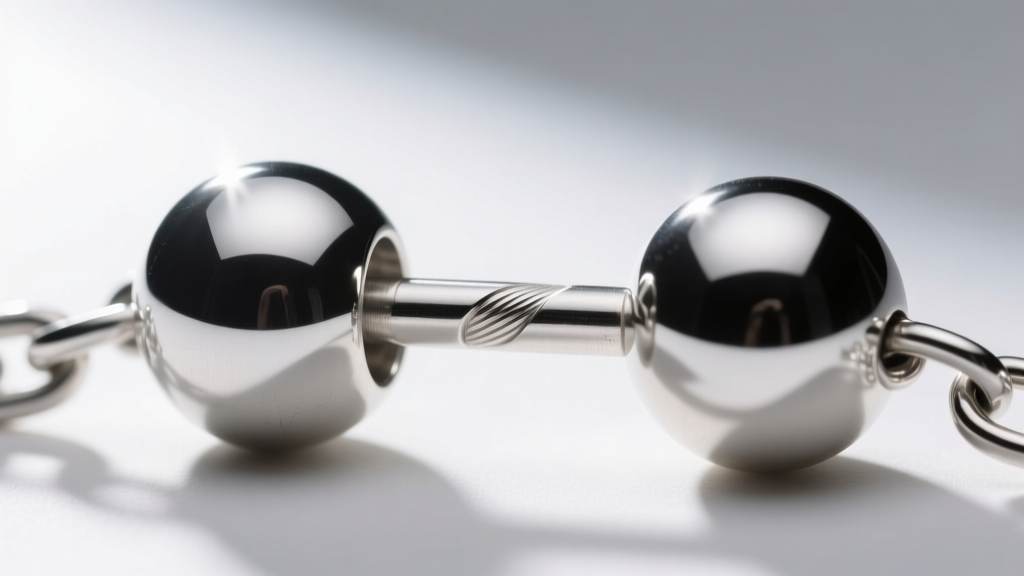
Unlike welded link chains, a ball chain relies entirely on mechanical tension. The connector bar features a small stamped flange that is forced through the entry hole of the hollow sphere. Once inside, the flange expands, locking the beads together. This design creates three major structural vulnerabilities:
- Crushing and Deformation: Hollow beads (common in 2.4mm and 3.0mm gauges) are highly susceptible to crushing if slept on or pulled with high force.
- Connector Bar Slippage: If the entry hole stretches due to repetitive tension, the flange can slip back through, causing the chain to snap.
- Work-Hardening: Repeated bending at the exact same joint causes the silver wire connector to work-harden, become brittle, and eventually snap.
The Step-by-Step Deep Cleaning Protocol
Many popular internet cleaning hacks are actively destructive to ball chains. You must never use the aluminum foil and baking soda electrolytic bath on a bead chain. While this method effectively reduces silver sulfide back into pure silver, the alkaline baking soda paste becomes permanently trapped inside the hollow spheres and connector joints. As noted by jewelry manufacturing experts at Rio Grande, trapped alkaline residue will eventually cause severe pitting and internal corrosion that cannot be polished away.
Similarly, ultrasonic cleaners should be avoided. The high-frequency cavitation bubbles can shake the delicate connector flanges loose from their tension seats, leading to mysterious chain separations weeks after cleaning.
The Safe Surfactant Method
- Prepare the Bath: Mix 1 cup of warm distilled water (tap water contains chlorine and minerals that accelerate tarnish) with 2 drops of mild, phosphate-free dish soap (like Dawn).
- Agitate Gently: Submerge the sterling silver ball chain necklace and let it soak for exactly 3 to 5 minutes. Do not exceed this time, as prolonged water exposure can weaken the tension joints.
- Target the Crevices: Using an extra-soft baby toothbrush, gently brush the entry holes of the beads. Brush parallel to the chain, never perpendicular, to avoid bending the connector bars.
- Rinse Thoroughly: Rinse under a gentle stream of lukewarm distilled water to remove all surfactant residue.
Drying and Lubricating the Joints
Air-drying a ball chain is a critical mistake. Water droplets will become trapped inside the hollow beads, leading to internal water spots and hidden oxidation that will eventually seep out and stain your skin or clothing.
Instead, use a can of compressed air (held at least 6 inches away to prevent freezing the metal) to blow out the micro-crevices and connector joints. Follow this by laying the chain flat on a lint-free microfiber cloth. Once completely dry, you can apply a microscopic amount of jeweler's rouge or a specialized silver polishing cloth (like a Pacific Silvercloth) to the exterior of the beads. Avoid liquid polishes entirely, as they will gunk up the mechanical joints and cause them to stiffen.
Troubleshooting Common Ball Chain Failures
Even with meticulous care, mechanical issues can arise. Use this diagnostic table to address common problems without causing further damage to the .925 silver.
| Issue | Mechanical Cause | Expert Fix |
|---|---|---|
| Stiff or Squeaky Joints | Trapped sebum, dead skin, or dried soap residue inside the sphere cavity. | Soak in distilled water for 2 minutes, blast with compressed air, and gently flex the joint back and forth to dislodge debris. |
| Chain Separates Easily | The entry hole on the hollow sphere has stretched, reducing tension on the connector bar flange. | Use flat-nose nylon-jaw pliers to very gently squeeze the entry hole of the stretched bead, reducing its diameter to grip the flange tightly again. |
| Bead Looks Dented or Crushed | Lateral pressure applied to the hollow sheet-metal sphere (common in gauges under 3.0mm). | Unfortunately, hollow beads cannot be perfectly un-crushed without specialized mandrels. Replace the single damaged bead using a jeweler's jump ring or upgrade to a solid-core bead chain. |
| Connector Bar Snapped | Work-hardening of the brass or silver wire due to repetitive bending at a single stress point. | Cut the broken wire flush with flush-cutters and attach a new sterling silver connector bar, or have a jeweler solder a standard jump ring in its place. |
Archival Storage and Anti-Tarnish Tactics
How you store your sterling silver ball chain necklace is just as important as how you clean it. Silver sulfide formation requires moisture and sulfur. By controlling the micro-climate of your jewelry box, you can halt the tarnishing process entirely.
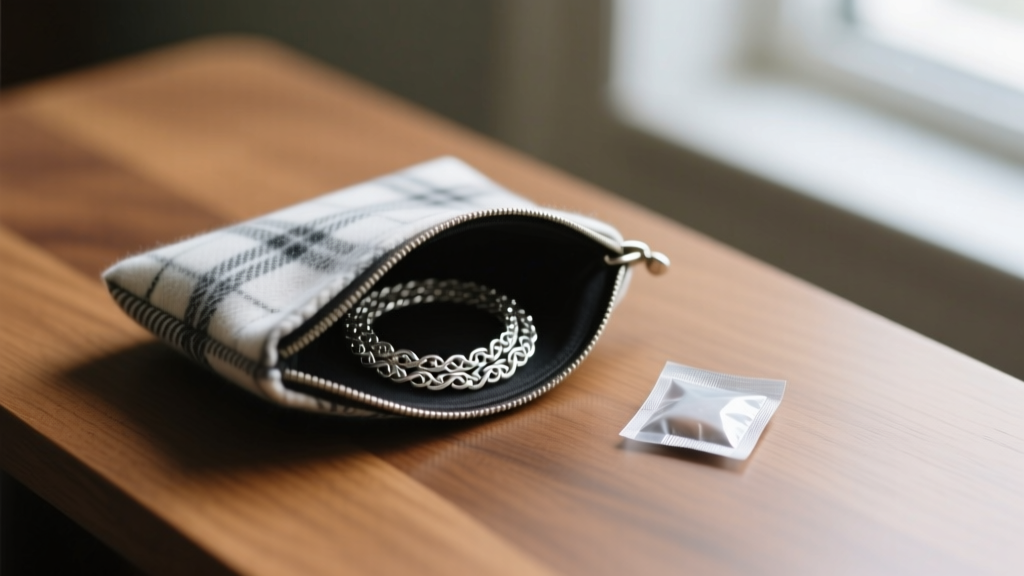
- Humidity Control: Store your jewelry in an environment with a relative humidity (RH) below 45%. Use silica gel packets in your jewelry drawers and replace them every 6 months.
- Chemical Interceptors: Place 3M Anti-Tarnish Strips in your storage containers. These strips utilize copper-based particles to absorb and neutralize airborne sulfur compounds before they can reach your silver.
- Isolation: Never store a ball chain tangled with harder gemstones or steel jewelry. The Mohs hardness of sterling silver is only 2.5 to 3, making it highly susceptible to micro-scratches from quartz, topaz, or stainless steel clasps.
- The Coiling Method: Do not hang ball chains on standard jewelry hooks for long-term storage. Gravity will place constant, low-level tension on the top three connector bars, eventually stretching the entry holes. Instead, coil the chain loosely into a figure-eight pattern and lay it flat in an anti-tarnish flannel pouch.
By respecting the unique mechanical engineering of the bead chain and avoiding harsh chemical shortcuts, your sterling silver ball chain necklace will maintain its fluid drape, brilliant luster, and structural integrity for decades of daily wear.


