Expert Guide: Buying a Sterling Silver Cardinal Necklace
Discover expert insights on sterling silver cardinal necklaces, covering alloy grades, casting methods, chain pairings, and patina maintenance.

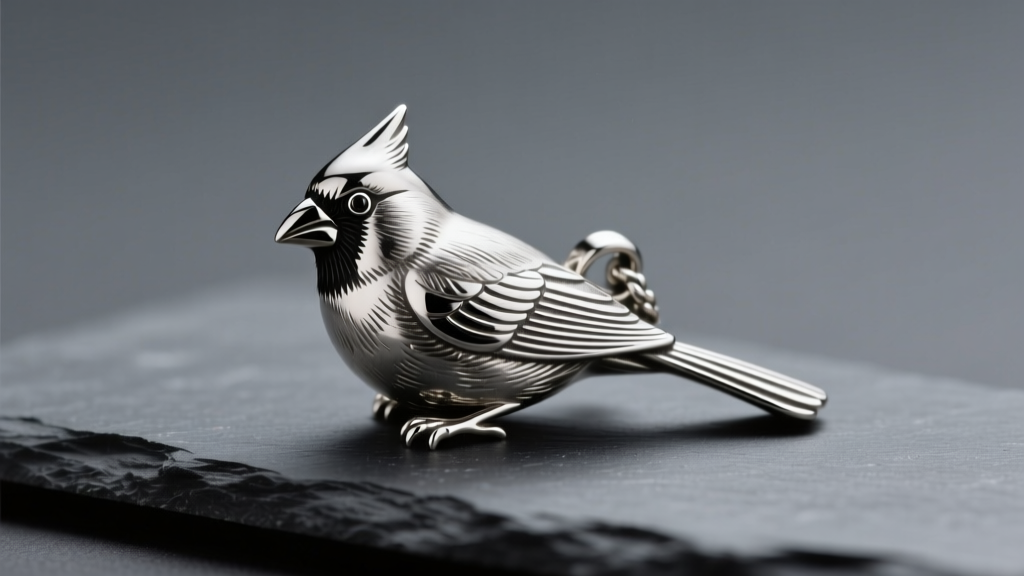
Nature-inspired jewelry remains a cornerstone of artisan metalwork, but the sterling silver cardinal necklace presents unique topographical challenges for jewelers. The northern cardinal (Cardinalis cardinalis) features a high-relief crest, a pronounced conical beak, and intricate feather layering that demand precise metallurgical and structural considerations. This expert deep dive bypasses generic buying advice to examine the alloy chemistry, casting mechanics, and tensile engineering required to produce and select a high-quality cardinal pendant that will endure for decades.
The Metallurgy of 925 Silver in Avian Motifs
Standard sterling silver is an alloy composed of 92.5% pure silver and 7.5% copper. While pure silver is too malleable for daily wear (measuring roughly 25 HV on the Vickers hardness scale), the addition of copper increases the hardness to approximately 60-70 HV. However, this copper content is the primary catalyst for tarnish, specifically when exposed to atmospheric sulfur.
When evaluating a sterling silver cardinal necklace, inquire whether the piece is cast in traditional 925 or Argentium silver. Argentium replaces a portion of the copper with germanium, raising the silver content to 93.5% or 96%. According to the Gemological Institute of America (GIA), this germanium addition creates a transparent, self-healing oxide layer that drastically slows tarnishing and eliminates firescale during the soldering process. For a cardinal pendant with deep, hard-to-polish recesses between the feather barbs, Argentium is vastly superior for long-term maintenance.
Casting Techniques: Lost-Wax vs. Die Striking
The method used to form the cardinal pendant dictates its level of detail, structural integrity, and price point. Because avian motifs require three-dimensional depth to capture the bird's crest and tail feathers, lost-wax casting is the industry standard for premium pieces.
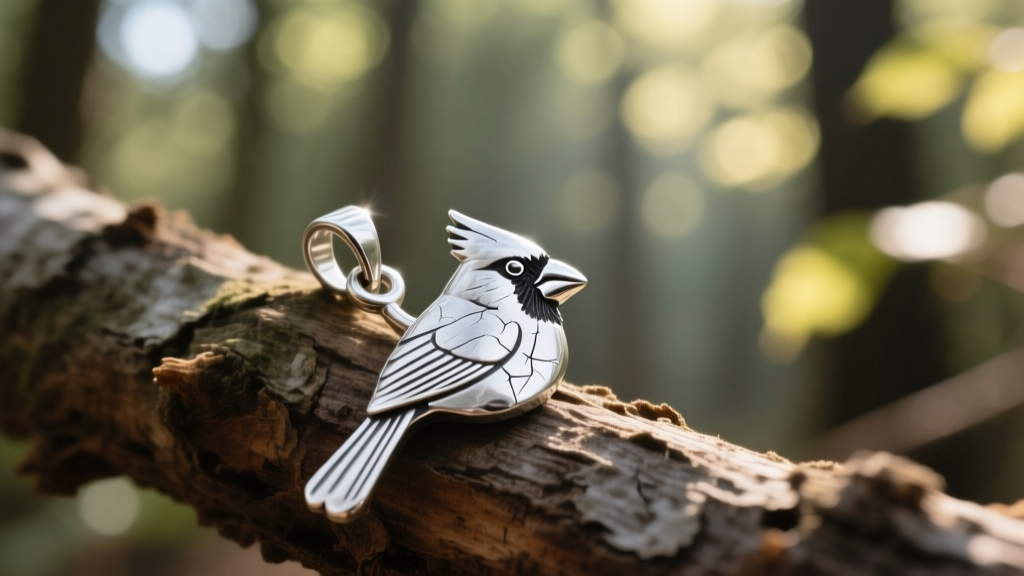
In modern lost-wax casting, a CAD model is printed in castable resin. Jewelers must account for the volumetric shrinkage of sterling silver, which typically ranges from 1.25% to 1.5% during the cooling phase. If the CAD designer fails to scale the model accordingly, the final cardinal pendant will be disproportionately small, and the delicate beak may become brittle. Die-striking, conversely, is limited to flat, two-dimensional silhouettes and lacks the organic undercuts required for a realistic cardinal.
| Method | Dimensionality | Detail Resolution | Structural Density | Typical Price Range |
|---|---|---|---|---|
| Lost-Wax Casting | Full 3D | High (captures individual barbs) | Solid or thick-walled hollow | $65 - $180 |
| Die-Striking | 2D / Flat | Low (silhouette only) | Highly compressed, very hard | $25 - $50 |
| Electroforming | Full 3D | Medium | Extremely thin, lightweight | $40 - $90 |
Chain Engineering: Matching Gauge and Link Style
A common failure point in nature-motif necklaces is the mismatch between the pendant's mass and the chain's tensile strength. Solid cast sterling silver cardinal pendants typically weigh between 4 grams and 12 grams, depending on whether the back is hollowed out (a technique used to reduce material costs and weight).
Bail Dimensions and Weight Distribution
The bail—the loop through which the chain passes—must be proportionate to the pendant's weight. For a 10-gram solid cardinal pendant, the bail should have an internal diameter of at least 3mm and a wire thickness of 1.2mm. If the bail is too narrow, it will act as a fulcrum, causing excessive friction and eventual wear-through on the chain links.
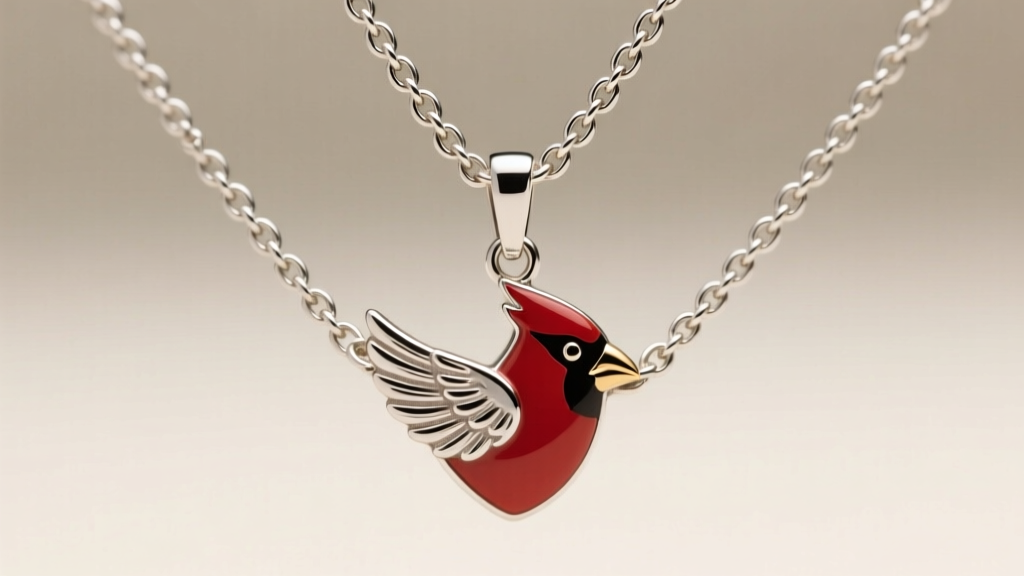
Furthermore, the chain itself must be selected based on its gauge (wire thickness):
- Lightweight Pendants (3g - 5g): A 0.8mm to 1.0mm cable or rolo chain is sufficient. Ensure the jump ring connecting the clasp is soldered shut to prevent lateral pulling.
- Mid-Weight Pendants (6g - 9g): Opt for a 1.2mm to 1.5mm wheat or box chain. These link styles distribute tension evenly across multiple planes, reducing the risk of kinking.
- Heavy Solid Casts (10g+): A 1.8mm to 2.2mm Figaro or rope chain is mandatory. Avoid snake chains entirely for heavy pendants, as the continuous tight links are prone to irreversible snapping under sudden dynamic loads.
Patina, Oxidation, and Long-Term Care
To accentuate the intricate feather textures of a cardinal pendant, master jewelers apply a controlled oxidation using liver of sulfur (potassium polysulfide). This chemical reaction darkens the recessed areas of the casting while leaving the high-relief surfaces (like the bird's chest and crest) bright and polished, creating vital visual contrast.
Expert Maintenance Tip: Never use liquid silver dip cleaners on an oxidized cardinal pendant. These thiourea-based acids will strip the intentional patina from the feather recesses in seconds, leaving the piece looking flat and lifeless. Instead, use a mild dish soap, warm water, and a soft-bristled baby toothbrush to clean the surface without disturbing the darkened undercuts.
If the patina begins to wear off on the high points due to friction against clothing, it can be restored at home. Dissolve a pea-sized amount of liver of sulfur gel in 250ml of warm water. Submerge the pendant for 30 to 45 seconds until it turns a uniform gunmetal gray, then rinse and gently buff the high points with a jeweler's polishing cloth.
Verifying Hallmarks and Avoiding Silverplate Fakes
The market is saturated with silver-plated base metals masquerading as solid sterling. According to The Silver Institute, authentic sterling must bear a quality mark such as "925", "Sterling", or "Ster". However, hallmarks can be easily stamped onto plated items.
To verify the authenticity of your sterling silver cardinal necklace, employ the thermal conductivity test. Silver possesses the highest thermal conductivity of any common metal. Place an ice cube directly on the cardinal's silver chest; it should begin melting almost instantly, significantly faster than it would on stainless steel or brass. Additionally, a neodymium magnet will not stick to genuine silver. If the pendant exhibits magnetic pull, it contains a ferrous core and is merely heavily plated. By understanding these metallurgical and structural nuances, you can confidently invest in a piece of wearable art that honors both the natural subject and the craft of fine jewelry making.


