Silver Compass Necklace Care: Cleaning and Restoration
Learn expert techniques to clean, polish, and store your sterling silver compass necklace. Prevent tarnish and protect delicate glass or enamel dials.

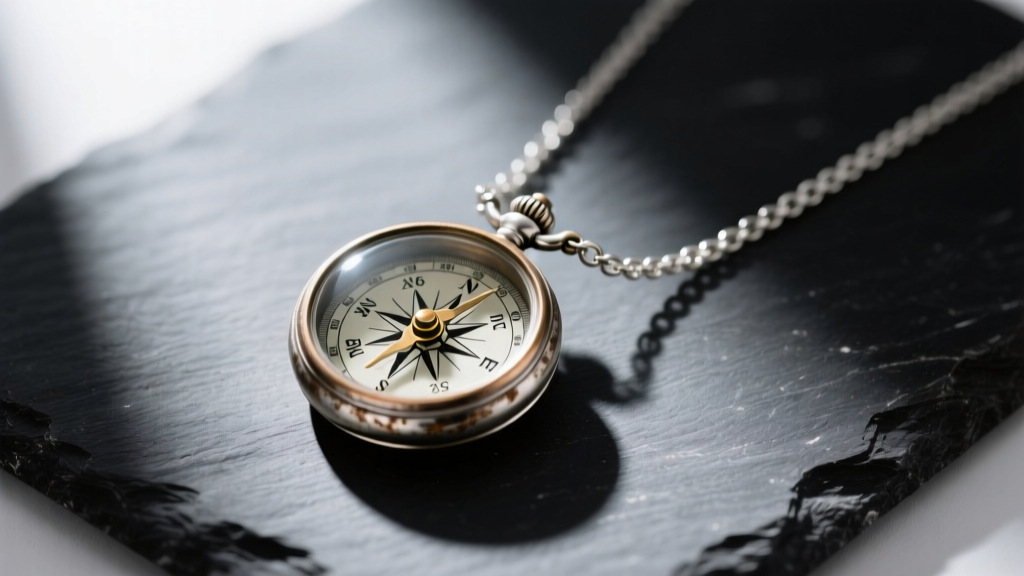
The Anatomy of a Silver Compass Necklace: What You Are Actually Cleaning
A silver compass necklace is more than just a standard pendant; it is a complex assembly of mixed materials that require highly specific care protocols. To maintain its functionality and aesthetic, you must first understand the material science at play. Most high-quality pieces are crafted from 925 sterling silver, which consists of 92.5% pure silver and 7.5% copper alloy. It is this copper that reacts with ambient sulfur and moisture to create silver sulfide—the blackish-gray tarnish that dulls your jewelry.
However, the pendant itself introduces secondary materials. The compass face is typically shielded by mineral glass, sapphire crystal, or a delicate layer of cold enamel. Inside, the directional needle is made of magnetized steel or brass, suspended on a micro-pivot. Submerging the entire piece in liquid or harsh chemical dips can compromise the waterproof seal (if one exists), leading to internal fogging, rusted needles, and the complete destruction of hand-painted enamel dials. Therefore, a bifurcated cleaning approach—treating the chain and the pendant separately—is mandatory for long-term preservation.
Step-by-Step Chain Cleaning: The Electrochemical Method
Delicate chains, such as 1.2mm cable chains or 0.8mm box chains, trap skin oils, lotions, and sulfur in their microscopic crevices. While commercial silver dips (like Tarn-X) will strip tarnish instantly, they also strip the silver's natural patina and can cause micro-pitting over time. Instead, we recommend the electrochemical ion-exchange method, which reverses the tarnish reaction without removing any base metal.
The Aluminum Foil and Baking Soda Technique
- Preparation: Line a glass or ceramic bowl with aluminum foil, shiny side facing up. Never use a metal bowl, as it will interfere with the ion exchange.
- The Catalyst: Add 2 tablespoons of baking soda and 1 tablespoon of coarse sea salt to the foil.
- Activation: Pour boiling water into the bowl. You will immediately notice a sulfurous (rotten egg) smell; this is the sulfur leaving the silver and binding to the aluminum.
- The Bath: Using wooden or plastic tongs, submerge only the silver chain into the solution for 3 to 5 minutes. Crucial: Keep the compass pendant completely out of the water. If the pendant cannot be detached, hold it above the waterline manually.
- Rinsing and Drying: Remove the chain, rinse it thoroughly under cool distilled water, and pat it completely dry with a lint-free microfiber cloth. Any trapped moisture in the chain links will accelerate future tarnishing.
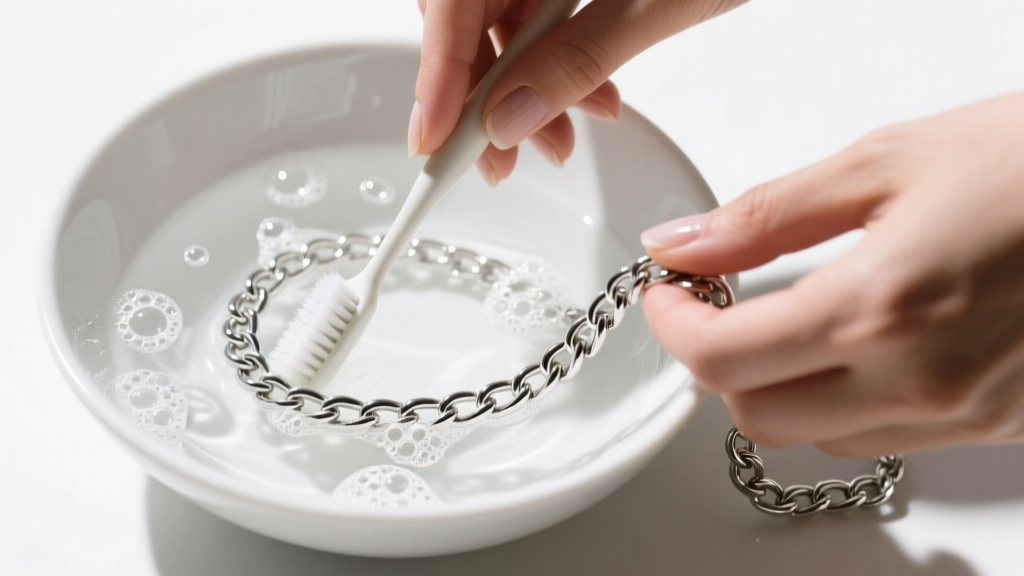
Safely Cleaning the Compass Pendant and Dial
The compass housing requires a much gentler, localized approach. Because the bezel holding the glass or enamel face is often secured with delicate prongs or resin adhesives, aggressive polishing can loosen the seal.
Polishing the Silver Bezel
Apply a pea-sized amount of a non-abrasive polish, such as Wright's Silver Polish or Hagerty Silversmiths' Spray, to a Q-tip or a tightly woven cotton swab. Carefully trace the silver bezel and the bail (the loop connecting the pendant to the chain). Avoid letting the polish touch the glass or enamel. Once the tarnish lifts, wipe the area clean with a slightly damp cloth and dry immediately.
Cleaning the Compass Face (Glass vs. Enamel)
- Mineral Glass / Sapphire Crystal: Mix a 50/50 solution of isopropyl alcohol and distilled water. Lightly mist a microfiber cloth (never spray directly onto the pendant) and wipe the glass in a circular motion. This removes fingerprints and oils without streaking.
- Cold Enamel / Mother of Pearl: Never use alcohol or ammonia on enamel or organic materials, as it will cause crazing, cracking, or dulling. Use only a barely damp cloth with a drop of pH-neutral baby shampoo to gently lift dirt, followed by immediate drying.
The Ultrasonic Cleaner Warning
According to the Gemological Institute of America (GIA), ultrasonic cleaners use high-frequency sound waves to create microscopic cavitation bubbles that blast dirt from crevices. While excellent for solid diamond and platinum pieces, never put a compass pendant in an ultrasonic cleaner. The vibrations will shatter glass, chip enamel, and demagnetize or dislodge the internal compass needle from its pivot pin.
Tarnish Prevention and Storage Framework
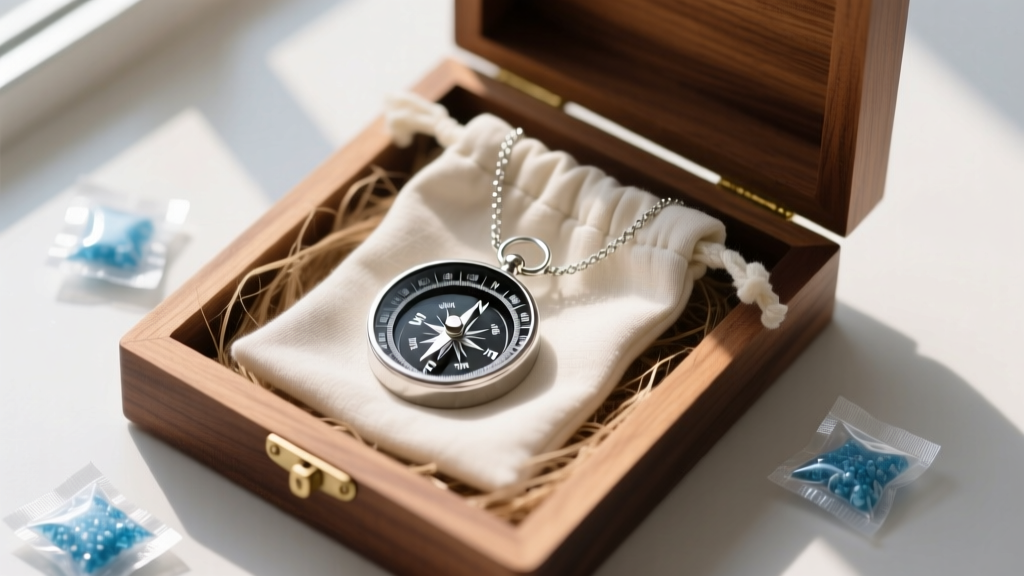
Proper storage is the most effective way to reduce the frequency of deep cleanings. Silver tarnishes primarily due to exposure to hydrogen sulfide in the air and high humidity. Below is a data-driven comparison of common storage methods to help you protect your silver compass necklace when it is not being worn.
| Storage Method | Tarnish Delay | Moisture Control | Best Use Case |
|---|---|---|---|
| Standard Ziploc Bag | 1-2 Months | Poor (Traps ambient humidity) | Short-term travel storage |
| Silica Gel Packets in Box | 3-4 Months | Excellent (Absorbs moisture) | Humid climates and coastal areas |
| Anti-Tarnish Paper Strips | 6-9 Months | Moderate (Absorbs sulfur gases) | Standard jewelry box drawers |
| Pacific Silvercloth Pouch | 1-3 Years | Good (Embedded silver particles) | Long-term heirloom preservation |
Common Maintenance Mistakes to Avoid
Even well-intentioned jewelry owners can inadvertently cause irreversible damage to a silver compass necklace. Avoid these frequent pitfalls:
Master Jeweler's Warning: "The most common failure we see in compass pendants is internal fogging. This happens when clients wear the necklace in the shower or swim in the ocean, allowing microscopic moisture to bypass the bezel seal. Once the internal steel needle rusts, the compass is permanently broken, and the glass must be professionally removed and replaced to fix it."
- The "Toothpaste Hack": Never use toothpaste to polish silver. Modern toothpastes contain hydrated silica, an abrasive that will leave permanent micro-scratches on high-polish silver and instantly cloud mineral glass.
- Perfume and Hairspray Exposure: Always put your necklace on after applying cosmetics, perfumes, and hairsprays. The alcohols and aerosolized chemicals in these products will degrade enamel finishes and accelerate copper oxidation in the sterling silver.
- Sleeping in the Necklace: The friction from tossing and turning can stretch the bail loop and weaken the solder points on delicate box chains, leading to sudden breakage and loss of the pendant.
When to Seek Professional Jeweler Services
While routine maintenance can be handled at home, certain issues require the intervention of a certified bench jeweler. If your compass needle becomes stuck, if you notice condensation trapped beneath the glass dial, or if the silver exhibits deep, black pitting that does not respond to the electrochemical bath, do not attempt a DIY repair. A professional can safely pop the bezel, replace the internal desiccant or pivot pin, and perform a rotary tumbling polish to restore the silver's original luster without compromising the structural integrity of the piece. For more information on professional jewelry maintenance standards, refer to the guidelines provided by Jewelers of America.
By respecting the unique material composition of your silver compass necklace and adhering to these targeted cleaning protocols, you ensure that this symbolic piece remains both a functional navigational tool and a brilliant sartorial staple for decades to come.


