How to Stop a Rash From Necklace Chains: A Material Guide
Learn why you get a rash from necklace chains and how to prevent it. Compare titanium, niobium, and gold alloys for sensitive skin.

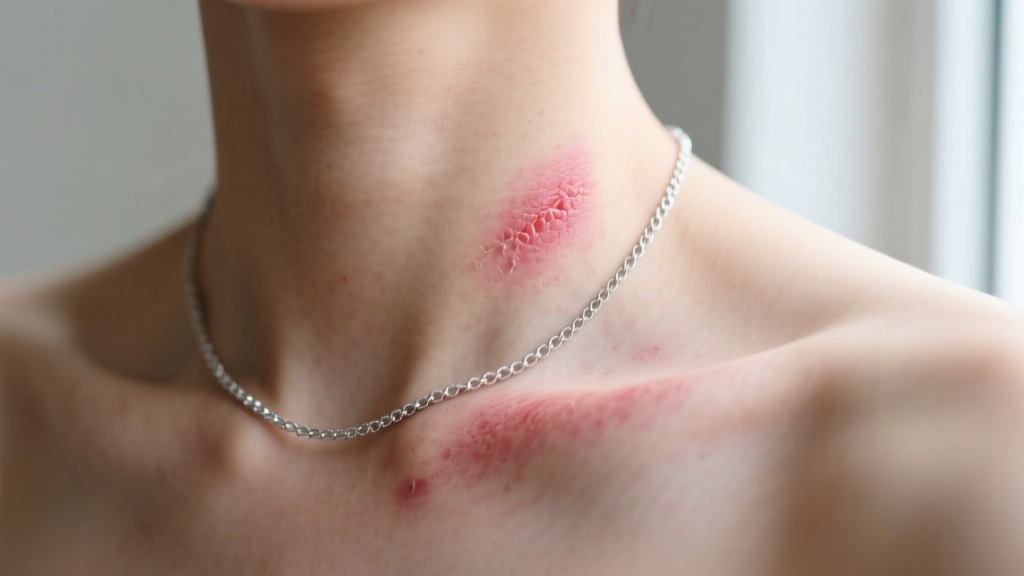
There are few things more frustrating than investing in a beautiful piece of jewelry, only to be forced to take it off because of an angry, itchy red line on your skin. Getting a rash from necklace chains is an incredibly common issue, but it is rarely a random occurrence. In the vast majority of cases, it is a predictable chemical and metallurgical reaction between your skin’s unique biology and the specific alloy composition of the metal resting against your collarbone.
As a jewelry metallurgist and style analyst, I see countless consumers fall victim to misleading marketing terms like "hypoallergenic" or "surgical grade." To truly solve the problem of jewelry-induced contact dermatitis, we have to look past the branding and examine the exact elemental makeup of the chains we wear. This guide breaks down the material properties, environmental triggers, and specific metal grades that will help you build a permanently skin-safe jewelry wardrobe.
The Chemistry Behind the Irritation
Before comparing metals, it is crucial to understand what is actually happening when you develop a rash from necklace wear. Medically known as Allergic Contact Dermatitis (ACD), this reaction is not a simple "friction burn." It is an immune system response triggered by metal ions leaching out of the jewelry and binding with the proteins in your epidermis.
According to the American Academy of Dermatology, nickel is the undisputed king of metal allergies, affecting roughly 18% of adults in North America. However, nickel doesn't just jump off a dry chain into your skin. It requires a catalyst.
The Role of Sweat, Chlorides, and Skin pH
Human sweat is a complex electrolyte solution with a pH ranging from 4.5 to 7.0, heavily laden with sodium chloride (salt), urea, and lactic acid. When a necklace chain sits in the hollow of the neck—a high-heat, high-friction zone that traps moisture—the chlorides in your sweat actively attack the passive oxide layer of many common jewelry metals. This process, known as galvanic corrosion, breaks down the metal's surface at a microscopic level, releasing free nickel and copper ions directly into the pores. If you are experiencing a sudden rash from necklace chains you've worn for years without issue, it is often because the protective plating has finally worn through, exposing a reactive base metal to your sweat.
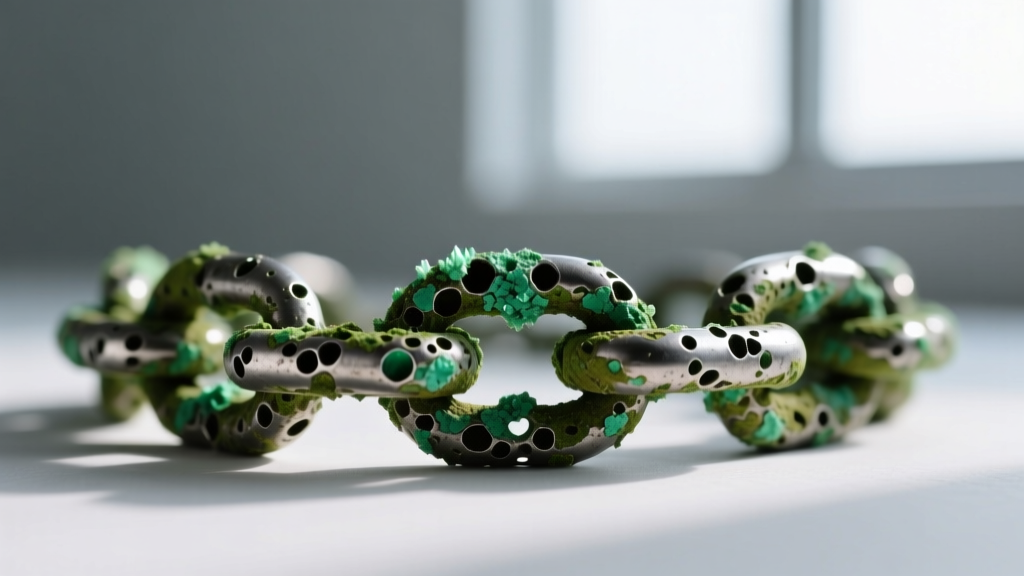
Material Breakdown: What is Touching Your Skin?
Not all metals are created equal, and the term "stainless" does not mean "stain-proof" or "allergy-proof." Below is a comparative analysis of common necklace materials, their elemental realities, and their true ACD risk profiles.
| Material / Grade | Typical Alloy Composition | Nickel Content | ACD Risk Profile |
|---|---|---|---|
| 316L Surgical Steel | Iron, Chromium (16-18%), Nickel (10-14%), Molybdenum | High (10-14%) | Moderate to High (Leaches in sweat) |
| Brass (Base Metal) | Copper (60-70%), Zinc (30-40%), trace Lead/Nickel | Trace to Low | High (Copper causes green skin; zinc oxidizes) |
| 14k Yellow Gold | Gold (58.5%), Copper, Silver, Zinc | Usually 0% | Low (Unless alloyed with nickel for color) |
| 14k White Gold | Gold (58.5%), Nickel or Palladium, Copper, Zinc | High (if Nickel-based) | Very High (Rhodium plating wears off, exposing nickel) |
| ASTM F136 Titanium | Titanium (90%), Aluminum (6%), Vanadium (4%) | 0% | Zero (Completely biocompatible) |
| Pure Niobium | Niobium (99.9%+) | 0% | Zero (Elemental, non-alloyed) |
The "Surgical Steel" and Plating Traps
One of the most pervasive myths in the jewelry industry is that "surgical steel" is inherently hypoallergenic. The 316L stainless steel used in body jewelry and medical tools contains up to 14% nickel. It is deemed "surgical" because it resists corrosion well enough for short-term internal implantation, where the body's tissues encapsulate the metal. However, worn externally on the epidermis and constantly bathed in acidic sweat, 316L will leach nickel ions. If you have a known nickel allergy, 316L is a primary trigger for a rash from necklace pendants and chains.
The Danger of Flash Plating and Vermeil Wear-Through
Many affordable gold and silver necklaces are actually made of cheap brass or nickel-silver bases, coated in a microscopic layer of gold or rhodium. The industry relies on two main plating standards:
- Flash Plating: Often less than 0.1 microns thick. This provides a brilliant initial shine but wears away against the friction of the collarbone within weeks, immediately exposing the reactive base metal beneath.
- Gold Vermeil: Legally required to be at least 2.5 microns of gold plated over a sterling silver base. While significantly more durable, the sterling silver base contains 7.5% copper, which can react with high-acidity sweat to cause localized irritant contact dermatitis (the dreaded "green skin" effect), even if it doesn't trigger a true nickel allergy.
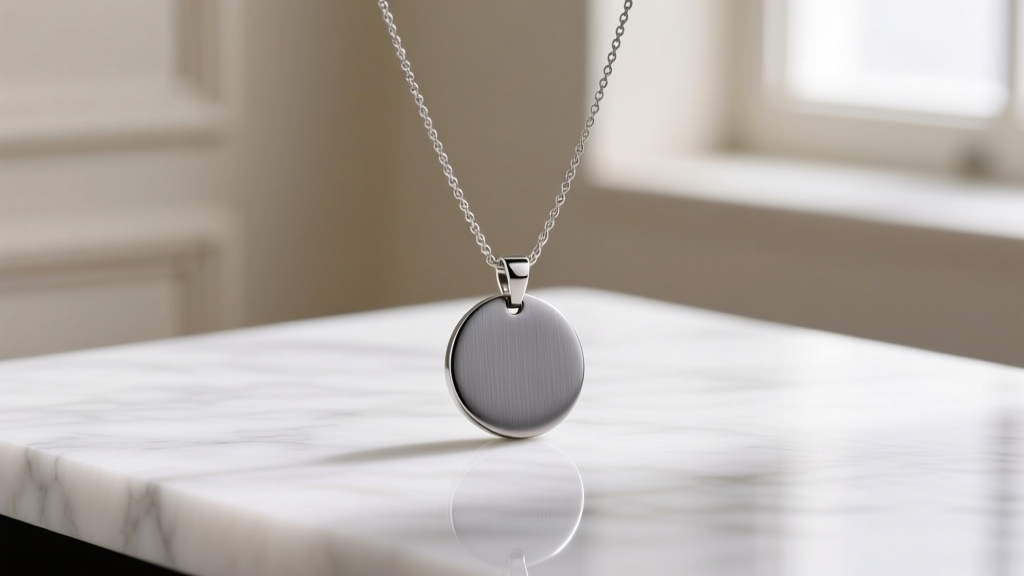
Safe Alternatives: Building an ACD-Proof Collection
If you are prone to contact dermatitis, you must shift your purchasing criteria from aesthetic design to metallurgical purity. The National Institutes of Health (NIH) emphasizes that the only definitive treatment for allergic contact dermatitis is the strict avoidance of the offending allergen. Here are the materials you should actively seek out:
1. Implant-Grade Titanium (ASTM F136)
Often referred to as Grade 23 or Ti-6Al-4V ELI (Extra Low Interstitial), this is the gold standard for sensitive skin. It contains absolutely zero nickel and forms a self-healing, inert oxide layer that is entirely impervious to the chlorides in human sweat. When shopping, look for brands that explicitly state "ASTM F136" or "Implant-Grade Titanium," rather than vague terms like "titanium steel" (which is often just rebranded stainless steel).
2. Pure Niobium
Niobium is an elemental metal, meaning it is not alloyed with any other elements to achieve its strength or color. Because it contains no nickel, copper, or lead, it is exceptionally biocompatible. Furthermore, niobium can be anodized using electricity to create vibrant, permanent colors without the use of chemical dyes or reactive paints, making it a brilliant choice for enameled-looking pendants that won't trigger a rash.
3. Palladium-White Gold and Platinum
If you prefer the look of white metals but cannot wear steel, avoid standard white gold (which is alloyed with nickel and plated with rhodium). Instead, invest in Palladium-White Gold, which uses palladium—a platinum group metal—to achieve the white color without nickel. Alternatively, 950 Platinum (95% pure platinum, usually alloyed with 5% ruthenium or iridium) is entirely hypoallergenic, incredibly dense, and will never wear through to a base metal because it is solid all the way through.
"Patients frequently mistake irritant contact dermatitis for an allergy. A heavy, poorly finished chain can cause micro-abrasions on the delicate skin of the neck, trapping sweat and bacteria, leading to a rash that mimics a metal allergy. Always check the physical smoothness of the chain links, not just the metal purity."
— Board-Certified Dermatological Consensus on Jewelry-Induced Dermatitis
Actionable Troubleshooting for Your Current Jewelry
If you already own pieces that cause irritation but hold sentimental or high financial value, you have a few practical mitigation strategies:
- Professional Re-Plating: Take white gold or worn vermeil pieces to a master jeweler to be re-plated with a thick layer of rhodium or platinum. This creates a physical barrier between the reactive alloy and your skin.
- The Clear Coat Myth: Painting the clasp or chain with clear nail polish is a common internet hack. Avoid this. Nail polish contains solvents like toluene and formaldehyde, which can cause their own severe contact dermatitis, and it will inevitably chip into your pores.
- Upgrade the Chain, Keep the Pendant: Often, the pendant is made of a safe, high-karat gold or gemstone, but the mass-produced chain attached to it is a reactive brass or steel alloy. Simply purchase a high-quality ASTM F136 titanium or solid 18k yellow gold chain and swap the pendant over.
Conclusion
Dealing with a rash from necklace chains is not a matter of simply "getting used" to the metal; it is a biological warning sign that your skin is reacting to ionic corrosion. By understanding the difference between marketing buzzwords and actual metallurgical grades, you can curate a collection that is as comfortable as it is beautiful. Prioritize ASTM F136 titanium, pure niobium, and high-purity palladium alloys, and leave the 316L surgical steel in the display case where it belongs.


