The Strawberry Necklace Gold Pendant: Alloys, Enamel & Craft
Explore the metallurgy, enameling techniques, and chain mechanics behind a high-quality strawberry necklace gold pendant. Expert buying guide.

The Metallurgy of Whimsy: Choosing the Right Gold Alloy
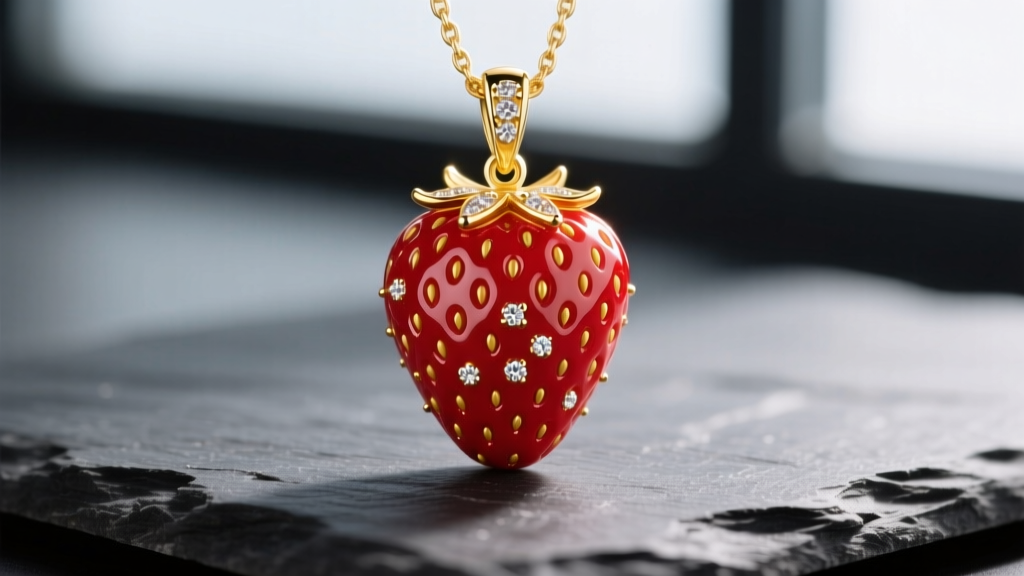
When collectors and enthusiasts search for a strawberry necklace gold pendant, they are often met with a sea of mass-produced, hollow-cast trinkets. However, true botanical jewelry is a masterclass in micro-sculpture and metallurgical precision. The foundation of any high-end fruit motif lies in the gold alloy selected by the jeweler. While 24k gold offers a rich, buttery yellow hue, its Vickers hardness (HV) of roughly 25 makes it entirely unsuitable for structural elements like delicate leaves, stems, or the tiny prongs required to hold gemstone seeds.
Expert jewelers typically rely on 14k or 18k gold alloys. 18k yellow gold (75% pure gold) provides a luxurious warmth that perfectly mimics the sun-ripened glow of a strawberry, with an HV of approximately 110-120. This is ideal for hand-engraved details and guilloché enameling. However, if the design features micro-pavé ruby or spinel seeds, 14k gold (58.5% pure gold, HV ~130-150) is vastly superior. The higher copper and silver content in 14k gold increases tensile strength, ensuring that the microscopic beads or prongs securing 0.8mm gemstones will not deform or wear away with daily friction against clothing.
Surface Techniques: Enamel vs. Micro-Pavé Gemstones
The visual impact of a strawberry pendant relies entirely on its surface treatment. There are two primary avenues for achieving the iconic crimson hue and textured surface: vitreous enameling and gemstone setting.
Champlevé and Guilloché Enameling
Vitreous enamel is essentially powdered glass fused to a metal substrate at temperatures between 1400°F and 1500°F (760°C - 815°C). For a premium strawberry necklace gold piece, master enamelists use the guilloché technique. The gold surface is first engine-turned with a rose engine lathe to create microscopic, repeating geometric patterns. Translucent red enamel is then laid over this textured gold. When fired, the enamel melts into a glass-like finish, while the guilloché pattern beneath catches and refracts light, giving the strawberry an optical depth and inner glow that solid opaque paint could never achieve.
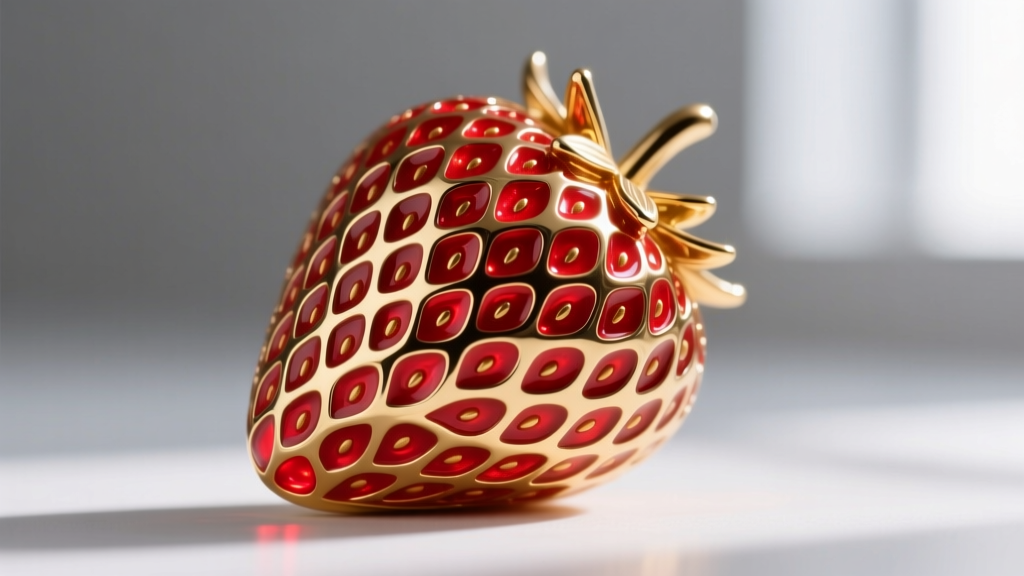
The primary failure mode of vitreous enamel is thermal shock and blunt force trauma. Because glass and gold expand and contract at different rates, a sudden temperature change or a hard drop against a granite countertop can cause the enamel to craze (develop micro-fractures) or shatter entirely. Therefore, the gold backing must be adequately thick—usually at least 1.2mm—to prevent the metal from flexing and popping the glass coating.
Micro-Pavé Seed Setting
Alternatively, high-jewelry houses may construct the strawberry's body using a micro-pavé technique. This involves setting dozens of 1.0mm to 1.5mm round-cut rubies, red spinels, or even pink sapphires directly into the gold surface. The seeds are often represented by tiny flush-set yellow diamonds or left as negative space (bead-blasted gold) to create contrast. According to the Jewelers of America, micro-pavé requires exceptional precision; the metal beads holding the stones are often less than 0.3mm thick. If the gold alloy is too soft, these beads will quickly erode, leading to catastrophic stone loss.
Chain Mechanics and Bail Engineering for Lightweight Pendants
A common mistake when purchasing a delicate botanical pendant is pairing it with an inappropriate chain. A typical solid gold strawberry pendant weighs between 3.5 and 6.0 grams. Suspending this from a heavy 3.0mm rope chain creates a visual imbalance and causes the pendant to flip constantly due to the chain's torque.
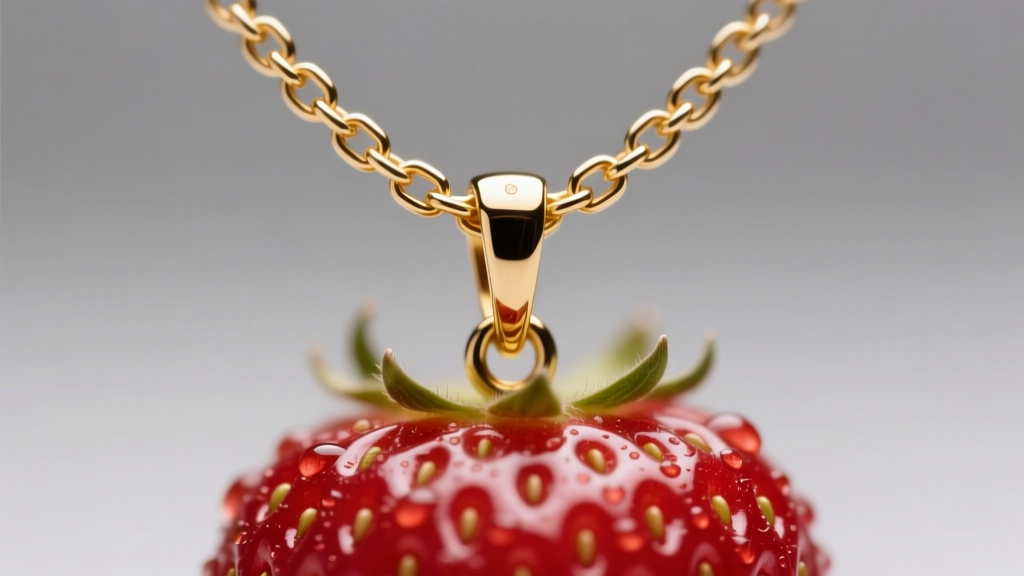
The optimal pairing is a 1.0mm to 1.2mm box chain or a delicate cable chain. Box chains are highly recommended for their geometric, light-catching links and exceptional resistance to kinking. Conversely, snake chains should be strictly avoided for botanical pendants; their tight, interlocking scales are notorious for catching on fine hair and kinking irreparably when bent.
The bail—the loop connecting the pendant to the chain—is equally critical. Cast-in-place bails often suffer from porosity (microscopic air bubbles trapped during the casting process) and can snap under sudden tension. A master jeweler will fabricate a separate, die-struck or hand-sawn bail and solder it to the pendant's stem using high-temperature hard solder, ensuring a joint that is stronger than the surrounding gold.
Pricing Tiers and Manufacturing Methods
Understanding how a strawberry necklace gold pendant is manufactured is the key to determining its fair market value. The table below outlines the three primary manufacturing tiers you will encounter in the fine jewelry market.
| Manufacturing Method | Characteristics & Durability | Typical Enamel / Finish | Estimated Price Range (USD) |
|---|---|---|---|
| Mass Cast (CAD/CAM) | Hollowed backs, visible sprue marks, thin prongs. Moderate durability. | Opaque cold enamel (epoxy) or painted resin. | $250 - $600 |
| Hand-Fabricated / Cast & Finished | Solid backs, hand-polished, secure micro-pavé settings. High durability. | Champlevé vitreous enamel or precision gemstone setting. | $1,200 - $3,500 |
| Haute Joaillerie (Master Craft) | Engine-turned, fully articulated stems, flawless stone matching. Heirloom grade. | Guilloché, Plique-à-jour, or calibré-cut gems. | $8,000 - $25,000+ |
Maintenance and Failure Modes of Botanical Jewelry
Caring for a botanical gold pendant requires a departure from standard jewelry cleaning routines. The structural complexity and delicate surface treatments demand specific protocols to avoid irreversible damage.
- Ultrasonic Cleaners: Will shatter enamel and loosen micro-pavé beads via acoustic cavitation.
- Steam Cleaners: Present a severe thermal shock risk for glass-based vitreous enamels.
- Chemical Dips: Can strip anti-tarnish coatings, oxidize alloy metals, and cloud gemstones.
Instead, maintenance should be limited to a gentle soak in lukewarm water with a few drops of pH-neutral dish soap, followed by light agitation with a baby-soft toothbrush. When drying, avoid rubbing the piece with a microfiber cloth, as the fibers can catch on the tiny prongs or the edges of the leaves. Use a blast of compressed air or a dedicated jewelry drying blower to remove moisture from the crevices.
Furthermore, be highly cautious of cosmetic chemicals. Hairsprays, perfumes, and lotions can leave a stubborn, cloudy film over both gemstones and enamel, dulling the light return. Always adhere to the 'last on, first off' rule: your strawberry necklace gold pendant should be the final item you put on when dressing, and the very first item you remove upon returning home.
Conclusion
A finely crafted strawberry necklace gold pendant is far more than a whimsical accessory; it is a testament to the jeweler's mastery over metallurgy, gemology, and thermal dynamics. By scrutinizing the gold alloy, demanding true vitreous enameling or precision micro-pavé, and pairing the piece with a mechanically sound chain, you ensure that this botanical treasure remains a vibrant, enduring staple in your collection for decades to come.


