How to Design and String a Pearl Necklace with Gold Beads
Learn how to design and string a custom pearl necklace with gold beads. Step-by-step knotting guide, thread sizing, and material tips.

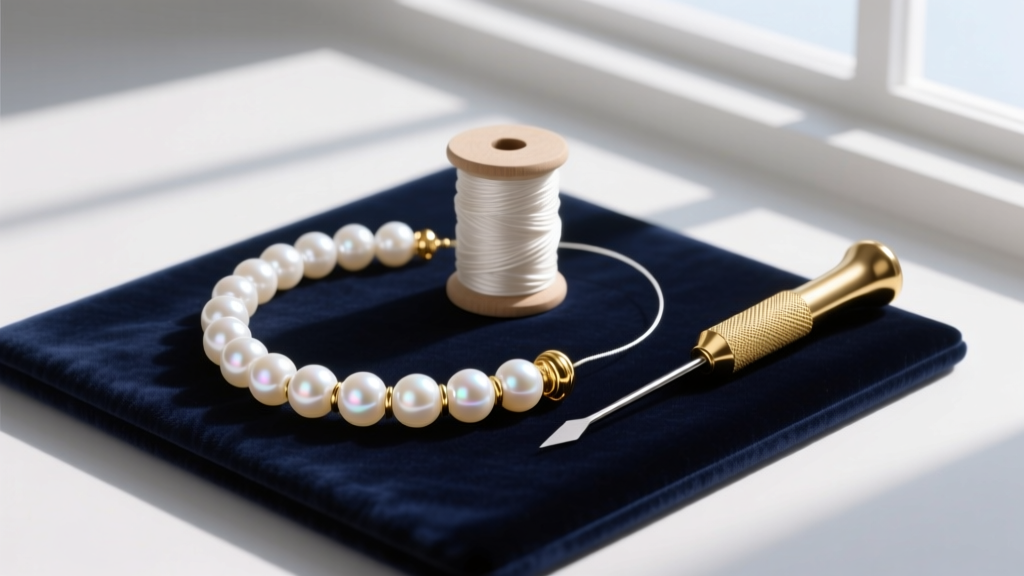
The Appeal of the Hybrid Pearl and Gold Design
Designing a custom pearl necklace with gold beads offers a sophisticated contrast between the organic, lustrous nacre of pearls and the sharp, reflective brilliance of precious metal. While traditional pearl strands rely solely on uniformity, introducing 14k or 18k gold spacer beads adds a modern, rhythmic elegance to the piece. However, combining these two distinct materials requires a deep understanding of jewelry mechanics. Gold, even in its softer 18k or 24k forms, possesses a different friction coefficient and structural hardness than pearl nacre. If strung improperly without adequate knotting, the metallic edges of the gold beads can act as micro-abrasives, slowly wearing down the delicate nacre over years of wear.
This comprehensive, step-by-step guide will walk you through the precise material selection, thread sizing, and professional overhand knotting techniques required to craft a durable, high-end hybrid necklace that will last for generations.
Essential Materials and Tool Specifications
Before beginning the stringing process, you must source materials that are structurally compatible. The most common mistake novice jewelers make is using wire or synthetic thread for pearls, which can cut through the drill holes over time. According to the Gemological Institute of America (GIA), natural and cultured pearls require specialized care and specific stringing mediums to preserve their structural integrity.
Selecting the Right Pearls and Gold Beads
- Pearls: For a classic hybrid strand, 7mm to 8mm round Akoya or high-grade AAA freshwater pearls are ideal. Ensure the drill holes are clean and measure between 0.7mm and 0.9mm.
- Gold Spacer Beads: Opt for seamless 14k solid gold round beads (2mm to 3mm). Avoid gold-plated brass or copper beads, as the base metal can oxidize and stain the silk thread or the adjacent pearl nacre. 14k gold is preferred over 18k for spacers because its higher alloy content provides better resistance to crushing when the necklace is tensioned.
Silk Thread Sizing Matrix
Using 100% natural silk thread (such as Griffin or The Beadsmith) is non-negotiable for fine pearls. Silk has a slight natural stretch that allows the knots to tighten securely without snapping. Below is the professional sizing chart based on pearl drill hole diameters.
| Thread Size | Thickness (mm) | Ideal Pearl Hole Size | Best For |
|---|---|---|---|
| Size E | 0.325mm | 0.5mm - 0.6mm | Small 5mm pearls with tight drill holes |
| Size F | 0.350mm | 0.7mm - 0.8mm | Standard 7-8mm Akoya/Freshwater pearls |
| Size FF | 0.375mm | 0.9mm - 1.0mm | Large 9mm+ South Sea or Tahitian pearls |
Note: Always test your thread by passing it through the smallest pearl hole twice before committing to the full strand.
Step-by-Step Assembly Guide
Step 1: Layout and Pattern Calculation
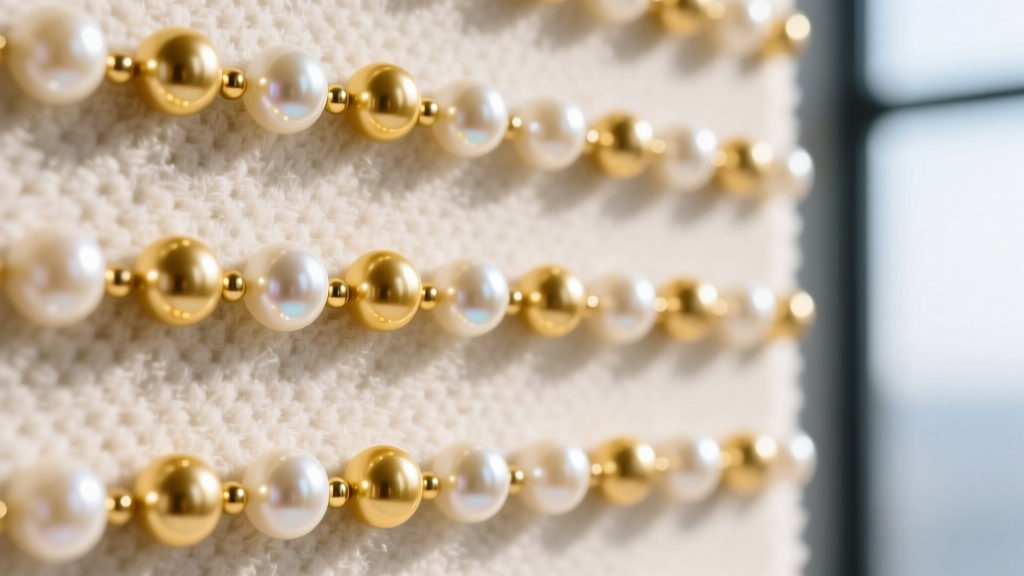
Use a flocked bead design board to map out your necklace. A standard princess-length necklace is 18 inches. When alternating 7mm pearls with 2mm gold beads and accounting for the 1mm space taken up by each silk knot, you will need approximately 45 pearls and 44 gold beads. Lay them out in your desired sequence, ensuring the color overtone of the pearls remains consistent throughout the gradient.
Step 2: Securing the Clasp with French Wire
Never tie silk thread directly to a metal clasp ring; the metal will eventually saw through the fibers. Instead, use French wire (also known as bullion).
- Cut a 1-inch piece of fine French wire using flush cutters.
- Thread your silk (doubled for strength) through the jump ring of your chosen clasp (a 14k gold lobster or pearl clasp).
- Slide the French wire over the silk loop to cover the thread completely.
- Pass the needle back through the first pearl and pull tight, creating a protected, metal-on-metal hinge at the clasp.
Step 3: The Overhand Knotting Technique
Knotting between every single bead—both pearl and gold—is mandatory in a pearl necklace with gold beads. This prevents the harder gold from rubbing against the softer pearl nacre and ensures that if the strand breaks, you only lose one bead.
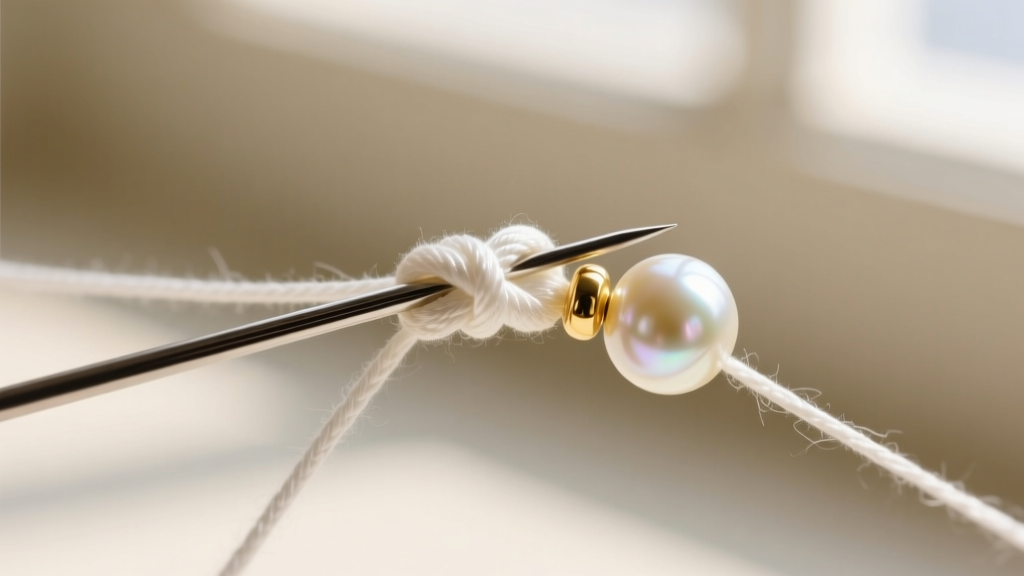
- String one pearl and one gold bead onto the doubled silk thread.
- Create a loose overhand knot in the silk.
- Insert the tip of a beading awl into the knot and slide it down flush against the gold bead.
- Pull the silk thread taut while gently guiding the awl to tighten the knot perfectly against the bead.
- Remove the awl and pull the thread one final time to lock the knot in place.
- Repeat this process down the entire length of the strand. Consistent tension is critical; pulling too hard will cause the silk to stretch unevenly, while pulling too lightly will leave visible gaps between the knot and the bead.
Advanced Tension and Finishing Techniques
The final three inches of the necklace require special attention. As you approach the clasp, you must transition from knotting every bead to knotting only every few beads, allowing the thread to pass smoothly through the French wire and clasp ring.
Once the strand is complete and attached to the second half of the clasp, you must secure the final knot. Apply a microscopic drop of flexible jewelry adhesive (such as G-S Hypo Cement) to the final knot inside the last pearl. Trim the excess silk thread with surgical scissors, leaving a 1mm tail that will retract inside the pearl's drill hole. Allow the cement to cure for 24 hours before wearing.
Expert Insight: Never use cyanoacrylate (Super Glue) on silk thread. It cures into a hard, brittle crystal that will eventually shatter and cut the silk fibers. Always use flexible, specialized jewelry cements designed for organic fibers.
Long-Term Care for Mixed-Media Necklaces
Maintaining a hybrid necklace requires balancing the care needs of both materials. While gold can withstand mild soaps and ultrasonic cleaners, pearls are highly sensitive to chemicals, acids, and heat. The GIA's pearl care guidelines strictly advise against ultrasonic cleaning for any pearl jewelry.
To clean your necklace, gently wipe the pearls and gold beads with a soft, lint-free microfiber cloth slightly dampened with distilled water after each wear. This removes body oils and cosmetic residues that can dull the pearl's luster and tarnish the gold alloy. Store the necklace flat in a soft pouch; hanging it for long periods can cause the silk thread to stretch permanently, creating unsightly gaps between your meticulously tied knots.


