Strong Magnetic Clasps for Necklaces: A Technical Buyer's Guide
Discover the engineering behind strong magnetic clasps for necklaces. Learn about neodymium grades, pull force, and safety mechanisms for secure wear.

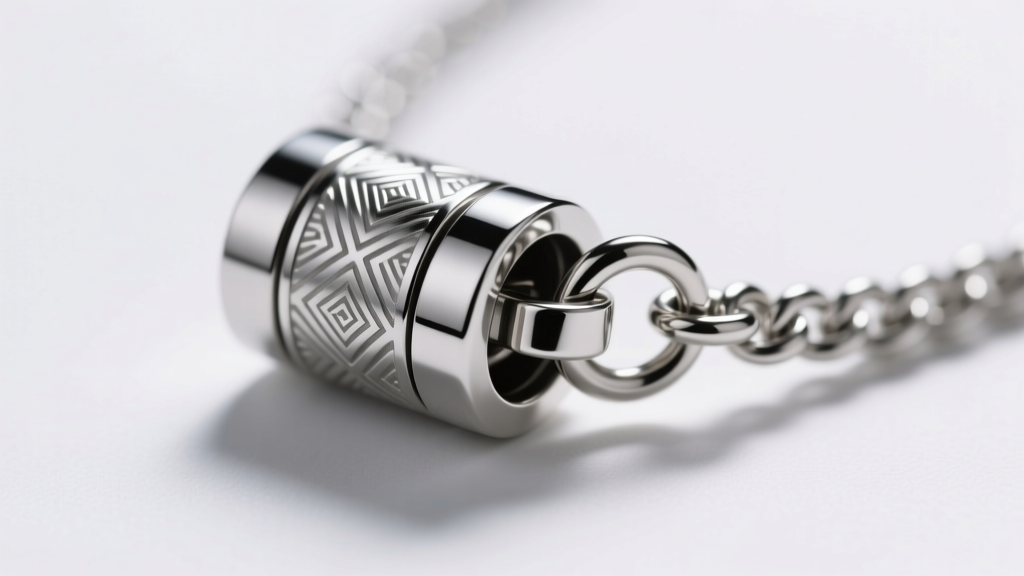
The evolution of jewelry findings has dramatically shifted over the last decade, moving away from purely mechanical closures toward advanced magnetic solutions. For jewelers, designers, and informed consumers, understanding the metallurgy and physics behind strong magnetic clasps for necklaces is critical. A poorly engineered magnetic clasp will fail under dynamic load, while a precision-machined neodymium assembly offers unparalleled security and ease of use. This technical deep dive explores the material science, force metrics, and integration protocols required to select and utilize high-performance magnetic necklace clasps.
The Physics of Sintered NdFeB in Jewelry Applications
Early magnetic clasps relied on ferrite or ceramic magnets, which suffer from low magnetic flux density and require bulky housings to achieve even marginal holding power. Modern high-end clasps utilize sintered Neodymium Iron Boron (NdFeB), the strongest permanent magnet material commercially available. The magnetic strength of these components is measured in terms of Maximum Energy Product (BHmax), expressed in Mega-Gauss Oersteds (MGOe).
When evaluating strong magnetic clasps for necklaces, the BHmax rating dictates how much magnetic material can be miniaturized while retaining sufficient holding force. A standard N42 grade magnet can achieve a surface field of over 4,000 Gauss in a compact 10mm x 5mm cylinder, making it ideal for delicate chains. However, raw magnetic pull is only one variable in clasp reliability; the geometric housing and mechanical interlocks play an equally vital role in preventing accidental detachment.
Neodymium Grades and Pull Force Metrics
Neodymium magnets are categorized by grades ranging from N35 to N52. The higher the number, the greater the magnetic energy density. For jewelry applications, manufacturers typically utilize N42, N50, or N52 grades to maximize pull force within minimal spatial footprints. According to data from K&J Magnetics, the pull force scales non-linearly with volume and grade.
| Magnet Grade | Dimensions (Diameter x Length) | Theoretical Pull Force (Tensile) | Recommended Chain Weight Limit |
|---|---|---|---|
| N35 | 8mm x 4mm | 3.2 lbs (1.45 kg) | Lightweight chains (< 15g) |
| N42 | 10mm x 5mm | 6.5 lbs (2.95 kg) | Medium chains (15g - 35g) |
| N50 | 10mm x 5mm | 8.1 lbs (3.67 kg) | Heavy chains (35g - 50g) |
| N52 | 12mm x 6mm | 12.4 lbs (5.62 kg) | Statement pieces (> 50g) |
It is crucial to understand that these metrics represent static tensile pull force (direct separation). Real-world wear introduces dynamic forces, meaning a clasp rated for 6.5 lbs of static pull may fail under a sudden 2-lb dynamic jerk if it lacks mechanical shear protection.
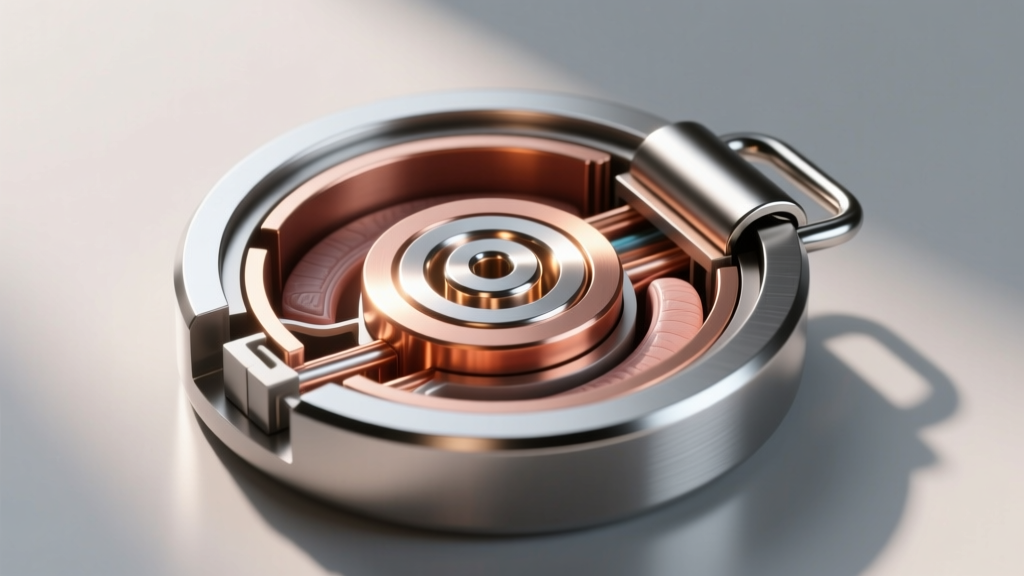
Coating Technologies and Corrosion Resistance
Sintered NdFeB is highly susceptible to oxidation. If left uncoated, the iron content within the magnet will rapidly corrode when exposed to ambient humidity, perspiration, and cosmetics, leading to a phenomenon known as 'spalling' where the magnet crumbles into a fine powder. To prevent this, strong magnetic clasps for necklaces must employ robust barrier coatings.
- Nickel-Copper-Nickel (Ni-Cu-Ni): The industry standard triple-plating process. It provides excellent corrosion resistance and a smooth, silver-colored finish that pairs well with sterling silver and white gold. However, it can trigger contact dermatitis in individuals with severe nickel allergies if the outer layer is compromised.
- Epoxy Resin: A black or clear polymer coating that offers complete waterproofing and high resistance to acidic sweat. Often used in sport or aquatic jewelry lines, though it is more prone to physical scratching.
- Physical Vapor Deposition (PVD): High-end clasps may use PVD to apply ultra-thin layers of titanium nitride or zirconium, yielding durable gold or rose gold finishes that match karat gold chains without risking galvanic corrosion.
Shear Force vs. Tensile Force: The Detachment Problem
The most common failure mode in magnetic jewelry is not a lack of tensile strength, but a vulnerability to shear force. Magnets resist direct pulling (tensile force) exceptionally well, but they slide apart easily when subjected to lateral (shear) pressure. When a necklace is caught on clothing or subjected to a glancing blow, the lateral force can easily overcome the magnetic friction.
Engineering Solutions for Shear Vulnerability
To counteract this, expert clasp designers integrate mechanical locking features that complement the magnetic attraction. The most effective designs include:
- Tongue-and-Groove Channels: The male and female halves feature interlocking ridges that physically block lateral movement.
- Step-Locks: A recessed step inside the female housing that the male magnet drops into, requiring a specific rotational or lifting angle to disengage.
- Secondary Safety Catches: A miniature hinged safety guard (similar to those found on fine watch bracelets) that flips over the joint, providing a mechanical backup in case the magnetic seal is broken.
Integration: Matching Clasps to Chain Gauges and Soldering
Integrating strong magnetic clasps for necklaces requires careful attention to the connecting jump rings. A high-pull N52 clasp attached to a weak, unsoldered jump ring will simply pull the ring open rather than detach magnetically. For heavy pendants and thick chains, the jump rings connecting the clasp to the chain must be laser-welded or hard-soldered.
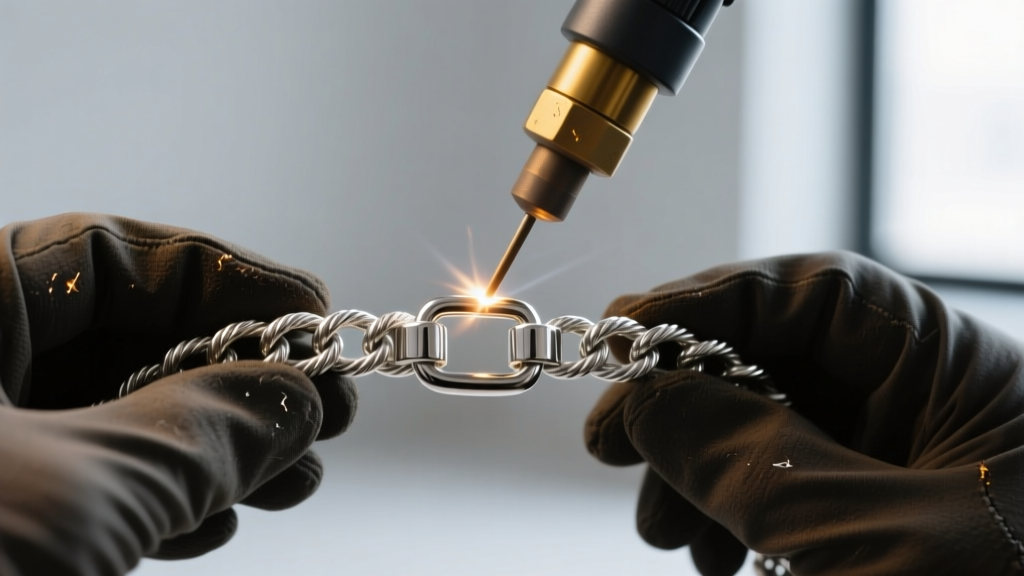
When soldering, thermal management is critical. Neodymium magnets begin to suffer irreversible demagnetization at temperatures as low as 80°C (176°F) for standard grades, and completely lose their magnetization at their Curie temperature of approximately 310°C (590°F). Jewelers must use heat-sink compounds or specialized laser welding techniques to attach the end caps and jump rings without transferring destructive heat to the internal NdFeB core. As noted by technical guides from Rio Grande, localized laser welding is the preferred method for assembling high-end magnetic findings, as it limits the heat-affected zone to a fraction of a millimeter.
Magnetic Shielding and Wearability Considerations
While strong magnetic clasps for necklaces offer superior functionality, the intense magnetic fields generated by N50 and N52 grades require safety considerations. An unshielded N52 magnet can project a measurable magnetic field up to 12 inches away from the source. This can interfere with mechanical watches, magnetize steel tools, and pose severe risks to individuals with pacemakers or implantable cardioverter defibrillators (ICDs).
Advanced clasp housings utilize flux-shielding materials, such as soft iron or specialized mu-metal alloys, to contain the magnetic field within the clasp assembly. This 'flux-capping' technique redirects the magnetic lines of force inward, maximizing the holding power at the joint while minimizing external magnetic leakage, ensuring the necklace is safe for daily wear in varied environments.
Expert Troubleshooting and Maintenance
Even premium magnetic clasps require specific maintenance protocols to ensure longevity. Because the NdFeB core is inherently brittle, dropping the necklace on a hard surface can cause the magnet inside the housing to shatter, leading to a sudden and total loss of holding power. Furthermore, cosmetics, lotions, and skin oils can accumulate in the tongue-and-groove channels, creating a physical barrier that reduces the surface-to-surface contact area. This effectively increases the air gap between the magnetic poles, which exponentially decreases the pull force. Regular cleaning with a soft brush and isopropyl alcohol is recommended to maintain optimal magnetic coupling and mechanical engagement.


