Glow Dark Necklace Tech: Strontium Aluminate Explained
Discover the material science behind a premium glow dark necklace. Compare strontium aluminate vs zinc sulfide, charging wavelengths, and encapsulation.

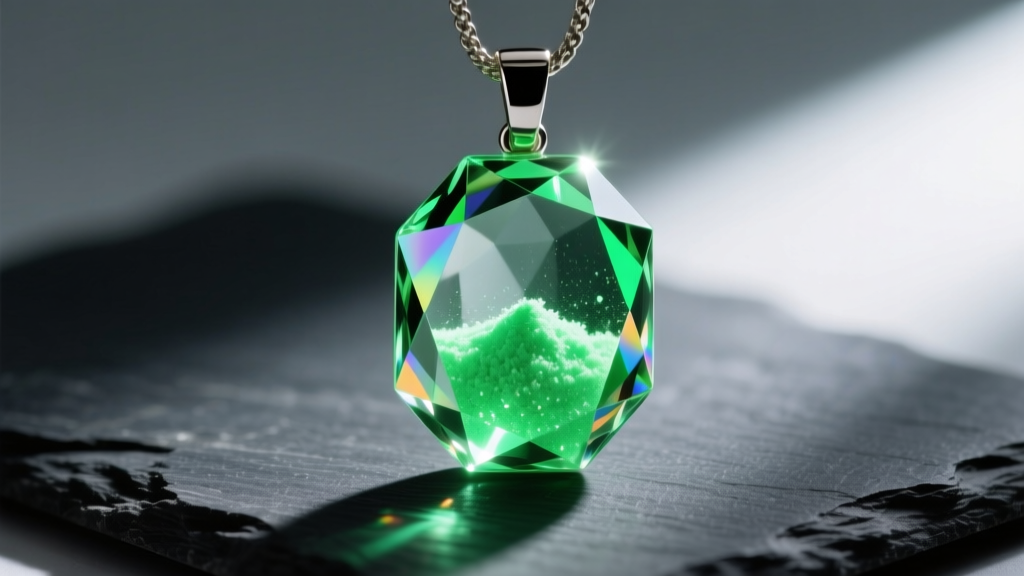
The Evolution of Photoluminescent Jewelry
For decades, the phrase 'glow dark necklace' conjured images of cheap, brittle plastic tubes filled with toxic chemicals or low-grade carnival novelties that faded within minutes. However, as of 2026, the landscape of photoluminescent jewelry has undergone a radical transformation, driven by advanced materials science. Today, high-end luminescent pendants are crafted using rare-earth-doped alkaline earth metal silicates and aluminates, offering brilliant, long-lasting afterglows that rival traditional gemstones in low-light environments. Understanding the technical specifications of these materials is critical for both jewelers and collectors seeking authentic, premium-grade pieces.
Zinc Sulfide vs. Strontium Aluminate: A Technical Breakdown
The market is currently divided between two primary photoluminescent compounds: legacy Zinc Sulfide (ZnS) and modern Strontium Aluminate (SrAl2O4). While ZnS is still used in mass-produced, budget-tier accessories, it is fundamentally inferior in almost every measurable metric. Strontium aluminate, specifically when doped with Europium and Dysprosium, represents the gold standard for any serious glow dark necklace.
| Property | Zinc Sulfide (ZnS:Cu) | Strontium Aluminate (SrAl2O4:Eu,Dy) |
|---|---|---|
| Peak Emission Wavelength | 530 nm (Green) | 520 nm (Green) / 490 nm (Aqua) |
| Initial Brightness | Low (Requires total darkness) | 10x to 15x Brighter |
| Visible Afterglow Duration | 30 - 60 Minutes | 12 - 24+ Hours |
| Excitation Spectrum | UV & Blue Light | UV, Violet, Blue, & Ambient White |
| Moisture Resistance | Moderate | Poor (Requires Encapsulation) |
| Relative Cost per Gram | $0.05 - $0.10 | $1.50 - $4.00 |
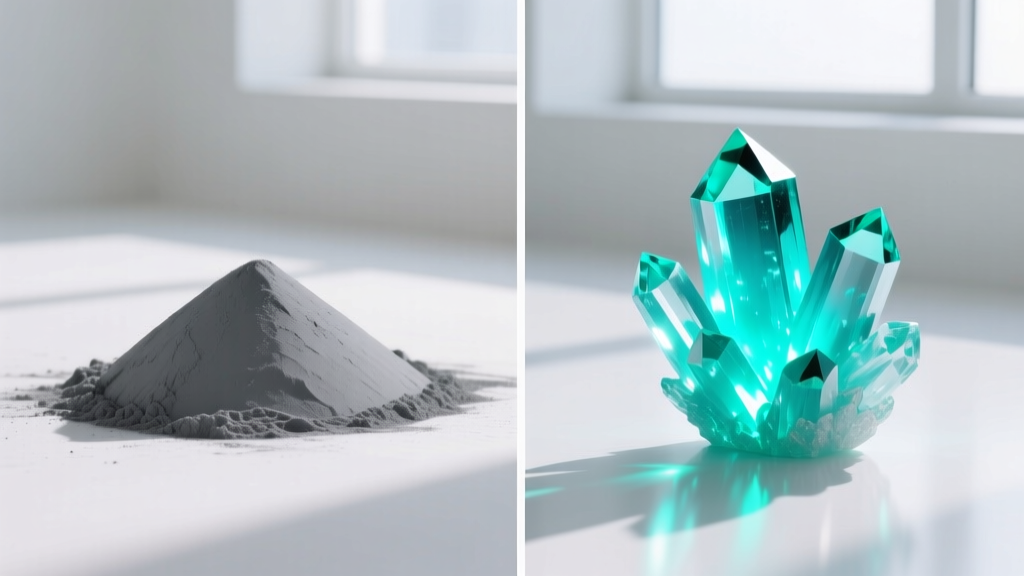
The Chemistry of the Glow Dark Necklace
The extraordinary performance of a premium glow dark necklace relies on the precise doping of the strontium aluminate crystal lattice. According to materials science research detailed by Wikipedia's Strontium Aluminate archives, the base SrAl2O4 matrix is inherently non-luminescent. The magic occurs when trace amounts of Europium (Eu2+) and Dysprosium (Dy3+) are introduced during high-temperature synthesis.
Electron Traps and Delayed Emission
Europium acts as the primary luminescent center. When photons strike the crystal, Eu2+ ions absorb the energy and transition to an excited state. However, it is the Dysprosium co-dopant that creates 'electron traps'—defects in the crystal lattice that capture these excited electrons and release them slowly over time. This delayed recombination is what produces the persistent phosphorescence, allowing the necklace to glow brightly for hours after the light source is removed. Without Dysprosium, the material would merely fluoresce, ceasing to glow the moment the UV light is turned off.
Encapsulation Matrices: Resin vs. Borosilicate Glass
The most critical point of failure in any strontium aluminate jewelry is moisture degradation. SrAl2O4 is highly susceptible to hydrolysis; when exposed to ambient humidity or sweat, the crystal structure breaks down, permanently destroying its luminescent properties. Therefore, the encapsulation matrix is just as important as the pigment itself.
'A premium glow dark necklace is only as durable as its encapsulation. Unsealed strontium aluminate will degrade into a dull, white, non-glowing powder within weeks if exposed to high humidity.' — Glow Inc: The Science of Photoluminescence
Borosilicate Glass Vials
For loose powder or raw crystal displays, jewelers utilize sealed borosilicate glass vials. Borosilicate is chosen for its low thermal expansion and high optical clarity. The vials are sealed using UV-curable optical adhesives, ensuring a hermetic barrier against moisture. The refractive index of borosilicate glass (~1.47) closely matches that of the embedding resins, minimizing internal light scattering and maximizing the external glow.
Marine-Grade UV-Stable Epoxy Resins
When casting solid pendants, master jewelers avoid cheap polyester or standard craft resins, which yellow under UV exposure and block the very light needed to charge the pigment. Instead, high-end pieces use marine-grade, HALS-stabilized (Hindered Amine Light Stabilizer) epoxy resins. These resins maintain a crystal-clear profile for decades and possess a refractive index of approximately 1.50, allowing for optimal light transmission both into the pigment and out to the observer's eye.
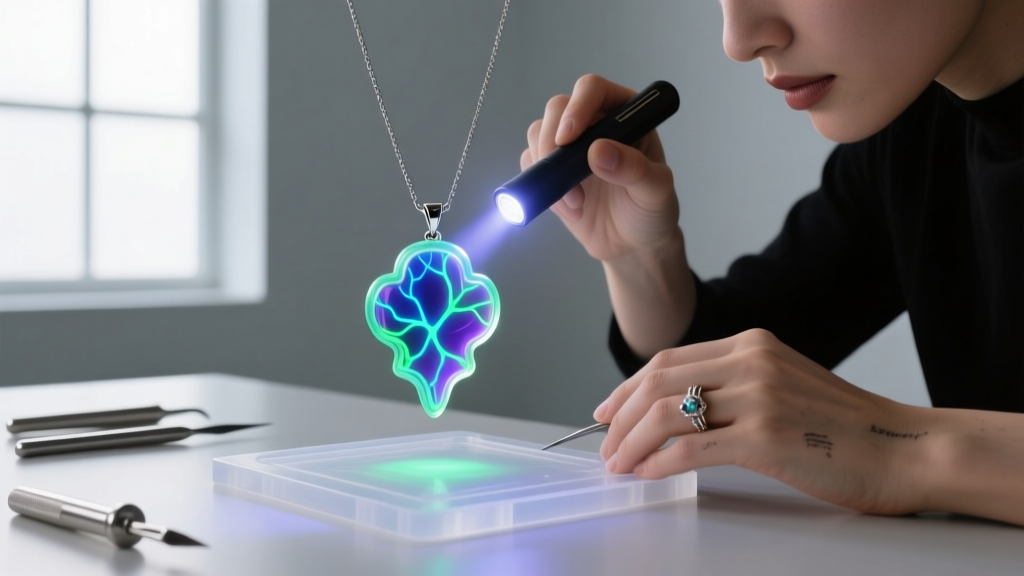
Excitation Wavelengths & Charging Protocols
Not all light sources are created equal when it comes to charging a photoluminescent pendant. While ambient sunlight will charge the necklace, understanding the excitation spectrum allows for rapid, maximum-capacity charging.
- 365nm UVA Flashlights: The absolute optimal charging tool. The 365nm wavelength perfectly overlaps the peak absorption band of SrAl2O4, charging the pendant to maximum brightness in 10 to 15 seconds.
- 395nm UV Flashlights: Common and inexpensive, but less efficient. Much of the energy is wasted as visible purple light, requiring 30-45 seconds for a full charge.
- Direct Sunlight: Contains a broad spectrum of UV and violet light. Excellent for charging, but prolonged exposure to the infrared (heat) spectrum can degrade certain resin matrices over time.
- Standard Indoor LEDs: Modern cool-white LEDs emit a small spike in the violet/blue spectrum (around 400-450nm). While sufficient to maintain a low-level glow, they lack the intensity to fully saturate the electron traps.
Color Variations and Emission Spectra
While green is the most common and brightest color, advanced ceramic engineering has expanded the palette for the modern glow dark necklace. The color is dictated by the host lattice and the specific rare-earth dopants used.
Aqua / Blue-Green (Sr4Al14O25:Eu,Dy)
By altering the stoichiometry to a strontium-rich matrix (Sr4Al14O25), the emission peak shifts to 490nm, producing a striking aqua or cyan glow. This variant boasts the longest absolute decay time of all photoluminescent pigments, remaining visible to the dark-adapted human eye for over 24 hours, though its initial peak brightness is roughly 20% lower than the standard green variant.
True Blue (BaMg2Al16O27:Eu)
Barium magnesium aluminate doped with Europium emits a deep, true blue at 450nm. However, this material lacks the deep electron traps provided by Dysprosium, resulting in a much faster decay curve. It is incredibly bright for the first 20 minutes but fades rapidly, making it a niche choice for specific theatrical or short-term event jewelry.
Buyer's Framework: Identifying Authentic SrAl2O4
When evaluating a high-ticket glow dark necklace, use this technical checklist to verify quality and ensure you are not overpaying for legacy Zinc Sulfide disguised as premium tech:
- Check the Decay Curve: Ask the seller for the 10-hour brightness metric. Authentic SrAl2O4 will still emit a measurable glow (above 0.32 mcd/m2) after 10 hours. ZnS will be completely dark.
- Inspect the Matrix: Look for micro-bubbles in resin casts. While a few are normal, excessive bubbling indicates improper vacuum degassing, which scatters light and reduces glow efficiency.
- Verify the Seal: If the pendant uses raw powder in a glass vial, inspect the cap under a jeweler's loupe. There should be a seamless, UV-cured optical adhesive seal with no visible threading gaps where moisture could ingress.
- Test the Charge: Shine a 365nm UV light on the piece. Genuine strontium aluminate will instantly 'snap' to a blindingly bright luminescence, whereas zinc sulfide will glow sluggishly and dimly.
Conclusion
The modern glow dark necklace is a triumph of solid-state chemistry and precision jewelry crafting. By moving past the novelty of zinc sulfide and embracing the complex, rare-earth-doped physics of strontium aluminate, jewelers are creating functional, luminous art pieces. Whether you are selecting a borosilicate-encased powder vial or a masterfully cast UV-stable resin pendant, understanding the material science ensures your luminescent jewelry will shine brilliantly for decades.


