Step-by-Step Guide to Styling a 3 Initial Necklace
Learn how to design, layer, and care for a 3 initial necklace. Our step-by-step guide covers metals, chain gauges, and tangle-free styling.

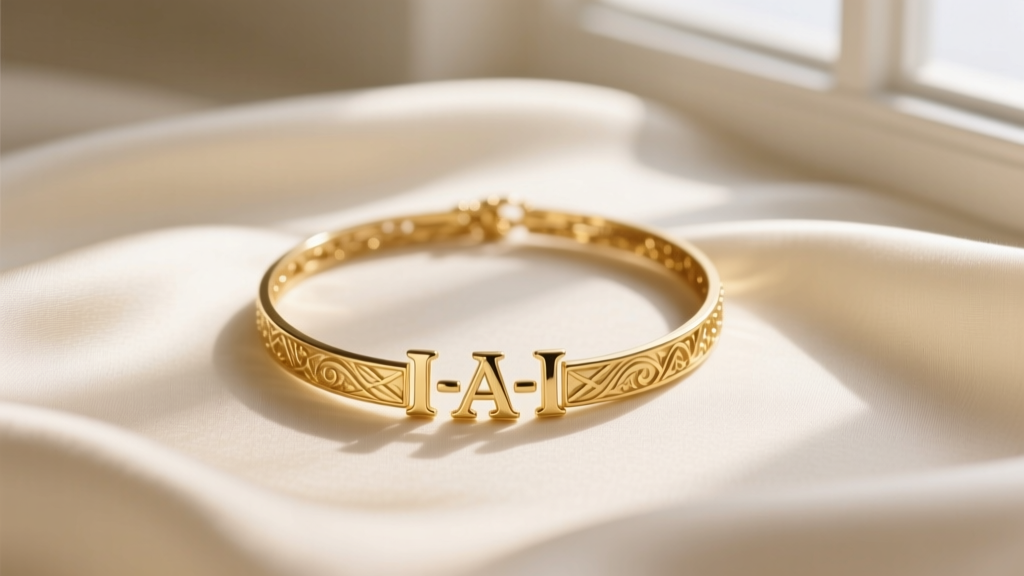
A 3 initial necklace is more than just a piece of jewelry; it is a deeply personal talisman. Whether it represents your three children, a trio of lifelong friends, or three pivotal life milestones, wearing three initials requires a careful balance of sentimentality and structural design. Unlike a single monogram, a three-letter pendant introduces unique physical challenges, including weight distribution, chain tension, and a higher propensity for tangling when layered.
In this comprehensive step-by-step guide, we will walk you through the exact specifications, metallurgical choices, and styling techniques required to design, wear, and maintain a 3 initial necklace that looks elegant and lasts a lifetime.
The Anatomy of a Perfect 3 Initial Necklace
Before selecting your chain, you must understand the physical footprint of a three-letter pendant. A standard single initial is typically 10mm to 12mm wide. When you scale this to three initials, the horizontal span can easily reach 35mm to 45mm. This wide footprint acts as a lever against the chain, meaning the bail (the loop that connects the pendant to the chain) must be perfectly centered and structurally reinforced. If the bail is too thin or poorly soldered, the constant pendulum motion of a wide pendant will eventually cause metal fatigue and snapping.
Step 1: Selecting the Right Metal Alloy and Gauge
The durability of your necklace hinges on the metallurgical properties of the alloy you choose. While 18k gold offers a richer, more buttery yellow hue, it is inherently softer. On the Vickers Hardness (HV) scale, 18k gold sits at approximately 115 HV, whereas 14k gold is alloyed with metals like zinc and copper to reach roughly 135 HV. For a wide 3 initial necklace that is prone to catching on clothing, 14k solid gold is the superior choice to prevent the letter bars from bending.
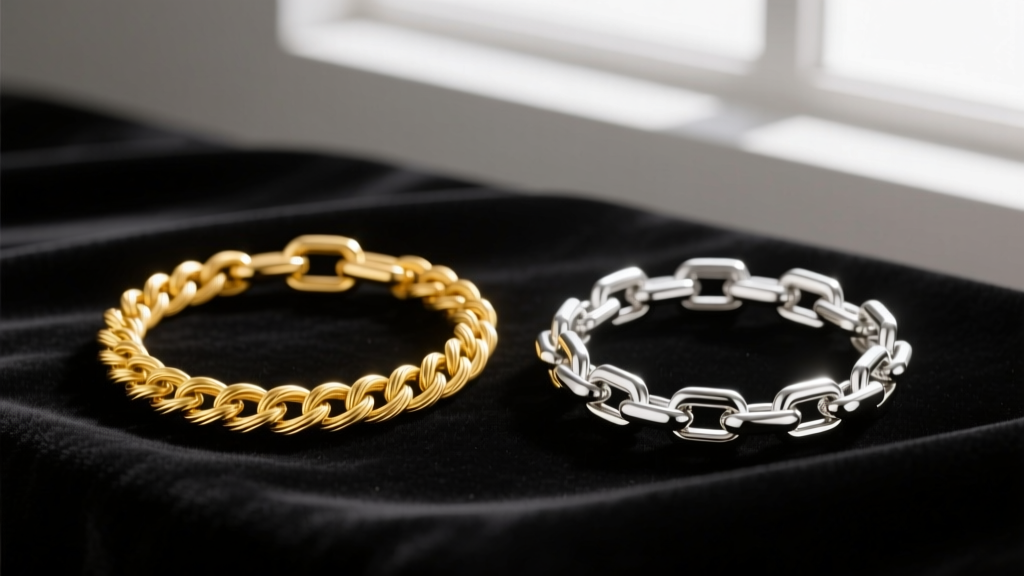
If you prefer silver, opt for 925 sterling silver that has been plated with a thick layer of rhodium. Raw sterling silver oxidizes rapidly when exposed to the sulfur in human sweat and environmental pollutants. Rhodium plating not only provides a brilliant, white-gold-like finish but also acts as an impermeable barrier against tarnish.
Chain Gauge Recommendations
The chain must support the weight of three solid metal letters without stretching. Avoid delicate chains under 0.8mm. Instead, look for these specific gauges:
- 0.9mm - 1.2mm Cable Chain: The classic choice. Ensure the jump rings are soldered shut.
- 1.0mm Box Chain: Excellent for layering because its square, interlocking links naturally resist twisting and tangling.
- 1.5mm Paperclip Chain: A modern, trendy option that provides high tensile strength, though the elongated links can sometimes catch on fine knitwear.
Step 2: Choosing the Layout and Font Style
The spatial arrangement of your three initials drastically alters the visual weight of the necklace. Here is a breakdown of the three primary layouts and how they behave on the body:
- Horizontal Bar: The letters are fused side-by-side on a single backing plate. This is the most stable layout, but it requires a longer chain (18 to 20 inches) so the wide pendant does not clip the edges of your collarbones.
- Vertical Drop: The initials are stacked top-to-bottom, connected by tiny jump rings. This layout draws the eye downward, creating a slimming illusion. However, the multiple jump rings introduce friction points that can wear down over time.
- Three Separate Discs: Three individual circular pendants, each bearing one letter, sliding freely along the chain. This offers a relaxed, bohemian look but requires rubber or silicone necklace spacers to keep the discs evenly distributed.
When it comes to typography, serif fonts (like Times New Roman styles) convey a vintage, academic elegance and feature thicker structural lines. Sans-serif or block fonts offer a minimalist, modern aesthetic but require a slightly thicker metal gauge to maintain structural integrity, as the uniform line width leaves less room for error in casting.
Step 3: Mastering the Layering Technique
Layering a 3 initial necklace is a masterclass in proportion. Because the pendant itself is visually heavy and wide, the surrounding chains must provide contrast without competing for attention. The golden rule of layering is the 2-inch drop rule—each subsequent necklace should be exactly two inches longer than the last to prevent the clasps and pendants from overlapping and tangling.
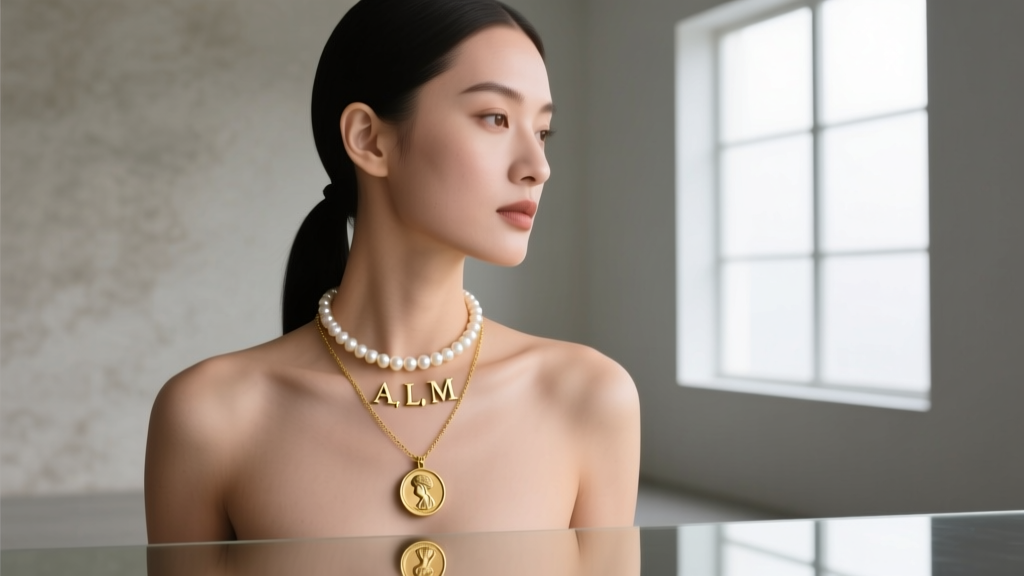
The Ideal Layering Stack
| Layer Position | Chain Length | Recommended Style | Purpose |
|---|---|---|---|
| Top (Base) | 14 inches | 2mm Pearl or Snake Chain | Anchors the stack high on the collarbone; adds texture. |
| Middle (Focal) | 16 inches | 1.0mm Box Chain + 3 Initial Pendant | The centerpiece; sits perfectly in the sternal notch. |
| Bottom (Anchor) | 18 to 20 inches | 1.2mm Cable Chain + Small Solitaire Diamond | Draws the eye down; balances the width of the initial bar. |
Pro Tip: If you struggle with your necklaces twisting together throughout the day, invest in a multi-strand spacer clasp. This small metallic bar features multiple loops that lock your chains in place at the nape of your neck, guaranteeing they remain perfectly spaced at the front.
Step 4: Matching Necklines to Your Pendant Drop
A 3 initial necklace interacts differently with various garment necklines. Because of its horizontal spread, it can easily clash with busy patterns or high collars.
- The V-Neck: The ideal partner. The diagonal lines of a V-neck frame the horizontal bar of the initials perfectly, creating a harmonious geometric balance. Opt for a 16-inch chain so the pendant rests just above the apex of the V.
- The Crew Neck: A standard crew neck T-shirt can make a wide initial necklace look cramped. If wearing a crew neck, choose a vertical drop layout or a longer 18-inch chain so the pendant rests entirely on the fabric of the shirt, rather than the collar seam.
- The Scoop Neck: This exposes a large canvas of skin. A layered stack (as outlined in Step 3) works beautifully here, filling the negative space without looking cluttered.
Maintenance: Preventing Tarnish, Snags, and Bending
Personalized jewelry requires specific care routines to maintain its legibility and structural soundness. According to the Jewelers of America, regular maintenance is the key to preserving fine jewelry alloys.
Cleaning Engraved and Cut-Out Letters
Dirt, lotion, and dead skin cells rapidly accumulate in the tight crevices where the letters meet the backing plate. Do not use harsh chemical dips, especially if your necklace features oxidized (blackened) recesses to make the letters pop, as the chemicals will strip the intentional patina. Instead, use a soft-bristled baby toothbrush, a drop of mild dish soap, and warm water. Gently agitate the crevices and pat dry with a microfiber cloth.
Inspecting the Jump Rings
The most common failure mode for a 3 initial necklace is the separation of the bail from the chain. When purchasing or inspecting your piece, look closely at the jump ring connecting the pendant to the chain. Laser-welded or soldered jump rings have no visible seam and are virtually impossible to pull apart. If you see a tiny slit (an unsoldered jump ring), take it to a local jeweler to have it soldered shut for a nominal fee. This single step will prevent the devastating loss of your sentimental pendant.
For more information on the durability of precious metal alloys and how they react to daily wear, the Gemological Institute of America (GIA) provides excellent educational resources on gold karatage and alloy composition.
Final Thoughts on Personalized Jewelry
Designing and styling a 3 initial necklace is an exercise in balancing emotional significance with physical mechanics. By prioritizing 14k gold for its superior hardness, selecting a chain gauge that can handle the pendant's leverage, and employing the 2-inch layering rule, you ensure that your meaningful trio of letters remains a staple in your wardrobe for decades. Treat your personalized pieces with the structural respect they demand, and they will elegantly tell your story every time you wear them.


