How to Style and Care for an Ivy Necklace: A Step-by-Step Guide
Learn how to style, layer, and restore an ivy necklace. Our step-by-step guide covers chain gauges, neckline pairing, and safe cleaning for botanical motifs.

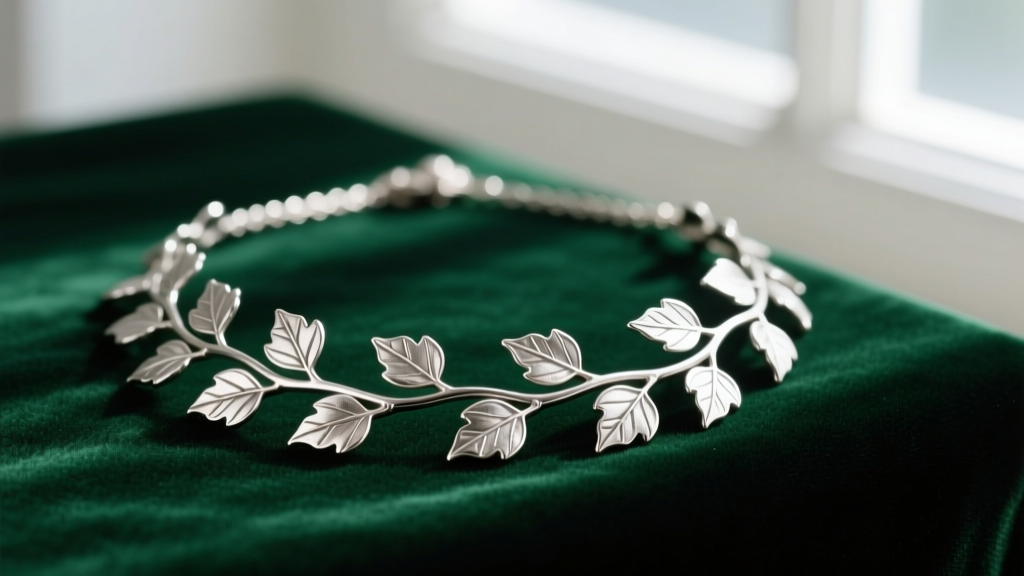
As we navigate the jewelry trends of 2026, the botanical renaissance shows no signs of wilting. Among the most coveted pieces in this category is the ivy necklace. Symbolizing fidelity, eternal life, and deep affection in the Victorian language of flowers, the ivy motif (specifically Hedera helix) bridges vintage romanticism with modern dark academia and cottagecore aesthetics. However, styling and maintaining these intricate, often asymmetrical pieces requires more than just slipping them on. From selecting the correct chain gauge to prevent the dreaded 'pendant flip,' to safely removing silver sulfide tarnish from deep leaf crevices, this step-by-step guide will help you master the art of wearing and caring for an ivy necklace.
The Anatomy of an Ivy Necklace: Materials and Motifs
Before diving into styling, it is crucial to understand the construction of your ivy pendant. Historically popularized during the mid-19th century, antique and vintage ivy necklaces were predominantly crafted in 925 sterling silver or 15k gold (a standard in Victorian England). Modern iterations frequently utilize Argentium silver (935 grade) for its superior tarnish resistance, or 14k solid gold for everyday durability.
The defining feature of an ivy necklace is its intricate veining. Jewelers use techniques like repoussé (hammering from the reverse side) or lost-wax casting to create the deep grooves that mimic the leaf's natural vascular system. While beautiful, these deep crevices act as magnets for skin oils, lotions, and environmental pollutants, making proper care a non-negotiable aspect of ownership.
Step 1: Selecting the Right Chain Gauge and Length
The most common frustration among ivy necklace wearers is the pendant constantly flipping upside down. This occurs due to a mismatch between the pendant's bail (the loop it hangs from), the chain's thickness, and the pendant's center of gravity. Ivy leaves are naturally asymmetrical and top-heavy. If the chain is too thick, it creates friction in the bail, locking the pendant in an awkward position. If the chain is too thin, the pendant slides too freely and flips.
The Chain-to-Bail Ratio Rule
For optimal drape, the diameter of your chain should be exactly one-third to one-half the inner width of the pendant's bail. Below is a reference chart to help you pair your ivy pendant with the correct chain.
| Ivy Pendant Weight | Bail Inner Width | Recommended Chain Gauge | Best Chain Style |
|---|---|---|---|
| Light (2g - 4g) | 2.0mm - 2.5mm | 0.8mm - 1.0mm | Cable or Box Chain |
| Medium (5g - 8g) | 3.0mm - 4.0mm | 1.2mm - 1.5mm | Rope or Curb Chain |
| Heavy (9g+) | 4.5mm+ | 1.8mm - 2.2mm | Figaro or Wheat Chain |
Pro Tip: If you have a heavy vintage ivy pendant with a worn-down bail, do not pair it with a snake chain. Snake chains lack the structural rigidity to support heavy, asymmetrical botanical pieces and are prone to kinking under the shifting weight of an ivy leaf.
Step 2: Layering Techniques for Botanical Pendants

Layering an ivy necklace requires strategic spacing to ensure the intricate leaf details are not obscured by adjacent chains. In 2026, the maximalist 'messy stack' has been replaced by intentional, structured cascades.
The 2-Inch Cascade Framework
- The Anchor (14-15 inches): Start with a simple, non-pendant chain or a delicate pearl choker. A 2mm freshwater pearl strand provides a luminous, organic contrast to the metallic ivy leaf.
- The Focal Point (17-18 inches): This is where your ivy necklace sits. Ensure the pendant rests precisely on the sternum. Use a slightly heavier chain texture here to draw the eye.
- The Elongator (20-22 inches): Finish with a minimalist lariat or a simple, unadorned rope chain. This creates a vertical line that elongates the torso and frames the ivy motif without competing with it.
Metal Mixing: Do not be afraid to mix metals. A yellow gold ivy pendant layered with a white gold or platinum anchor chain creates a striking, modern contrast that highlights the warmth of the botanical motif.
Step 3: Matching Your Ivy Necklace to Necklines
The jagged, multi-pointed edges of an ivy leaf dictate how it interacts with your wardrobe. The wrong neckline can cause the delicate points of the leaf to snag on fabric, potentially bending the metal or damaging the garment.
- Sweetheart & Scoop Necklines: These are the ideal canvas for an ivy necklace. The curved neckline mirrors the organic shape of the leaf, allowing the pendant to lay flat against the skin.
- V-Necklines: A medium-sized ivy pendant works beautifully here, following the geometric lines of the V-neck. However, ensure the chain is short enough that the pendant doesn't get lost in the fabric's fold.
- High Collars & Turtlenecks: Avoid wearing delicate ivy pendants over thick, ribbed knits. The friction of the fabric against the metal will accelerate wear on the bail and can cause the leaf points to catch and bend. If you must wear it over a turtleneck, opt for a large, heavy-cast ivy pendant on a 22-inch chain.
Step 4: Safe Cleaning and Patina Preservation
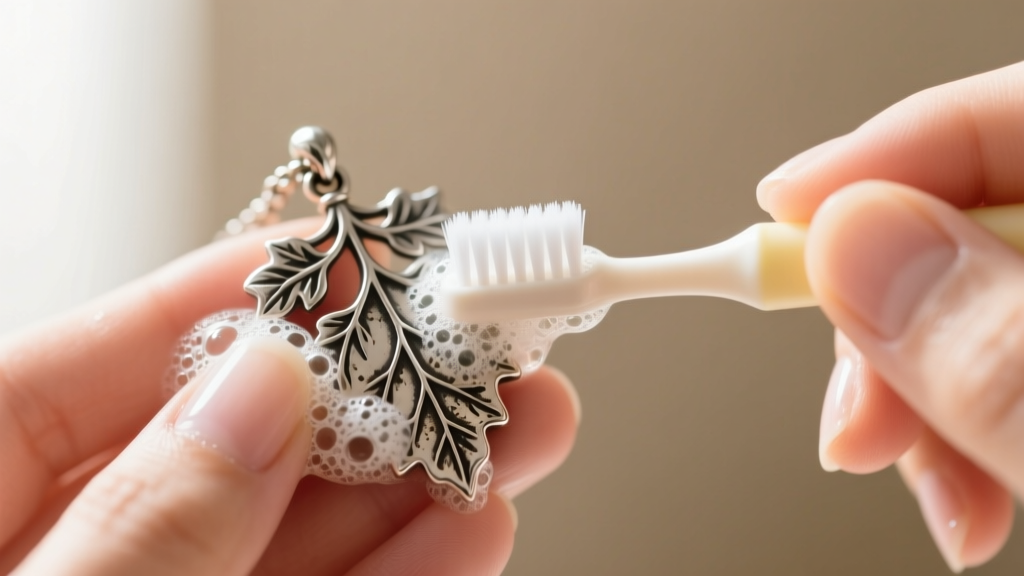
Cleaning an ivy necklace is a delicate operation. The deep grooves that give the leaf its realistic texture are the exact spots where silver sulfide (tarnish) and cosmetic buildup accumulate. Furthermore, many antique botanical pieces feature applied enamel or oxidized finishes that harsh chemicals will instantly destroy.
What to Avoid at All Costs
Never use commercial 'silver dip' solutions (which contain thiourea) on an ivy necklace. These chemicals strip away intentional oxidation (the dark antiquing in the leaf veins that provides contrast) and will permanently cloud or dissolve vintage guilloché enamel. For a comprehensive understanding of metal conservation, refer to the Victoria and Albert Museum's guide on silver conservation.
The Safe Cleaning Protocol
- The Soak: Mix a few drops of phosphate-free dish soap (like Dawn) into a bowl of lukewarm distilled water. Submerge the ivy necklace for exactly 5 minutes to loosen sebum and lotion.
- The Agitation: Using a baby toothbrush (which has ultra-soft bristles that will not scratch 925 silver or 14k gold), gently brush along the direction of the leaf veins. Do not scrub in circles, as this can trap debris deeper into the crevices.
- The Rinse: Rinse thoroughly under lukewarm running water. Ensure the drain is plugged!
- The Dry: Pat dry with a microfiber cloth, then use a hairdryer on the 'cool' setting to blast moisture out of the bail and deep leaf grooves. Trapped moisture accelerates tarnishing.
For gemstone-set ivy necklaces (such as those featuring micro-pave diamonds or cabochon turquoise in the leaf center), consult the Gemological Institute of America (GIA) jewelry care guidelines before applying any liquids, as porous stones require specialized, dry-cleaning methods.
Troubleshooting Common Ivy Necklace Issues
Even with meticulous care, the unique geometry of an ivy necklace presents specific mechanical challenges over time.
Issue 1: Bail Friction and Wear
Because ivy pendants are asymmetrical, they hang at a slight angle, causing uneven friction inside the bail. Over years of wear, this can wear a hole through a thin silver bail. The Fix: Have a jeweler install a hidden 'bail tube' or line the inside of the existing bail with a tiny insert of harder metal, like platinum or white gold, to absorb the friction from the chain.
Issue 2: Bent Leaf Points
The tips of the ivy leaves are highly susceptible to bending if pressed against a hard surface (like a desk or steering wheel). The Fix: Do not attempt to bend cold-worked sterling silver back into shape with your fingers; it will likely snap due to metal fatigue. A professional jeweler must anneal (heat) the specific leaf point before gently reshaping it with nylon-jaw pliers.
Issue 3: Clasp Failure on Delicate Chains
Vintage ivy necklaces often feature tiny spring-ring clasps that fail under the weight of the pendant. The Fix: Upgrade the clasp to a 5mm or 6mm lobster claw. Lobster clasps feature a solid internal spring mechanism that is vastly superior for securing botanical pendants, ensuring your heirloom piece remains safely around your neck.
By understanding the structural nuances and historical context of your ivy necklace, you elevate it from a simple accessory to a masterfully curated element of your personal style. Whether you are layering it for a modern botanical aesthetic or preserving an antique heirloom, these precise techniques will ensure your ivy motif remains as vibrant and enduring as the plant it represents.
For further reading on the historical significance of flora in jewelry design, explore the Metropolitan Museum of Art's botanical motif archives.


