How to Select, Style, and Care for a Large Emerald Necklace
Master the art of wearing a large emerald necklace. Learn step-by-step authentication, neckline matching, and expert care protocols.

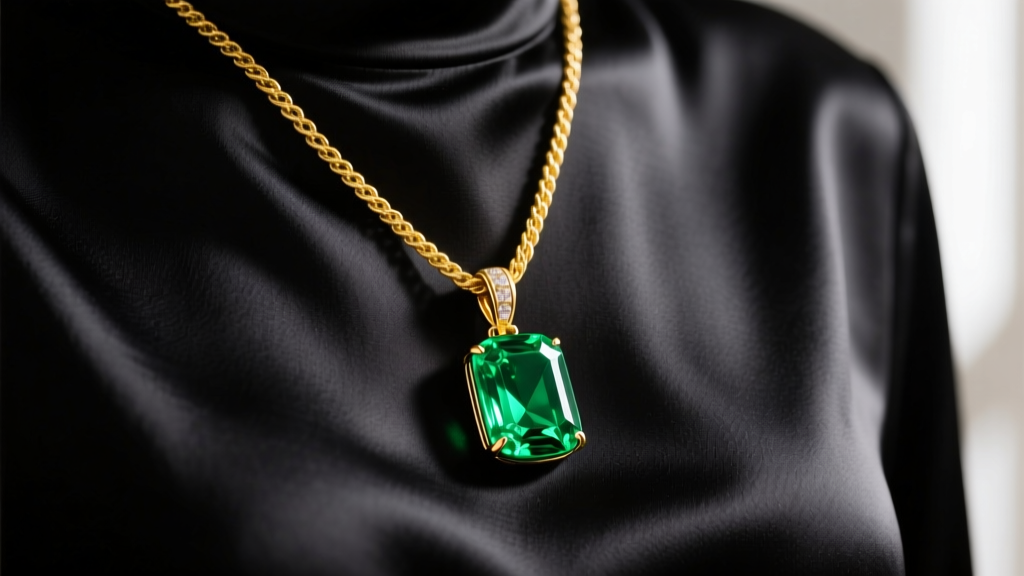
When investing in a large emerald necklace, you are not merely purchasing a piece of jewelry; you are acquiring a geological marvel that has captivated royalty and collectors for centuries. However, the sheer visual weight, unique inclusions, and specific care requirements of a statement emerald demand a strategic approach to styling and maintenance. Whether you are inheriting a vintage piece or purchasing a modern centerpiece, understanding the nuances of emerald gemology and styling is essential.
The Anatomy of a Statement Emerald: What 'Large' Really Means
In the gemological community, an emerald crosses into 'large' or 'statement' territory at the 5-carat mark. However, because emeralds have a lower specific gravity (2.67 to 2.78) compared to diamonds or sapphires, a 5-carat emerald will face up significantly larger than a diamond of the same weight. A well-proportioned 5-carat emerald-cut stone will typically measure around 12mm x 9mm, making it an undeniable focal point on the décolletage.
When selecting a large emerald pendant, the setting must be engineered to protect the stone's vulnerable corners. Emeralds rank 7.5 to 8 on the Mohs scale of hardness, but their toughness—the ability to resist chipping and breaking—is notoriously poor due to 'jardin' (the internal network of fractures and inclusions natural to the stone). Therefore, a large emerald should always be set in a bezel or a heavy V-prong setting crafted from 18k gold or platinum to absorb daily impacts.
Step-by-Step Guide to Authenticating Emerald Treatments
Nearly 99% of natural emeralds undergo some form of clarity enhancement to fill surface-reaching fractures. Knowing how to authenticate and understand these treatments is the most critical step in buying a large emerald necklace.
- Step 1: Demand a Reputable Lab Report. Never purchase a large emerald without documentation from the GIA (Gemological Institute of America) or the Gübelin Gem Lab. These reports will explicitly state the level of clarity enhancement.
- Step 2: Decode the Enhancement Scale. The GIA uses a scale of None, Minor (F1), Moderate (F2), and Significant (F3). 'Minor' indicates traditional cedar oiling, which is universally accepted and does not drastically reduce the stone's value. 'Moderate' means more substantial filling is present. 'Significant' often implies the use of synthetic resins (like Opticon) or glass fillers, which severely diminishes the investment value and requires extreme care.
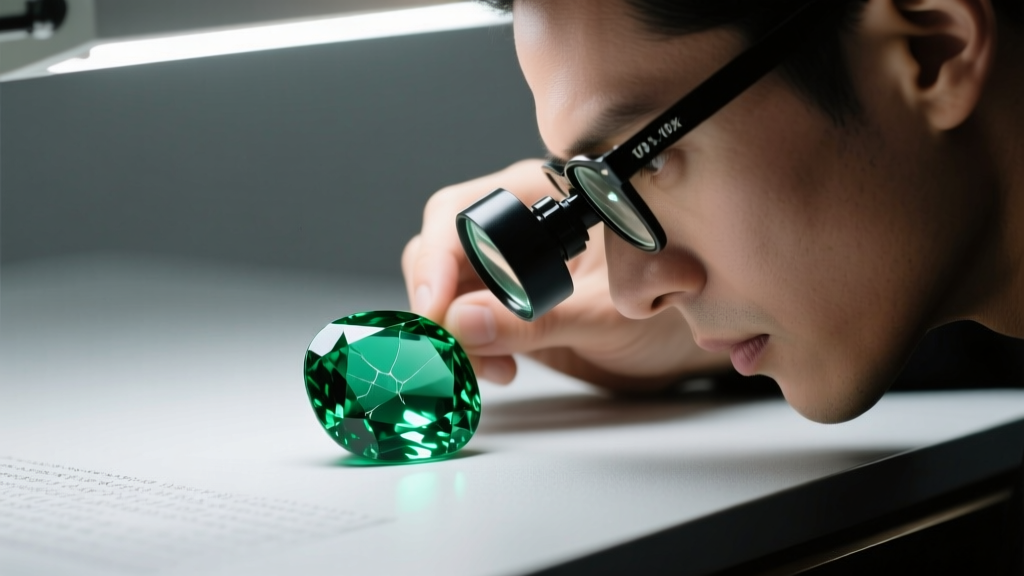
- Step 3: Perform the Loupe Test. Using a 10x triplet loupe, examine the stone's surface under bright, direct light. If you see a 'flash effect' (a subtle blue or purple iridescence) inside the fractures, the stone has likely been treated with epoxy resin rather than natural oil. While stable, resin-filled emeralds should command a much lower price per carat.
How to Match Necklines with a Large Emerald Pendant
A large emerald necklace can easily overwhelm an outfit if the neckline and chain length are mismatched. The goal is to frame the stone so it rests on bare skin, allowing its deep green saturation to contrast beautifully with your complexion.
| Neckline Type | Ideal Chain Length | Pendant Style & Chain Gauge |
|---|---|---|
| Deep V-Neck | 18 to 20 inches | Elongated Emerald Cut Drop; 2.5mm Wheat Chain |
| Sweetheart | 16 to 18 inches | Oval or Pear Halo Pendant; 2.0mm Rope Chain |
| Scoop Neck | 20 to 22 inches | Large Cabochon Bezel Pendant; 3.0mm Box Chain |
| Boatneck / Bateau | 24+ inches (Opera) | Geometric Art Deco Drop; 1.5mm Cable Chain (Layered) |
Pro Tip: A heavy 5+ carat emerald pendant requires a chain with structural integrity. Avoid delicate 1.0mm cable chains, as the weight of a large stone will eventually stretch or snap the links. Opt for a 2.0mm to 3.0mm wheat, rope, or box chain crafted in 14k or 18k solid gold.
Step-by-Step Styling: Balancing the Visual Weight
Styling a large emerald necklace requires a 'less is more' approach to the rest of your jewelry wardrobe. Because the human eye is naturally drawn to the vibrant green spectrum, the emerald will dominate your visual center of gravity.
- Metal Harmony: Match the metal to the emerald's origin. Colombian emeralds (from mines like Muzo or Chivor) typically possess a warm, slightly yellowish-green undertone that looks breathtaking in 18k or 22k yellow gold. Conversely, Zambian emeralds (like those from the Kagem mine) often feature a cooler, bluish-green hue with higher clarity, making them ideal for platinum or 18k white gold settings.
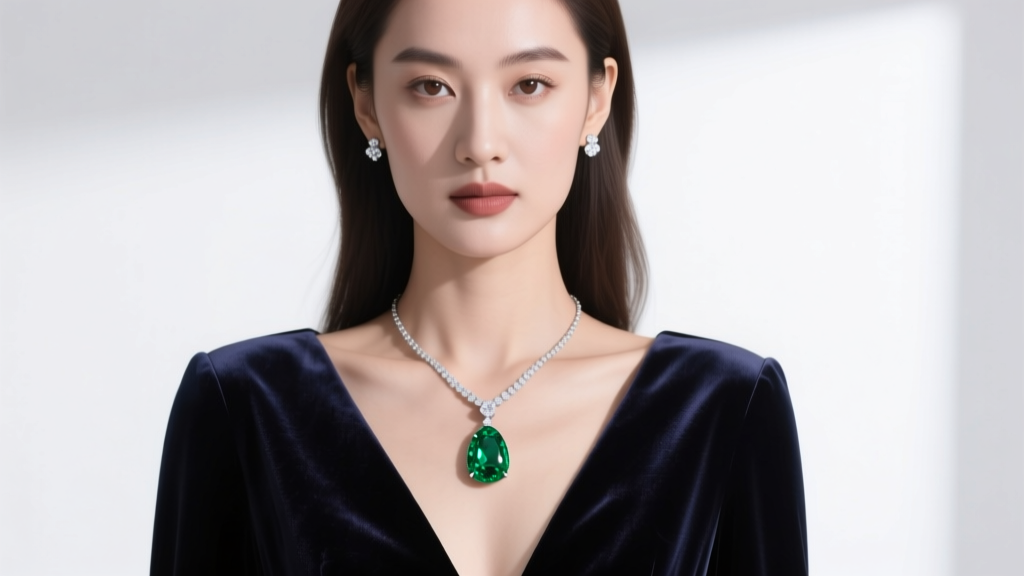
- Earring Pairing: Avoid large, dangling chandelier earrings. Instead, anchor the look with high-quality diamond studs (0.50ct to 1.00ct total weight) or simple gold hoops. This keeps the visual hierarchy intact, ensuring the necklace remains the undisputed star.
- Fabric Contrast: Emeralds pop most vibrantly against dark, matte fabrics. Black silk, deep navy velvet, and charcoal wool provide the necessary contrast to make the green saturation appear richer and more luminous.
The Care Protocol: Cleaning and Storing High-Value Emeralds
The most common mistake owners make with large emerald necklaces is using commercial jewelry cleaners or ultrasonic machines. Ultrasonic vibrations can easily shatter an included emerald, and harsh chemicals will strip the cedar oil from its fractures, leaving the stone looking cloudy and white-fractured.
Step-by-Step Safe Cleaning Method
- Prepare the Solution: Fill a small glass bowl with lukewarm (never hot) distilled water and add two drops of mild, phosphate-free dish soap (like Dawn).
- Soak Briefly: Submerge the emerald pendant for no more than 3 to 5 minutes to loosen surface oils and cosmetics.
- Brush Gently: Using a brand-new, ultra-soft baby toothbrush, gently sweep the back of the setting and the chain. Avoid scrubbing the surface of the emerald directly, especially near the prongs or bezel edges.
- Rinse and Dry: Rinse under a gentle stream of lukewarm water. Pat dry with a lint-free microfiber cloth. Allow it to air dry completely before storing.
Storage Best Practices
Always store your large emerald necklace in a soft, velvet-lined jewelry box, separated from diamonds and sapphires. While emeralds are hard enough to resist scratching from most metals, diamonds (Mohs 10) will easily scratch the surface of an emerald if they rub together in a shared jewelry pouch.
Investment Value: Origin and Pricing Expectations
A large emerald necklace is not just a fashion statement; it is a tangible asset. The price per carat for stones over 5 carats scales exponentially, heavily influenced by geographic origin and treatment levels.
| Origin | Color Profile | Approx. Price per Carat (5ct+, Minor Oil) |
|---|---|---|
| Colombian (Muzo/Coscuez) | Warm, vibrant, slightly yellowish-green | $15,000 - $60,000+ |
| Zambian (Kagem) | Cool, deep, bluish-green, higher clarity | $8,000 - $25,000 |
| Brazilian | Lighter, minty green, highly included | $2,000 - $8,000 |
When evaluating a large emerald, remember that color saturation and origin often trump absolute clarity. A slightly included Colombian emerald with a vivid, saturated green hue will always command a higher premium and retain its value better than a flawless, pale green stone from a lesser-known deposit.
By understanding the gemological intricacies, mastering the styling proportions, and adhering to strict care protocols, your large emerald necklace will remain a breathtaking and enduring centerpiece in your collection for decades to come.