The Ultimate Guide to Styling a Boho Beaded Necklace
Learn how to choose, layer, and care for a genuine boho beaded necklace. Discover stringing gauges, gemstone grades, and expert styling tips.

What Defines a True Boho Beaded Necklace?
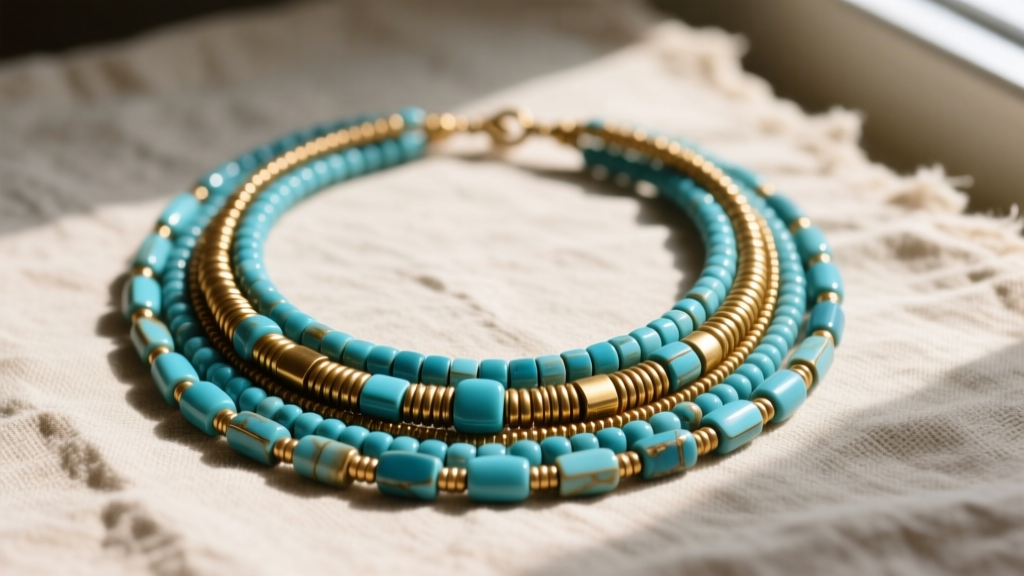
The bohemian aesthetic in jewelry is rooted in a celebration of natural elements, artisanal craftsmanship, and a relaxed, free-spirited ethos. However, the mass-market explosion of festival fashion has diluted this category, flooding the market with cheap plastics and dyed glass. A genuine boho beaded necklace is defined by its use of organic, semi-precious, or earth-mined materials, often featuring asymmetrical patterns, hand-knotting, or intricate seed beadwork. For beginners navigating this space, understanding the difference between authentic artisan beadwork and fast-fashion imitations is the first step toward building a meaningful, long-lasting jewelry collection.
True bohemian jewelry tells a story through its materials. You will frequently encounter elements like hand-carved bone, ethically sourced horn, raw brass heishi beads, and unpolished semi-precious gemstones. The appeal lies in the slight imperfections—the natural matrix in a turquoise bead or the varying opacity of handmade Czech glass. When you invest in a high-quality boho beaded necklace, you are not just buying an accessory; you are acquiring a piece of wearable art that develops a unique patina and character as it ages alongside you.
The Anatomy of Quality: Stringing Materials & Gauges
The most common failure point in any beaded necklace is the stringing material. If you are purchasing or commissioning a boho beaded necklace, you must scrutinize what holds the beads together. Many entry-level commercial pieces use a basic 7-strand nylon-coated wire, often referred to generically as Tigertail. While affordable, 7-strand wire has a high memory and will permanently kink if bent or stored improperly, leading to a stiff, unnatural drape around the neckline.
For premium artisan pieces, look for 49-strand micro-fused stainless steel beading wire coated in nylon. Brands like Soft Flex or Beadalon manufacture 49-strand wires that offer the drape of silk thread but the tensile strength of steel. The ideal gauge for most gemstone boho necklaces is 0.018 inches (0.46mm). This thickness easily passes through the drill holes of 6mm to 8mm semi-precious stone beads while remaining flexible enough to lay flat against the collarbone. According to Fire Mountain Gems, a 49-strand 0.018-inch wire can support up to 20 pounds of tensile weight, making it virtually break-proof under normal wearing conditions.
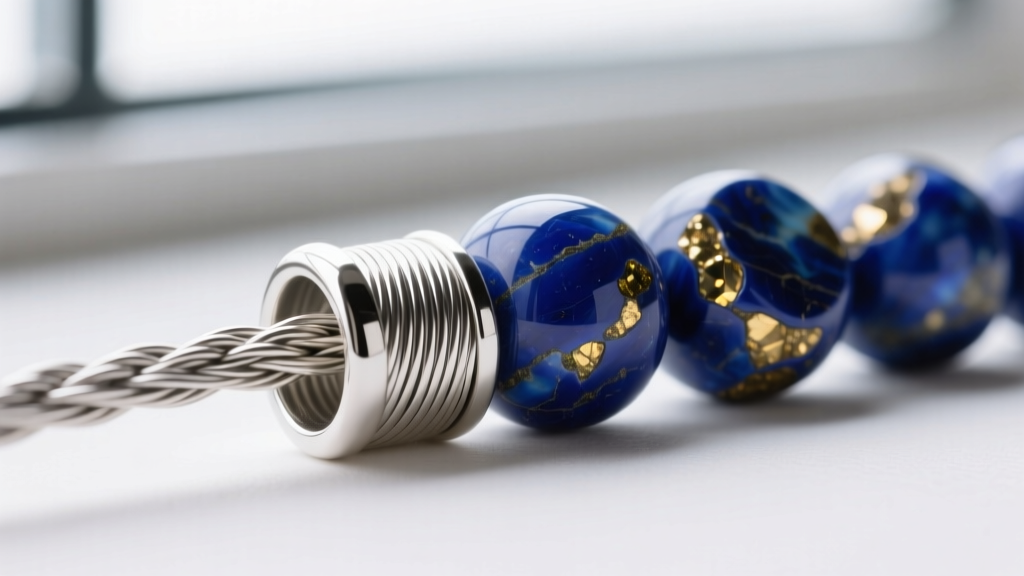
Equally important are the findings used to secure the wire. High-end boho beaded necklaces utilize 2x2mm sterling silver crimp tubes, which are compressed using specialized crimping pliers to fold the metal inward, creating a clean, rounded finish. Avoid pieces that use flat-crushed crimp beads or base-metal clam-shell knot covers, as these can shear the wire over time or cause skin irritation.
Gemstone Grades & Spotting Fast-Fashion Fakes
The boho palette heavily relies on earthy, vibrant gemstones. Turquoise, lapis lazuli, amazonite, and carnelian are staples of the genre. However, these stones are frequently faked or heavily treated. Understanding gemstone grades is crucial for beginners to avoid overpaying for dyed imitations.
- Turquoise: Natural, untreated turquoise is rare and expensive. Most authentic boho pieces use stabilized turquoise, where a clear epoxy resin is introduced to harden the stone and enhance its color without altering its fundamental nature. Beware of dyed howlite or magnesite, which features unnatural, uniform coloring and superficial black veining that looks painted on. The Gemological Institute of America (GIA) provides extensive documentation on identifying these common simulants.
- Lapis Lazuli: Genuine lapis should feature a deep royal blue base with natural flecks of golden pyrite and occasional white calcite inclusions. If the stone is a solid, uniform, ultra-dark blue with no pyrite, it is likely dyed jasper or sodalite.
- Seed Beads: Authentic boho fringe and spacer work relies on precision seed beads. Look for Japanese Miyuki or Toho beads in size 11/0 (approximately 1.6mm). These offer uniform sizing that prevents the beadwork from puckering, a common issue with cheaper, irregular Czech seed beads.
Sizing & Proportions: Finding Your Ideal Length
The drape of a boho beaded necklace dramatically alters its visual impact and how it pairs with different necklines. Unlike delicate metal chains, bead strands have physical weight and thickness, meaning a 20-inch beaded necklace will sit higher on the chest than a 20-inch metal chain. Below is a structural guide to help you select the right length for your body type and wardrobe.
| Length Category | Inches | Best Necklines | Boho Styling Notes |
|---|---|---|---|
| Choker | 14" - 16" | V-neck, Scoop, Off-shoulder | Best for lightweight seed beads or small 4mm heishi. Heavy stones will feel restrictive. |
| Princess | 18" | Crew neck, Boat neck | The most versatile length. Ideal for a single strand of 6mm turquoise or lapis rounds. |
| Matinee | 20" - 24" | High necklines, Button-downs | Perfect for layered, multi-strand boho bib necklaces featuring amber or bone pendants. |
| Opera | 28" - 36" | Deep V, Plunging, Tunics | Can be doubled up. Excellent for long, flowing wooden bead or mala-style necklaces. |
The 3-Tier Layering Framework
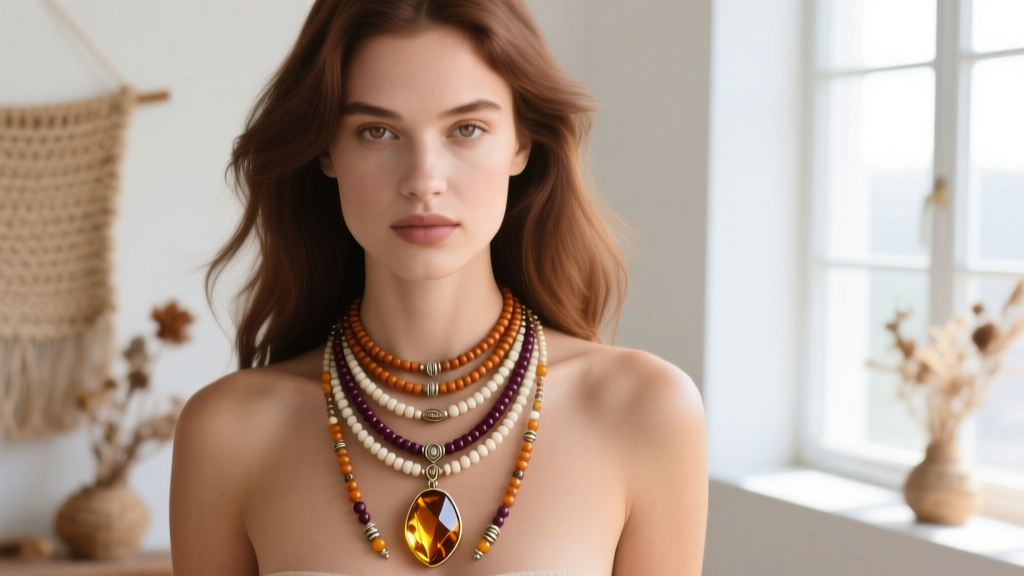
Layering is the heartbeat of bohemian styling, but haphazardly throwing on multiple necklaces results in a tangled, heavy mess. To master the boho beaded necklace stack, utilize the 3-Tier Framework, which relies on mathematical spacing and varied bead textures to create visual depth without overwhelming the wearer.
Tier 1: The Anchor (16 inches)
Start with a lightweight, close-fitting strand. A simple 16-inch strand of 11/0 Miyuki seed beads in an earthy matte olive or terracotta finish works perfectly. This tier frames the collarbone and provides a subtle base color.
Tier 2: The Focal Point (20 to 22 inches)
This is where your primary boho beaded necklace lives. Choose a strand with larger, 8mm to 10mm semi-precious stones, such as stabilized turquoise or matte amazonite. The 4-inch gap between Tier 1 and Tier 2 ensures the beads do not constantly clash and grind against one another, preventing surface scratching.
Tier 3: The Pendulum (26 to 30 inches)
Finish the stack with a long, weighted piece. A leather cord featuring a carved bone pendant, a large raw brass cast, or a wooden mala bead strand draws the eye downward, elongating the torso. Ensure the clasp on this longest tier is a sturdy lobster claw or a magnetic neodymium clasp, as the leverage of a long, heavy beaded strand puts immense stress on standard spring-ring clasps.
Care & Maintenance: Preventing Bead Degradation
Because boho jewelry relies heavily on porous, organic, and untreated materials, standard jewelry cleaning methods can be disastrous. Never place a boho beaded necklace in an ultrasonic cleaner. The high-frequency vibrations can fracture natural inclusions in stones like lapis lazuli and completely strip the wax coatings often applied to turquoise and amber.
Furthermore, avoid spraying perfumes, hairsprays, or sunscreens directly onto your necklace. The alcohol and chemical solvents in these cosmetics will break down the nylon coating on the beading wire over time, leading to internal fraying and eventual snapping. They will also seep into the drill holes of porous stones, causing permanent dark spots and discoloration. To clean your beadwork, simply wipe the stones gently with a dry, untreated microfiber cloth after wearing. If the stringing wire begins to look dull or feels stiff, it is time to take the piece to a professional bench jeweler for restringing—a maintenance task you should expect to perform every three to five years depending on wear frequency.


