How to Style and Care for an Orange Gemstone Necklace
Learn how to style, match, and clean your orange gemstone necklace. Expert tips on garnet, carnelian, and fire opal care for lasting brilliance.

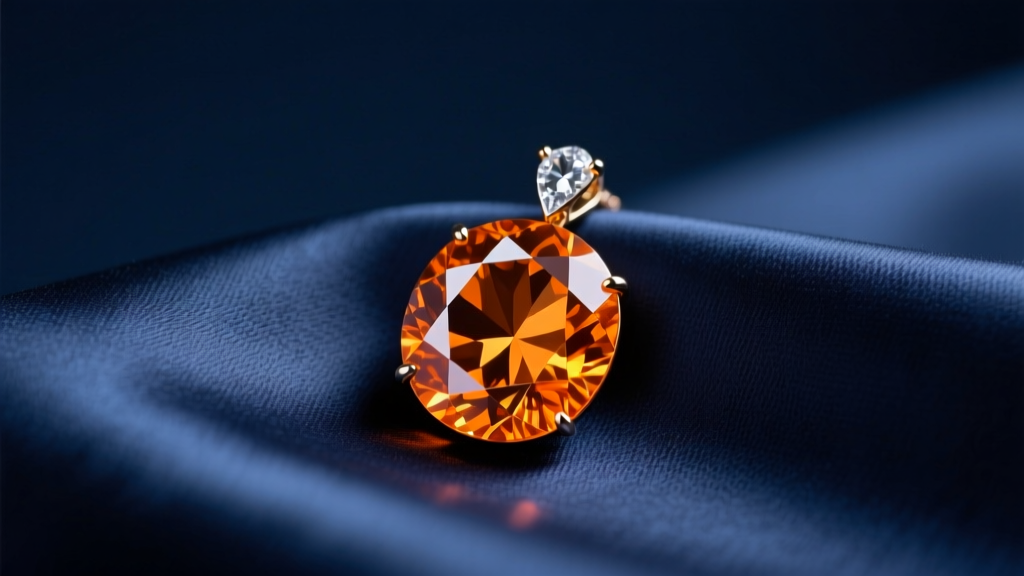
When you invest in an orange gemstone necklace, you are choosing a piece that radiates warmth, vitality, and undeniable visual impact. However, the umbrella term "orange gemstone" encompasses a wildly diverse range of mineral structures—from the durable, crystalline lattice of spessartine garnet to the fragile, water-rich matrix of fire opal. As jewelry trends in 2026 continue to favor bold, saturated color palettes and ethically sourced minerals, understanding the exact gemological profile of your necklace is no longer optional; it is essential for preserving its value and brilliance.
This comprehensive, step-by-step guide will teach you how to identify your specific orange gem, pair it with the correct chain gauge, style it using advanced color theory, and clean it without causing catastrophic structural damage.
Step 1: Identify Your Orange Gemstone and Its Vulnerabilities
Before applying any cleaning solution or choosing a storage method, you must accurately identify the stone. The market is flooded with lookalikes and treated stones. For instance, natural carnelian is frequently mimicked by dyed agate, which can bleed or fade when exposed to harsh chemicals. According to the Gemological Institute of America (GIA), understanding the Mohs hardness and cleavage planes of your specific gem dictates its entire care regimen.
| Gemstone | Mohs Hardness | Porosity & Cleavage | Ultrasonic Safe? |
|---|---|---|---|
| Spessartine Garnet | 7.0 - 7.5 | Low porosity, no cleavage | Yes (if unfractured) |
| Carnelian (Chalcedony) | 6.5 - 7.0 | Micro-porous, no cleavage | No (risk of dye leaching) |
| Fire Opal | 5.5 - 6.5 | High water content, fragile | NEVER (causes crazing) |
| Sunstone (Feldspar) | 6.0 - 6.5 | Perfect cleavage planes | No (risk of splitting) |
Expert Insight: If your orange gemstone exhibits a glassy luster and deep mandarin hues without visible inclusions, it is likely a high-grade spessartine garnet. If it shows a waxy luster and uniform, slightly opaque orange banding, suspect dyed agate rather than natural carnelian.
Step 2: Match the Chain Gauge and Setting to the Stone
A common failure point in pendant necklaces is the mismatch between the bail, the jump ring, and the chain gauge. An orange gemstone necklace featuring a heavy, 20-carat carnelian cabochon will easily snap a delicate 0.8mm chain over time due to the pendulum effect and friction.
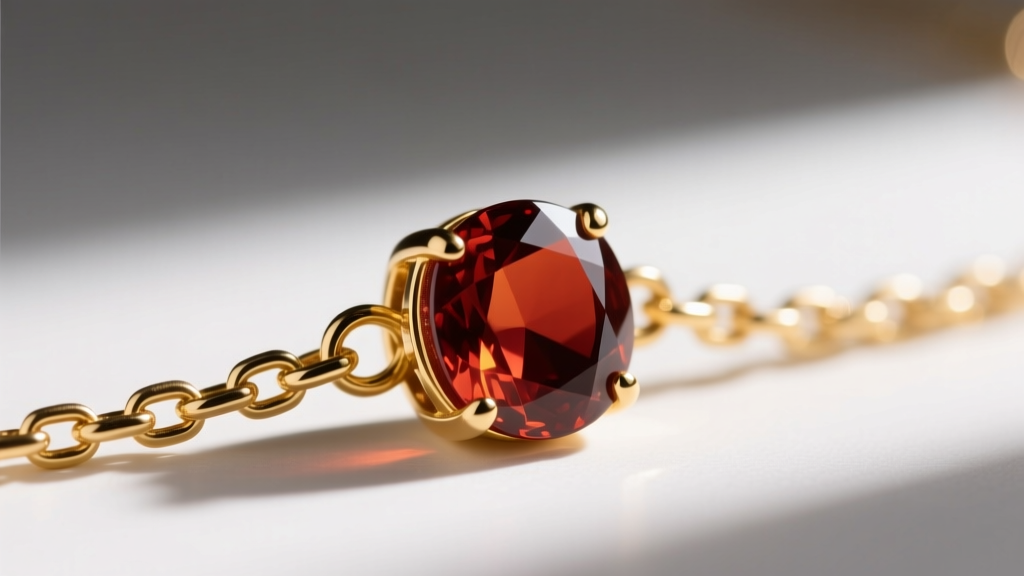
Chain Gauge Sizing Guide
- Under 5 grams (e.g., faceted 4ct Sunstone): Use a 0.9mm to 1.2mm cable or rope chain. Secure with a 5mm lobster clasp.
- 5 to 15 grams (e.g., standard Spessartine pendant): Opt for a 1.5mm to 2.0mm box or wheat chain. The interlocking links of a wheat chain distribute weight evenly, preventing kinking.
- Over 15 grams (e.g., large Carnelian cabochon): Require a 2.5mm to 3.5mm Figaro or curb chain. Ensure the jump ring connecting the bail to the chain is soldered closed, rather than merely pushed together, to prevent the heavy stone from pulling the ring apart.
Bezel vs. Prong Settings
For fragile stones like fire opal, a full bezel setting is mandatory. Prong settings leave the girdle of the opal exposed to impacts, which can easily chip the stone given its 5.5 Mohs rating. Conversely, spessartine garnet benefits from a 4-prong or 6-prong setting, allowing maximum light return to showcase its fiery dispersion.
Step 3: Color Theory and Wardrobe Pairing
Styling an orange gemstone necklace requires an understanding of the color wheel to prevent the piece from looking garish. Orange sits directly opposite blue, making teal and navy your most powerful complementary pairings.
"The key to styling high-saturation gems like mandarin garnet is grounding them with deep, cool-toned neutrals. A vivid orange pendant against a charcoal or navy backdrop creates a striking optical contrast that elevates both the garment and the jewel." — Contemporary Gem Styling Frameworks, 2025
Specific Wardrobe Hex Codes & Fabric Pairings
- Complementary Contrast: Navy Blue (#000080) or Deep Teal (#008080). The cool undertones neutralize the heat of the orange, making the gemstone appear more vivid. Best in matte fabrics like raw silk or fine merino wool.
- Analogous Harmony: Terracotta (#E2725B) or Mustard (#FFDB58). This creates a warm, autumnal gradient. Use varying textures (e.g., a chunky knit sweater) to prevent the outfit from looking flat.
- Modern Neutral: Charcoal Grey (#36454F) or Cream (#FFFDD0). Avoid stark, optic white (#FFFFFF), as the blue undertones in bright white can sometimes make lighter orange stones (like sunstone) look washed out.
Step 4: A Step-by-Step Cleaning Protocol
Never use commercial silver dips, ammonia, or ultrasonic cleaners on an orange gemstone necklace unless you have positively identified the stone as an unfractured garnet. The safest, most effective method for 90% of orange gems is the mild surfactant technique.
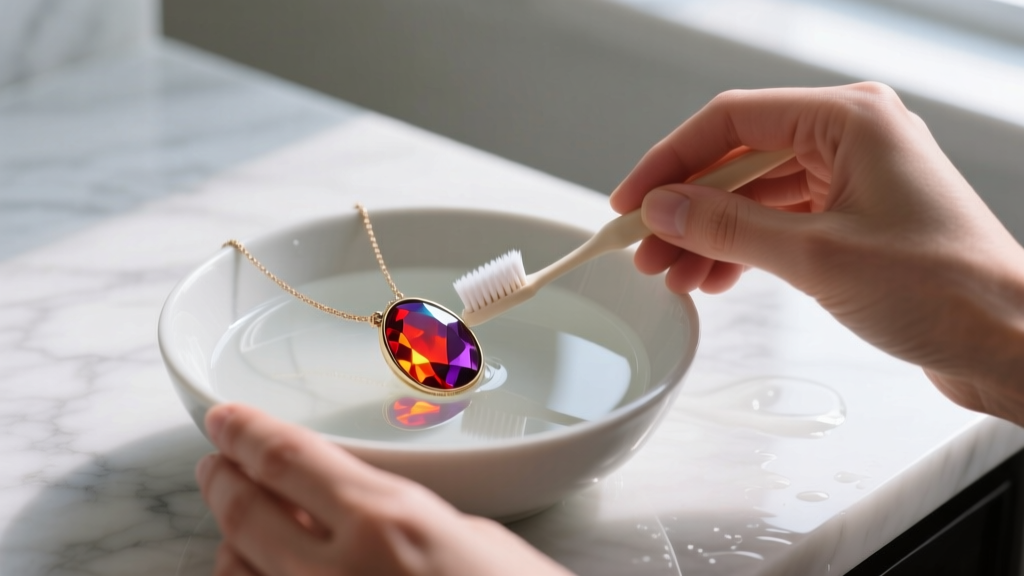
- Prepare the Solution: Fill a glass bowl with lukewarm distilled water (tap water contains chlorine and minerals that can leave a film on porous stones like carnelian). Add two drops of phosphate-free, mild dish soap.
- Soak (With Exceptions): Submerge garnet or sunstone for 5-10 minutes to loosen sebum and cosmetic buildup. Never soak fire opal, as prolonged water exposure can alter its internal structure or cause crazing.
- Agitate Gently: Use an extra-soft baby toothbrush to gently sweep the back of the gemstone (the pavilion), where lotion and dead skin cells accumulate and block light return.
- Rinse and Dry: Rinse under a gentle stream of lukewarm water. Pat dry with a lint-free microfiber cloth. Ensure the chain links and the bail are completely dry before storage to prevent oxidation of the metal alloys.
Step 5: Safe Storage to Prevent Scratching
Because orange gemstones span a wide range of hardness levels, improper storage is a primary cause of permanent surface damage. A spessartine garnet (Mohs 7.5) will effortlessly scratch a fire opal (Mohs 5.5) or a silver chain if tossed together in a jewelry box.
Store your orange gemstone necklace in an individual, anti-tarnish flannel pouch. If the necklace features a delicate chain, lay it completely flat or hang it from a padded hook to prevent micro-kinks. For fire opals specifically, maintain a stable humidity level in your storage area; extremely dry environments (like a room with constant central heating) can draw moisture out of the opal, leading to irreversible surface cracking.
By following these precise gemological and styling protocols, your orange gemstone necklace will maintain its structural integrity and vibrant fire for decades, serving as a timeless anchor in your jewelry collection.