How to Style a Heavy Tribal Chief Necklace for Any Event
Learn how to style a heavy tribal chief necklace. Our step-by-step guide covers weight distribution, neckline matching, and material care.

Decoding the Tribal Chief Necklace
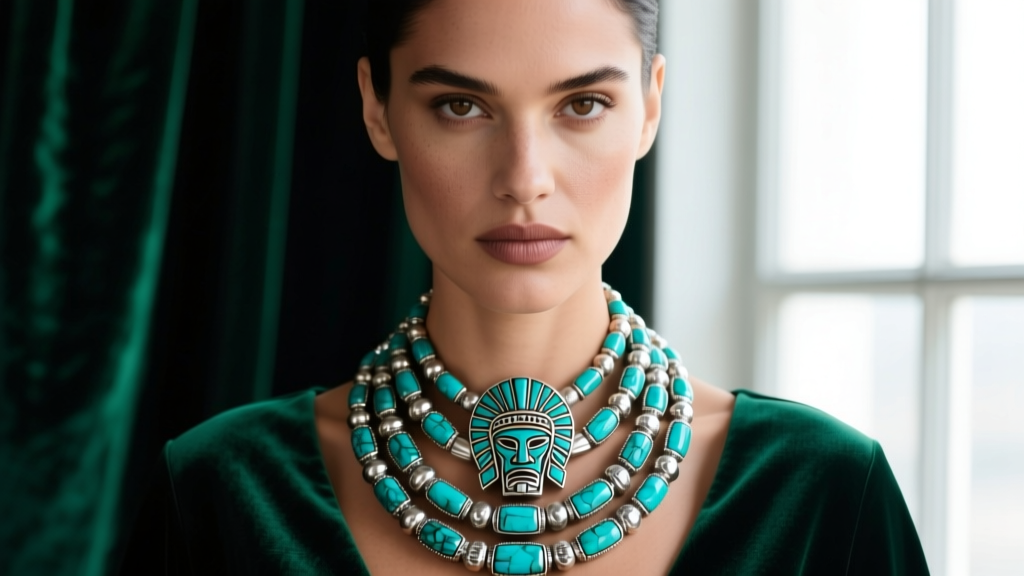
The term tribal chief necklace encompasses a wide array of bold, statement-making jewelry deeply rooted in indigenous and ancient cultural aesthetics. From the intricate, multi-strand turquoise and silver squash blossom necklaces of the Navajo to the vibrant, heavy glass-bead collars of the Maasai, these pieces are not mere accessories; they are wearable artifacts of heritage, status, and artistry. In contemporary fashion, a tribal chief necklace serves as the ultimate focal point of an outfit, characterized by substantial weight, oversized pendants (such as the crescent-shaped Naja), and complex multi-strand layering.
However, wearing a piece that can weigh anywhere from 150 to over 450 grams requires strategic styling. Without the right approach, the sheer mass of the jewelry can pull uncomfortably on your neckline, distort the drape of your clothing, or clash with competing patterns. This step-by-step guide will teach you how to confidently wear, balance, and maintain a heavy tribal chief necklace for any occasion.
Step 1: Assess Weight, Materials, and Clasp Integrity
Before styling, you must evaluate the physical construction of your necklace. Heavy indigenous-inspired pieces demand robust hardware. A standard 18-gauge spring ring clasp will inevitably fail under the tension of a 300-gram multi-strand collar.
- Clasp Mechanics: Look for heavy-duty toggle clasps or oversized lobster clasps forged from 14-gauge or 12-gauge wire. Toggle clasps are ideal for tribal chief necklaces because the horizontal bar distributes weight evenly across the collarbone, preventing the clasp from slipping forward.
- Material Verification: Authentic pieces typically feature 925 sterling silver, solid brass, or copper. If your piece features turquoise, verify its origin. Genuine Sleeping Beauty or Kingman turquoise has a Mohs hardness of 5 to 6, making it relatively soft and porous compared to dyed howlite imitations often sold in tourist markets.
- Wire and Stringing: Multi-strand beadwork should be strung on multi-ply coated stainless steel beading wire (minimum 49-strand) rather than simple nylon thread, which degrades and snaps under the friction of heavy stone beads.
Step 2: Map the Drop Length to Your Neckline
The most common styling error with heavy statement necklaces is pairing them with the wrong collar or neckline, which causes the jewelry to tangle or obscure the garment's architecture. Use the table below to match your tribal chief necklace drop length to the optimal neckline.
| Necklace Style & Drop | Optimal Neckline | Why It Works |
|---|---|---|
| Maasai Collar (14-16 inches) | Off-the-shoulder or Strapless | Allows the wide, rigid beadwork to sit flat against the bare collarbone without fabric bunching. |
| Squash Blossom (18-22 inches) | Deep V-Neck or Scoop | The V-shape mirrors the downward trajectory of the Naja pendant, elongating the torso. |
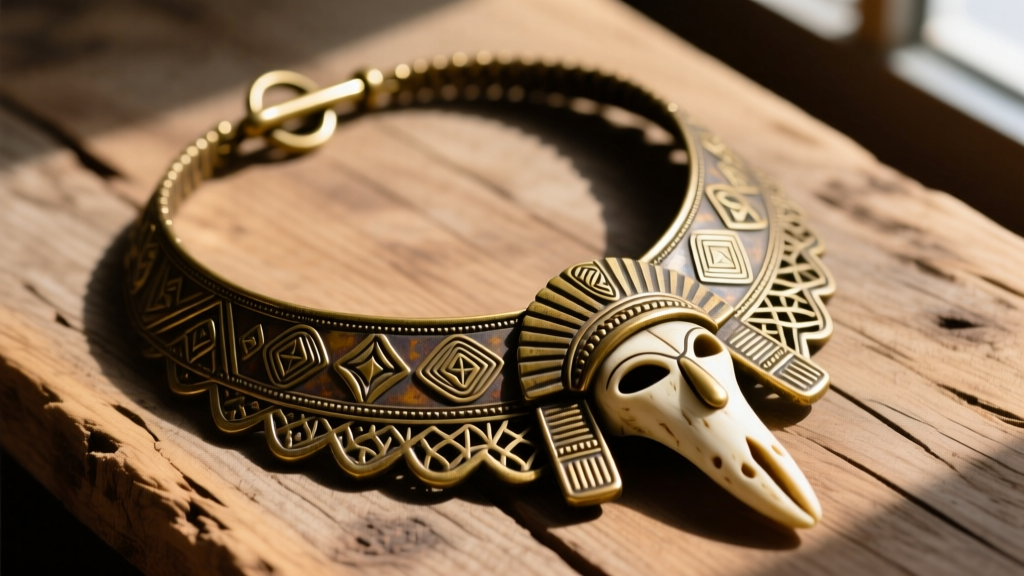
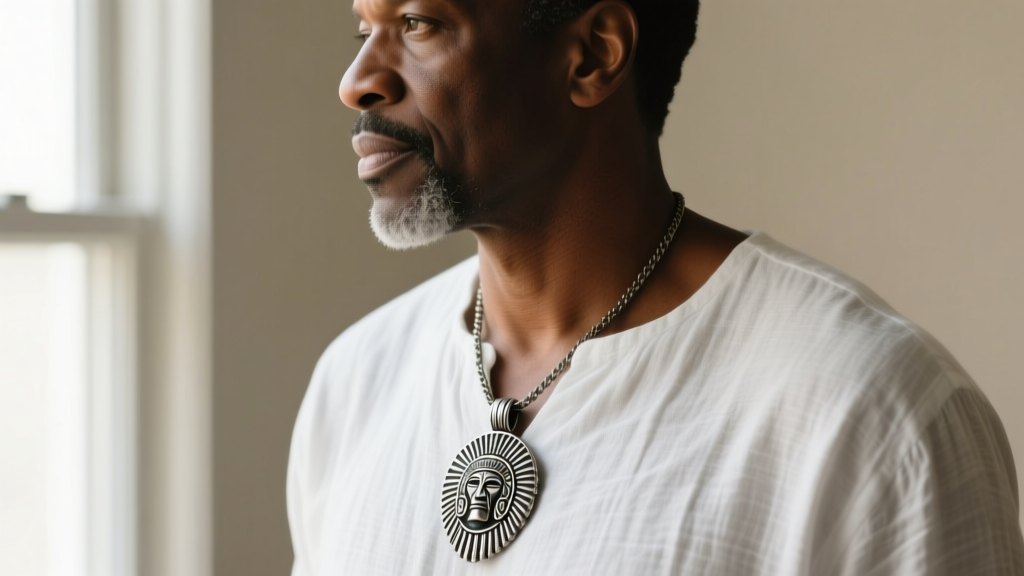
| Heavy Brass Pectoral (24+ inches) | Crew Neck or Turtleneck | The long drop clears the high collar, resting on the sternum and providing a bold contrast to opaque fabrics. |
Step 3: Apply the 'Rule of One' for Visual Balance
A tribal chief necklace is inherently loud. It features complex textures—oxidized silver, carved bone, raw lapis lazuli, or vibrant seed beads. To prevent your look from becoming chaotic, you must apply the Rule of One.
Curating Your Accompanying Jewelry
If your necklace is the 'chief' piece, the rest of your jewelry must act as the 'council'—present, but entirely subordinate. Avoid chandelier earrings, heavy cuff bracelets, or stacked rings. Instead, opt for minimalist counterparts that complement the metal tone of your necklace without competing for attention.
- With Sterling Silver & Turquoise: Pair with simple 3mm silver ball stud earrings and a single, thin silver band ring.
- With Brass & Bone: Choose small, unadorned brass hoops and skip the rings entirely to let the earthy tones of the necklace stand out.
- With Vibrant Beadwork: Keep the ears completely bare or wear invisible glass studs, allowing the chromatic intensity of the collar to dominate.
Step 4: Secure and Maintain Heavy Statement Pieces
Gravity is the enemy of heavy jewelry. A 400-gram necklace will naturally pull the front of a lightweight silk or linen blouse downward, causing the fabric to sag and the necklace to flip upside down.
Pro Stylist Tip: To anchor a heavy tribal collar to a delicate fabric, use double-sided silicone fashion tape. Apply a small strip to the underside of the central pendant or the heaviest part of the collar, pressing it gently against the inside of your garment. This prevents the 'pendulum effect' when you walk or lean forward.
Cleaning and Preservation
Maintaining the integrity of mixed-material tribal jewelry requires specific care protocols. Never use ultrasonic cleaners or harsh chemical dips on a tribal chief necklace. Ultrasonic vibrations can fracture porous stones like turquoise, malachite, and lapis lazuli, while chemical dips will strip the intentional oxidation (patina) from carved silver details.
Instead, use a dry, untreated microfiber polishing cloth for the metal components. For the stones, gently wipe them with a barely damp cloth and dry them immediately. According to the Gemological Institute of America (GIA), porous gems should never be exposed to cosmetics, perfumes, or ultrasonic heat, as they will absorb the chemicals and permanently discolor.
Ethical Sourcing and Authenticity
When investing in a tribal chief necklace, particularly those inspired by Native American or indigenous African designs, ethical sourcing is paramount. The market is unfortunately saturated with mass-produced knockoffs that appropriate cultural designs without benefiting the originating communities.
In the United States, the Indian Arts and Crafts Board (IACB) enforces the Indian Arts and Crafts Act, which makes it illegal to offer or display for sale any art or craft product in a manner that falsely suggests it is Indian-produced. When purchasing a Native American-style squash blossom or chief necklace, always buy directly from verified indigenous artisans or reputable galleries that provide a certificate of authenticity detailing the artist's name and tribal affiliation.
For pieces inspired by global indigenous cultures, seek out fair-trade cooperatives that ensure artisans are paid living wages and that materials like bone, horn, and wood are sustainably harvested. True style is not just about aesthetics; it is about respecting the lineage and craftsmanship embedded in every bead and silver link.
Final Styling Checklist
Before stepping out, run through this quick diagnostic checklist to ensure your tribal chief necklace is styled to perfection:
- Clasp Check: Is the toggle or lobster clasp fully secured and resting comfortably at the nape of the neck without pulling?
- Neckline Harmony: Is the pendant resting cleanly on the skin or fabric, without tangling in collars or seams?
- Balance Test: Have you removed competing statement earrings or heavy bracelets?
- Security: If wearing a lightweight top, have you applied fashion tape to prevent the pendant from flipping?
By treating your tribal chief necklace with the respect its craftsmanship demands, you transform it from a mere accessory into a powerful, conversation-starting centerpiece that honors both history and modern style.


