What Is the Theme in the Story The Necklace? A Gemological Deep Dive
We explore what is the theme in the story The Necklace by analyzing the technical differences between 19th-century paste jewelry and real diamonds.

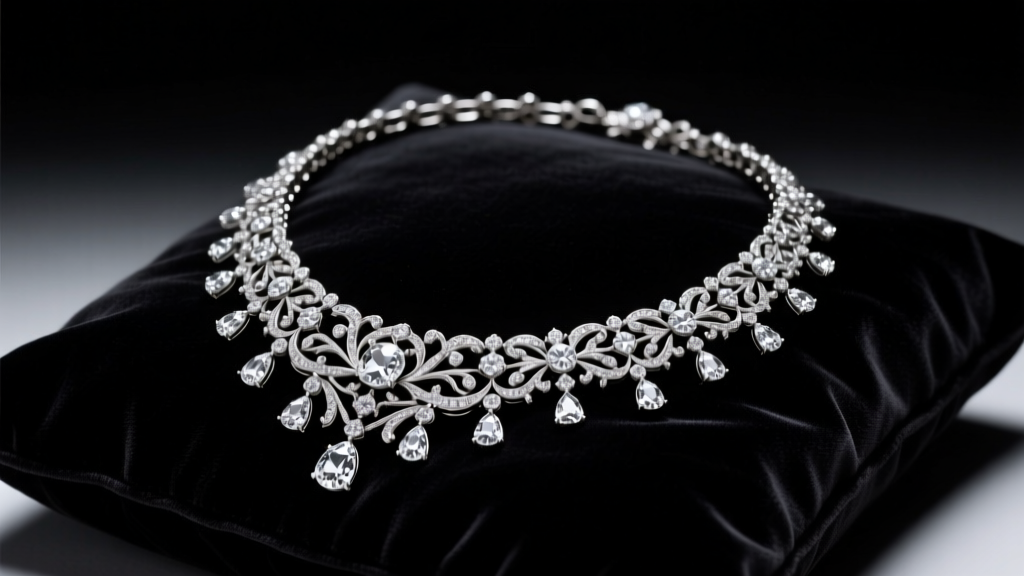
Guy de Maupassant’s 1884 literary masterpiece, The Necklace (La Parure), remains a staple of global literature. The tragic tale of Mathilde Loisel, who ruins her life to replace a borrowed diamond necklace only to discover the original was a fake, is a masterful exploration of human vanity. However, as jewelry experts and gemologists, we read the story through a distinctly different lens. Beyond the moral fable lies a fascinating case study in 19th-century jewelry authentication, material science, and the deceptive nature of simulants.
What Is the Theme in the Story The Necklace?
When literature students and critics ask, what is the theme in the story the necklace, the standard academic consensus points to the deception of appearances, the destructive nature of pride, and the harsh realities of class division. Maupassant uses the necklace as a physical manifestation of the illusion of wealth. Mathilde’s obsession with the appearance of luxury blinds her to its reality.
Yet, from a technical jewelry perspective, the core theme is the illusion of material value. The story hinges entirely on the inability of an untrained eye to distinguish between a 500,000-franc diamond rivière and a 500-franc paste (lead glass) replica. By dissecting the gemological properties of the necklace in question, we can uncover the precise technical reasons why the illusion was so perfect—and the glaring red flags that Mathilde tragically ignored.
The Technical Anatomy of an 1880s "Paste" Rivière
In the late 19th century, "paste" did not mean cheap plastic or resin as it might imply today. Paste referred to high-lead-content glass, a technique perfected in the 1730s by Parisian jeweler Georges Frédéric Strass. Strass discovered that adding lead oxide to glass dramatically increased its refractive index and dispersion, allowing it to mimic the optical properties of diamonds.
Lead Glass vs. Carbon: Refractive Index and Dispersion
To understand how Jeanne Forestier’s paste necklace could pass for real diamonds at a high-society Parisian ball, we must look at the physics of light. A natural diamond has a Refractive Index (RI) of 2.42, meaning it bends light sharply, creating internal reflections known as "brilliance." Strass paste typically possessed an RI of 1.5 to 1.7. While lower, the high lead content gave paste an exceptional "dispersion" (the splitting of white light into spectral colors).
In the dim, flickering gaslight and candlelight of an 1880s ballroom, the high dispersion of lead glass would throw flashes of colored "fire" that easily fooled the untrained eye. According to the Gemological Institute of America (GIA), early diamond simulants relied heavily on this colored fire to compensate for their lack of true internal brilliance.
How Mathilde Missed the Clues: A Jeweler's Autopsy
Mathilde Loisel was not a gemologist, but she was a woman obsessed with luxury. Her failure to authenticate the piece before borrowing it—and her subsequent failure to realize she was replacing a fake with real diamonds—reveals a profound ignorance of jewelry construction. Here are the technical red flags she missed:
- The Weight Discrepancy: Diamonds have a specific gravity of 3.52. Lead glass is significantly denser, often exceeding 4.0. A 50-carat diamond rivière would feel noticeably lighter than a paste replica of the exact same dimensions.
- Thermal Conductivity: Diamonds are exceptional thermal conductors; they feel icy cold to the touch and warm up slowly. Glass is a thermal insulator. Upon clasping the necklace around her neck, Mathilde should have immediately felt the difference in temperature transfer.
- Facet Junction Wear: Diamonds rank a 10 on the Mohs hardness scale, meaning their facet edges remain razor-sharp for centuries. Paste ranks around 5 to 6. If Jeanne’s necklace was a family heirloom or frequently worn, the facet junctions would have shown microscopic abrasions and chipping under magnification, a hallmark of antique paste documented by the Victoria and Albert Museum.
Diamond vs. 19th-Century Paste: A Gemological Comparison
To visualize the exact material differences that drove the plot of Maupassant's story, review the technical comparison below:
| Property | Natural Diamond (1880s Mine Cut) | Strass Paste (Lead Glass) |
|---|---|---|
| Refractive Index (Brilliance) | 2.42 (Exceptional light return) | 1.50 - 1.70 (Moderate light return) |
| Dispersion (Fire) | 0.044 (Balanced spectral colors) | 0.060+ (Highly colorful, but "glassy") |
| Mohs Hardness | 10 (Indestructible facet edges) | 5 - 6 (Prone to facet abrasion) |
| Specific Gravity (Weight) | 3.52 (Lighter for its size) | 4.00+ (Heavier, dense lead content) |
| Setting Style | Open-back (to show transparency) | Closed-back (to hide foil backing) |
The Foil-Backing Technique and the Illusion of Fire
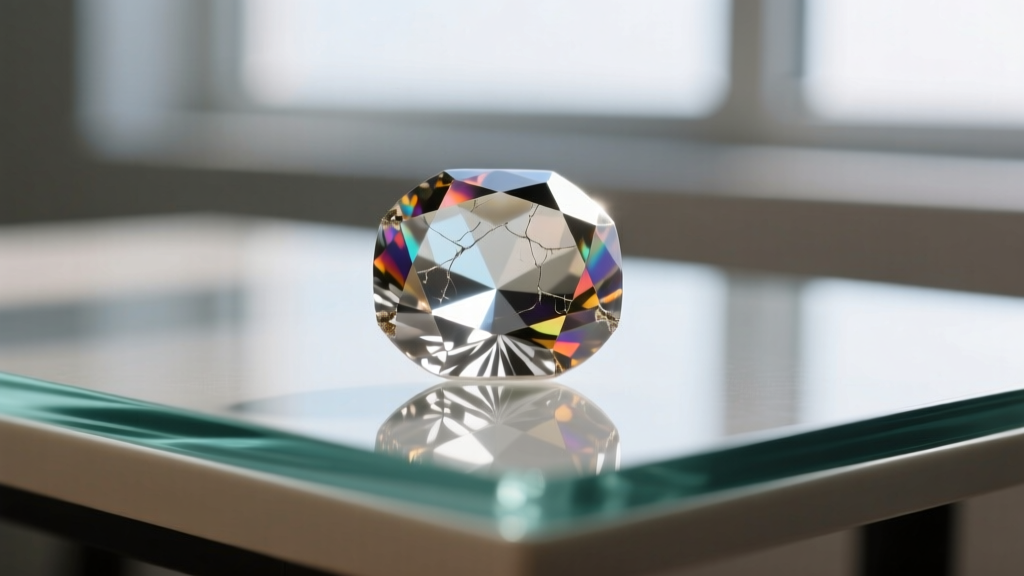
The most damning technical oversight in the story is the setting of the stones. Because paste glass lacks the high refractive index required to bounce light back to the viewer through the crown of the stone, 19th-century jewelers utilized a technique called foil backing. A thin sheet of silver, gold, or tinted metallic foil was placed behind the glass stone in a closed-back bezel or pavé setting. This foil acted as a mirror, artificially creating the brilliance that the glass lacked.
Real diamonds of the 1880s—typically Old Mine Cuts or early Old European Cuts—were almost exclusively set in open-back settings. Jewelers wanted to showcase the diamond's natural transparency and allow light to enter from all angles. Furthermore, setting a real diamond in a closed-back silver setting would trap moisture and dirt, degrading its optical performance. If Mathilde had simply turned the necklace over and looked at the back of the mounting, the solid metal backing would have instantly revealed the stones as paste.
"She saw nothing, knew nothing, understood nothing. She only felt that she must have a jewel, a richness, a luxury." — Guy de Maupassant. Her emotional desperation bypassed her logical observation of the jewelry's physical anatomy.
Modern Takeaways: Avoiding the "Paste" Trap Today
While we no longer rely on lead glass and silver foil to simulate diamonds, the core theme of Maupassant's story is more relevant in 2026 than ever. Today's market is flooded with advanced simulants like Cubic Zirconia (CZ) and moissanite, alongside the explosive growth of lab-grown diamonds. The illusion of value has shifted from "fake vs. real" to "synthetic vs. natural."
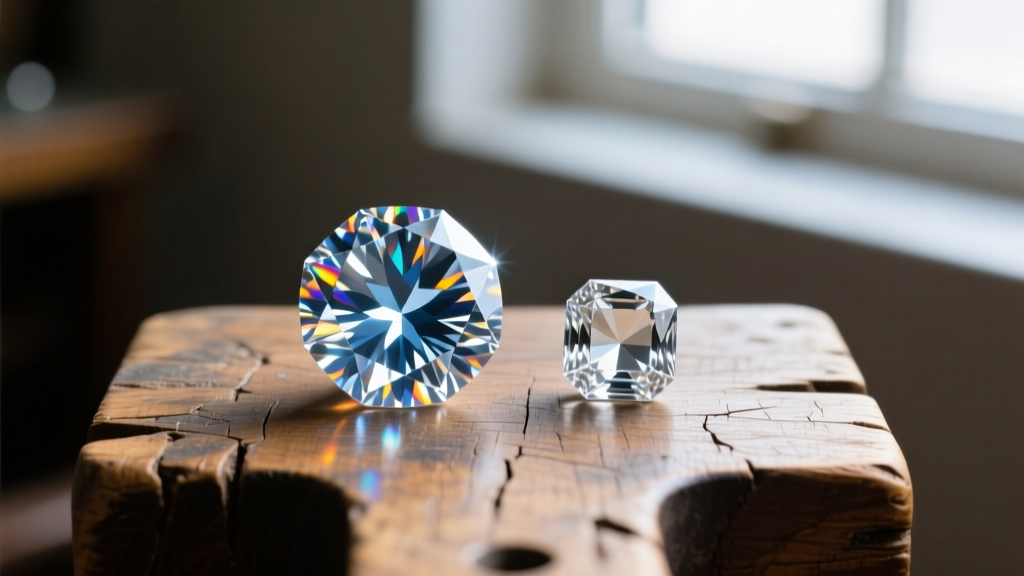
Modern consumers can avoid Mathilde’s fate by adhering to strict authentication protocols:
- Demand Certification: Never rely on visual inspection alone. High-grade lab-grown diamonds and natural diamonds are optically identical to the naked eye. Only a gemological report from a reputable lab (like GIA or AGS) with laser inscription verification can confirm origin.
- Understand Market Pricing: Just as Mathilde should have questioned how her moderately wealthy friend could casually lend out a 500,000-franc asset, modern buyers must recognize pricing anomalies. If a "diamond" tennis bracelet is priced 80% below the global Rapaport benchmark, you are looking at CZ, moissanite, or a heavily included industrial-grade stone.
- Use Thermal and Electrical Testers: Modern jewelers use dual-tester devices that measure both thermal conductivity (to separate glass/CZ from diamond) and electrical conductivity (to separate moissanite from diamond).
Conclusion
Ultimately, answering the question of what is the theme in the story the necklace requires looking past the moral lesson of vanity and examining the tangible reality of the jewelry itself. Maupassant brilliantly weaponized the technical limitations of 19th-century gemology to craft a devastating tragedy. Mathilde Loisel did not just lose ten years of her life to a piece of glass; she fell victim to the fundamental gap between the perception of luxury and the science of materials. As jewelry enthusiasts, her story remains a timeless reminder: true value is never just skin deep—it is measured in refractive indices, thermal conductivity, and the uncompromising truth of the loupe.


