How to Style and Knot a Ladies Long Chain Necklace
Learn how to style, knot, and layer a ladies long chain necklace. Discover ideal lengths, chain links, and neckline pairings in our step-by-step guide.


The ladies long chain necklace is a cornerstone of versatile jewelry styling, offering a fluid silhouette that transitions effortlessly from casual daytime wear to elegant evening layering. However, styling chains that measure 28 inches or longer requires an understanding of metal physics, link geometry, and spatial proportions. A poorly chosen long chain will tangle, kink, or overwhelm your neckline. In this comprehensive step-by-step guide, we break down the exact mechanics of selecting, knotting, and layering long chains to ensure your jewelry performs as beautifully as it looks.
The Anatomy of Long Chains: Opera vs. Rope Lengths
Before mastering the styling techniques, you must understand the two primary categories of long necklaces. The Opera length (28 to 36 inches) typically rests on the sternum or just above the navel. The Rope length (37 to 45+ inches) falls well below the navel and is designed to be doubled or knotted.
When selecting a ladies long chain necklace, the link structure is just as critical as the length. Avoid herringbone or snake chains for long lengths. These flat, fluid links are highly susceptible to permanent kinking if bent past a 45-degree angle, and long chains naturally fold upon themselves. Instead, opt for structural links:
- Rope Chains: The twisted, helical structure hides minor kinks and offers a heavy, luxurious drape that is ideal for knotting.
- Figaro Chains: The alternating pattern of flattened links lays flush against the body, making it an excellent choice for wearing unknotted over high necklines.
- Cable Chains: Best kept in thicker gauges (2.0mm or above). Fine 1.0mm cable chains over 30 inches are notorious for catching on body hair and sweater fibers.
Step-by-Step: Mastering the Slip Knot Technique
Knotting a long chain alters its visual weight and allows you to customize the drop length. However, applying too much tension can stretch precious metals. According to the GIA Gem Encyclopedia, 18k gold has a lower Vickers hardness (approx. 110-125) compared to 14k gold (approx. 130-150). Therefore, if you are knotting an 18k gold rope chain, you must use a loose slip knot to avoid permanently elongating the links.
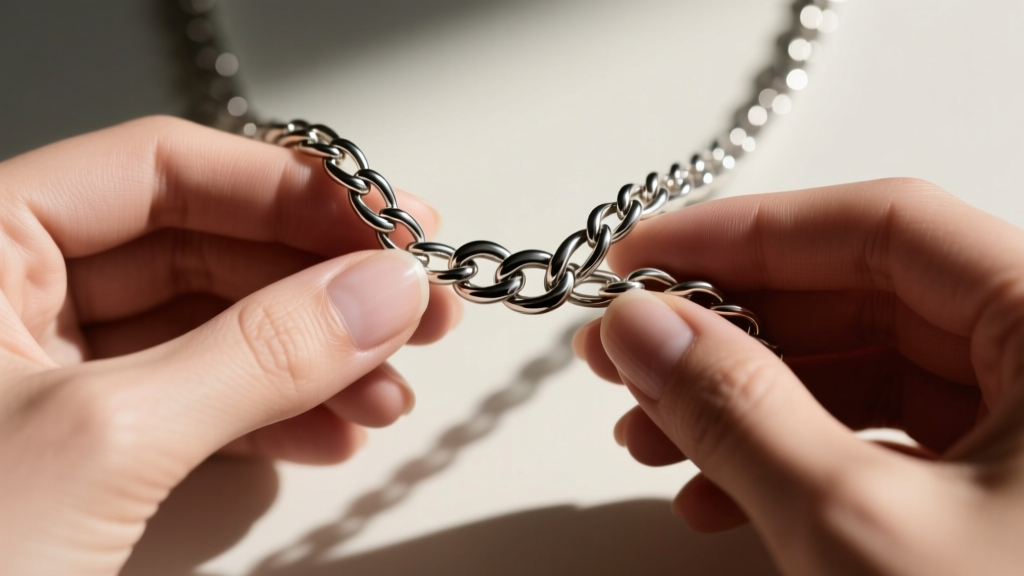
The 3-Step Knotting Method
Step 1: The Anchor Loop. Drape the chain evenly around your neck. Grasp the two ends and cross the right side over the left, creating a simple 'X' at your desired sternum height.
Step 2: The Pass-Through. Take the right tail and pass it under the left tail, then pull it through the top of the loop you just created. Do not pull tight yet.
Step 3: The Tension Release. Gently slide the knot up or down the chain to adjust the Y-drop. Once positioned, pull the tails just enough to secure the knot, leaving a millimeter of slack within the loop. This slack prevents the metal links from grinding against each other, which accelerates wear and tear on the solder points.
Neckline Pairings: A Decision Framework
A ladies long chain necklace can either elongate your torso or clash with your garment's architecture. Use the following decision matrix to match your chain length and pendant weight to your neckline.
| Neckline Type | Ideal Chain Length | Recommended Chain Width | Styling Strategy |
|---|---|---|---|
| V-Neck | 30 - 34 inches (Opera) | 1.5mm - 2.5mm | Let the chain parallel the V-shape of the garment. Add a 10mm-15mm pendant to anchor the point. |
| Turtleneck | 36 - 42 inches (Rope) | 3.0mm+ | Wear unknotted over the fabric. The thick metal provides necessary contrast against heavy knits. |
| Crew Neck | 28 inches (Knotted) | 2.0mm | Use the slip-knot technique to create a Y-silhouette, breaking up the horizontal line of the collar. |
| Scoop Neck | 32 inches (Doubled) | 1.2mm | Double the chain to create a 16-inch choker and 20-inch princess layer simultaneously. |
Troubleshooting Tangling and Metal Fatigue
The most common failure mode for long chains is tangling at the nape of the neck, which leads to pulled jump rings and stretched links. This occurs when the center of gravity shifts, causing the clasp to slide forward and the fine links to bunch together.
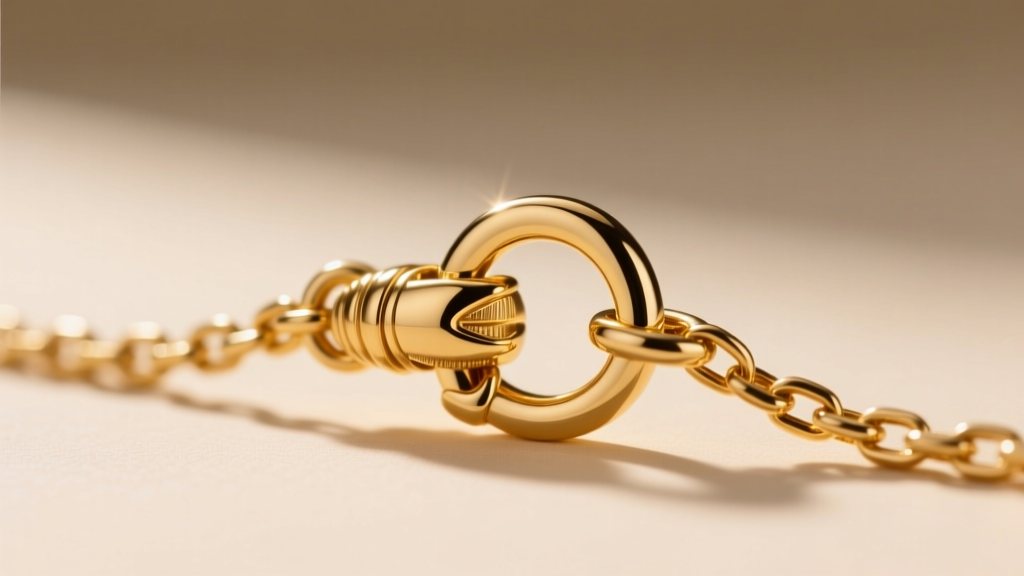
How to Prevent the Clasp Slide
If your clasp constantly migrates from the back of your neck to the front, the chain is too lightweight for its length. To fix this without buying a new chain, you can attach a small, decorative 3mm gold or silver bead directly to the jump ring opposite the lobster clasp. This adds just enough counterweight to keep the clasp anchored at the nape. Furthermore, always inspect the soldered jump ring connecting the clasp. According to jewelry industry standards, a laser-welded jump ring is vastly superior to a standard split ring for chains exceeding 30 inches, as the dynamic pulling force of a long chain can easily pry open an unsoldered split ring.
The Layering Math: Spacing and Proportions
Layering a ladies long chain necklace with shorter pieces requires strict adherence to spatial mathematics to avoid a cluttered, tangled mess. As noted by Vogue's jewelry styling experts, the key to successful layering is negative space.
The 2-Inch Minimum Rule: When stacking necklaces, there must be a minimum 2-inch gap between the resting points of each chain. If you are wearing a 16-inch choker, your next layer should be no shorter than 18 inches, and your long chain should be at least 28 inches.
Mixing Metals and Textures
For a modern 2026 aesthetic, mix chain textures rather than just metal colors. Pair a delicate 18k yellow gold paperclip chain at 18 inches with a chunky 14k white gold rope chain at 32 inches. The contrast in link geometry prevents the chains from interlocking and tangling, as the smooth, flat links of the paperclip chain will glide over the twisted grooves of the rope chain rather than catching inside them.
Pro Tip: Always put your long chain on first when dressing. Pulling a 36-inch chain over a styled updo or tight turtleneck after you have already fastened your shorter, more delicate necklaces is the primary cause of catastrophic tangling and chain snap.
Mastering the ladies long chain necklace is ultimately about respecting the physical properties of the metal and the geometry of your wardrobe. By selecting structural links, utilizing the tension-release knotting method, and adhering to strict layering gaps, you transform a simple accessory into a masterclass of personal styling.