How to Style a Gold Moon Necklace: Step-by-Step Guide
Learn how to style, layer, and care for your gold moon necklace. Expert tips on chain gauges, karat selection, and neckline pairing.

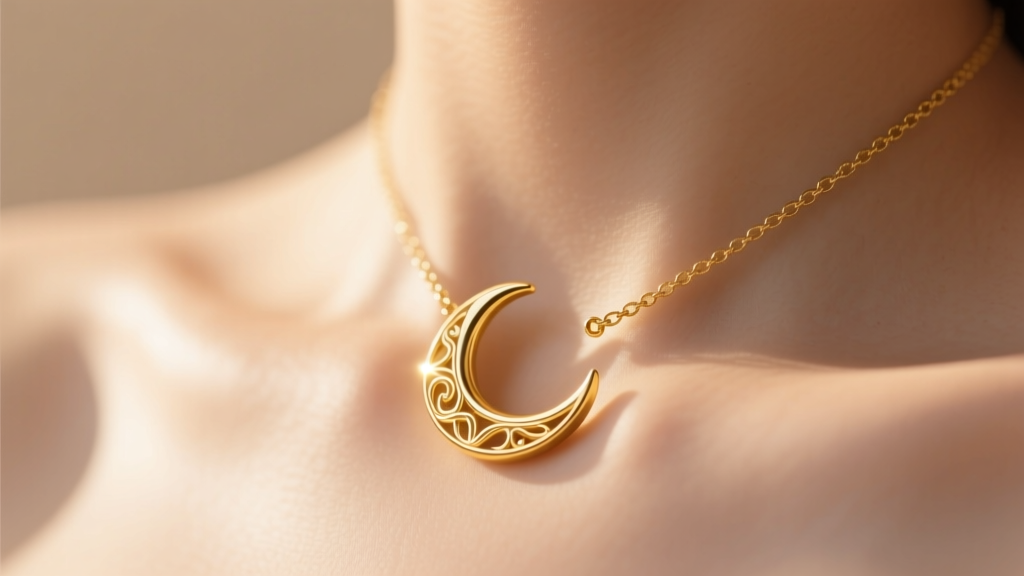
Celestial jewelry has transcended fleeting trends to become a permanent fixture in modern fine jewelry wardrobes. When styling a necklace, moon gold pendants require specific chain pairings and layering techniques to truly shine without looking costumey. Whether you are working with a delicate crescent or a bold full moon medallion, mastering the mechanics of proportion, metal purity, and chain texture is essential. This comprehensive, step-by-step guide will teach you how to select, layer, and maintain your gold moon necklace with the precision of a professional stylist.
Step 1: Selecting the Right Gold Karat for Moon Pendants
The structural integrity of your pendant depends heavily on the gold alloy. Moon pendants—especially crescents with sharp, tapered tips—are prone to bending if the metal is too soft. According to the Gemological Institute of America (GIA), understanding the balance between purity and durability is the first step in curating fine jewelry.
| Karat | Gold Purity | Durability | Best For | Price Range (USD) |
|---|---|---|---|---|
| 10k | 41.7% | Very High | Ultra-thin crescents, daily beater chains | $80 - $150 |
| 14k | 58.5% | High | Everyday wear, intricate moon phase charms | $150 - $350 |
| 18k | 75.0% | Medium | Heirloom pieces, rich yellow full moons | $350 - $800 |
| 22k | 91.6% | Low | Thick cast medallions (avoid for thin tips) | $600 - $1,500+ |
Expert Insight: If your moon pendant features a diamond or sapphire accent (like a tiny star or bezel-set gem), never choose 22k gold. The prongs will wear down and lose the stone within months. Stick to 14k or 18k for any gem-set celestial jewelry.
Step 2: Matching Chain Gauge to Pendant Weight
A common mistake is pairing a heavy, solid gold moon medallion with a fragile chain. The chain gauge (thickness) must support the pendant's weight while allowing the bail (the loop connecting the pendant to the chain) to slide freely.
- Under 2 Grams (Delicate Crescents): Use a 0.9mm to 1.1mm cable or box chain. These provide a barely-there look that lets the moon float on the skin.
- 2 to 5 Grams (Standard Moons): Opt for a 1.2mm to 1.5mm rolo or paperclip chain. This offers enough tensile strength to prevent snapping if the pendant catches on clothing.
- Over 5 Grams (Statement Medallions): You need a 1.8mm to 2.5mm Cuban link or thick rope chain. Anything thinner will stretch and eventually break at the clasp.
The Bail-to-Chain Ratio Rule
Does your moon pendant constantly flip backward, hiding the design? This is a physics issue. The inner diameter of the pendant's bail should be exactly 1.5x to 2x the width of your chain. If you use a 1.0mm chain, the bail opening should be no larger than 2.0mm. Excessive space allows the pendant to rotate freely and flip upside down.
Step 3: Mastering the Layering Technique
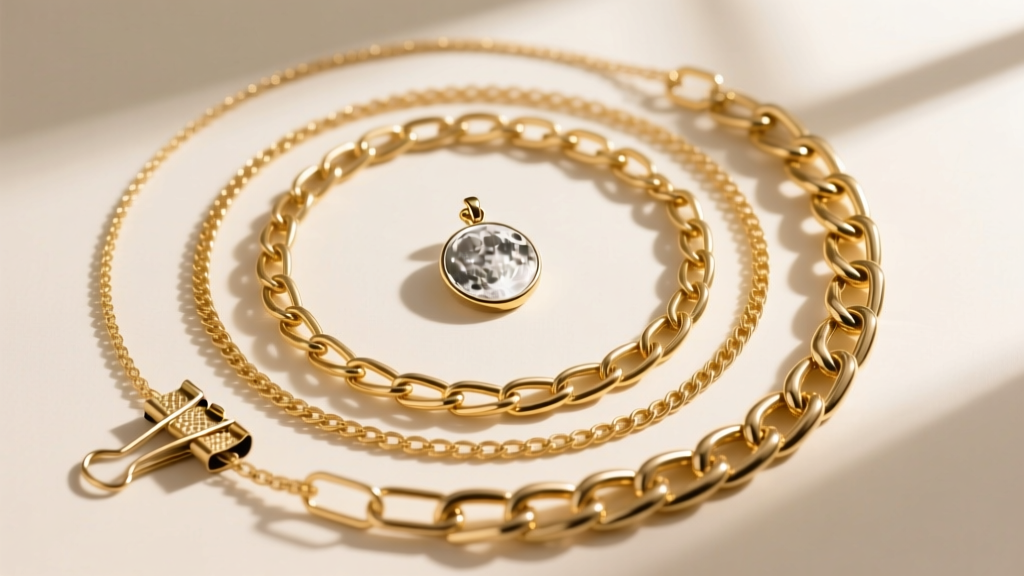
Layering a gold moon necklace with other pieces creates a curated, personalized aesthetic. However, haphazard layering leads to severe tangling and visual clutter. Follow this structural framework to build a flawless stack.
The 2-Inch Drop Rule
To prevent chains from knotting together, each subsequent layer must drop at least 2 inches below the previous one.
- Layer 1 (14-16 inches): A simple 1.0mm gold choker or a tiny bezel-set diamond solitaire. This anchors the stack near the collarbone.
- Layer 2 (18-20 inches): Your primary gold moon necklace. An 18-inch princess length places the moon right at the center of the chest, drawing the eye.
- Layer 3 (22-24 inches): A longer, heavier chain featuring a larger pendant, such as a compass, a cross, or a textured gold bar.
Mixing Chain Textures to Prevent Tangling
Chains tangle when their links are similar in size and shape, allowing them to interlock like gears. To combat this, mix chain styles. Pair your smooth moon pendant cable chain with a highly textured paperclip chain or a twisted rope chain for the adjacent layers. The differing friction coefficients and link geometries will naturally repel one another, keeping your stack untangled throughout the day.
Step 4: Pairing Moon Pendants with Necklines
The shape of your moon pendant should complement, not compete with, your clothing's neckline.
- V-Necks and Wrap Dresses: These necklines create a natural downward arrow. Pair them with a crescent moon oriented horizontally, or a vertical moon phase bar that mimics the V-shape. An 18-inch chain is ideal here.
- Crewnecks and Turtlenecks: High, closed necklines require bold contrast. Wear a full moon medallion (15mm or larger) on a 22-inch or 24-inch chain that rests over the fabric. The solid gold disc breaks up the expanse of fabric beautifully.
- Scoop and Boat Necks: These wide necklines expose the collarbones. Opt for a delicate, off-center asymmetrical moon on a 16-inch chain that sits just above the fabric line, highlighting the décolletage.
Step 5: Troubleshooting Common Wear Issues
Even with perfect styling, daily wear introduces mechanical challenges. Here is how to solve the most frequent issues encountered with gold moon jewelry.
Problem: The Chain Keeps Sliding and Pulling Hair
Solution: This usually happens with lightweight chains and heavy pendants. The clasp slides to the front of the neck. To fix this, add a small gold counterweight charm (like a tiny 2mm gold bead) directly opposite the clasp on the back of the neck. This redistributes the weight and keeps the clasp hidden.
Problem: The Crescent Tips are Scratching My Skin
Solution: Sharp crescent tips can become abrasive over time due to micro-wear. Take the necklace to a local jeweler and ask for a "micro-bevel" or "comfort fit" polish on the inner edges of the moon tips. This removes less than 0.1mm of metal but entirely eliminates the scratching sensation.
Step 6: Professional Cleaning and Storage Protocols
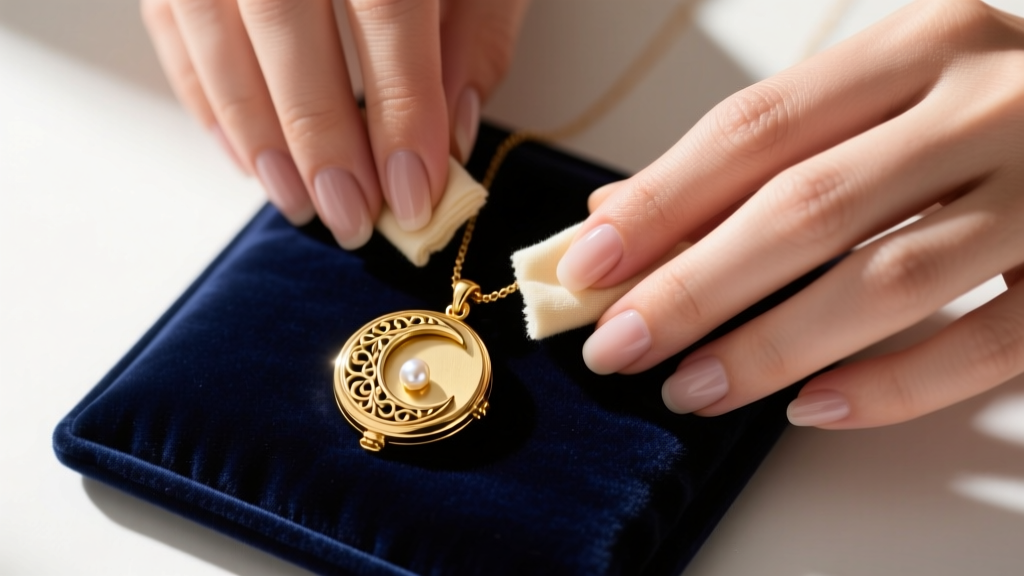
Gold does not tarnish, but the alloys mixed with it (like copper and silver in 14k gold) can react to environmental pollutants, lotions, and sweat, leaving your moon pendant looking dull and cloudy. The Jewelers of America recommends specific, non-abrasive cleaning methods to preserve the finish of your gold.
The Safe At-Home Cleaning Method
- Mix a few drops of mild, phosphate-free dish soap (like Dawn) into a bowl of lukewarm distilled water. Avoid tap water, as chlorine and hard minerals can leave microscopic water spots on high-polish gold.
- Submerge the necklace for exactly 3 to 5 minutes. Do not soak overnight.
- Use an ultra-soft baby toothbrush to gently sweep the crevices of the moon's craters or engraved details. Brush in a single direction to avoid creating micro-scratches.
- Rinse under lukewarm distilled water and pat dry with a lint-free microfiber cloth. Never use paper towels, as wood pulp fibers will scratch 18k and 22k gold.
What to Avoid at All Costs
Never use ultrasonic cleaners on gold moon pendants that feature oxidized (blackened) detailing in the craters. The high-frequency vibrations and harsh chemical baths will strip the intentional antiquing, leaving you with a flat, one-dimensional piece. Furthermore, avoid storing your moon necklace in a communal jewelry box where it can rub against harder gemstones like diamonds or sapphires, which can easily gouge the gold surface.
By understanding the metallurgy, mastering the geometry of layering, and committing to proper maintenance, your gold moon necklace will remain a luminous, perfectly styled staple in your collection for decades to come.


