How to Style and Layer a Gold Rectangle Necklace Like a Pro
Learn how to choose, style, and layer a gold rectangle necklace. Our step-by-step guide covers gold purity, chain gauges, and neckline pairing.


The architectural elegance of a gold rectangle necklace makes it a cornerstone of modern minimalist jewelry. Unlike circular pendants that draw the eye outward, the vertical or horizontal lines of a rectangle create a structured, elongating effect that flatters the décolletage. As we navigate the styling landscape of 2026, the shift towards 'quiet luxury' and geometric precision means that this specific pendant shape is more relevant than ever. However, pulling off this look requires more than just throwing a chain around your neck. It demands an understanding of metallurgy, chain gauges, and spatial layering.
This comprehensive, step-by-step guide will teach you how to select, style, and maintain a gold rectangle necklace with the precision of a master jeweler.
Step 1: Selecting Dimensions and Gold Purity
The foundation of your necklace lies in its metallurgical composition and physical footprint. According to the Gemological Institute of America (GIA), the purity of your gold dictates not only its color but its tensile strength, which is critical when supporting a geometric pendant.
14k vs. 18k Gold for Rectangle Pendants
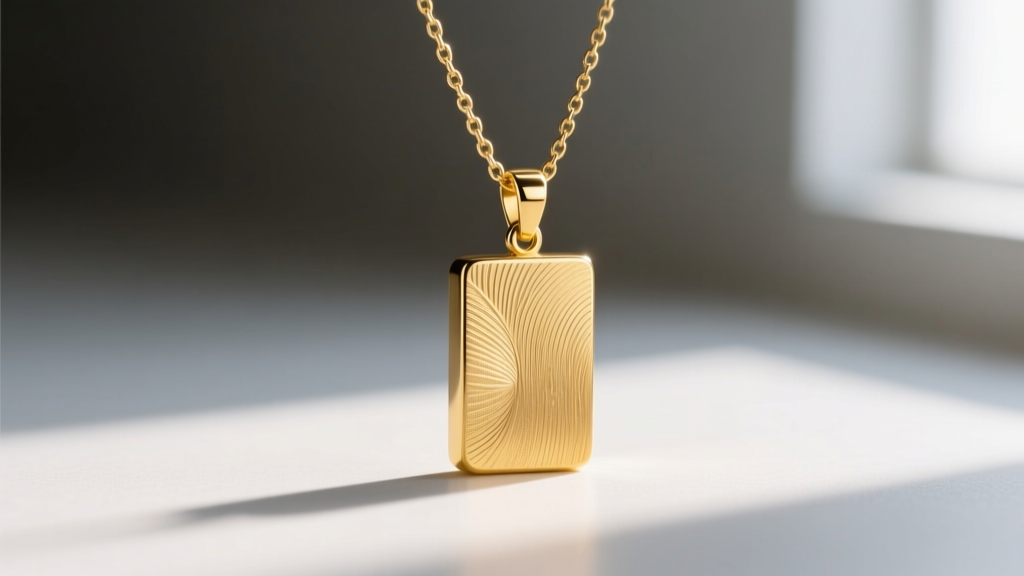
- 14k Gold (58.5% pure gold): Alloyed with higher amounts of copper and silver, 14k gold offers superior scratch resistance. Because rectangle pendants often feature large, flat, high-polish surfaces, they are prone to micro-scratches. 14k is the ideal choice for everyday wear and high-polish finishes.
- 18k Gold (75% pure gold): Offers a richer, deeper yellow hue but is noticeably softer. If you opt for an 18k gold rectangle necklace, choose a brushed, hammered, or matte finish to mask inevitable surface wear.
Proportion Guide: Dimensions and Weight
Choosing the right size depends on your styling goal. Here is a technical breakdown of standard rectangle pendant dimensions:
| Category | Dimensions (L x W) | Average Weight | Best Use Case |
|---|---|---|---|
| Micro Bar | 10mm x 3mm | 0.5g - 0.8g | Delicate layering, 14"-16" chokers |
| Standard Rectangle | 20mm x 8mm | 2.0g - 3.5g | Versatile everyday wear, 16"-18" chains |
| Statement Block | 40mm x 12mm | 6.0g - 9.0g | Standalone piece, 20"-24" matinee lengths |
Step 2: Choosing the Right Chain Gauge and Hardware
A rectangle pendant requires a chain that complements its sharp angles without overpowering the bail (the loop connecting the pendant to the chain). The interplay between chain gauge and pendant weight is where most styling mistakes occur.
Matching Chain Styles to Geometric Pendants
- Box Chains (0.9mm - 1.2mm): The geometric links of a box chain perfectly mirror the straight edges of a rectangle pendant. A 1.0mm 14k box chain can comfortably support a 3.5g standard rectangle without stretching.
- Cable Chains (1.0mm - 1.5mm): Offers a classic, rounded contrast to the sharp pendant. Ensure the links are soldered shut to prevent the pendant's bail from slipping through and warping the chain.
- Snake Chains (1.5mm+): Provides a sleek, modern, and continuous metallic line. However, snake chains are notorious for kinking if bent sharply. Avoid snake chains if your rectangle pendant is heavy (over 4g), as the constant pivot at the bail will eventually snap the chain's interlocking plates.
Hardware Upgrades
Most delicate chains come with a 5mm spring ring clasp, which is frustrating to fasten one-handed. Take your necklace to a local jeweler and pay the nominal fee (usually $15-$25) to upgrade to a 7mm lobster clasp or a neodymium magnetic clasp for seamless daily wear.
Step 3: The 3-Tier Layering Framework
Layering a gold rectangle necklace requires strict adherence to spatial distribution to prevent the dreaded 'chain tangle.' When mixing chains, friction causes them to twist around one another. Follow this exact 3-tier framework to build a flawless stack.
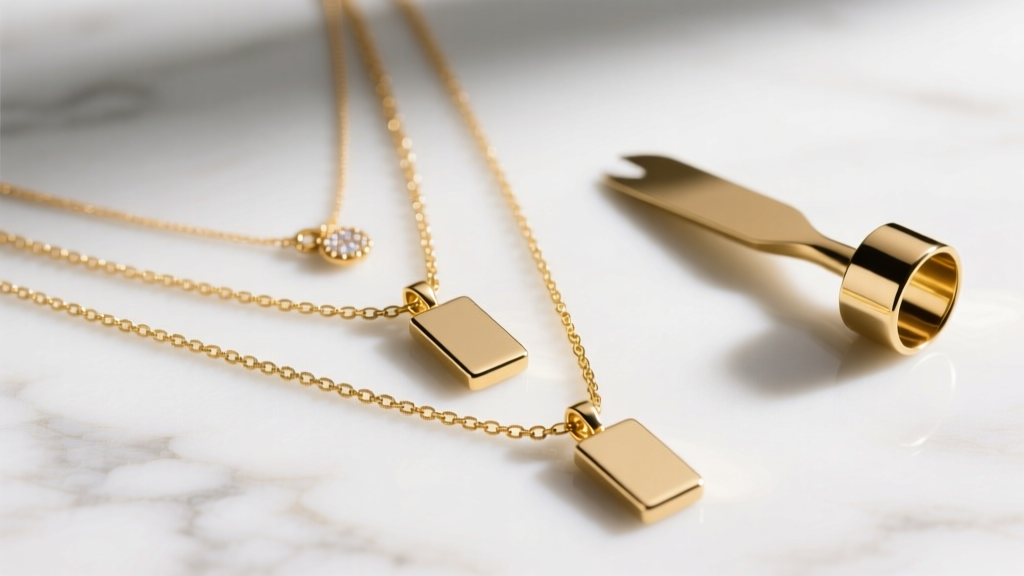
Tier 1: The Anchor (14" - 15")
Start with a micro bar rectangle pendant on a 14-inch or 15-inch choker-length chain. This sits high on the collarbone and establishes the top boundary of your stack. Use a delicate 0.8mm cable chain for this tier.
Tier 2: The Focal Point (17" - 18")
This is where your standard 20x8mm gold rectangle necklace lives. An 18-inch princess length allows the pendant to rest precisely on the upper sternum. Use a slightly thicker 1.1mm box chain here to differentiate the texture from the first tier, which actually reduces friction and tangling.
Tier 3: The Elongator (20" - 22")
Finish the stack with a 22-inch matinee chain featuring either a larger statement rectangle or a complementary geometric shape (like a small gold hoop or a horizontal bar). This tier draws the eye downward, creating a slimming V-effect.
Pro Tip: If you are layering more than two chains, invest in a 'necklace detangler' or 'layering clasp.' This is a single metal bar with multiple loops that connects all your chains at the back of the neck, keeping them perfectly spaced and tangle-free at the front.
Step 4: Pairing with Specific Necklines
The sharp lines of a rectangle pendant interact differently with various clothing silhouettes. Here is how to match your gold rectangle necklace to your wardrobe:
- The V-Neck: A V-neck plunges roughly 4 to 5 inches below the collarbone. Pair this with an 18-inch chain and a vertical rectangle pendant. The pendant should bisect the V-neck line without resting on the fabric, creating a continuous, elongating vertical axis.
- The Crew Neck: Because a crew neck sits high and tight, a long necklace will look disjointed. Opt for a 15-inch or 16-inch chain with a horizontal rectangle bar that rests just above the fabric's ribbed collar, mimicking the horizontal line of the neckline.
- The Button-Down Shirt: Leave the top two buttons undone to create an artificial V-neck. A 20-inch chain with a heavier, brushed gold rectangle pendant adds a touch of relaxed sophistication, resting against the skin rather than the cotton fabric.
- The Square Neck: Avoid horizontal rectangle bars, as they will compete with the square neckline's geometry. Instead, use a delicate vertical micro-bar on a 16-inch chain to break up the horizontal expanse of exposed skin.
Step 5: Daily Maintenance and Tarnish Prevention
While pure gold does not tarnish, the alloy metals (copper, zinc, silver) in 14k and 18k gold can react with environmental factors. Furthermore, the flat surface of a rectangle pendant acts as a magnet for fingerprints, sebum, and cosmetic residue, which dulls its reflective properties.
The 3-Minute Cleaning Protocol
- Prepare the Solution: Mix a few drops of phosphate-free, mild dish soap (like Dawn) into a bowl of lukewarm water. Avoid hot water, which can weaken chain solders over time.
- Soak: Submerge the necklace for exactly 3 minutes to loosen body oils trapped in the chain links and the pendant's bail.
- Agitate: Use an extra-soft baby toothbrush to gently sweep the back of the rectangle pendant and the bail. Never use a standard adult toothbrush, as the bristles are stiff enough to induce micro-scratches on high-polish 18k gold.
- Rinse and Dry: Rinse under a gentle stream of lukewarm water. Pat dry with a lint-free microfiber cloth. Air-drying will leave hard water spots that are highly visible on flat geometric surfaces.
What to Avoid
According to Federal Trade Commission (FTC) guidelines on jewelry care and material disclosures, consumers must be wary of harsh chemical cleaners. Never expose your gold rectangle necklace to chlorine (found in pools and household bleach), as it causes 'stress corrosion cracking' in gold alloys, which will eventually cause the delicate chain links to snap.
Additionally, avoid ultrasonic cleaners if your rectangle pendant features a brushed or matte finish. The high-frequency vibrations can actually smooth out the microscopic grooves of the brushed texture over time, leaving you with a shiny, unevenly worn pendant. For brushed finishes, stick strictly to the manual soap-and-water method and use a specialized jewelry polishing cloth only on the high-polish beveled edges.
By understanding the exact dimensions, metallurgical properties, and spatial dynamics of your jewelry, you elevate a simple accessory into a masterclass of personal styling. A gold rectangle necklace is not just a piece of metal; it is an architectural tool for your wardrobe, provided you know exactly how to wield it.


