How to Style & Layer Your Liz Palacios Necklace: A Step-by-Step Guide
Learn how to style, layer, and care for your Liz Palacios necklace. Our step-by-step guide covers chain gauges, neckline pairing, and gem care.

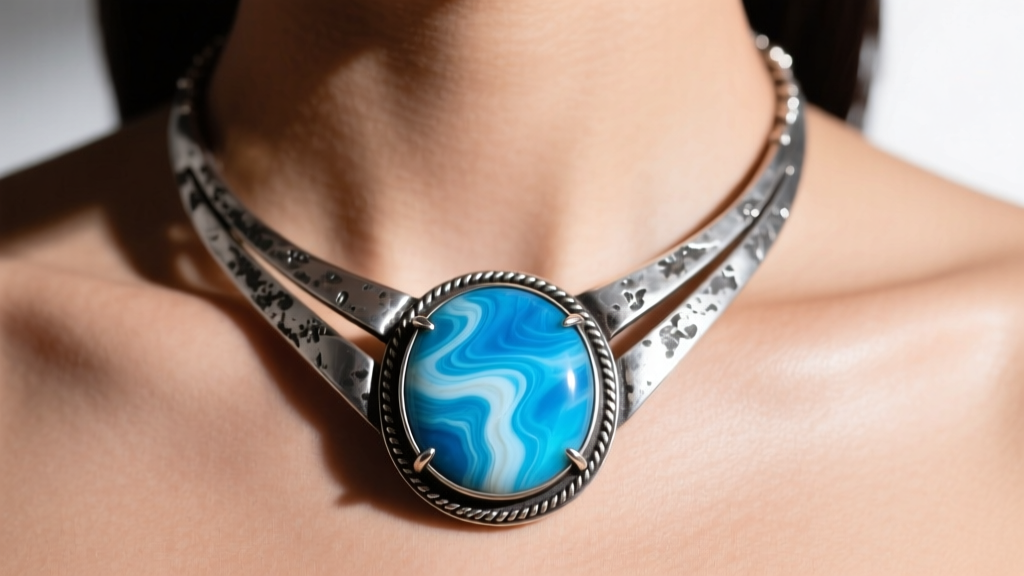
Artisan jewelry occupies a unique space in the modern accessory landscape, bridging the gap between fine jewelry craftsmanship and bold, expressive fashion. When it comes to statement pieces, the Liz Palacios necklace aesthetic—characterized by rich, porous gemstones, intricate metalwork, and intentional oxidized finishes—remains a masterclass in wearable art. However, styling a heavily detailed, gemstone-centric piece requires more than just throwing it on. It demands an understanding of proportion, metal mixing, and gemstone preservation.
Whether you are working with a massive turquoise cabochon or a delicate rose-cut labradorite pendant, this comprehensive 2026 guide will walk you through the exact steps to layer, style, and maintain your artisan necklaces with professional precision.
The Anatomy of an Artisan Gemstone Necklace
Before attempting to layer, you must understand the physical properties of your focal piece. Artisan designers frequently utilize specific materials that dictate how the necklace drapes and ages.
- The Metal Base: Most high-end artisan pieces are crafted from .925 sterling silver. Many feature intentional oxidation (blackening) in the crevices to highlight textures. Some incorporate 18k gold vermeil. According to the Federal Trade Commission Jewelry Guides, true vermeil must have a sterling silver base and a gold plating of at least 2.5 microns thick to ensure longevity.
- The Gemstone Cut: Artisan necklaces heavily favor cabochon cuts (smooth, domed, unfaceted) for opaque stones like turquoise, lapis lazuli, and larimar. This cut protects the stone's integrity and showcases natural inclusions. Conversely, transparent stones like amethyst or garnet are often rose-cut to maximize light return without the harsh brilliance of modern brilliant cuts.
- The Bail and Hardware: Look for oversized, soldered bails. A heavy 40-gram pendant requires a bail with an inner diameter of at least 6mm to accommodate thicker anchor chains without causing metal-on-metal friction.
Step-by-Step Guide to Layering a Statement Piece
Layering a bold Liz Palacios necklace is about creating a visual hierarchy. You want to support the statement piece, not compete with it. Follow this three-step framework to build a balanced stack.
Step 1: Establish the Focal Point (18 to 22 Inches)
Your artisan pendant should sit squarely in the 'princess' to 'matinee' length range (18 to 22 inches). This places the gemstone directly on the sternum, allowing the intricate bezel work to catch the light. Ensure the chain holding the pendant is substantial enough to support the weight—a 2.5mm to 3.5mm rope or box chain is ideal for pendants weighing over 25 grams.
Step 2: Select the Anchor Chain (14 to 16 Inches)
To frame the face and draw the eye upward, add a shorter, minimalist chain. A 15-inch sterling silver snake chain or a delicate 1.2mm cable chain works perfectly. The goal here is negative space. Do not add a pendant to this layer; let the bare metal provide a sleek, modern contrast to the organic texture of the gemstone below.
Step 3: Add Textural Contrast (24 to 30 Inches)
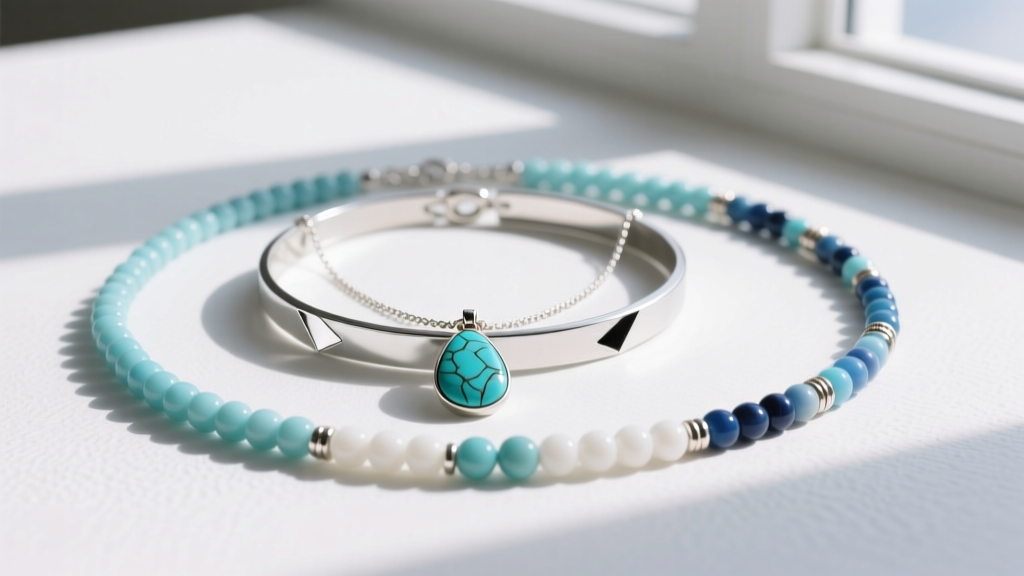
For the bottom layer, introduce a completely different material. If your focal piece is metal-heavy, use a strand of matte-finished onyx or carnelian beads. If your focal piece is a massive gemstone, opt for a long, 28-inch oxidized silver paperclip chain. The varying link sizes (e.g., 8mm x 12mm links) create a visual rhythm that prevents the stack from looking cluttered.
Neckline Pairing Matrix: What to Wear Where
The success of your styling relies heavily on the geometry of your clothing. Use this matrix to match your necklace stack to your neckline.
| Neckline Type | Ideal Necklace Length | Styling Strategy & Chain Gauge |
|---|---|---|
| Deep V-Neck | 20" - 24" (Matinee) | Follow the V-shape. Use a single, heavy pendant on a 3.0mm chain that terminates just above the hem of the V. |
| Crew / Scoop | 16" & 18" (Layered) | Fill the negative space. Pair a 16" choker with an 18" artisan pendant to create a cascading effect over the fabric. |
| Boatneck / Bateau | 28" - 32" (Opera) | Break the horizontal line. Use a long, single-strand beaded necklace or a lariat that draws the eye vertically. |
| Button-Down Collar | 18" (Princess) | Tuck the chain inside the collar, letting the pendant rest against the skin, or wear it entirely over the collar for a preppy contrast. |
Caring for Porous Gemstones and Oxidized Silver
Artisan jewelry requires specialized maintenance. The very characteristics that make a Liz Palacios necklace beautiful—raw stones and darkened silver crevices—are highly susceptible to damage from standard jewelry cleaning methods.
The Mohs Hardness Scale and Cleaning
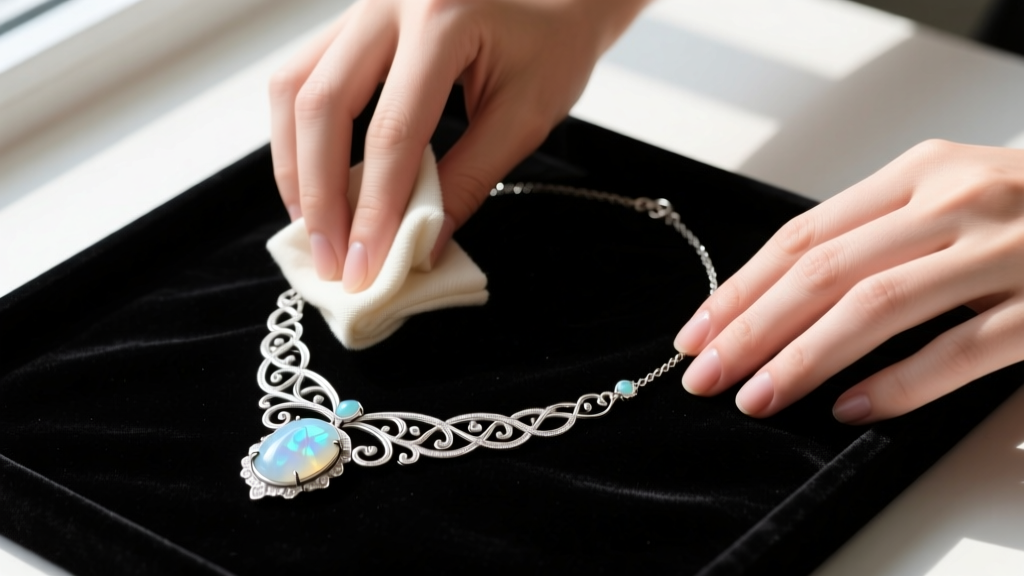
Never use ultrasonic cleaners or steamers on porous or soft gemstones. According to the Gemological Institute of America (GIA) Gem Care Guide, stones like turquoise (Mohs 5-6), opal (Mohs 5.5-6.5), and malachite (Mohs 3.5-4) can easily fracture or lose their polish when exposed to high-frequency vibrations and harsh chemical baths. Instead, use a damp, lint-free microfiber cloth to gently wipe the surface of the cabochon.
Preserving Intentional Oxidation
Standard silver dips and aggressive polishing will strip the intentional black oxidation from the recesses of your sterling silver settings, leaving the piece looking flat and overly bright. To clean the high-polish areas without ruining the patina, use a treated polishing cloth (like a Sunshine cloth) and carefully rub only the raised surfaces. Use a soft-bristled makeup brush to dust out the oxidized crevices.
Troubleshooting Common Layering Mistakes
Even with the perfect pieces, physical mechanics can ruin a layered look. Here is how to solve the most common issues:
- The Tangling Dilemma: When wearing three or more chains, friction causes them to twist together. The Fix: Invest in a multi-strand spacer clasp. This small sterling silver or gold-filled bar features multiple loops that lock your chains at fixed distances apart at the nape of the neck, completely eliminating tangling while keeping the front drape fluid.
- Pendant Flipping: A top-heavy cabochon pendant will constantly flip backward, showing the plain metal backing instead of the stone. The Fix: Apply a tiny, invisible drop of museum wax to the back of the bail, or have a jeweler solder a small 'V-bail' or add a counterweight bead to the back of the chain to force the pendant to lay flat against the sternum.
- Clasp Migration: Heavy artisan pendants pull the chain downward, causing the lobster clasp to slide from the back of the neck to the front. The Fix: Use a chain with a built-in silicone stopper bead near the clasp, or attach a small, decorative counter-charm directly to the clasp ring to weigh it down at the nape.
Mastering the art of styling an artisan gemstone piece elevates your entire wardrobe. By respecting the materials, understanding spatial proportions, and implementing proper care protocols, your statement necklaces will remain vibrant, structural, and timeless for decades to come.


