How to Style and Layer a T Pendant Necklace Flawlessly
Learn how to style, layer, and care for a T pendant necklace. Discover chain lengths, neckline matching, and expert maintenance tips.

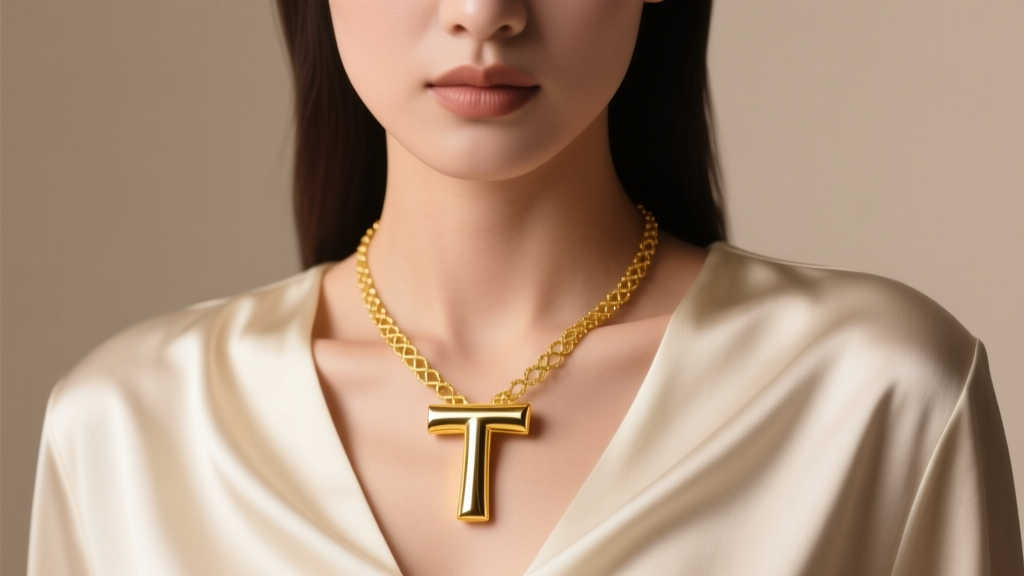
The T pendant necklace has transcended its origins as a simple typographic charm to become a permanent staple of architectural minimalism. As we navigate the jewelry landscape of 2026, the focus has shifted heavily toward structural layering, mixed-metal styling, and intentional proportion. Whether you are wearing a heritage piece from a luxury house or a modern indie interpretation, the horizontal T-bar offers a clean, geometric focal point that anchors any neckline. However, mastering the art of the T pendant requires more than just throwing it on. It demands an understanding of chain tensile strength, precise length spacing, and metal-grade maintenance.
The Anatomy and Engineering of a T Pendant
Before layering, you must understand the physical mechanics of your jewelry. A standard horizontal T-bar (typically measuring between 12mm and 20mm across) in solid 14k gold weighs approximately 2.5 to 4.0 grams. This concentrated weight at the center of the chain creates a downward pull that cheaper, hollow chains cannot withstand over time.
- The Chain Gauge: Avoid delicate 0.8mm or 1.0mm cable chains for heavier T-bars. The constant friction of the bail rubbing against a thin link will eventually cause the chain to snap. Opt for a 1.2mm to 1.5mm box chain or a reinforced rolo chain, which offer superior tensile strength and resist kinking.
- The Bail Type: Look for a T pendant with a hidden, integrated bail or a thick, soldered jump ring. Floating bails (where the chain threads directly through a hollowed-out section of the T-bar) look seamless but can cause accelerated wear on the chain links if the interior edges are not perfectly polished by the jeweler.
Metal Grades and Pricing Tiers
When shopping for a T pendant necklace, understanding metal composition is critical for both longevity and skin sensitivity. According to the Federal Trade Commission Jewelry Guides, specific standards dictate how metals can be legally marketed, which directly impacts what you should expect to pay.
- 925 Sterling Silver ($60 - $150): An excellent entry point. Sterling silver is highly reflective but prone to oxidation. It requires regular polishing, especially in humid climates.
- 18k Gold Vermeil ($130 - $280): To legally be called "vermeil," the piece must feature a sterling silver base plated with at least 2.5 microns of 18k gold. Anything less is standard gold plating and will wear through to the silver beneath within months of daily wear.
- Solid 14k or 18k Gold ($400 - $1,200+): The ultimate investment. Solid gold will never flake or tarnish, making it ideal for a T pendant that you intend to wear in the shower, at the gym, and while sleeping.
Step-by-Step Guide to Layering Your T Pendant
Layering a T pendant necklace is all about respecting the "2-inch rule." If chains are placed too close together, the clasps will tangle at the nape of your neck, and the pendants will clash visually. Here is a foolproof, three-step layering framework.
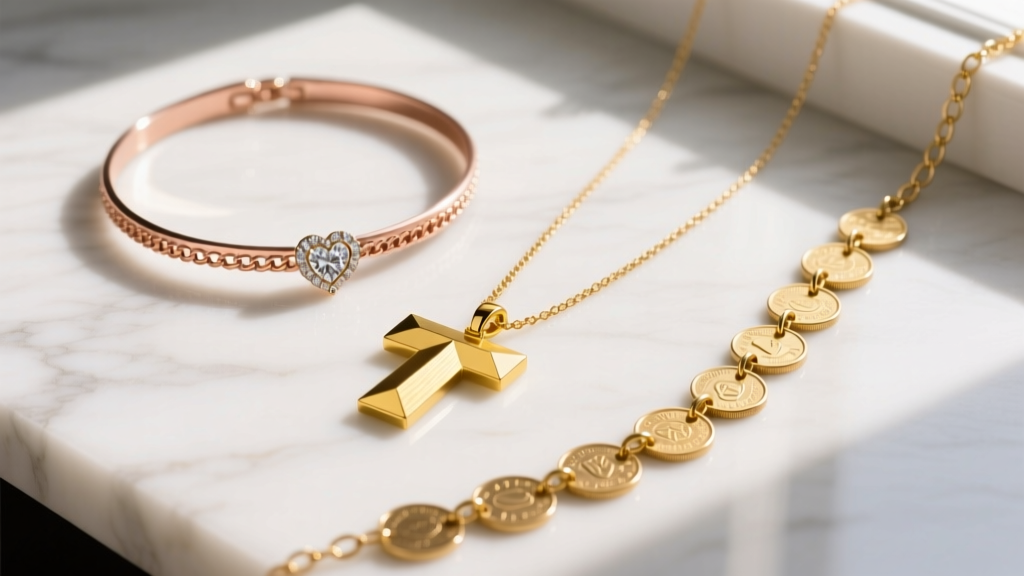
Step 1: The Anchor (14 to 15 Inches)
Start with a delicate, lightweight choker. A 14-inch or 15-inch 1.0mm cable chain with a tiny diamond solitaire or a simple gold bead sits snugly against the collarbone. This piece should not compete with the T pendant; its job is to frame the upper neck and provide a base layer of shimmer.
Step 2: The Focal T Pendant (16 to 18 Inches)
Your T pendant necklace should sit exactly two to three inches below the anchor chain. An 18-inch princess length is universally flattering for the T-bar, allowing the horizontal line of the pendant to rest perfectly on the upper chest without getting lost in the hollow of the collarbone.
Step 3: The Extender (20 to 24 Inches)
Finish the stack with a longer, heavier chain that lacks a prominent pendant. A 22-inch oxidized silver chain, a strand of irregular baroque pearls, or a simple gold lariat draws the eye downward, elongating the torso and allowing the geometric T-bar to remain the undisputed star of the middle tier.
Matching Your T Pendant to Specific Necklines
The horizontal geometry of a T pendant interacts differently with various fabric cuts. Use this reference table to ensure your necklace complements, rather than fights, your outfit.
| Neckline Type | Ideal Chain Length | Styling Strategy |
|---|---|---|
| Deep V-Neck | 18" to 20" | Allow the T-bar to float in the center of the V. Avoid lengths that hit exactly at the seam of the fabric. |
| Crew Neck | 14" or 22" | Contrast the high, round collar with a tight choker or let a long T pendant drape entirely over the fabric. |
| Button-Down Shirt | 16" to 18" | Wear the T pendant inside an unbuttoned collar. The horizontal bar mimics the geometry of the shirt's collar points. |
| Turtleneck | 20" to 24" | Use a longer, heavier chain. The dark, solid fabric of a turtleneck requires a larger T-bar and thicker chain to stand out. |
Caring for and Maintaining the T-Bar Polish
Because the T-bar is a solid, flat surface, it acts as a magnet for fingerprints, lotion smudges, and micro-scratches. Maintaining its mirror finish requires specific protocols. The Gemological Institute of America (GIA) recommends gentle, non-abrasive cleaning methods for precious metals to preserve their structural integrity over decades of wear.

Daily and Weekly Maintenance
Keep a jeweler's rouge-impregnated polishing cloth (such as a Sunshine cloth) on your vanity. Wipe the horizontal face of the T-bar gently in one direction. Do not rub in tight circles, as this will create a swirl pattern of micro-scratches that dulls the reflection over time.
Deep Cleaning and Ultrasonic Warnings
For a deeper clean, use a few drops of mild dish soap in warm water and a baby-soft toothbrush to clean the bail and the underside of the T-bar where skin oils accumulate. Crucial Warning: If your T pendant features pavé diamonds or tension-set gemstones along the bar, never use an ultrasonic cleaner. The high-frequency vibrations can easily rattle small stones loose from their delicate settings. Stick to manual soaking and gentle brushing for any T pendant featuring stone accents.
Storage Protocols
Never toss a T pendant necklace into a communal jewelry box. The hard edges of the T-bar will scratch softer pearls or opals, and other chains will wrap around the horizontal bar, causing severe tangling. Always hang your T pendant by its clasp on a dedicated jewelry stand, or lay it completely flat in a velvet-lined drawer with the clasp secured to prevent the chain from slipping through the links.
By treating your T pendant necklace as a piece of wearable architecture rather than just an accessory, you ensure it remains a versatile, striking cornerstone of your jewelry wardrobe for years to come.


