How to Style and Layer a Pearl and Rose Quartz Necklace
Master the art of layering a pearl and rose quartz necklace. Learn step-by-step styling, neckline pairings, and essential care tips for these delicate gems.

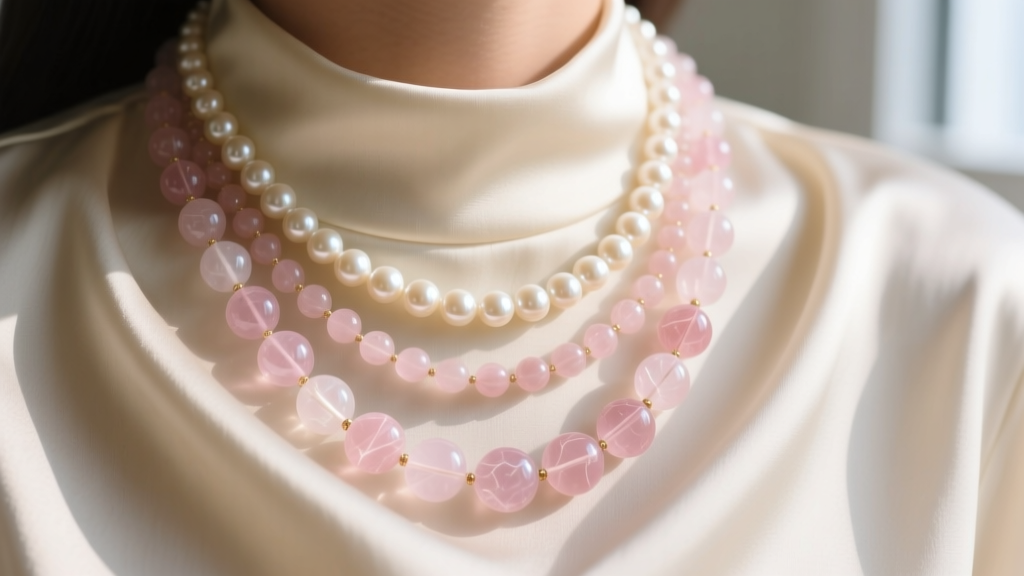
The combination of organic luster and crystalline warmth makes a pearl and rose quartz necklace a staple in romantic, ethereal, and everyday minimalist jewelry wardrobes. However, styling these two distinct materials together requires more than just an eye for color; it demands a structural understanding of gemology. In 2026, the trend has shifted decisively away from uniform, mass-produced bead strands toward asymmetrical, mixed-media layering. Yet, many wearers unknowingly damage their jewelry by ignoring the physical properties of the stones they are pairing.
This step-by-step guide will walk you through the exact mechanics of layering, neckline pairing, and maintaining a pearl and rose quartz necklace, ensuring your pieces remain pristine while achieving a flawless, modern aesthetic.
The Material Reality: Understanding Mohs Hardness and Friction
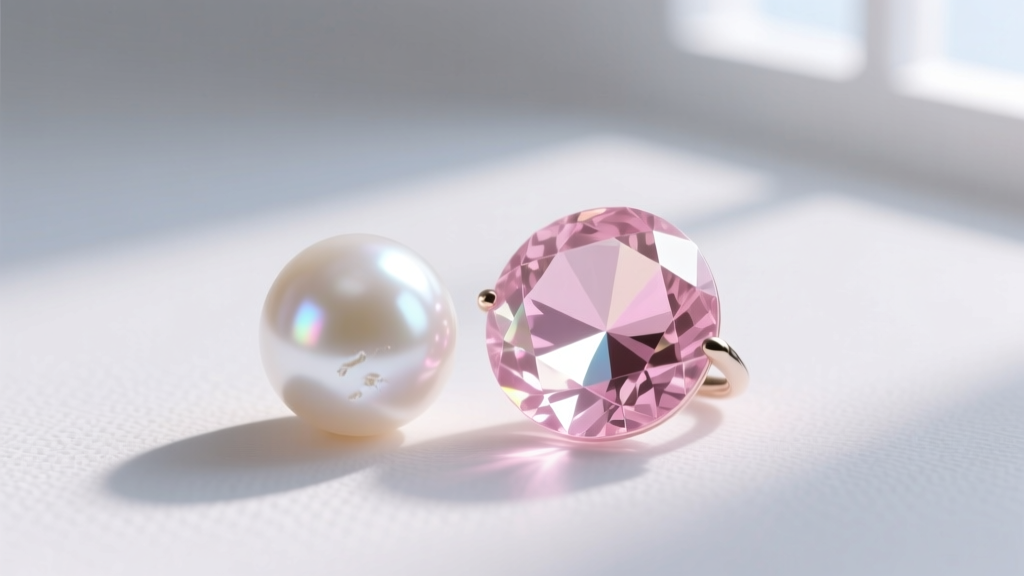
Before you drape a single chain around your neck, you must understand the geological friction between your materials. According to the Gemological Institute of America (GIA), pearls are organic gems with a Mohs hardness rating of just 2.5 to 4.5. Rose quartz, a crystalline silicon dioxide, sits much higher on the scale at a 7.
The Failure Mode: If you layer a heavy rose quartz pendant on an 18-inch chain directly over a 16-inch strand of pearls, the quartz will inevitably rest against the pearls during movement. Because quartz is significantly harder, it will act like microscopic sandpaper, permanently scratching and dulling the pearl’s delicate nacre over time.
The Solution: When styling a pearl and rose quartz necklace, you must utilize the "3-Inch Separation Rule." Ensure there is at least a 2-to-3-inch length difference between the pearl strand and the rose quartz pendant to prevent physical contact. Alternatively, use small silicone or gold-filled spacer beads on the rose quartz chain to create a physical buffer if the lengths must be closer.
Step-by-Step Guide to Layering Your Necklaces
Creating a balanced, tangle-free stack requires precise length management and weight distribution. Here is the exact blueprint for layering these specific stones.
Step 1: The Anchor (14 to 15 Inches)
Start with a delicate, 14-inch or 15-inch collar necklace. For this base, use small (4mm to 6mm) AAA-grade freshwater pearls strung on a silk thread or a fine 14k gold-filled cable chain. This sits high on the collarbone and draws the eye upward, framing the face without competing with the heavier stones below.
Step 2: The Focal Point (18 Inches)
Your primary pearl and rose quartz necklace should sit at the 18-inch princess length. Opt for a single, high-quality Madagascar rose quartz pendant (known for its superior translucency compared to opaque Brazilian variants) measuring roughly 12mm to 15mm. Set it in a bezel or prong setting to prevent the raw edges of the stone from catching on your clothing or adjacent chains.
Step 3: The Extender (22 to 24 Inches)
To complete the stack, add a 22-inch or 24-inch matinee or opera-length chain. Instead of more heavy beads, use a textured chain (like a rope or wheat chain) interspersed with tiny 3mm pearl accents. This adds verticality and movement without adding excessive weight to your neckline, which can cause the shorter clasps to tangle.
Neckline Pairings: A Visual Framework
The way your jewelry interacts with your clothing dictates the visual success of your stack. Use this framework to match your pearl and rose quartz necklace to your wardrobe.
- The Deep V-Neck: Pair a 16-inch pearl choker with an 18-inch rose quartz drop pendant. The V-shape of the neckline naturally mirrors the downward point of the pendant, creating an elongating effect for the neck and torso.
- The Crew Neck / T-Shirt: Avoid short chokers, which will clash with the high fabric line. Instead, wear a single, bold 20-inch rose quartz pendant layered over a 22-inch delicate pearl strand. The contrast of the casual cotton with the elegant gems creates a highly sought-after "elevated casual" look.
- The Boatneck / Off-the-Shoulder: This neckline exposes the collarbones and shoulders. Utilize a sweeping 28-inch opera-length pearl strand that can be doubled up, allowing the rose quartz elements to rest at the sternum while the pearls wrap elegantly around the exposed skin.
Essential Care and Cleaning Protocols
Because you are mixing an organic, porous material (pearl) with a crystalline, fracture-prone material (rose quartz), standard jewelry cleaning methods will destroy your pieces. Ultrasonic cleaners, which use high-frequency sound waves, will shatter the internal structure of rose quartz and strip the nacre right off a pearl.
Refer to the GIA Quartz Guide and pearl care standards for the following maintenance matrix:
| Maintenance Task | Pearl Protocol | Rose Quartz Protocol |
|---|---|---|
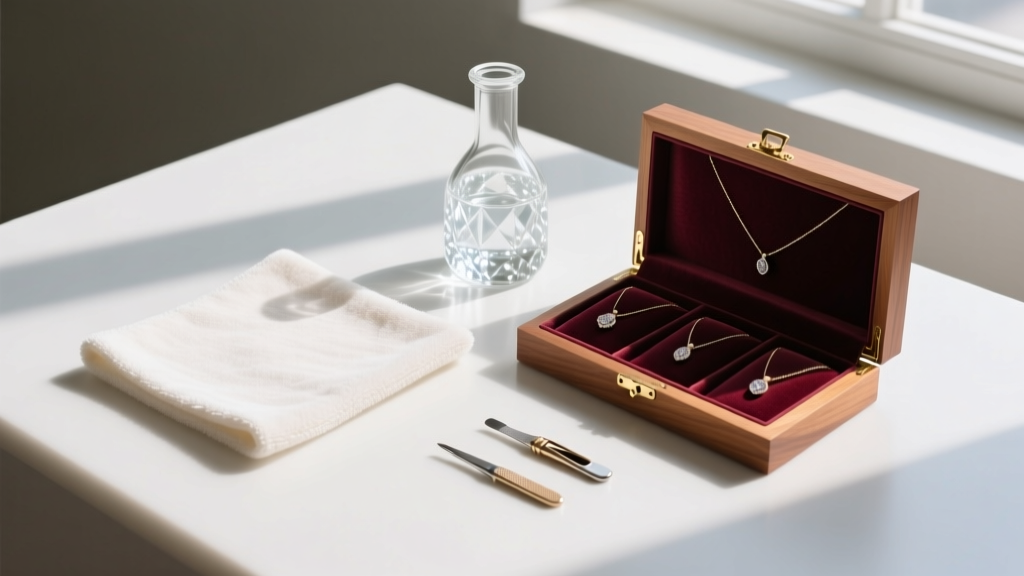
| Daily Cleaning | Wipe gently with a damp, lint-free microfiber cloth after wearing to remove skin acids. | Rinse with lukewarm distilled water and pat dry; avoid tap water which contains chlorine. |
| Deep Cleaning | NEVER submerge. Use a barely damp cloth with a drop of mild, phosphate-free baby soap. | Soak for 3 minutes in warm water with a drop of gentle dish soap; use a soft baby toothbrush. |
| Ultrasonic Cleaners | NEVER. The vibrations will cause the nacre to peel and delaminate from the bead nucleus. | NEVER. The vibrations will exploit natural inclusions, causing the stone to fracture internally. |
| Chemical Exposure | Avoid all perfumes, hairsprays, and cosmetics. Apply them 15 minutes before putting pearls on. | Avoid harsh acids, bleach, and hydrofluoric acid, which can etch the surface of the quartz. |
| Storage | Store in a breathable soft pouch. Pearls need slight moisture; airtight plastic causes cracking. | Store in a separate, hard-lined compartment to prevent the quartz from scratching softer gems. |
Troubleshooting Common Issues
Problem: The Chains Are Hopelessly Tangled
When layering a pearl and rose quartz necklace, the varying weights of the beads often cause the finer chains to twist and knot. Do not pull. Lay the tangled mass on a flat, hard surface. Sprinkle a small amount of talcum powder or cornstarch over the knot to reduce friction. Using two fine sewing needles, gently work the center of the knot outward. The powder allows the metal links to slide past one another without catching on the drilled holes of the pearls.
Problem: The Pearls Look Dull and Chalky
If your pearls have lost their orient (the deep, glowing luster), they have likely been dehydrated or exposed to skin acids. While you cannot "polish" a pearl back to life without removing layers of nacre, you can rehydrate them. Lightly dampen a soft cloth with distilled water and a minuscule drop of mineral oil, wipe the pearls gently, and then wear them against your skin. Your body's natural oils are the best long-term conditioner for organic gems.
Problem: The Rose Quartz Faded in the Sun
Prolonged exposure to direct, harsh UV light can cause the pink color centers in some rose quartz specimens to fade to a pale, grayish-white. If you live in a high-sun climate, reserve your translucent Madagascar rose quartz pieces for evening wear or indoor events, and opt for deeper, more saturated Brazilian rose quartz for daily, outdoor summer styling.
Final Thoughts on Hardware and Clasps
Finally, pay attention to the metal hardware connecting your pearl and rose quartz necklace. Because pearls are highly sensitive to tarnishing metals, avoid cheap brass or copper alloy clasps that are merely gold-plated. As the plating wears off, the base metals will react with your sweat and transfer green or black oxidation directly onto the porous surface of the pearls adjacent to the clasp. Always insist on 14k solid gold, 14k gold-filled, or high-grade sterling silver lobster clasps to ensure the longevity of your entire layered stack.


