Choker Necklaces Gold: 2026 Trend Forecast & Styling Guide
Discover the top 2026 trends for choker necklaces gold. Expert styling tips, karat comparisons, and layering techniques for every neckline.


The Evolution of the Gold Choker in 2026
The jewelry landscape has shifted dramatically over the last decade, but few pieces have demonstrated the staying power and evolutionary adaptability of the gold choker. Moving far beyond the velvet ribbons and plastic tattoo chokers of the 1990s, today's iterations are exercises in architectural precision and metallurgical artistry. As we navigate the 2026 trend cycle, choker necklaces gold have cemented their status not merely as nostalgic throwbacks, but as foundational pillars of modern fine jewelry wardrobes. According to runway analyses from Vogue, the contemporary gold choker is defined by its interplay with the collarbone, acting as a framing device for the face rather than just an accessory.
What separates a passing fad from a permanent fixture? The answer lies in material innovation and proportional scaling. Designers are currently pushing the boundaries of traditional chain-making, introducing liquid-metal finishes and micro-woven textures that catch the light in entirely new ways. For the discerning collector or the everyday minimalist, understanding the nuances of these designs is critical to making an informed investment.
Material Deep Dive: Karat Weights, Widths, and Hardness
When investing in fine jewelry, the purity of the metal dictates not only the color and price but also the structural integrity of the piece. A choker sits high on the neck, an area prone to friction from hair, clothing, and natural oils. Therefore, selecting the correct karat weight is a balance between aesthetic warmth and mechanical durability. The Gemological Institute of America (GIA) notes that alloying gold with metals like copper, zinc, and silver fundamentally alters its Vickers hardness (HV), which is crucial for rigid or semi-rigid collar styles.
| Karat Weight | Gold Purity | Vickers Hardness (Approx.) | Best Choker Style | Price Range (USD) |
|---|---|---|---|---|
| 14k Gold | 58.3% | 130 - 150 HV | Herringbone, Paperclip, Intricate Links | $250 - $1,200 |
| 18k Gold | 75.0% | 110 - 130 HV | Liquid Metal Collars, Hammered Cuffs | $800 - $3,500 |
| 22k Gold | 91.6% | 60 - 80 HV | Thick Solid Bangles, Matte Finish Bands | $2,000 - $6,000+ |
Expert Insight: Avoid 22k or 24k gold for delicate micro-chokers (under 3mm in width). The high purity makes the metal too malleable, leading to inevitable kinking and clasp failure. For daily wear chains, 14k remains the undisputed champion of durability, while 18k offers that rich, buttery yellow hue favored by luxury houses.
Top 3 Gold Choker Trends Dominating 2026
1. The Liquid Metal Collar
Eschewing traditional links, the liquid metal collar mimics the appearance of molten gold poured directly over the collarbone. These pieces typically range from 8mm to 15mm in width and are crafted using advanced centrifugal casting and high-polish tumbling techniques. The seamless aesthetic is achieved through hidden box clasps or magnetic closures that blend flawlessly into the metalwork. This trend leans heavily into 18k gold to maximize the reflective, mirror-like surface.
2. Woven Herringbone Micro-Chokers
The herringbone chain is experiencing a massive renaissance, but in 2026, it is being scaled down to micro-proportions (1.5mm to 2.5mm). This snake-chain variant lies completely flat against the skin, offering a sleek, skin-like shimmer. However, buyers must be aware of the structural vulnerability: herringbone chains are notoriously prone to permanent kinking if bent backward. Always store these flat or draped over a velvet cone, never tangled in a jewelry box.
3. Asymmetric Chain Links
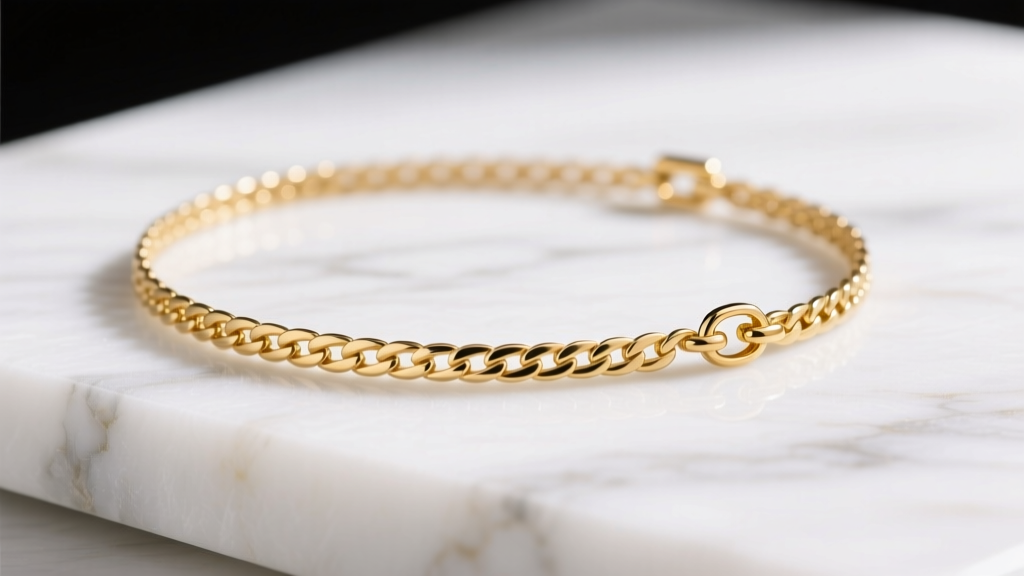
Uniformity is out; intentional asymmetry is in. Designers are mixing elongated paperclip links with shorter, thicker curb links within the same 14-inch to 16-inch choker length. This creates a dynamic, industrial-chic aesthetic that catches the eye and breaks up the monotony of traditional chains. These are best finished with oversized lobster clasps that act as a secondary focal point when worn slightly off-center.
Neckline Pairing Matrix: How to Style
A gold choker is only as effective as its pairing with your wardrobe. The proximity to the jawline means it can either elongate or truncate the neck depending on the garment's cut. Use this framework to optimize your styling:
- The V-Neck & Plunge: Pair with a 14-inch rigid liquid metal collar. The hard horizontal line of the choker contrasts beautifully with the vertical plunge of the neckline, creating a balanced geometric frame.
- The Square Neckline: Opt for a delicate 2mm herringbone micro-choker. The softness of the flat chain complements the structured, angular cut of a square bodice without competing for attention.
- The Off-Shoulder / Bardot: This is the ideal canvas for layering. Start with a snug 13-inch beaded gold choker, followed by a 16-inch pendant chain to draw the eye down the exposed décolletage.
- The Turtleneck / Mock Neck: Avoid delicate chains; they will disappear into the fabric. Choose a heavy, 10mm+ asymmetric link choker worn over the fabric, utilizing the textile as a dark backdrop to make the gold pop.
Layering Framework: The 2-4-6 Rule
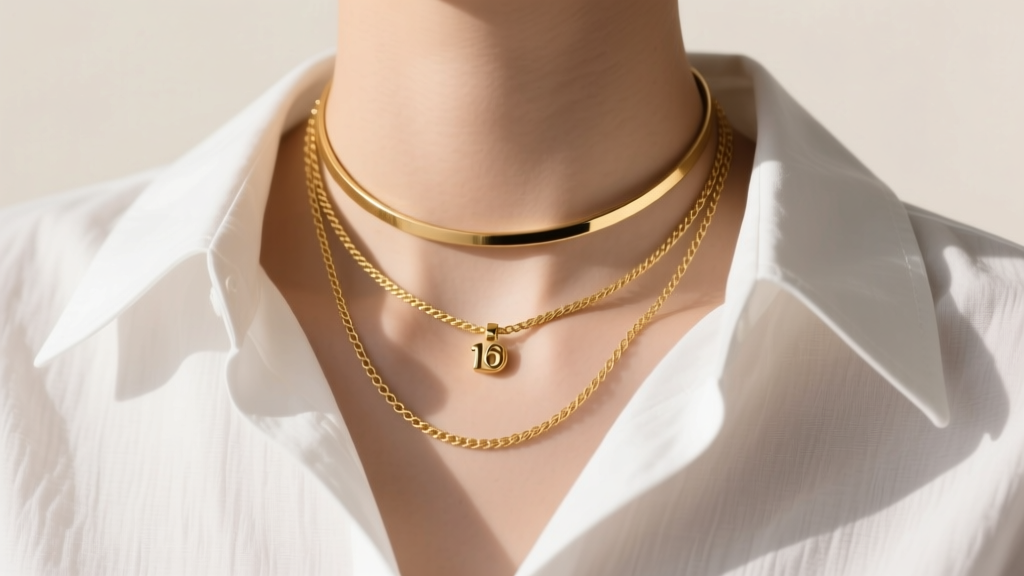
Layering choker necklaces gold with longer pieces requires strict adherence to spacing to prevent tangling and visual clutter. The industry-standard '2-4-6 Rule' dictates the spacing in inches between each layer. If your gold choker sits at 14 inches (tight to the neck), your second chain should be exactly 16 inches (a standard princess length resting on the collarbone), and your third should be 18 inches. Furthermore, vary the chain thickness: if the choker is a 4mm curb chain, the 16-inch layer should be a delicate 1.5mm cable chain, and the 18-inch layer can feature a substantial pendant to anchor the look.
Investment & Pricing Guide
Navigating the market requires an understanding of what drives the cost of gold chokers beyond the daily spot price of the metal. Labor intensity is the primary multiplier. A standard 14k gold cable chain choker might retail for $200-$350, as it is machine-produced and easily soldered. Conversely, a hand-woven 18k Byzantine choker or a seamless liquid metal collar requires hours of specialized bench work, pushing prices into the $1,500 to $4,000 range.
When purchasing, always inspect the clasp mechanism. A high-quality choker will feature a reinforced jump ring and a sturdy lobster clasp. Spring-ring clasps, while common in mass-market jewelry, are fragile and difficult to operate, making them a poor choice for a piece that sits tightly against the neck where tension is high.
Conclusion
The gold choker has transcended its trend-cycle origins to become a sophisticated staple of modern jewelry design. By understanding the metallurgical realities of karat weights, recognizing the structural quirks of specific chain weaves, and applying deliberate styling matrices, you can curate a piece that offers both immediate sartorial impact and long-term heirloom value. Whether you gravitate toward the mirror-like finish of a liquid metal collar or the understated shimmer of a micro-herringbone, 2026 offers unprecedented variety in how we frame the neckline.


