How to Style a High Neck Top With Necklace: A Complete Guide
Discover how to perfectly style a high neck top with necklace layering. Expert buying guide on lengths, gauges, and snag-free pendants.

The Physics and Aesthetics of High Necklines
Mastering the art of pairing a high neck top with necklace styles is one of the most nuanced challenges in modern jewelry styling. Unlike V-necks or scoop necks that offer a bare canvas for metallic drape, high necklines—ranging from chunky wool turtlenecks to sleek silk mock necks—introduce complex variables of fabric weight, texture, and friction. When you buy jewelry specifically for high-collared garments, you are no longer just shopping for aesthetics; you are shopping for structural integrity and ergonomic comfort.
The primary issue most consumers face is the 'choking effect' or the inevitable tangling of delicate chains in knitwear. A standard 16-inch princess chain, which sits beautifully on bare skin, will aggressively constrict the collar of a turtleneck and warp the neckline of a silk blouse. Furthermore, the friction between metal and textile can lead to severe pilling on cashmere or catastrophic snapping of fine jewelry links. According to the Jewelers of America, repairing snagged chains accounts for a significant percentage of everyday jewelry maintenance, much of which is caused by improper pairing with textured winter garments.
This comprehensive buying guide will dissect the exact specifications—from chain gauge and weave patterns to clasp mechanics and pendant settings—required to flawlessly execute the high neck top with necklace look without compromising your wardrobe or your fine jewelry.
Mapping Necklace Lengths to Fabric Weights
The foundational rule of high-neck styling is that the necklace length must be inversely proportional to the thickness of the fabric. A thin, skin-tight mock neck requires a different mathematical approach than an oversized, ribbed fisherman sweater. When the fabric adds bulk to the circumference of your neck, a chain that measures 18 inches on a jewelry bust will effectively shrink to 16 inches when worn over a thick collar, causing the pendant to sit awkwardly high and the chain to pull at the base of the neck.
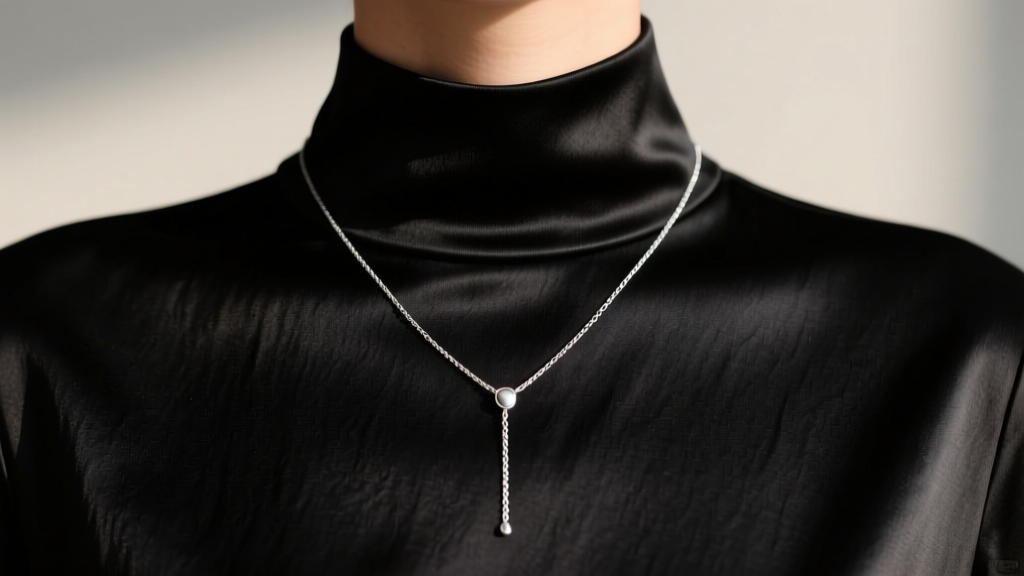
To achieve the perfect drape, you must calculate the 'fabric delta.' For heavy knits and wool turtlenecks, you need a minimum of 22 to 24 inches (Matinee length) to allow the chain to clear the collarbone and rest on the upper chest. For sleek, thin fabrics like silk or fine cotton mock necks, an 18 to 20-inch chain will provide a sophisticated, close-to-the-body silhouette without distorting the garment's seams.
| Neckline Type | Fabric Weight | Ideal Chain Length | Recommended Gauge | Best Pendant Style |
|---|---|---|---|---|
| Chunky Turtleneck | Heavy Knit / Wool | 24 - 28 Inches | 2.5mm - 4.0mm | Large Geometric / Smooth Cabochon |
| Ribbed Sweater | Medium Cashmere / Cotton | 22 - 24 Inches | 1.5mm - 2.5mm | Bezel-Set Medallions |
| Silk Mock Neck | Lightweight Satin / Silk | 18 - 20 Inches | 1.0mm - 1.5mm | Delicate Lariat / Small Solitaire |
| Halter Neck | Varies (Usually Bare Neck) | 14 - 16 Inches (Choker) | 2.0mm - 3.0mm | Collar / Statement Bib |
Chain Weaves: Which Survive the Knitwear Test?
Not all chain links are created equal, and the weave pattern dictates how a necklace interacts with textile fibers. When selecting a chain to wear over a high neck top, you must avoid weaves with micro-gaps or protruding edges.
The Danger of Snake and Herringbone Chains
Snake chains and herringbone weaves are notoriously fragile when subjected to lateral friction. The tightly packed, smooth-looking links of a snake chain act like a micro-saw against wool and cashmere, pulling individual fibers and causing severe pilling. Furthermore, if a single link in a herringbone chain is bent due to the friction of a thick collar, the entire chain will permanently kink. The Gemological Institute of America (GIA) frequently notes that these fluid-style chains are strictly meant for bare-skin wear and lack the tensile strength for textile layering.
Optimal Weaves: Curb, Rope, and Box
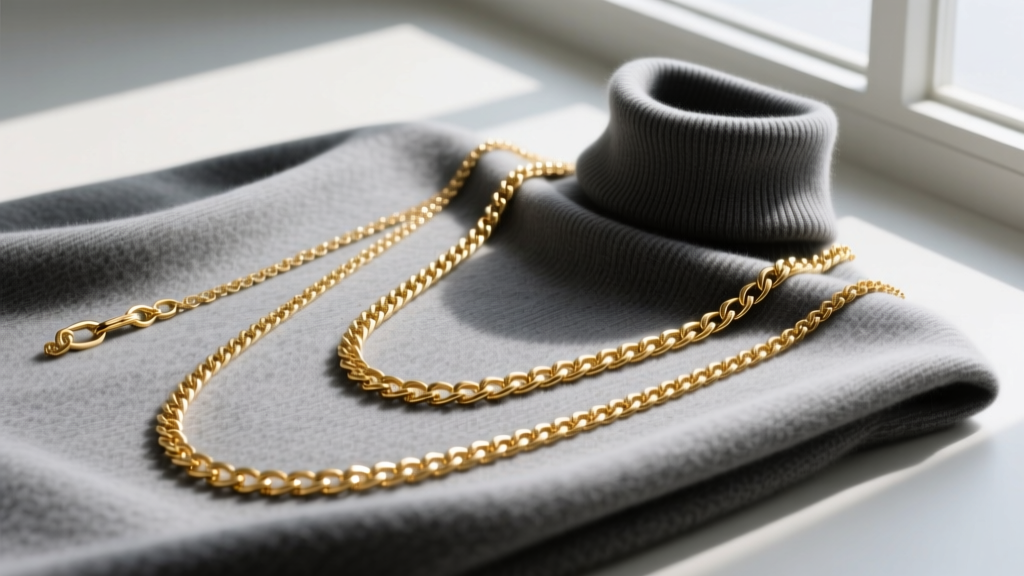
For high-neck styling, you want chains with closed, flush links. Curb chains lay flat against the fabric, distributing weight evenly and preventing the links from catching on knit loops. Rope chains, particularly those in the 2.0mm to 3.0mm gauge, offer a luxurious, high-surface-area reflection that stands out beautifully against matte fabrics like cotton and wool. Box chains are exceptionally durable and structurally rigid, meaning they will not collapse into the folds of a turtleneck, maintaining a clean, intentional silhouette.
Pendant Settings and the Snag Factor
The pendant is the focal point of your neckline, but its physical architecture can ruin a high-end sweater in seconds. Traditional prong settings—where sharp metal claws hold a faceted gemstone in place—are the ultimate enemy of knitwear. As you move, the prongs will inevitably catch on the yarn loops of a turtleneck, pulling threads and potentially loosening the gemstone.
When buying a pendant for high-neck tops, exclusively seek out bezel settings or flush/gypsy settings. A bezel setting encircles the gemstone with a smooth, continuous rim of metal, eliminating any sharp edges. Flush settings embed the stone directly into the metal surface, creating a completely flat profile that glides effortlessly over silk and wool alike. If you prefer the organic look of raw crystals or pearls, ensure they are set in smooth, dome-like bezels rather than wire-wrapped cages, which are notorious for snagging.
Hardware and Clasp Mechanics
The clasp is an often-overlooked component that drastically affects the wearability of a necklace over a high collar. Standard spring-ring clasps (typically 5mm to 7mm) are incredibly difficult to fasten when a thick turtleneck collar is obstructing your line of sight and limiting your finger mobility.
When shopping for high-neck jewelry, look for chains equipped with oversized lobster clasps (12mm or larger) or magnetic toggle clasps. Magnetic clasps are a game-changer for winter layering, allowing you to secure the necklace at the front of your neck and then rotate it to the back, or simply let the magnets snap together blindly behind your collar. Ensure the magnets are encased in 14k or 18k gold or surgical-grade stainless steel to prevent skin irritation or rust transfer onto your garments.
Advanced Layering Over High Collars
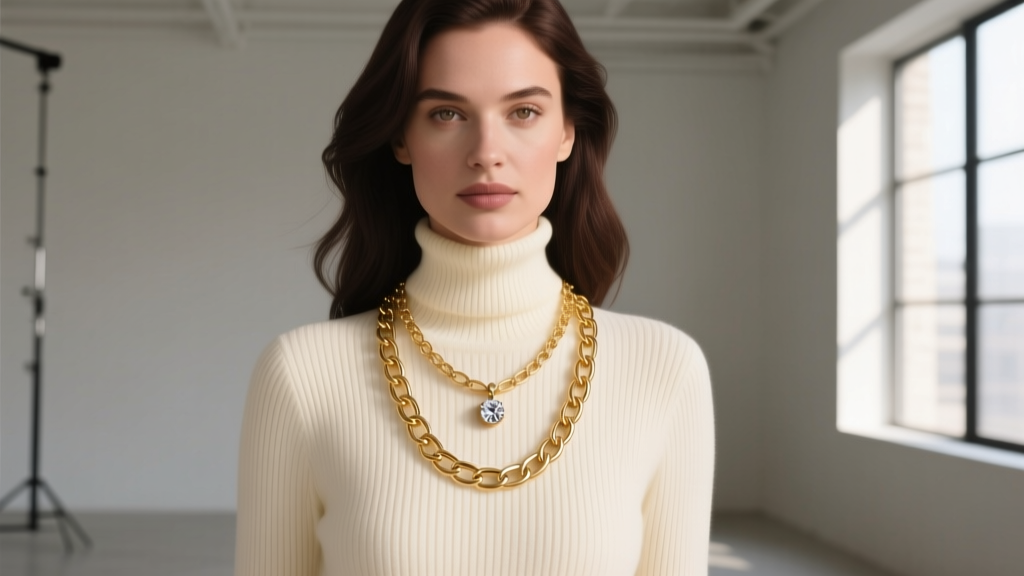
Layering necklaces over a turtleneck is a hallmark of sophisticated 2026 styling, but it requires strict adherence to the 'Two-Inch Rule.' To prevent the chains from tangling and abrading one another against the fabric, each successive chain must be exactly two inches longer than the previous one.
For a masterclass layered look over a medium-weight ribbed turtleneck, start with a 20-inch delicate cable chain featuring a small, flush-set diamond. Add a 22-inch medium-weight paperclip chain, and finish with a 24-inch heavy curb chain holding a substantial, smooth-edged medallion. This cascading structure ensures that each chain occupies its own visual and physical zone, preventing the metal from knotting and the fabric from bunching.
Critical Buying Mistakes to Avoid
- Buying 22k or 24k Gold for Knitwear: Pure gold is exceptionally soft. The friction of a heavy wool sweater will literally wear away the microscopic surface layers of high-karat gold over time, leading to premature thinning of the links. Stick to 14k or 18k gold alloys, which incorporate copper and silver for necessary tensile strength.
- Ignoring the Pendant-to-Chain Weight Ratio: A heavy, oversized pendant on a thin (under 1.2mm) chain will cause the chain to act like a cheese wire against the back of your neck and the fabric of your top. The pendant should never weigh more than three times the weight of the chain it hangs from.
- Mixing Metal Finishes Incorrectly: High neck tops, especially in dark, solid colors like navy, black, or charcoal, act as a high-contrast backdrop. Matte or brushed metals can look dull and blend into the shadows of fabric folds. Always opt for high-polish finishes to ensure the jewelry catches the light and provides the necessary visual pop against the textile.
Final Verdict on High Neck Styling
Successfully executing the high neck top with necklace aesthetic is an exercise in precision. By prioritizing structural chain weaves like curbs and ropes, enforcing strict length-to-fabric ratios, and demanding smooth bezel settings, you transform a potential styling hazard into a masterclass of modern elegance. The right necklace doesn't just sit on top of a turtleneck; it interacts with the garment to elevate the entire silhouette, proving that even the most restrictive necklines offer a canvas for brilliant jewelry design.


