2026 Trends: Styling the Multi Color Pearl Necklace
Discover 2026 trends for the multi color pearl necklace. Expert analysis on Edison vs. Tahitian hues, stringing durability, and neckline styling frameworks.

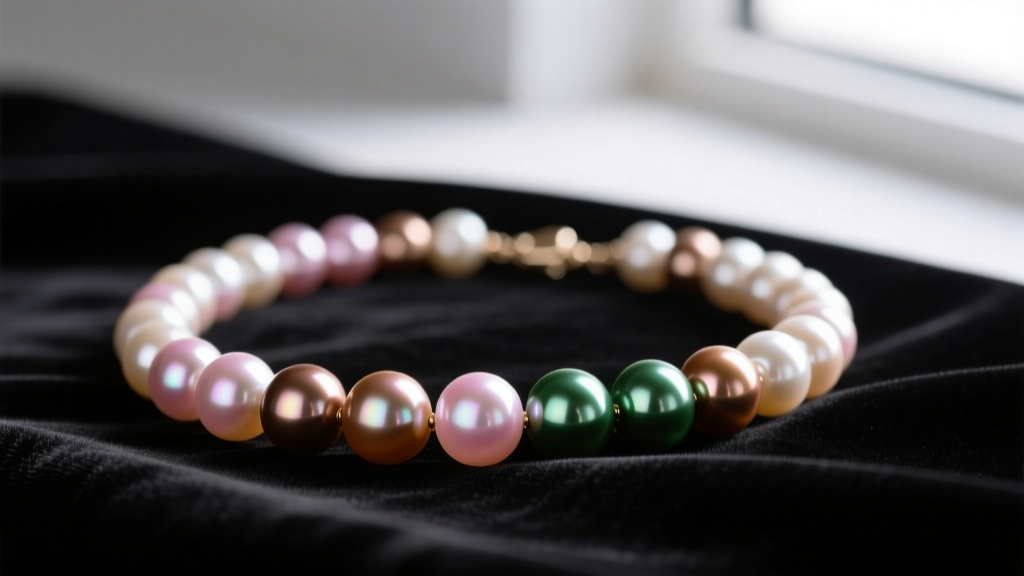
The jewelry landscape of 2026 has officially moved past the safety of uniform white strands. Today, the modern multi color pearl necklace stands at the intersection of organic rebellion and high-end bespoke craftsmanship. No longer confined to vintage costume jewelry or dyed imitations, contemporary multi-hue pearl designs leverage the natural, unbleached bodycolors and iridescent overtones of premium bead-nucleated mollusks. For collectors and style enthusiasts, understanding the gemological and structural nuances of these chromatic masterpieces is essential for making informed investments and executing flawless styling.
The Chromatic Shift: Rejecting Uniformity
Historically, the pearl industry prized absolute uniformity. Strands were meticulously sorted to ensure identical bodycolor, overtone, luster, and surface cleanliness. However, the 2026 trend cycle celebrates what gemologists call "orient"—the rainbow-like play of color that shimmers just beneath the surface of the nacre. The modern multi color pearl necklace intentionally mixes metallic pinks, deep aubergines, pistachio greens, and bronzes within a single strand. This shift is heavily driven by the rise of baroque and semi-baroque shapes, which catch light at irregular angles, amplifying the multi-chromatic effect. According to the Gemological Institute of America (GIA), the complex layering of aragonite platelets in non-traditional pearl varieties creates unique optical interference, resulting in these highly sought-after metallic and peacock overtones.
Material Matrix: Decoding the Pearls
Not all multi color pearl necklaces are created equal. The market is currently segmented into three distinct material categories, each offering vastly different aesthetic profiles, durability metrics, and price points. Understanding the biological origin of the pearl is the first step in evaluating a strand's true value.
| Pearl Type | Size Range | Natural Hues | Nacre Thickness | Avg. Price per Inch |
|---|---|---|---|---|
| Edison Freshwater | 11mm - 15mm | Metallic Pink, Bronze, Peacock | 2.0mm - 4.0mm (Solid) | $40 - $120 |
| Tahitian Saltwater | 8mm - 12mm | Aubergine, Pistachio, Silver | 0.8mm - 2.0mm | $150 - $400 |
| Dyed Freshwater | 6mm - 9mm | Artificial Brights | 0.5mm - 1.0mm | $5 - $15 |
Edison pearls, cultivated in the Hyriopsis cumingii mussel, dominate the mid-to-high tier of the multi color pearl necklace market. Because they are bead-nucleated and left in the water for up to three years, they develop exceptionally thick nacre with striking metallic lusters. Tahitian pearls, produced by the Pinctada margaritifera oyster, offer darker, moodier palettes. As noted by Encyclopedia Britannica, the dark lip of the Tahitian oyster is responsible for the natural grey, green, and purple bodycolors that require zero chemical enhancement.
Under the Hood: Construction, Stringing, and Drill Holes
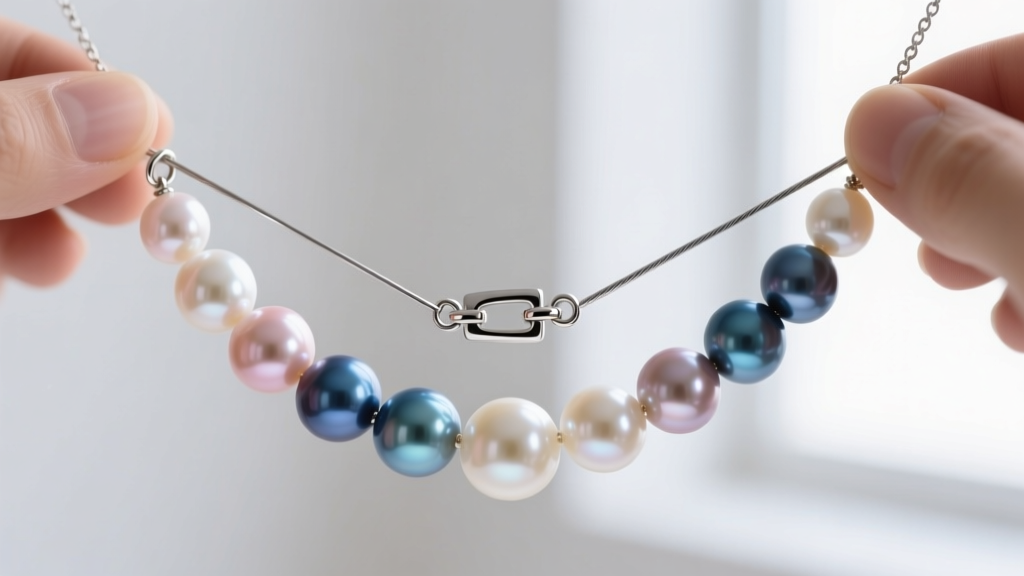
A multi color pearl necklace is only as durable as its internal architecture. The traditional method of stringing pearls on size F or G silk thread (0.38mm to 0.45mm thickness) with individual knots between each pearl is rapidly being abandoned for heavy, irregularly shaped baroque and Edison pearls. Silk degrades when exposed to the acidic pH of human skin oils and perfumes, leading to catastrophic strand failure.
The Shift to Micro-Braided Steel
In 2026, premium multi-hue strands are constructed using 49-strand micro-braided stainless steel wire, typically in 0.015-inch or 0.018-inch diameters. This material offers a tensile strength exceeding 25 pounds while maintaining the drape of silk. Because wire cannot be knotted, jewelers must use precision crimp beads and protective French wire (gimp) at the clasp junctions to prevent the metal wire from sawing through the pearl's drill hole over time.
Drill Hole Tolerances
When inspecting a multi color pearl necklace, examine the drill holes. High-quality Edison and Tahitian pearls feature precision-drilled holes ranging from 0.8mm to 1.0mm. Holes larger than 1.2mm indicate lower-grade manufacturing, which removes valuable nacre and creates a visible "gap" when the pearls rest against one another. Furthermore, the drill holes should be perfectly centered; off-center drilling causes the strand to twist unnaturally when worn.
The 2026 Styling Framework: Necklines and Layering
Styling a multi color pearl necklace requires an understanding of color theory and spatial balance. Because the necklace itself is a high-impact statement piece, the surrounding garments must act as a neutral canvas or a deliberate textural contrast.
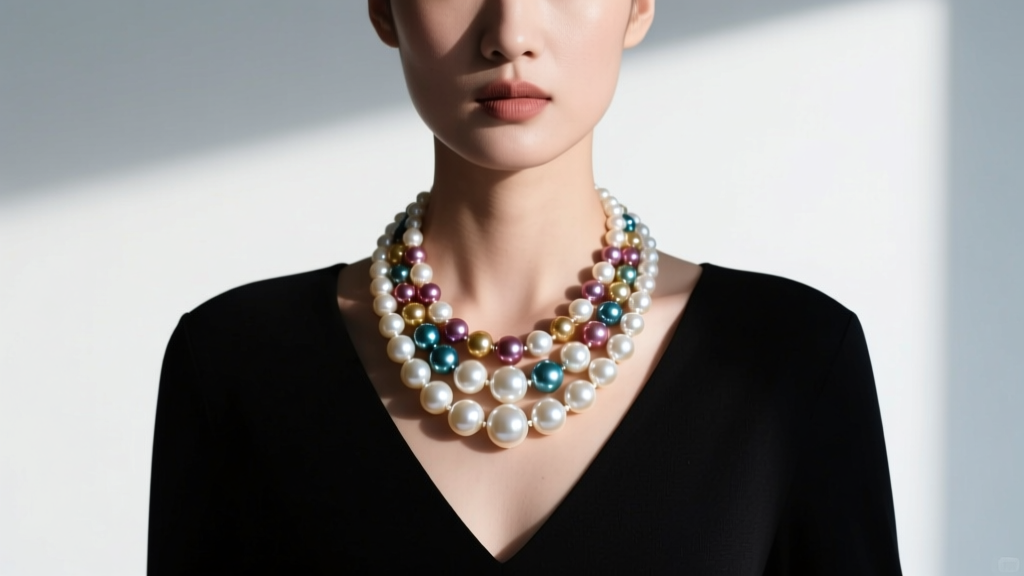
- The Deep V-Neck Canvas: A 16-inch or 18-inch multi-hue strand resting just above the collarbone creates a striking visual anchor against a solid black, navy, or charcoal silk V-neck. The dark fabric absorbs light, forcing the metallic overtones of the pearls to reflect maximally.
- Asymmetrical Necklines: For off-the-shoulder or one-shoulder garments, opt for a graduated multi color pearl necklace (where pearls are larger at the center and taper toward the clasp). This draws the eye horizontally, balancing the asymmetry of the clothing.
- Mixed-Metal Layering: The 2026 layering protocol involves pairing an organic, baroque multi color pearl choker (14-16 inches) with a rigid, geometric 14k or 18k gold paperclip chain (20 inches). The contrast between the soft, iridescent organic material and the hard, reflective precious metal creates a sophisticated, curated aesthetic.
Investment vs. Fast Fashion: 2026 Pricing Tiers
When shopping for a multi color pearl necklace, price is a direct indicator of biological origin and structural integrity. Fast-fashion retailers frequently sell dyed freshwater strands for $30 to $80. While visually vibrant, these pearls are subjected to harsh chemical baths that compromise the nacre's crystalline structure, leading to dullness and chipping within months.
For a genuine, naturally colored multi-hue strand, expect to invest between $600 and $1,500 for premium Edison freshwater designs, characterized by 12mm+ sizes and mirror-like luster. Tahitian multi-color strands, requiring the meticulous sorting of rare saltwater oysters, command prices starting at $3,500 and can exceed $15,000 for flawless, deeply saturated peacock and aubergine graduations. Always request a gemological report verifying that the colors are "natural" and "untreated" before making a high-tier purchase.
"The true luxury of the modern multi color pearl necklace lies not in perfection, but in the deliberate curation of natural imperfections. It is the celebration of the ocean's unpredictable palette." — 2026 Global Gemological Trend Report
Ultimately, the multi color pearl necklace has evolved from a niche curiosity into a cornerstone of contemporary fine jewelry. By prioritizing thick-nacred Edison or Tahitian varieties, demanding modern wire-stringing construction, and applying deliberate styling frameworks, you can secure a piece that is as structurally enduring as it is visually breathtaking.


