The Beginner's Guide to Styling a Square Gold Pendant Necklace
Discover how to choose, style, and layer a square gold pendant necklace. Our beginner-friendly guide covers karats, chain pairings, and neckline matching.

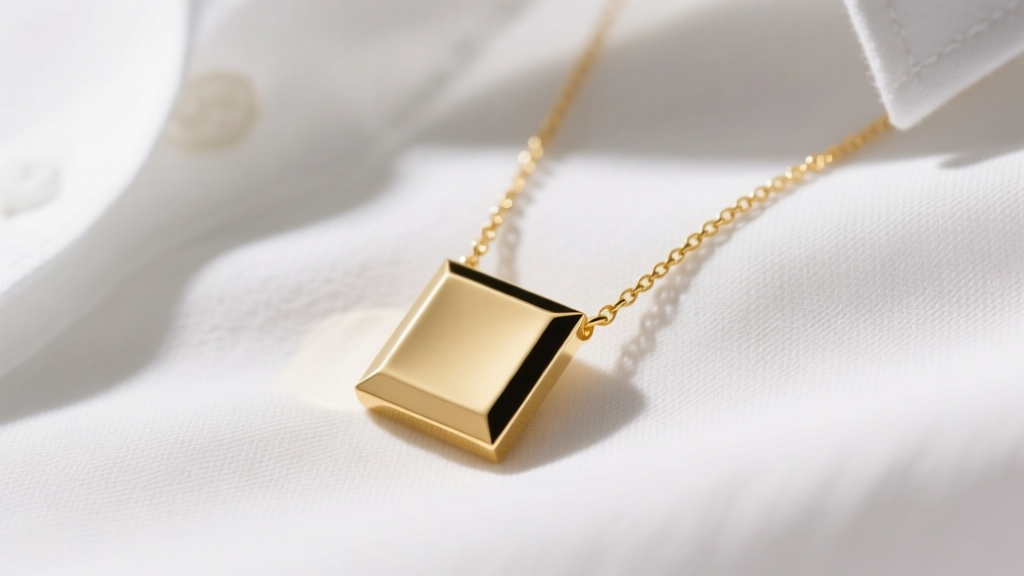
The Enduring Appeal of Geometric Jewelry
When building a foundational jewelry collection, the shapes you choose dictate the versatility of your wardrobe. While circular and teardrop pendants have historically dominated the market, the square gold pendant necklace has emerged as a definitive staple for modern minimalists and bold maximalists alike. The sharp, clean lines of a square pendant offer a striking geometric contrast to the natural curves of the human body, creating an effortlessly chic focal point. Whether you are stepping into the world of fine jewelry for the first time or looking to refine your everyday aesthetic, understanding the nuances of this specific silhouette is crucial.
In this comprehensive guide, we will break down everything a beginner needs to know about selecting, sizing, and styling a square gold pendant. From decoding gold purity and understanding chain mechanics to mastering neckline pairings, you will gain the actionable expertise required to make a confident, informed purchase in 2026 and beyond.
Decoding Gold: Karats, Alloys, and Durability
Before evaluating the aesthetic design of your square pendant, you must understand the material it is crafted from. Pure gold (24k) is inherently too soft for daily wear; it will scratch, bend, and lose its crisp square edges within weeks. Therefore, jewelers alloy gold with metals like copper, silver, and zinc to increase its structural integrity. According to the Gemological Institute of America (GIA), the karat system measures this purity, directly impacting the pendant's color, durability, and price.
| Karat | Gold Purity | Durability (Vickers) | Best Use Case | Price Tier |
|---|---|---|---|---|
| 10k | 41.7% | ~140 HV | Budget-friendly daily wear; highly scratch-resistant. | $ |
| 14k | 58.3% | ~120 HV | The ultimate balance of rich color and everyday durability. | $$ |
| 18k | 75.0% | ~90 HV | Heirloom pieces; deep yellow hue but prone to micro-scratches. | $$$ |
| 22k | 91.6% | ~60 HV | Investment or ceremonial wear; too soft for sharp geometric edges. | $$$$ |
Expert Tip: For a square pendant, maintaining sharp, precise corners is essential to the design's integrity. We highly recommend 14k gold for everyday wear, as its ~120 Vickers hardness ensures the geometric edges will not round off or dent during accidental impacts.
Solid Gold vs. Plated: What Beginners Must Know
When shopping online, you will encounter terms like "gold vermeil," "gold-filled," and "gold-plated." If you are investing in a square gold pendant necklace, understanding these distinctions will save you from buyer's remorse. Gold-plated jewelry features a microscopic layer of gold (often less than 0.5 microns) over a base metal like brass. Over time, friction and skin oils will wear this layer away, revealing the dull base metal beneath. Gold vermeil is a step up, requiring a thick layer of gold over sterling silver, but it still has a finite lifespan. For a timeless geometric piece meant to last decades, always prioritize solid 14k or 18k gold. The Federal Trade Commission (FTC) Jewelry Guides strictly regulate these terms, so always look for clear disclosures regarding metal composition before checking out.
Choosing the Right Chain for a Square Pendant
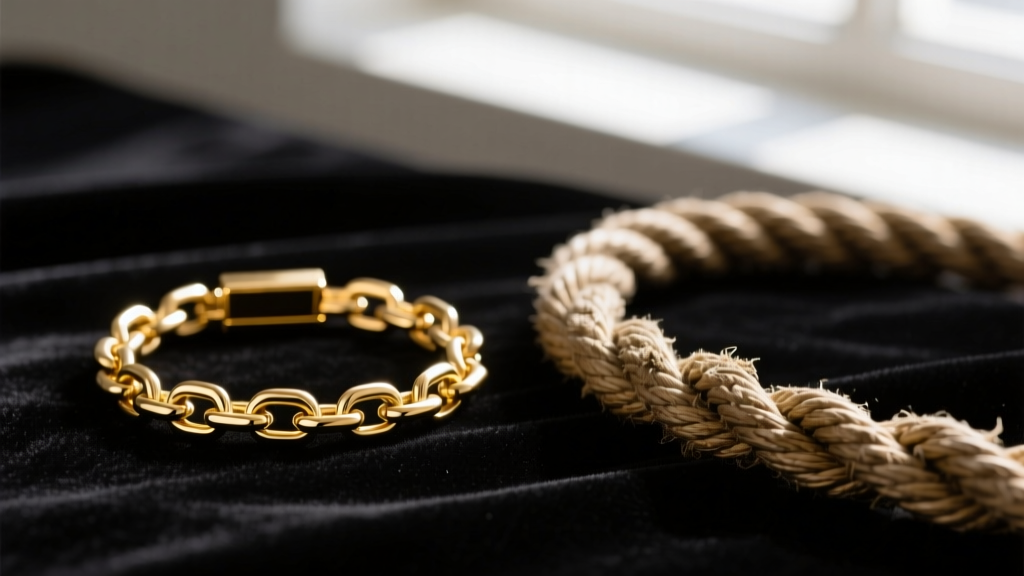
The chain is not merely a delivery system for your pendant; it is a critical design element that can either harmonize with or clash against the square silhouette. The interplay between the chain's texture and the pendant's geometry defines the overall aesthetic.
- Box Chain: Featuring square, interlocking links, a box chain naturally mirrors the geometry of a square pendant. This creates a cohesive, modern, and highly structured look. It is also incredibly strong and resistant to kinking.
- Cable Chain: The classic round-link cable chain provides a soft visual contrast to the sharp edges of a square pendant. It is lightweight, traditional, and allows the pendant to remain the undisputed focal point.
- Rope Chain: Twisted links create a spiraling, reflective texture. A rope chain adds a vintage or nautical flair, though its busy texture can sometimes compete with intricate pendant engravings.
- Snake Chain: Sleek and tubular, snake chains offer a contemporary, liquid-metal appearance. However, they are prone to permanent kinking if bent sharply, making them less ideal for heavier, oversized square pendants.
Proportions, Bails, and Sizing Mechanics
A common beginner mistake is ignoring the physical dimensions of both the pendant and the connecting hardware. Square pendants generally fall into three size categories:
- Dainty (8mm - 12mm): Ideal for subtle, everyday layering. Best paired with 1mm to 1.5mm cable or box chains.
- Mid-Weight (15mm - 20mm): The sweet spot for a standalone statement piece. Requires a slightly sturdier chain (1.5mm - 2.5mm) to support the weight without looking disproportionate.
- Statement (25mm+): Bold, architectural, and heavy. Demands a thick chain (3mm+) and a robust clasp.
The Bail Factor: The bail is the loop that connects the pendant to the chain. A hidden bail (soldered to the back) allows the square face to sit flush against the chest, maximizing the geometric impact. However, you must ensure the bail's inner diameter accommodates your chosen chain. A standard 3mm bail will not fit over a 4mm box chain, rendering your pairing impossible without a jeweler's intervention.
Neckline Pairing Guide for Square Pendants
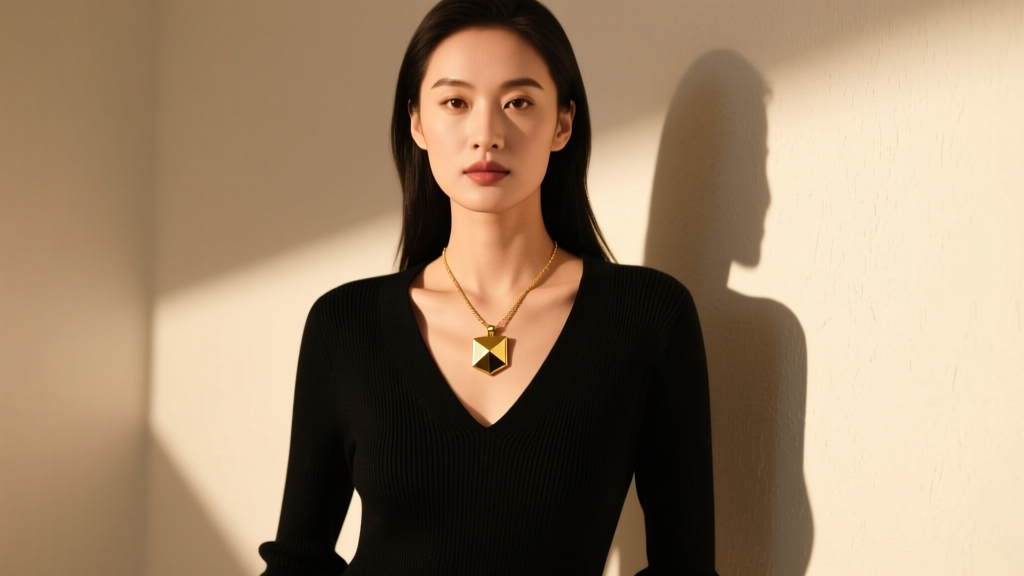
Styling a square gold pendant necklace requires an understanding of how geometric shapes interact with fabric lines and skin exposure. Here is a practical framework for matching your pendant to your wardrobe:
The Crew Neck and Scoop Neck
For high, rounded necklines, opt for a shorter chain length (16 to 18 inches). The goal is to have the square pendant rest just below the collarbone, breaking up the continuous curve of the fabric with a sharp, structured focal point. A mid-weight (15mm) pendant works best here.
The V-Neck and Plunging Necklines
A V-neck naturally creates a downward geometric arrow. By pairing it with an 18 to 20-inch square pendant, you echo and anchor this directional flow. The sharp corners of the pendant complement the sharp angles of the neckline, creating a highly intentional, elongating effect.
The Button-Down Shirt
For a sophisticated, contemporary office look, leave the top two buttons of a crisp shirt undone and layer a dainty 10mm square pendant on a 16-inch chain with a slightly larger 18mm square pendant on an 18-inch chain. The mixed proportions add depth without overwhelming the structured collar.
"Geometric jewelry, particularly the square silhouette, acts as an anchor in an outfit. It provides visual weight and structure that softer, organic shapes simply cannot achieve." — Contemporary Jewelry Styling Principles
Care, Maintenance, and Clasp Security
To maintain the crisp edges and brilliant luster of your square gold pendant, proper maintenance is non-negotiable. Avoid ultrasonic cleaners if your pendant features any gemstone inlays or enamel work, as the high-frequency vibrations can loosen settings. Instead, use a solution of warm water and a few drops of mild, phosphate-free dish soap. Gently agitate with a soft-bristled baby toothbrush, paying special attention to the bail and the back of the pendant where skin oils and lotions accumulate.
Finally, never underestimate the importance of the clasp. For pendants weighing more than 5 grams, avoid spring-ring clasps, which are notoriously fragile and prone to snapping under tension. Always opt for a lobster claw clasp, which features a secure, spring-loaded mechanism that will keep your investment safely around your neck.
Final Thoughts
A square gold pendant necklace is far more than a fleeting trend; it is a masterclass in geometric minimalism. By carefully selecting the right karat for your lifestyle, pairing the pendant with a complementary chain, and thoughtfully considering proportions and necklines, you elevate a simple accessory into a signature element of your personal style. Armed with this foundational knowledge, you are now ready to navigate the market with confidence and select a piece that will endure for decades.


