Styling Statement Gems Like The Short Story The Necklace
Learn how to style, authenticate, and wear statement pendants inspired by Maupassant's classic tale, avoiding tragic debt and fake gems.

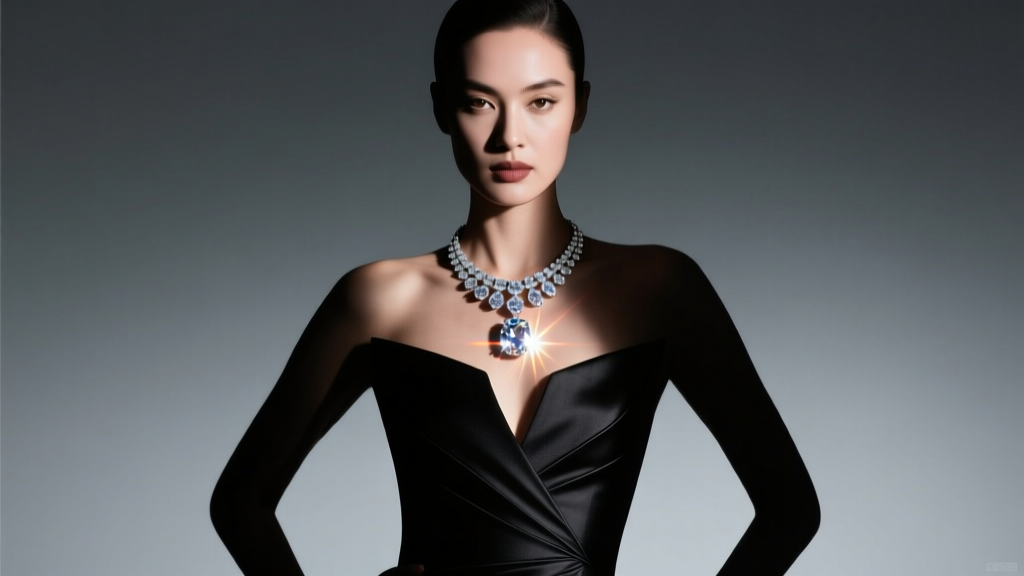
The Legacy of Maupassant's Masterpiece
When literary critics and jewelers alike analyze the short story the necklace by Guy de Maupassant, they often focus on the tragic irony of Mathilde Loisel's fate. Mathilde borrows what she believes to be a priceless diamond necklace, loses it, and spends a decade in grueling poverty to replace it—only to discover the original was a 'paste' imitation worth a mere 500 francs. For modern jewelry enthusiasts, this 1884 masterpiece isn't just a cautionary tale about vanity; it is a profound lesson in gemological authentication, the true cost of luxury, and the mechanics of statement jewelry.
In 2026, the line between 'paste' and natural diamonds has been entirely redefined by lab-grown alternatives and advanced simulants. Today, you can achieve the breathtaking, high-carat impact of Mathilde’s borrowed jewel without the risk of financial ruin. This step-by-step guide will teach you how to source, construct, authenticate, and style a massive statement pendant, ensuring you never fall victim to the illusion of value.
Step 1: Sourcing the Modern 'Diamond' (Without the Debt)
Mathilde’s fatal mistake was assuming visual brilliance equated to intrinsic financial value. Today, we have Lab-Grown Diamonds (LGDs) and Moissanite, which offer identical or superior optical properties to mined diamonds at a fraction of the cost.
- CVD Lab-Grown Diamonds: Chemically and optically identical to natural diamonds. A 5-carat, D-color, VVS1 clarity CVD diamond pendant will cost approximately $12,000 to $18,000 in today's market, compared to $150,000+ for its natural counterpart.
- Moissanite: With a refractive index of 2.65 (higher than diamond's 2.42), moissanite offers intense 'fire' and brilliance. A 5-carat equivalent moissanite pendant costs between $800 and $1,500, making it the ultimate 'paste' upgrade that won't bankrupt you if lost.
- Cubic Zirconia (CZ): The true modern equivalent of the 19th-century paste jewel. While visually similar to the untrained eye, CZ (refractive index 2.15) lacks the sharp scintillation of diamond and will cloud over time due to its porosity. Reserve CZ for fashion jewelry, not heirloom pieces.
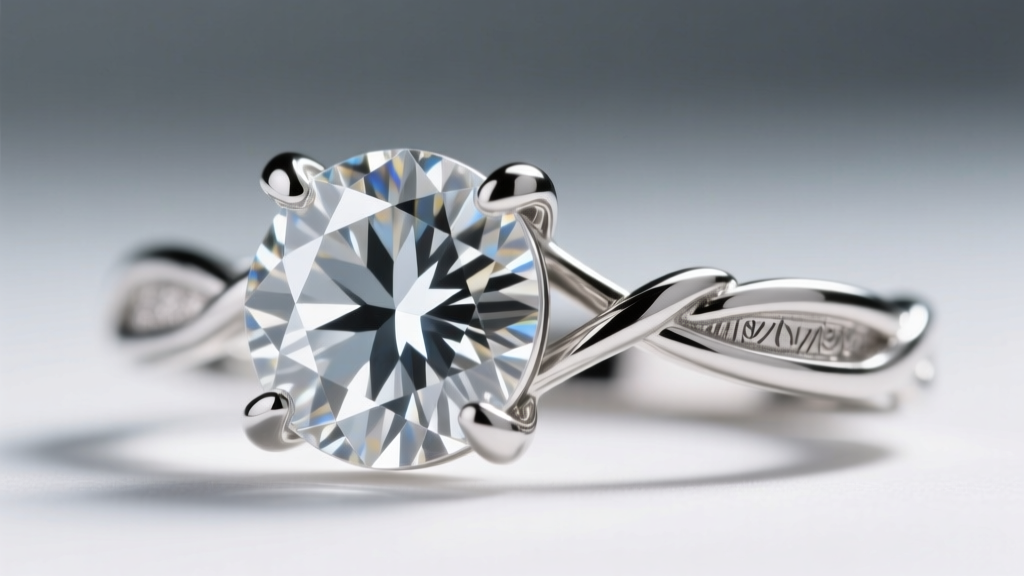
Step 2: Engineering the Pendant Setting for Heavy Stones
A high-carat statement stone requires specialized structural engineering. A standard 4-prong martini setting used for 1-carat stones will fail under the gravitational torque of a 5-carat pendant. When designing or purchasing your piece, demand the following specifications:
The Basket Setting and Prong Gauge
For stones exceeding 3 carats, a basket setting with a reinforced horizontal gallery wire is mandatory. The prongs should be cast or hand-forged in Platinum or 18k White Gold, with a minimum thickness of 1.2mm at the base. Platinum is preferred due to its high tensile strength and malleability, which allows prongs to be tightened securely over the girdle without snapping.
Bail Selection
The bail (the loop connecting the pendant to the chain) is the most common point of failure. Avoid simple soldered ring bails for heavy stones. Instead, opt for a hidden bail or a triple-tube bail that distributes the weight across a wider surface area of the stone's setting, preventing the pendant from flipping upside down when worn.
Step 3: Matching the Chain to the Carat Weight
Nothing ruins a statement piece faster than a snapped chain. The tensile strength of the chain must be proportionate to the pendant's total gram weight. Use the matrix below to select the correct chain gauge and style.
| Pendant Carat Weight | Recommended Chain Gauge | Optimal Chain Style | Metal Recommendation |
|---|---|---|---|
| 1.0 - 2.5 ct | 1.2mm - 1.5mm | Cable or Rolo | 14k or 18k Gold |
| 3.0 - 5.0 ct | 1.8mm - 2.2mm | Box or Wheat | 18k Gold or Platinum |
| 6.0 - 10.0+ ct | 2.5mm - 3.5mm | Rope or Cuban Link | Platinum (Required for tensile strength) |
Pro Tip: Always equip heavy chains with a secondary safety catch—a small figure-8 wire that loops over the primary lobster clasp. This ensures that if the clasp's spring mechanism fails, the necklace remains secured around your neck.
Step 4: Authenticating Your Stones (Don't Be Fooled Like Mathilde)
Had Mathilde possessed basic gemological knowledge, she would have realized her borrowed necklace was glass or paste. While modern simulants are harder to spot, you can authenticate your own purchases and avoid being sold CZ disguised as LGD.
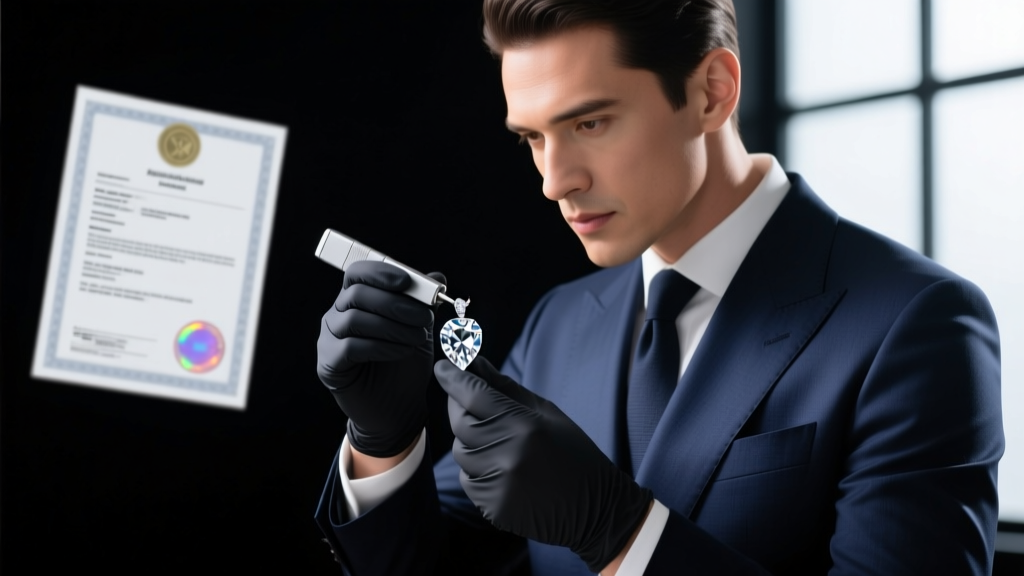
- Check for Laser Inscriptions: Reputable lab-grown diamonds are laser-inscribed on the girdle with their report number and the words 'Lab Grown'. Use a 30x jeweler's loupe to verify this against an IGI or GIA certificate.
- Thermal Conductivity Testing: Diamond and moissanite both pass standard thermal diamond testers. However, CZ and glass will fail immediately. This is the fastest way to rule out cheap simulants.
- Electrical Conductivity Testing: To differentiate between a lab diamond and moissanite, use a multi-tester. Moissanite is electrically conductive, whereas diamond is not.
- Observe Doubling: Moissanite is doubly refractive. If you look through the bezel facets with a loupe and see doubled facet lines on the opposite side of the stone, you are looking at moissanite, not diamond.
Step 5: Styling the Statement Piece for Modern Necklines
A 5-carat or larger pendant commands attention and dictates the silhouette of your outfit. To maximize the visual impact without overwhelming your frame, follow these styling rules:
The Plunging V-Neck and Deep Scoop
High-carat pendants require negative space. A deep V-neckline creates a natural geometric frame that leads the eye directly to the gemstone. Ensure the chain length is precisely 18 to 20 inches, allowing the pendant to rest exactly at the apex of the neckline, hovering just above the skin rather than resting flat against the collarbone.
Off-the-Shoulder and Bateau Necklines
For formal galas, an off-the-shoulder gown paired with a 24-inch rope chain and a massive solitaire pendant creates an elongated, regal silhouette. Avoid chokers or 16-inch chains with oversized pendants, as the stone will physically clash with the fabric's hemline, causing the pendant to flip and tangle.
What to Avoid
Never pair a massive statement pendant with high-collared blouses, turtlenecks, or heavily embellished necklines. The friction from the fabric will constantly turn the bail, and the visual competition will diminish the stone's brilliance. Let the pendant be the sole focal point of the upper torso.
Final Takeaway: True Value Lies in Ownership
The ultimate tragedy of the short story the necklace wasn't just the loss of the jewelry; it was the illusion of wealth and the crushing weight of debt. By leveraging modern lab-grown diamonds, understanding the structural requirements of heavy pendant settings, and mastering the art of gemological authentication, you can wear breathtaking, room-illuminating statement pieces with absolute confidence. True luxury in the modern era isn't about suffering for a natural stone—it's about owning your style, understanding your materials, and never losing yourself in the pursuit of an illusion.


