Stylish Necklace Glasses: The Ultimate Buying Guide
Discover how to choose the perfect necklace glasses holder. Compare materials, grip types, and lengths to protect your frames while elevating your style.

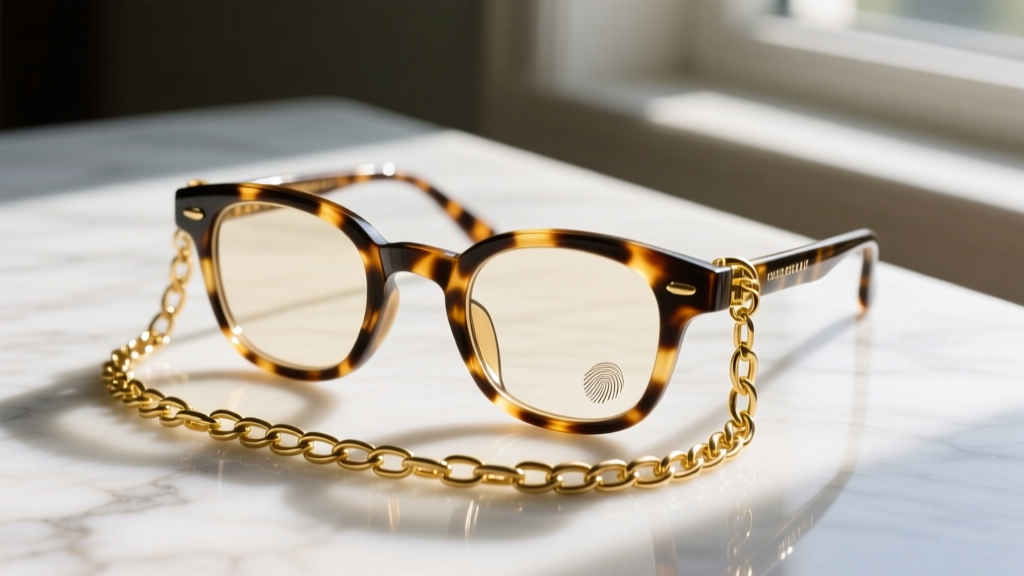
The Renaissance of Eyewear Jewelry
As we navigate the hybrid lifestyles of 2026, the boundary between utility and high jewelry continues to blur. The once-dated concept of the reading glasses lanyard has undergone a radical transformation. Today, necklace glasses holders are not merely functional tethers; they are deliberate style statements that bridge the gap between optical necessity and sartorial elegance. Whether you are transitioning from screen-heavy remote work to outdoor social engagements, or simply managing presbyopia with designer reading frames, selecting the right eyewear chain requires a nuanced understanding of materials, weight distribution, and hardware mechanics.
Many consumers make the mistake of treating necklace glasses as an afterthought, purchasing cheap, mass-produced acrylic strands that degrade quickly and damage expensive optical frames. A premium eyeglass necklace must perform a delicate balancing act: it must be heavy enough to drape elegantly without tangling, yet light enough to prevent dragging your eyewear down the bridge of your nose. This comprehensive buying guide will dissect the anatomy of high-end eyewear chains, providing you with the exact specifications needed to make an informed, style-forward purchase.
Decoding Materials: Beyond Basic Beads
The material composition of your necklace glasses dictates its longevity, skin compatibility, and overall aesthetic. When investing in a piece that will rest against your chest and interact with your expensive eyewear, understanding metallurgy and gemology is paramount.
For metal chains, the distinction between gold-plated and gold-filled is critical. Gold-plated chains feature a microscopic layer of gold (often less than 0.05% of the total weight) electroplated over a brass or copper core. These will inevitably tarnish, flake, and turn your skin green when exposed to the natural oils and sweat of the décolletage. Conversely, 14k gold-filled chains consist of a thick outer layer of solid gold mechanically bonded to a brass core, comprising at least 5% of the total weight. According to industry standards, gold-filled materials offer the same tarnish resistance and hypoallergenic properties as solid gold, making them the superior choice for daily wear.
If you prefer a beaded aesthetic, material density becomes a primary concern. Genuine freshwater pearls offer a timeless, luminous quality, but they are surprisingly dense. The Gemological Institute of America notes that proper care of organic gems like pearls requires avoiding prolonged exposure to cosmetics and perfumes, which can degrade their nacre. For a lightweight, vibrant alternative, high-grade cellulose acetate beads—often sourced from the same manufacturers that produce luxury eyewear frames—offer exceptional durability, hypoallergenic properties, and a fraction of the weight.
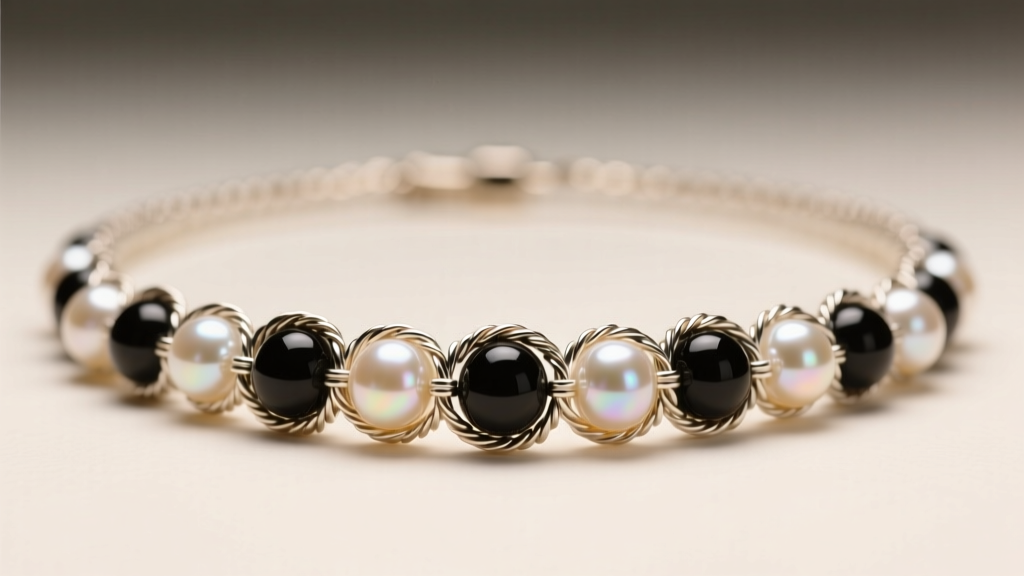
Material Comparison Matrix
| Material | Average Weight | Durability Rating | Ideal Frame Type |
|---|---|---|---|
| 14k Gold-Filled Chain | 15-25g | Excellent | Wire & Titanium |
| Freshwater Pearls | 45-60g | Good (Needs Care) | Thick Acetate |
| Cellulose Acetate Beads | 20-35g | Excellent | All Types |
| Silicone Cords | 10-15g | Fair (Degrades) | Sport / Active |
The Mechanics of the Grip: End Loops and Clasps
The most common failure point of any eyeglass necklace is the connection between the chain and the frame temple. A poorly designed end loop will either slip off during movement or, worse, scratch and degrade your eyewear. When evaluating necklace glasses, scrutinize the terminal hardware.
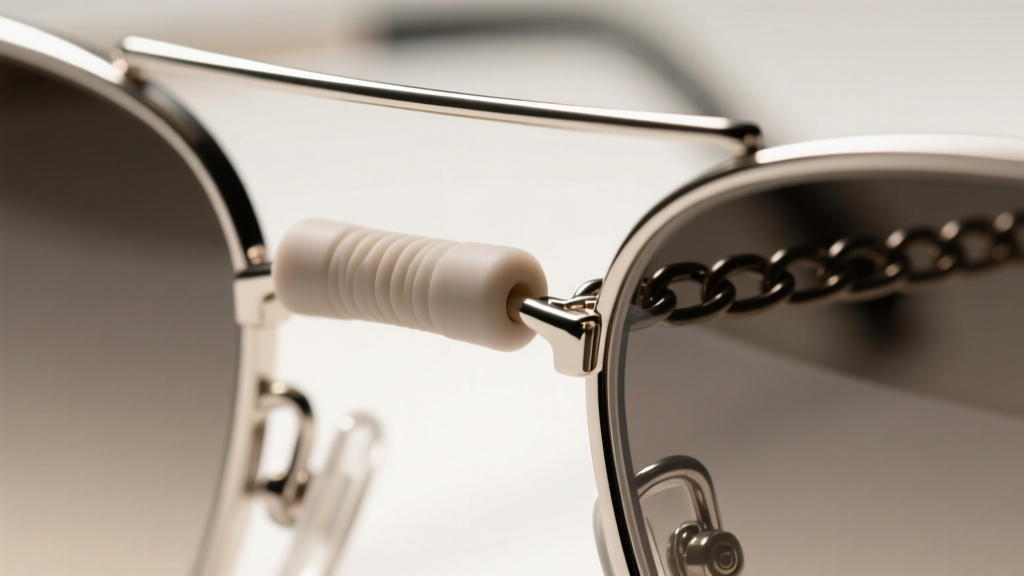
The industry standard for secure attachment is the silicone end loop. However, not all silicone is created equal. You want to look for loops made from Shore A 30 to 40 durometer silicone. This specific hardness scale ensures the material is soft enough to grip the acetate or metal temple without causing micro-abrasions, yet firm enough to resist snapping under tension. Avoid hard plastic loops or unlined metal clasps, which will strip the paint and finish from your glasses over time.
For those who frequently switch between reading glasses and sunglasses, adjustable slider clasps are a game-changer. These feature a small metal or silicone bead that can be pushed up and down the cord to tighten the loop around different temple widths. Ensure that the interior of the slider is lined with a micro-textured silicone grip; smooth metal sliders will inevitably loosen throughout the day as the chain moves against your clothing.
Sizing and Drape: Finding Your Perfect Length
The length of your necklace glasses determines both the functionality and the visual proportion of the accessory. A chain that is too short will cause your glasses to hang awkwardly high on your chest, creating a choking hazard and putting excessive lateral tension on the frame hinges. A chain that is too long will swing wildly and risk catching on doorknobs or desk edges.
- Standard Length (24 to 26 inches): This is the most versatile size, designed to hang just below the collarbone. It is ideal for reading glasses and smaller optical frames, keeping them easily accessible without excessive swinging.
- Long Drape (28 to 30 inches): Best suited for oversized sunglasses or taller individuals. This length allows the glasses to rest around the solar plexus, providing a relaxed, bohemian drape that layers beautifully over knitwear or blouses.
- Lariat and Y-Chains (32+ inches): These feature a drop-chain design that creates a V-shape. While highly fashionable, they are strictly for lightweight sunglasses, as the concentrated weight at the bottom of the Y can pull heavily on the nose bridge when worn.
Weight Distribution and Frame Compatibility
Gravity is the enemy of optical comfort. When you attach a necklace to your glasses, you are adding downward and outward leverage to the temples. If the chain is too heavy, it will pull the glasses down your nose, forcing you to constantly push them up and compromising the fit of your nose pads.
As a general rule of thumb, the weight of your necklace glasses should never exceed 40 grams if you wear lightweight wire, titanium, or rimless frames. The American Optometric Association emphasizes that improper handling and stress on the temples can misalign frames, altering your pupillary distance (PD) alignment and causing eye strain. For robust, thick acetate frames, you can safely accommodate heavier beaded chains in the 50 to 70-gram range. Always check the product specifications for the exact gram weight before purchasing, especially when buying online.
Matching Necklace Glasses to Necklines and Face Shapes
Treating your eyewear chain as a true piece of jewelry means considering how it interacts with your wardrobe and facial structure. The visual line created by the chain can either complement or clash with your outfit's geometry.
Neckline Pairings
When wearing V-neck tops or wrap dresses, opt for a Y-style lariat chain or a delicate pendant drop that mirrors the V-shape of the neckline. For crew necks and turtlenecks, a shorter, chunkier beaded necklace glasses holder creates a striking collar-like effect that sits cleanly above the fabric line without getting lost in the folds.
Face Shape Considerations
The beads and links that frame your face when the glasses are resting on your chest can subtly influence your overall look. Individuals with rounder face shapes often benefit from the structural contrast of geometric, angular metal links or faceted crystal beads. Conversely, those with sharp, angular jawlines can soften their features by choosing necklace glasses featuring smooth, spherical freshwater pearls or rounded resin beads.
Care and Maintenance for Longevity
To ensure your eyewear necklace remains pristine, proper maintenance is required. Never clean silicone end loops with rubbing alcohol or harsh chemical solvents; this strips the material of its natural moisture, leading to brittleness and eventual snapping. Instead, wipe the loops with a damp microfiber cloth and mild soap. For metal chains, use a specialized jewelry polishing cloth to remove skin oils and environmental pollutants. Store your necklace glasses flat or hung on a dedicated jewelry hook to prevent the chain from kinking or the beads from rubbing against your optical lenses, which could transfer grit and cause micro-scratches on your anti-reflective coatings.


