Swallow Necklace Anatomy: Metals, Casting & Chain Pairing
Explore the technical anatomy of a swallow necklace. We cover metal grades, casting methods, chain pairing, and historical sailor symbolism.

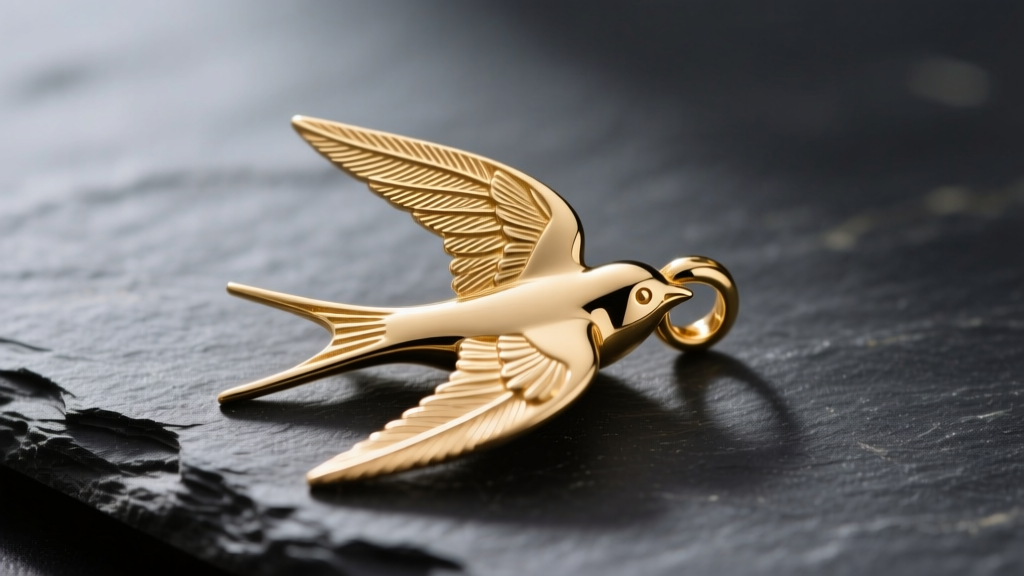
The swallow necklace is far more than a fleeting trend in avian jewelry; it is a masterclass in micro-sculpting, metallurgical balance, and historical symbolism. While many consumers focus solely on the silhouette of the bird in flight, jewelry designers and bench jewelers understand that crafting a high-quality swallow pendant requires navigating complex structural challenges. From preventing the fragile wingtips from snapping during the casting process to selecting a chain that will not abrade the hidden bail, every decision impacts the longevity and drape of the piece.
In this expert deep dive, we deconstruct the anatomy of the swallow necklace, examining the specific metal alloys used, the precision of lost-wax casting, and the physics of chain pairing to help you make an informed, technically sound purchase.
The Historical & Horological Roots of the Swallow Motif
Before analyzing the metallurgy, it is vital to understand the structural DNA of the swallow motif. The swallow bird has deep roots in maritime history. According to the Royal Museums Greenwich, sailors traditionally earned a swallow tattoo after sailing 5,000 nautical miles, with a second added at 10,000 miles. The bird was chosen because swallows always return to the same location to mate and raise their young, symbolizing a safe return home.
When this motif transitioned from skin to precious metals in the mid-20th century, jewelers had to adapt the dynamic, swept-back wings of the bird into a static, durable format. The classic "swept-wing" design remains the industry standard, but modern CAD (Computer-Aided Design) and 3D resin printing have allowed for hyper-realistic feather barbs that were impossible to carve by hand in wax just two decades ago.
Metallurgical Breakdown: Choosing the Right Alloy
The choice of metal dictates not only the price but the structural integrity of the pendant's thinnest points—specifically the tail feathers and primary wingtips. According to GIA (Gemological Institute of America) guidelines on precious metal alloys, the Vickers hardness (HV) of the chosen karatage will determine how well the pendant resists bending and deformation over years of wear.
Sterling Silver (925) & Intentional Oxidation
Sterling silver (92.5% silver, 7.5% copper) is the most common medium for swallow necklaces. The copper content provides necessary tensile strength, but it also makes the alloy susceptible to tarnish. Master jewelers use this to their advantage through intentional oxidation. By applying liver of sulfur to the finished piece and then lightly polishing the high points with a rouge cloth, the recessed feather textures remain dark, creating a high-contrast, three-dimensional effect that highlights the micro-details of the plumage.
Karat Gold (14k vs. 18k) for Micro-Detailing
When investing in a gold swallow necklace, the karatage is a critical structural consideration. 18k gold (75% pure gold) offers a richer, warmer hue but has a lower Vickers hardness (typically around 90-110 HV). This makes the ultra-thin wingtips of an 18k swallow pendant highly susceptible to bending if caught on clothing. Conversely, 14k gold (58.5% pure gold) boasts a higher hardness (120-150 HV), making it the superior choice for intricate, delicate avian designs that will be worn daily. As noted by the experts at Rio Grande, 14k gold's superior yield strength makes it the bench jeweler's preferred alloy for delicate prongs and thin extremities.
Casting Techniques: Lost-Wax vs. Die Striking
How a swallow pendant is manufactured fundamentally changes its weight, detail resolution, and price point.
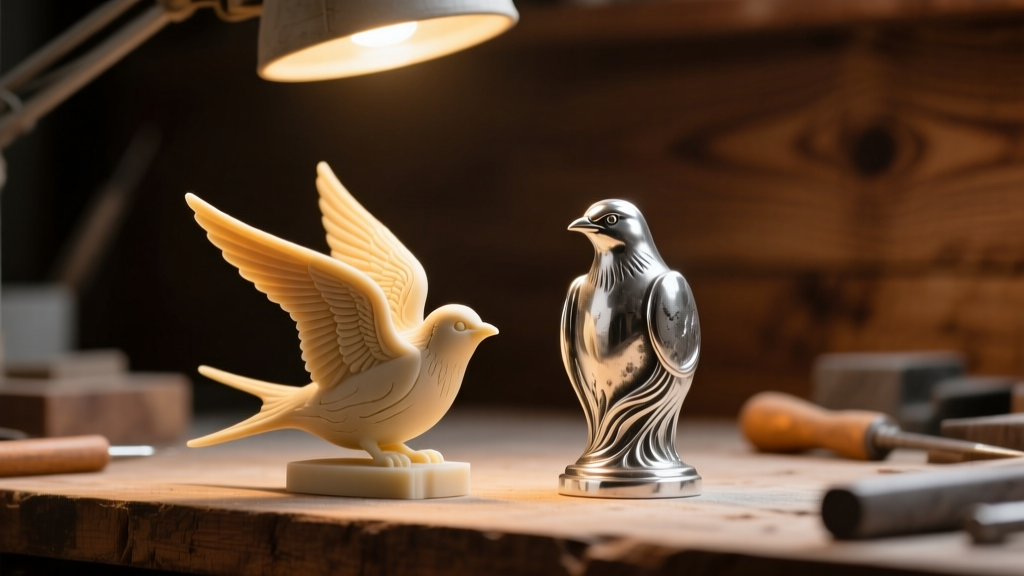
- Lost-Wax Investment Casting: This is the gold standard for high-end swallow necklaces. A 3D-printed resin or hand-carved wax model is encased in plaster investment, burned out in a kiln, and replaced with molten metal. This method captures details down to 0.1mm, allowing for individual feather barbs and realistic talon articulation. However, it requires careful "spruing" (creating channels for the molten metal to flow). If the sprues are placed poorly, the thin wingtips can suffer from "shrinkage porosity," leading to weak points that may snap.
- Die Striking: This method uses immense hydraulic pressure to stamp a sheet of metal between two hardened steel dies. Die-struck swallow pendants are incredibly dense, durable, and have a beautiful natural luster. However, they are strictly two-dimensional or semi-3D, lacking the deep undercuts and intricate feather texturing possible with casting.
Chain Pairing Mechanics: Bail Sizes and Drape Physics
A common failure point in avian jewelry is the pairing of an intricate pendant with an incompatible chain. Swallow pendants typically feature either a standard soldered loop (usually 4mm to 5mm inner diameter) or a "hidden bail" integrated into the dorsal side of the bird to create the illusion of flight.
The drape angle of the necklace is dictated by the friction between the chain and the bail, as well as the weight distribution of the pendant's wings. Below is a technical comparison of chain types and their compatibility with standard swallow pendants.
| Chain Type | Standard Width | Bail Compatibility | Drape Physics & Snag Risk |
|---|---|---|---|
| Wheat (Spiga) | 1.2mm - 1.5mm | Excellent (Fits hidden & standard bails) | High flexibility, low friction. Follows the natural curve of the collarbone without twisting the pendant. |
| Box (Venetian) | 1.0mm - 1.5mm | Good (Best for standard 4mm+ loops) | Geometric links provide a structured drape. Can cause slight wear on unlined silver bails over time due to sharp inner edges. |
| Rope | 1.5mm - 2.5mm | Poor (Often too thick for hidden bails) | High friction. The twisted links can catch on the delicate wingtips if the pendant flips during movement. |
| Cable (Classic) | 1.0mm - 1.8mm | Good | Neutral drape. The open oval links are lightweight but can pull body hair, distracting from the pendant. |
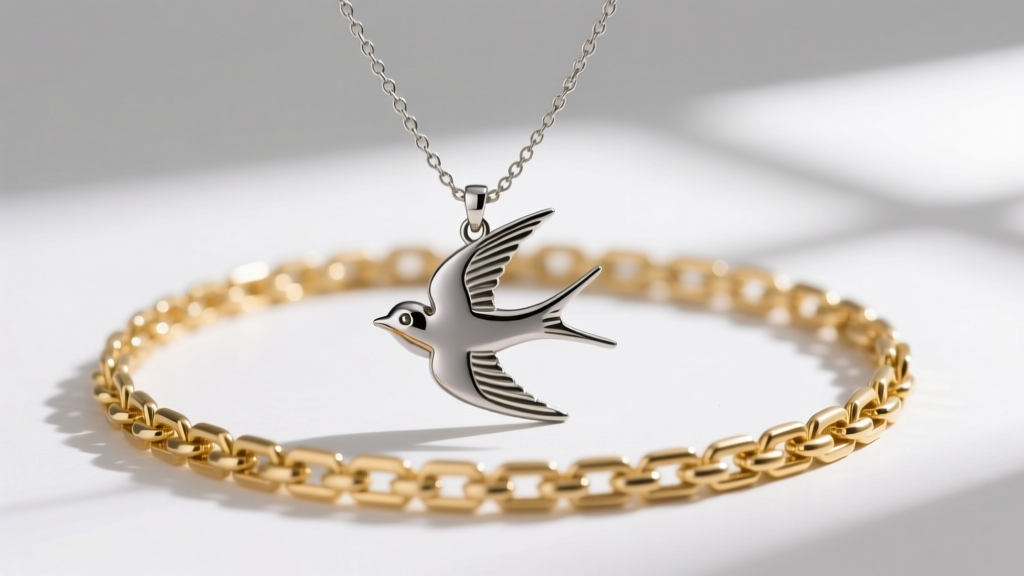
For the most aerodynamic and visually pleasing drape, a 1.2mm wheat chain is the industry benchmark for medium-sized (15mm - 25mm wingspan) swallow pendants. It provides enough tensile strength to support the metal weight while remaining virtually invisible against the skin, emphasizing the bird's flight.
Maintenance & Troubleshooting: Preventing Feather Snagging
The intricate detailing that makes a cast swallow necklace beautiful also makes it a magnet for lint, hair, and fabric snags. Proper maintenance requires a departure from standard jewelry cleaning protocols.
Bench Jeweler's Warning: Never use a stiff-bristled brass brush or a harsh polishing cloth on an oxidized swallow pendant. The bristles will strip the dark patina from the recessed feather grooves, flattening the visual depth of the piece and leaving a muddy, grey appearance.
Instead, utilize a soft-bristled baby toothbrush with a drop of mild dish soap and warm water to agitate debris from the micro-crevices of the wings. For highly polished gold or platinum swallow necklaces without oxidation, an ultrasonic cleaner is generally safe, provided the pendant does not feature any tension-set or fracture-filled gemstones (such as emeralds or opals, which are sometimes set into the bird's eye).
Addressing Bent Wingtips
If the delicate wingtips of your sterling silver or 18k gold swallow necklace become bent, do not attempt to bend them back into place with your fingers. Repeated flexing will cause work-hardening, leading to metal fatigue and eventual snapping. Take the piece to a professional bench jeweler who will use a micro-torch to locally anneal (soften) the specific joint before reshaping it with nylon-jawed pliers, ensuring the structural integrity of the casting is maintained.
Final Thoughts on Avian Jewelry Engineering
A well-crafted swallow necklace is a triumph of miniature engineering. By understanding the metallurgical properties of your chosen alloy, recognizing the hallmarks of quality investment casting, and pairing the pendant with a friction-appropriate chain, you ensure that this historic symbol of safe return remains a durable, lifelong staple in your jewelry wardrobe.