How To Style And Source A Taylor Swift Opalite Necklace
Learn how to source, style, and care for a Taylor Swift opalite necklace. Discover chain pairings, stone grades, and era-specific styling tips.

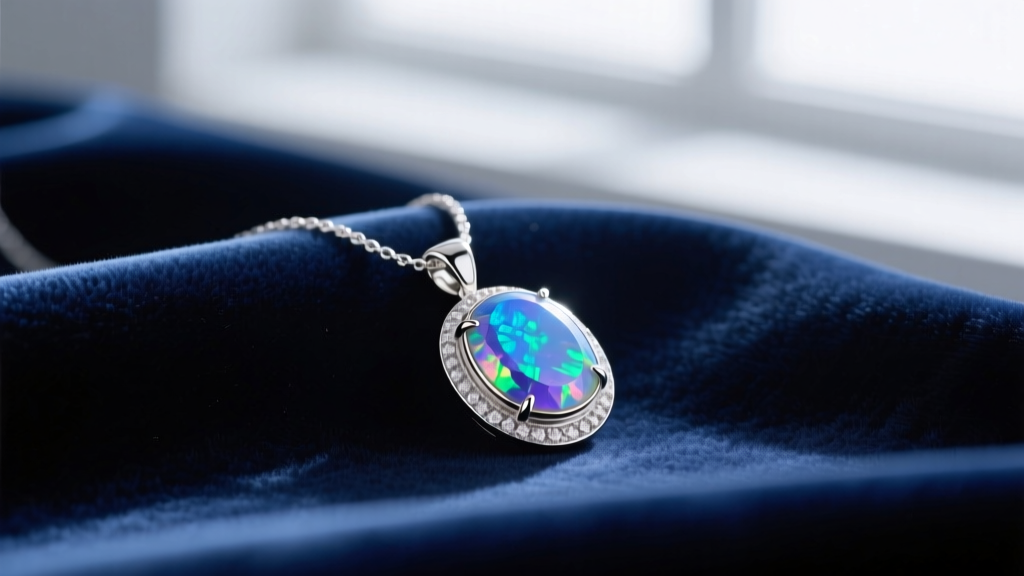
The cultural footprint of Taylor Swift extends far beyond music; it heavily influences contemporary jewelry trends. Among the most highly searched accessories by fans and fashion enthusiasts alike is the ethereal, moody aesthetic encapsulated by the 'Taylor Swift opalite necklace' trend. Whether spotted during acoustic sets, in music video easter eggs, or worn as part of her celestial-inspired wardrobe, milky, iridescent stones have become synonymous with her modern style. But what exactly is opalite, and how can you accurately source, style, and maintain a piece that captures this specific aesthetic? This comprehensive guide breaks down the metallurgical, gemological, and stylistic steps required to master the look.
Step 1: Decoding the Stone (Synthetic Opalite vs. Genuine Opal)
To accurately replicate the Taylor Swift opalite necklace look, you must first understand the material. In the commercial jewelry market, 'opalite' almost exclusively refers to a man-made glass (often a dolomite or quartz glass) engineered to mimic the milky translucency of natural common opal. According to the Gemological Institute of America (GIA), natural opals are formed from silica gel and contain varying amounts of water, whereas commercial opalite glass is entirely synthetic and non-porous.
While natural precious opal exhibits a true 'play-of-color' caused by the diffraction of light through microscopic silica spheres, synthetic opalite glass relies on ambient light refraction to create a soft, glowing halo—often flashing subtle blues or pinks depending on the background against which it rests. This manufactured glow is precisely what gives the necklace its dreamy, 'Midnights'-era vibe.
Material Comparison Chart
| Material | Composition | Mohs Hardness | Avg. Pendant Price | Visual Trait |
|---|---|---|---|---|
| Synthetic Opalite Glass | Man-made quartz/dolomite glass | 5.5 - 6.5 | $15 - $45 | Milky translucence, blue/pink edge glow |
| Natural Common Opal | Hydrated silica (3-10% water) | 5.5 - 6.5 | $50 - $150 | Waxy luster, opaque to translucent, no color flash |
| Natural Precious Opal | Hydrated silica (spherical structure) | 5.5 - 6.5 | $300 - $2,000+ | Vibrant play-of-color (spectral diffraction) |
Step 2: Selecting the Perfect Chain and Setting
The stone is only half the equation. The hardware you choose dictates both the longevity and the aesthetic accuracy of your necklace. Because synthetic opalite glass is relatively soft (Mohs 5.5) and prone to chipping upon hard impact, the setting is critical.
Bezel vs. Prong Settings
Avoid traditional prong settings for opalite. Prongs leave the edges of the glass exposed to daily knocks against desks, doors, and zippers. Instead, opt for a bezel setting, where a continuous rim of metal wraps entirely around the perimeter of the stone. This not only secures the glass firmly but also provides a sleek, modern border that aligns perfectly with contemporary celebrity jewelry trends.
Chain Gauges and Metallurgy
For a delicate, feminine drape that mirrors Swift's styling, avoid heavy chains. According to jewelry manufacturing standards outlined by Fire Mountain Gems, a 1.2mm to 1.5mm cable chain offers the ideal balance of tensile strength and visual lightness.
- Sterling Silver (925): Best for cool-toned opalite glass. Ensure it is rhodium-plated to prevent tarnishing from skin oils.
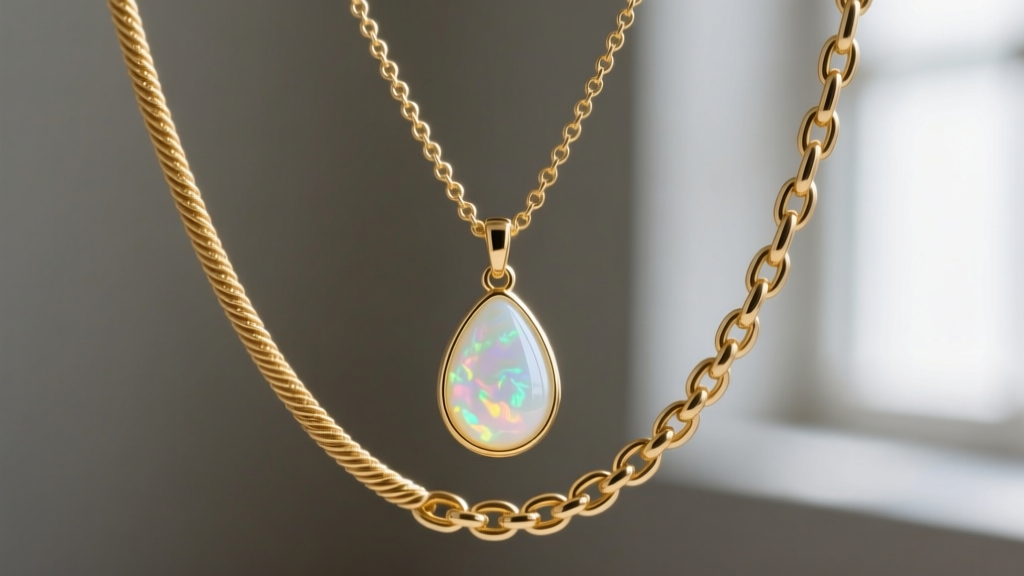
- Gold Vermeil: For warm-toned styling, choose 18k gold vermeil (a minimum of 2.5 microns of gold over a sterling silver base). Avoid standard 'gold plated' brass, which will degrade and turn your skin green within months of daily wear.
Step 3: Sizing and Length for the Ethereal Aesthetic
The placement of the pendant on your collarbone drastically alters the visual impact of the necklace. The Taylor Swift opalite necklace look relies on precise layering and deliberate length choices.
'The magic of an iridescent pendant lies in its proximity to the skin. A stone that rests directly on the collarbone catches ambient light with every subtle movement, creating a living, breathing glow.' — Master Jeweler's Styling Principle
The Ideal Lengths
- 16 Inches (The Choker): Sits snugly at the base of the neck. Ideal for open-neck blouses and creating a 'Folklore' cottagecore aesthetic.
- 18 Inches (The Princess): The most versatile length. The pendant will rest perfectly on the upper chest, making it the optimal choice for wearing over dark, moody fabrics reminiscent of the 'Midnights' era.
- 20-24 Inches (The Matinee): Best reserved for layering over turtlenecks or deep V-neck dresses, allowing the opalite to catch the light away from the face.
Step 4: Styling the Necklace for Different 'Eras'
Adapting your Taylor Swift opalite necklace to your personal wardrobe requires an understanding of color theory and fabric texture. The milky translucence of opalite glass acts as a visual chameleon, shifting its undertones based on what surrounds it.
The 'Midnights' Moody Look
Pair a silver bezel-set opalite pendant on an 18-inch cable chain with deep navy, charcoal, or black velvet garments. The dark background absorbs light passing through the back of the stone, forcing the light to reflect off the front surface. This maximizes the synthetic opalite's signature blue edge-glow, creating a striking, celestial contrast against dark fabrics.
The 'Folklore' Earthy Look
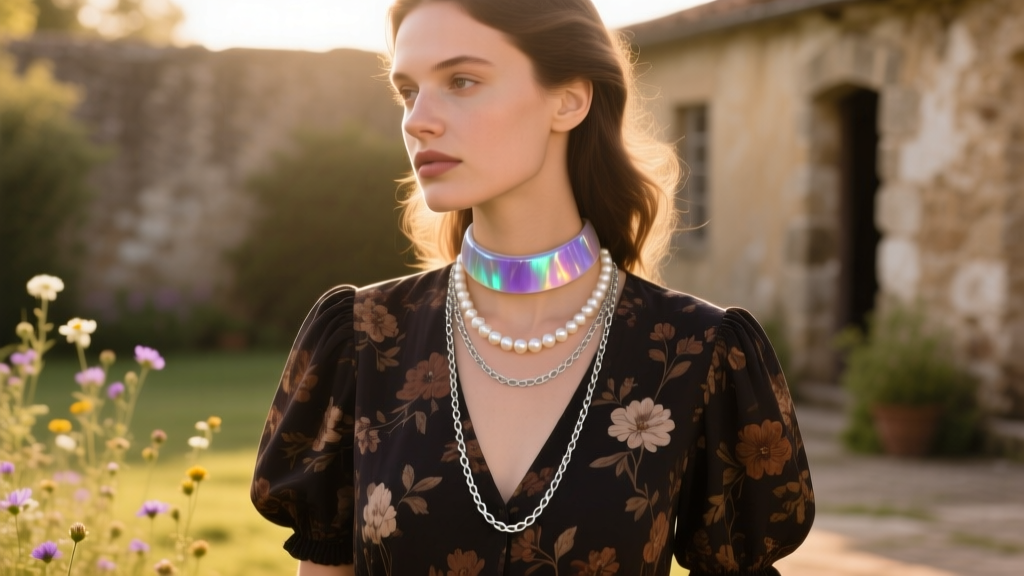
Switch to an 18k gold vermeil chain and wear the necklace at 16 inches. Layer it with a delicate 14-inch gold satellite chain and a 20-inch gold paperclip chain. Pair this trio with cream-colored linen, olive-green cotton, or rust-toned knitwear. The warm gold and earthy fabrics will pull the subtle pink and peach undertones out of the opalite glass, resulting in a soft, romantic, vintage-inspired silhouette.
Step 5: Care and Maintenance for Opalite Glass
One of the most common misconceptions in jewelry care is treating synthetic opalite glass exactly like natural opal. Because natural opal contains up to 21% water, it can 'craze' (develop a network of fine cracks) if exposed to extreme dryness or heat. Synthetic opalite glass contains zero water, meaning it will never craze or dry out. However, it presents its own unique maintenance challenges.
Daily Wear Precautions
At a Mohs hardness of 5.5, opalite glass is softer than the quartz dust found in everyday household dirt and on your hands (quartz is a 7 on the Mohs scale). Wiping your necklace dry with a standard paper towel or rough cloth will introduce micro-scratches that eventually cloud the glass, ruining its ethereal glow.
The Proper Cleaning Protocol
- Soak: Mix a few drops of mild, lotion-free dish soap into a bowl of lukewarm (not hot) distilled water.
- Agitate: Drop the necklace in and let it sit for 3-5 minutes to loosen skin oils and cosmetic residue.
- Brush: Use an ultra-soft, baby-hair toothbrush to gently sweep the back of the bezel setting where the chain meets the bail.
- Dry: Pat dry with a clean, lint-free microfiber cloth. Never use ultrasonic cleaners or steamers, as the high-frequency vibrations can shatter the glass or loosen the adhesive used in some budget bezel settings.
Final Thoughts on Sourcing Your Piece
Securing the perfect Taylor Swift opalite necklace is less about chasing a single, mass-produced celebrity merchandise item, and more about understanding the interplay of materials, light, and personal style. By prioritizing a secure bezel setting, selecting a high-quality 1.2mm vermeil or rhodium-plated silver chain, and adhering to strict microfiber cleaning protocols, you ensure that your pendant maintains its iconic, moody luminescence for years to come. Whether you are dressing for a stadium tour or a quiet evening in, the ethereal glow of opalite remains a timeless, adaptable staple in any modern jewelry collection.


