Anatomy of a 4 Way Cross Necklace: Metals, Casting & Chain Pairing
Explore the metallurgy, casting techniques, and chain-pairing mechanics of the 4 way cross necklace. An expert guide to buying durable religious jewelry.

The Architecture of the Four-Way Pendant
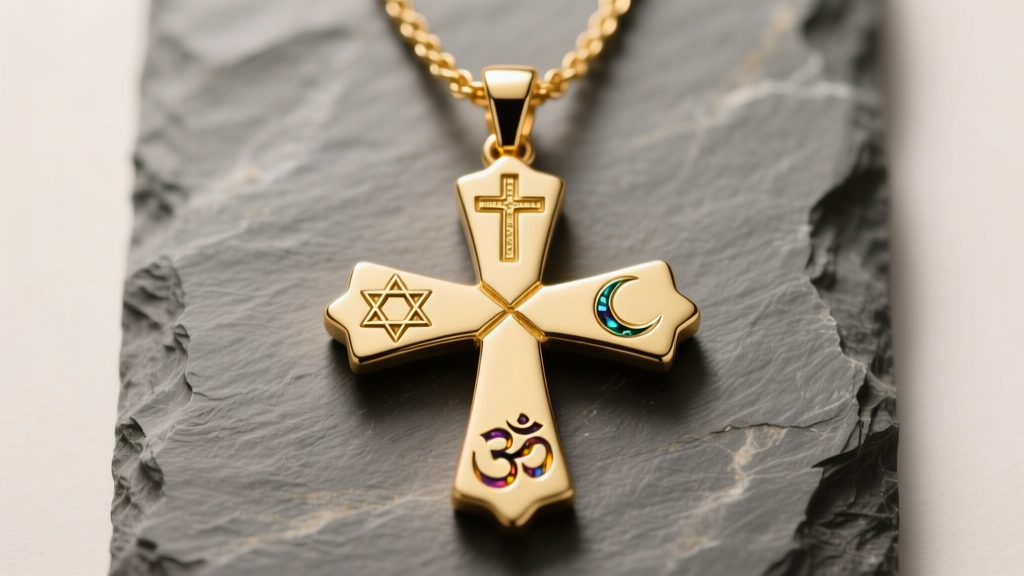
The 4 way cross necklace is far more complex than a standard linear pendant. Often referred to as a four-way medal or cruciform pendant, this design integrates four distinct devotional icons—typically a Crucifix, the Sacred Heart, St. Christopher, and the Holy Spirit (Dove)—radiating from a single central axis. From an engineering perspective, this cruciform geometry introduces unique structural vulnerabilities that mass-market jewelry manufacturers often ignore. Because the weight and surface area are distributed across four distinct arms rather than a single vertical drop, the pendant is highly susceptible to lateral torque and shear stress when caught on clothing or subjected to sudden impacts.
Center Junction Tolerances and Stress Points
The central junction—the exact point where the four arms intersect—is the critical failure point of any 4 way cross necklace. In poorly engineered pieces, the metal at this nexus is cast too thinly, leading to micro-fractures that eventually snap under everyday wear. For a solid 925 sterling silver piece, the central junction must maintain a minimum thickness of 1.4mm to withstand standard tensile stress. For 14k gold, which possesses a higher Vickers hardness (typically 120-140 HV depending on the alloy mix), a minimum thickness of 1.2mm is acceptable. Expert jewelers will often reinforce this junction with a hidden soldered backing plate or a thicker bezel border that ties the four arms together without disrupting the visual symmetry of the religious icons.
Metallurgy and Casting Methods
The longevity of a 4 way cross necklace is dictated by its metallurgical composition and the manufacturing method used to form it. The intricate undercuts required to render the facial details of the crucifix and the feathering of the Holy Spirit dove dictate the casting approach. While lost-wax investment casting remains the industry standard for capturing these deep reliefs, the alloy composition must be tightly controlled to prevent porosity (shrinkage voids) at the tips of the four arms.
| Manufacturing Method | Tensile Strength | Detail Resolution | Best Use Case |
|---|---|---|---|
| Lost-Wax Casting | Moderate (Prone to porosity if sprued poorly) | Exceptional (Deep undercuts, 3D relief) | Solid 14k/18k Gold, Heavy Sterling Silver |
| Die-Striking | High (Compressed metal grain structure) | Low (Shallow reliefs, flat profiles) | Thin 10k Gold, Mass-market Silver Medals |
| Electroforming | Very Low (Hollow, fragile shells) | High (Can replicate wax perfectly) | Large, lightweight fashion jewelry (Not recommended for daily wear) |
When sourcing a high-end piece, look for Argentium Silver (96% silver, 3.5% copper, 0.5% germanium). Traditional sterling silver (92.5% silver, 7.5% copper) is prone to firescale during the casting process and tarnishes rapidly in the deep crevices of a four-way design, which are nearly impossible to polish with a standard rouge cloth. Argentium's germanium content eliminates firescale and provides extreme tarnish resistance, preserving the intricate details of the sacred icons over decades of wear.
Enamel Inlay Techniques: Vitreous vs. Cold Epoxy
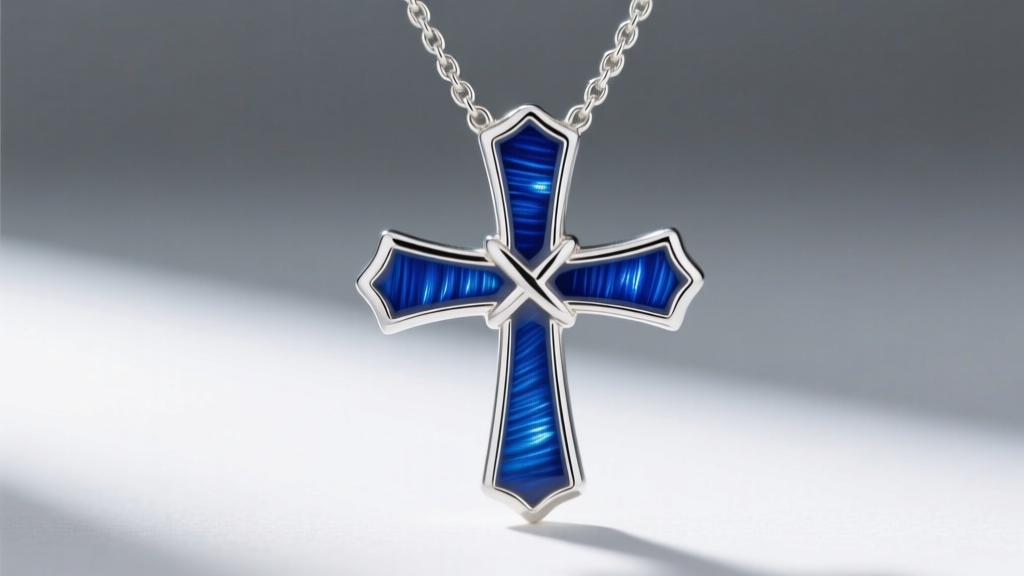
Many premium 4 way cross necklaces feature colored accents—such as a ruby-red Sacred Heart or a sapphire-blue background for the Holy Spirit. The technique used to apply this color drastically affects the pendant's lifespan and value. Vitreous enamel is a glass-based powder fused to the metal substrate in a kiln at temperatures exceeding 1400°F (760°C). This creates a permanent, scratch-resistant chemical bond that will not fade or yellow. However, because glass is inherently brittle, vitreous enamel can shatter or chip if the pendant is dropped onto a hard surface like tile or concrete.
Failure Modes in Enamel Adhesion
Conversely, 'cold enamel' is actually a two-part epoxy resin that cures at room temperature. While cold enamel is highly impact-resistant and will not shatter upon dropping, it is susceptible to UV degradation and chemical breakdown. Over a period of 5 to 10 years, cold epoxy will inevitably yellow, cloud, and begin to pull away from the metal cell walls due to differences in thermal expansion rates between the resin and the gold or silver. For an heirloom-quality 4 way cross necklace intended to be passed down through generations, vitreous enamel is the only acceptable standard, provided the wearer exercises basic impact awareness.
Chain Engineering: Supporting a Multi-Arm Pendant
The wide profile and distributed weight of a 4 way cross necklace demand a highly specific chain pairing. A standard solid 14k gold four-way pendant weighs between 4.5 grams and 8.2 grams. While this is not exceptionally heavy, the pendant's wide horizontal wingspan creates a pendulum effect that generates lateral friction against the chain's bail. If the chain is too flexible, it will kink and eventually snap at the clasp or the link immediately adjacent to the bail.
- Wheat Chains (1.5mm - 2.0mm): The optimal choice. The woven, interlocking oval links provide immense tensile strength (often exceeding 20 lbs of breaking force) and resist kinking while allowing the pendant to slide smoothly.
- Box Chains (1.2mm - 1.5mm): Excellent lateral rigidity. The square links prevent the chain from twisting, ensuring the 4 way cross always hangs perfectly flat against the sternum.
- Rope Chains (Avoid): The twisted geometry of a rope chain acts like a file against the inside of the pendant's bail. Over 2-3 years of daily wear, a rope chain will saw through a standard cast bail, resulting in the loss of the pendant.
- Snake Chains (Avoid): While sleek, snake chains lack lateral flexibility. The wide bail of a four-way pendant will force the snake chain to bend at sharp, unnatural angles, permanently kinking the metal tubing.
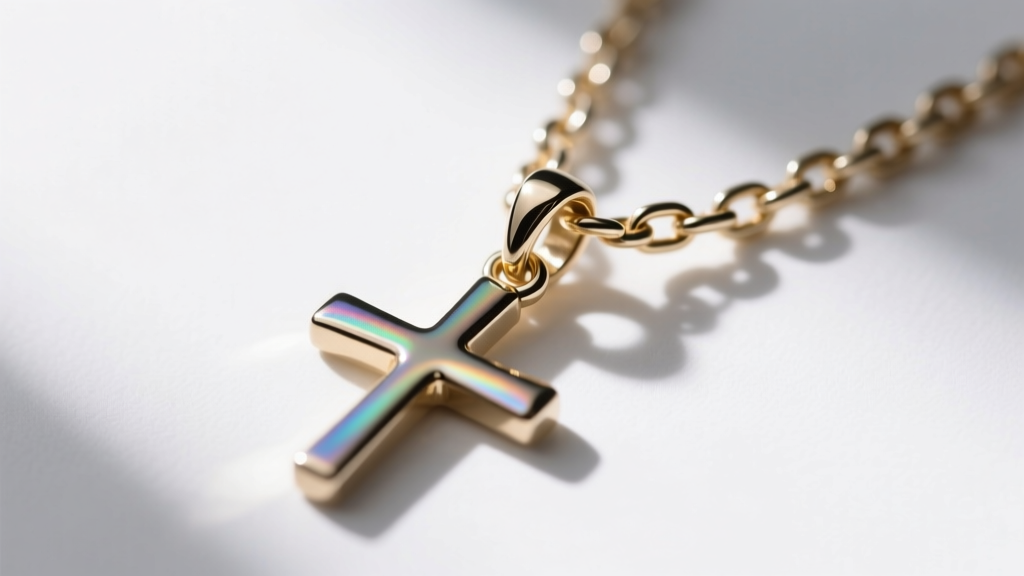
Furthermore, pay close attention to the bail construction. Many mass-produced pieces feature an 'integrated bail'—meaning the loop at the top is cast as part of the Holy Spirit arm. This creates a weak point where the loop meets the arm. For heavy solid gold pieces, insist on a pendant with a soldered V-ring bail or a laser-welded tube bail attached to the central junction or the top arm, which distributes the hanging stress across a much wider surface area.
Sourcing, Authenticity, and Repair Protocols
When investing in a fine jewelry 4 way cross necklace, verify the hallmark. A simple '925' or '14k' stamp is insufficient; look for a registered maker's mark that allows you to trace the piece back to a reputable jewelry manufacturer or artisan. This is crucial for future repairs. If an arm of the cross snaps, traditional torch soldering is often too risky, as the ambient heat can melt the vitreous enamel or warp the thin silver detailing on the adjacent arms. A master jeweler will use laser welding, which focuses a high-energy beam on a microscopic point, fusing the metal back together without raising the ambient temperature of the surrounding religious icons. Understanding these technical nuances ensures that your devotional jewelry remains structurally sound and visually pristine for a lifetime.


