Mastering Necklace Clasps and Closures: An Engineering Deep Dive
Explore the engineering, material grades, and mechanical failure points of necklace clasps and closures. Learn to match hardware to chain weight.

The Anatomy of Chain Hardware: Beyond Aesthetics
When a fine jewelry piece fails, the breakage rarely occurs along the meticulously crafted links of the chain itself. The point of catastrophic failure is almost universally located at the hardware. Understanding the engineering behind necklace clasps and closures requires shifting focus from pure aesthetics to mechanical stress, metallurgical limits, and ergonomic functionality. A clasp is not merely a finishing touch; it is a dynamic load-bearing component subjected to continuous tensile strain, shear stress, and environmental degradation. For jewelers, bench technicians, and serious collectors, analyzing these components through a technical lens is essential for ensuring the longevity of high-value necklaces and pendants.
Material Science: Metallurgy and Tensile Strength
The performance of any closure mechanism is strictly bound by the Vickers hardness (HV) and yield strength of its constituent alloy. While 18-karat gold is prized for its rich color and high purity, its relatively low hardness (typically around 120-130 HV) makes it suboptimal for high-tension spring mechanisms. When an 18k gold spring ring is subjected to repetitive opening and closing, the metal undergoes work-hardening, eventually becoming brittle and snapping at the hinge point.
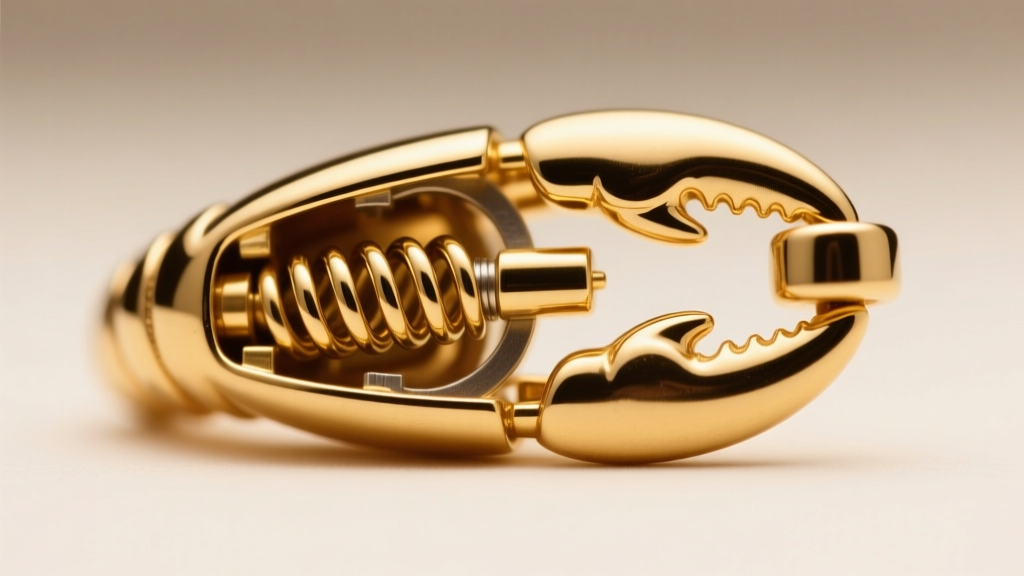
Conversely, 14-karat gold alloys (often alloyed with nickel, zinc, or copper) boast a higher hardness rating (140-160 HV), providing superior resilience for internal springs and trigger levers. For ultra-fine chains where weight is a primary concern, platinum (approx. 135 HV but with vastly superior tensile strength and density) offers excellent durability, though it requires specialized bench techniques to form. According to metallurgical guidelines from the Gemological Institute of America (GIA), selecting the correct alloy temper for findings is just as critical as selecting the gemstones. Many high-end manufacturers now utilize 316L surgical stainless steel for the internal springs of gold lobster clasps, ensuring mechanical longevity while maintaining the exterior karat-gold appearance.
Mechanical Failure Modes in Common Closures
To properly specify necklace clasps and closures, one must understand how and why they fail. Each mechanical design possesses inherent structural vulnerabilities.
Lobster Clasps: Trigger Pin Wear and Spring Fatigue
The lobster claw is the industry standard for chains ranging from 1mm to 4mm in thickness. However, the primary failure mode is not the clasp body, but the microscopic pin connecting the trigger to the internal spring. Over thousands of articulation cycles, this pin experiences severe shear stress. Furthermore, if the internal steel spring is exposed to ultrasonic cleaners containing harsh alkaline solutions or acidic pickling baths without proper neutralization, hydrogen embrittlement can occur, causing the spring to shatter under minimal tension.
Spring Rings: Gap Deformation and Thermal Damage
Spring rings rely on a continuous outer wire that slides back to create a gap. The most common failure occurs when a pendant bail or heavy jump ring forces the gap wider than its engineered tolerance, permanently deforming the outer circle into an oval. Additionally, during bench repairs, applying a torch too close to a spring ring will instantly ruin the heat-treatment temper of the internal carbon-steel spring, rendering the clasp permanently slack.
Toggle Clasps: The Fulcrum Effect
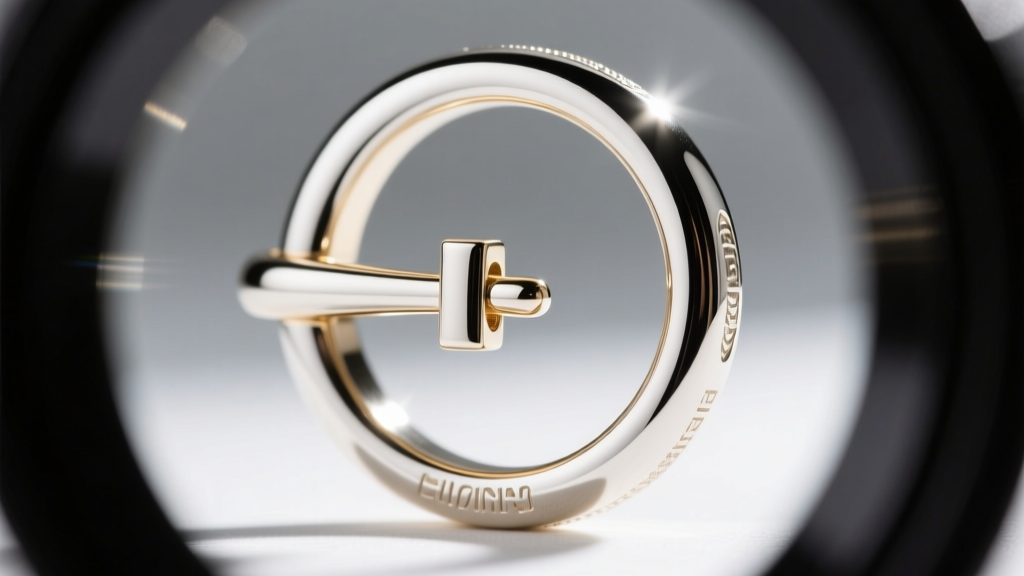
Toggle clasps operate on a simple gravity-and-tension principle. The failure point here is the circular ring. When a heavy pendant pulls the chain downward, the T-bar acts as a fulcrum, applying localized leverage against the inner wall of the ring. Over time, this causes the ring to ovalize, eventually allowing the T-bar to slip through. To mitigate this, the ring must be cast or stamped with a significantly thicker cross-section than the rest of the chain links.
Weight-to-Hardware Ratios: A Technical Framework
Matching the correct hardware to the chain gauge and total pendant weight is a precise science. Undersized hardware leads to immediate mechanical failure, while oversized hardware creates an unbalanced, uncomfortable drape. The following framework, adapted from manufacturing standards at Rio Grande, provides a baseline for bench jewelers.
| Total Chain + Pendant Weight | Chain Wire Gauge | Recommended Clasp Type | Jump Ring Specification |
|---|---|---|---|
| Under 10 grams | 22ga - 20ga | Standard Spring Ring (5mm-7mm) | 20ga wire, 4mm OD, unsoldered |
| 10 - 25 grams | 19ga - 17ga | Small Lobster Claw (9mm-12mm) | 18ga wire, 5mm OD, soldered or split |
| 25 - 50 grams | 16ga - 14ga | Heavy Lobster or Box Clasp | 16ga wire, 6mm OD, fully soldered |
| 50+ grams | 12ga and thicker | Heavy Toggle or Custom Fold-Over | 14ga wire, 8mm+ OD, structural weld |
Upgrading and Soldering: Best Practices for Jewelers
The clasp is only as strong as the jump ring connecting it to the chain. For any necklace supporting a valuable pendant, standard open jump rings are a critical liability. The lateral force applied when taking a necklace on or off can easily pry an open jump ring apart, resulting in the loss of the piece.
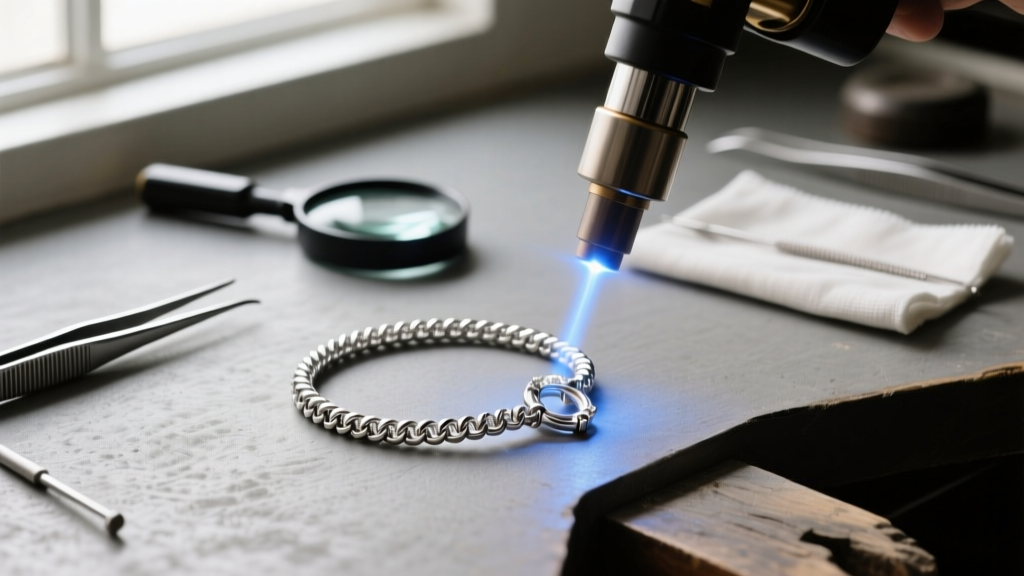
Upgrading to soldered jump rings or heavy-duty split rings (which mimic the mechanics of a miniature keychain ring) is mandatory for pieces exceeding 15 grams. When soldering jump rings to clasp end-rings, bench jewelers must use precise heat control. Laser welding has revolutionized this process, allowing technicians to fuse the jump ring seam without transferring thermal energy to the adjacent clasp mechanism, thereby preserving the temper of internal springs and preventing the melting of delicate solder seams already present on the clasp body.
Accessibility and Ergonomic Innovations
As the jewelry-wearing demographic broadens, the demand for ergonomic necklace clasps and closures has driven significant engineering innovations, particularly for individuals with limited fine motor skills or dexterity issues.
Neodymium Magnetic Clasps
Modern magnetic closures have moved past weak ceramic magnets, utilizing N52-grade neodymium rare-earth magnets. These provide immense pull-force (often exceeding 15 lbs of direct tensile resistance). However, the engineering flaw in cheap magnetic clasps is poor shear-strength resistance; a lateral swipe can break the magnetic bond. High-end magnetic findings solve this by incorporating a physical locking sleeve or interlocking tongue-and-groove channels that engage once the magnets pull the halves together, combining magnetic ease-of-use with mechanical shear resistance.
Screw-Lock and Bayonet Mechanisms
For heavy pearl strands or high-value diamond tennis necklaces, screw-lock barrels remain the gold standard. The internal threading must be machined to exact tolerances—typically a 0.8mm metric pitch in fine jewelry—to prevent cross-threading. Bayonet closures, which utilize a push-and-twist locking mechanism similar to camera lenses, are gaining traction in contemporary men's jewelry due to their sleek profile and high resistance to accidental unfastening.
Conclusion: Engineering for Longevity
Mastering the selection of necklace clasps and closures requires a departure from treating findings as an afterthought. By evaluating the Vickers hardness of the alloys, calculating the precise weight-to-hardware ratios, and understanding the mechanical failure modes of specific mechanisms, jewelers and designers can drastically reduce the rate of catastrophic chain failure. Whether upgrading a vintage piece with a laser-welded split ring or specifying a heavy-duty toggle for a solid 14k gold rope chain, the hardware must always be engineered to outlast the chain it secures.


