Pearl Necklace Lengths: A Technical Guide to Sizing & Drape
Master pearl necklace lengths with our technical guide. Explore exact mm sizing, stringing mechanics, knotting, and drape geometry for perfect styling.

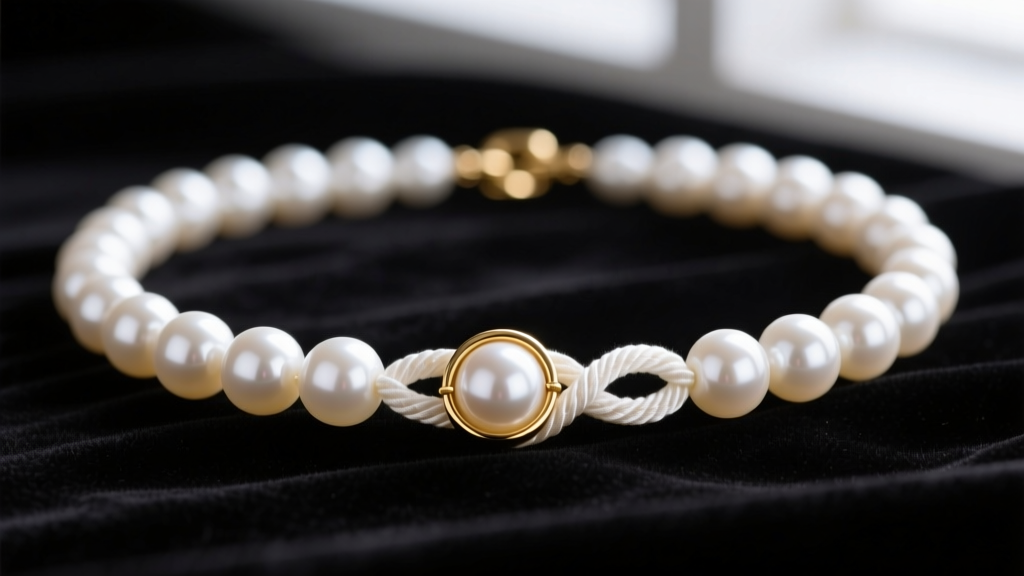
The Geometry of Drape: Standard Pearl Necklace Lengths
Understanding pearl necklace lengths requires moving beyond basic fashion terminology into the realm of geometric precision. In professional jewelry manufacturing, strand length is not measured by laying the necklace flat on a ruler; it is calculated by the inner circumference when clasped. This distinction is critical because the thickness of the pearls and the knotting material add significant outer diameter, altering how the strand sits against the clavicle and sternum. The interplay between the wearer's neck circumference, the pearl's millimeter size, and the stringing material's flexibility dictates the final drape.
| Classification | Inner Circumference | Metric (cm) | Optimal Pearl Size | Drape Mechanics & Neckline Pairing |
|---|---|---|---|---|
| Collar | 10 - 13 inches | 25 - 33 cm | 3mm - 5mm | Rigid, multi-strand architecture; sits flush against the mid-neck. Best with V-necks or off-shoulder. |
| Choker | 14 - 16 inches | 35 - 41 cm | 5mm - 7mm | Rests precisely on the clavicle hollow. Requires high flexibility to avoid choking sensations. |
| Princess | 17 - 19 inches | 43 - 48 cm | 7mm - 9mm | Falls just below the collarbone. The most versatile length for standard crew and scoop necklines. |
| Matinee | 20 - 24 inches | 50 - 61 cm | 8mm - 10mm | Rests on the upper sternum. Ideal for business attire and high-neck blouses. |
| Opera | 28 - 36 inches | 71 - 91 cm | 7mm - 9mm | Falls below the bust line. Requires counter-weighting at the clasp to prevent forward sliding. |
| Rope | > 36 inches | > 91 cm | 6mm - 8mm | Highly fluid; often doubled. Requires intermediate clasps or continuous knotting for structural integrity. |
Pearl Diameter vs. Strand Length: The Millimeter Matrix
A common error in jewelry design is ignoring the mathematical relationship between pearl diameter and total strand length. A 16-inch choker behaves entirely differently depending on whether it is strung with 5mm or 10mm pearls. To understand this, we must calculate the linear footprint of each bead-and-knot unit.
The Math of Knot Spacing
Assume a standard 16-inch (406.4mm) choker. If strung with 7mm Akoya pearls and traditional silk knots (which add approximately 1.2mm of linear space per knot), each repeating unit measures 8.2mm. Dividing 406.4mm by 8.2mm yields roughly 49 pearls. However, if you use 10mm South Sea pearls on the same 16-inch strand, the bead-to-knot ratio shifts drastically. The larger pearls possess a higher specific gravity and a wider drill hole channel, resulting in a stiffer, less articulated strand. According to the Gemological Institute of America (GIA), larger pearls inherently demand longer strand lengths to maintain a fluid drape; a 10mm pearl on a 14-inch choker will create a rigid polygon rather than a smooth curve around the neck.

Stringing Mechanics: Silk, Synthetics, and Drill Hole Friction
The structural integrity of pearl necklace lengths relies entirely on the stringing medium and the quality of the pearl's drill hole. Historically, Japanese silk (sizes E, F, and FF) has been the industry standard. Silk offers superior knot-holding friction and a supple drape. However, silk is a protein fiber highly susceptible to degradation from human sebum and perspiration, which typically has a pH between 4.5 and 5.5. Over time, this acidic environment weakens the silk's tensile strength.
Synthetic Alternatives and Chamfering
Modern master stringers increasingly utilize gel-spun polyethylene threads (such as Power Pro) for longer lengths like Opera and Rope, where the cumulative weight of the pearls places immense stress on the clasp-end knots. While synthetics offer near-infinite tensile strength and zero stretch, they introduce a critical failure mode: abrasion. If a pearl's drill hole (typically 0.7mm to 0.9mm for saltwater varieties) is not properly chamfered—meaning the sharp nacre edges at the entry and exit points are not rounded off—the sharp internal rim will eventually slice through the synthetic thread. When designing or restringing, always inspect the drill holes under 10x magnification to ensure smooth transitions, a vital step emphasized in advanced pearl care and maintenance protocols.
Clasp Weight and the "Pull-Down" Effect
The clasp is not merely a functional closure; it is a structural counterweight. In longer pearl necklace lengths, particularly the 32-inch Opera and 45-inch Rope, a heavy 18k gold diamond-set tongue clasp will succumb to gravity, pulling the back of the necklace down toward the wearer's waist. This "pull-down" effect forces the front of the necklace to ride higher on the chest, completely ruining the intended geometric drape.
- For Collars and Chokers: Use secure, rigid clasps like box clasps with figure-eight safety catches. The short length and neck friction prevent sliding.
- For Princess and Matinee: Standard tongue or ball clasps work well, provided the gold weight does not exceed 4 grams.
- For Opera and Rope: Utilize lightweight fishhook clasps or hidden magnetic clasps encased in aluminum. For continuous ropes, incorporate secondary "station" clasps to break the tensile load.
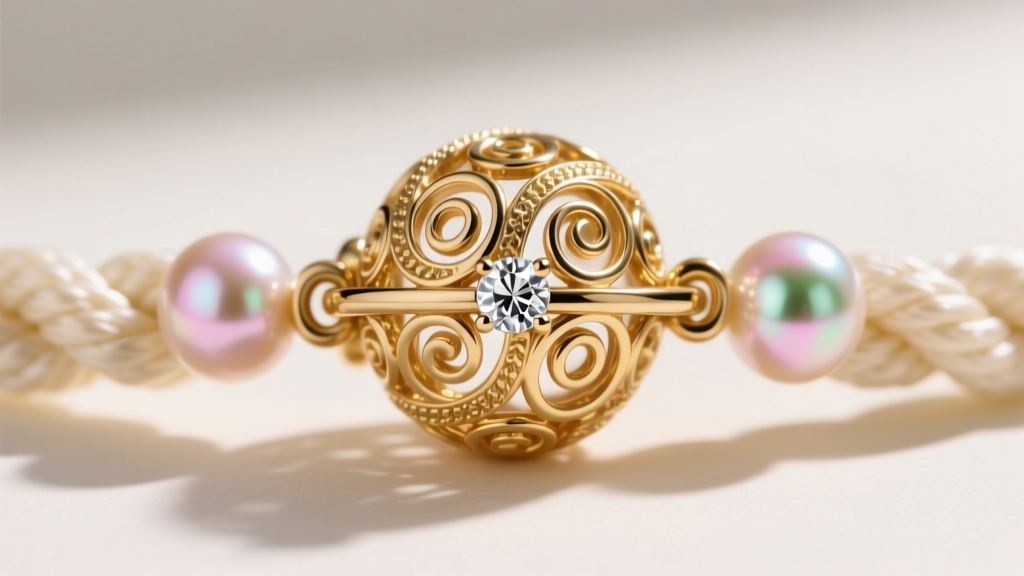
Troubleshooting Common Drape Failures
Even with precise measurements, pearl necklaces can exhibit mechanical failures that compromise their aesthetic. Recognizing these issues requires an understanding of jewelry physics.
Expert Troubleshooting Tip: If a newly strung pearl necklace exhibits "gapping" (visible spaces between the pearls that do not close when the strand is laid flat), the silk was not adequately pre-stretched before knotting. Master stringers hang weights on the silk thread for 24 hours prior to stringing to eliminate post-knotting elongation.
Another frequent issue is clasp migration, where the clasp continually slides to the front of the neck. This is almost always caused by an imbalance in the strand's center of gravity. If the pearls are graduated (e.g., 6mm at the back tapering to 9mm at the front), the heavier front section will pull the lightweight clasp forward. The technical solution is to add a microscopic gold counter-weight bead inside the French wire (gimp) at the clasp end, or to use a heavier clasp assembly to balance the specific gravity of the graduated nacre.
Conclusion: Precision in Proportion
Mastering pearl necklace lengths is an exercise in applied geometry and materials science. By analyzing the inner circumference, calculating the linear footprint of the bead-and-knot units, and selecting the appropriate stringing medium and clasp weight, jewelers and collectors can ensure a flawless drape. Whether evaluating a rigid 12-inch collar or a fluid 40-inch rope, the technical details of millimeter sizing and drill-hole friction ultimately dictate the elegance and longevity of the piece.


