The Expert Guide to Choosing a Pearl Necklace with Turquoise
Discover the technical nuances of buying a pearl necklace with turquoise. Learn about gemstone hardness, grading scales, and stringing methods.

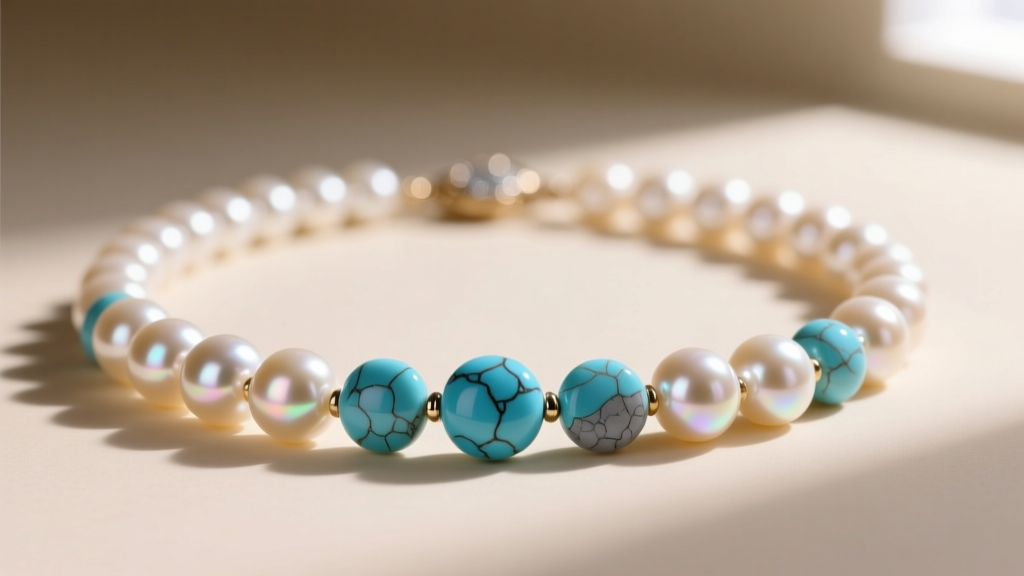
The combination of a pearl necklace with turquoise represents a masterclass in organic and inorganic gemstone pairing. The soft, iridescent luster of nacre contrasts beautifully with the opaque, striking blue-green hues of turquoise. However, from a gemological and bench-jeweler perspective, merging these two materials requires a deep understanding of their physical properties, structural vulnerabilities, and grading standards. This technical deep dive explores the exact specifications, stringing methodologies, and material grades required to design, purchase, or evaluate a high-end pearl and turquoise necklace.
The Gemological Clash: Mohs Hardness and Porosity
When designing or purchasing a mixed-material necklace, the first technical hurdle is the Mohs hardness scale. According to the Gemological Institute of America (GIA), pearls are organic gemstones composed of aragonite platelets and conchiolin, ranking between 2.5 and 4.5 on the Mohs scale. Turquoise, a hydrous phosphate of copper and aluminum, is slightly harder, ranking between 5 and 6.
This discrepancy creates a severe abrasion risk. If turquoise beads are strung directly adjacent to pearls without protective buffering, the harder turquoise will act as a micro-abrasive, gradually wearing down the pearl's nacre. Over years of wear, this friction will create flat spots on the pearls and dull their orient. Furthermore, both stones are highly porous. Turquoise readily absorbs skin oils, cosmetics, and environmental chemicals, which can alter its color matrix. Pearls are similarly vulnerable; the conchiolin protein binding their aragonite crystals degrades rapidly when exposed to the acidic pH of human sweat or the alcohol in perfumes.
Grading Standards: Matching AAA Pearls with High-Grade Turquoise
A common failure in commercial jewelry is the mismatching of material grades. Pairing top-tier Hanadama Akoya pearls with low-grade, heavily dyed chalk turquoise results in a structural and aesthetic imbalance. A true expert-level pearl necklace with turquoise demands parity in quality. Below is a technical matrix for matching these stones.
| Material | Top-Tier Grade | Mid-Tier Grade | Common Treatments to Avoid |
|---|---|---|---|
| Akoya Pearls | Hanadama (0.4mm+ nacre, high luster) | AAA (Clean surface, good luster) | Heavy bleaching, metallic dyeing |
| South Sea Pearls | AAA (Thick nacre, flawless surface) | AA+ (Minor blemishes) | Irradiation for artificial black/gold |
| Turquoise | Natural Persian / Sleeping Beauty | Stabilized High-Grade (Zachery Process) | Reconstituted block, heavy wax/polymer |
When evaluating the turquoise inlay or beads, look for a consistent, saturated 'robin's egg' or deep sky-blue color with a tight, structural matrix (if spiderwebbing is present). The GIA Turquoise Guide notes that stabilization is an accepted industry practice for mid-tier stones to prevent crumbling, but high-end pieces should utilize the Zachery process (a potassium-silicate treatment) or feature completely natural, high-density rough that does not require polymer impregnation.

Stringing and Assembly Techniques for Mixed-Material Necklaces
The longevity of a pearl and turquoise necklace is entirely dependent on its assembly. Standard beading wire (e.g., 49-strand stainless steel coated in nylon) is entirely inappropriate for high-end pearls. The wire will eventually saw through the pearl's drill holes, and the rigid drape ruins the organic flow of the necklace. Instead, master jewelers utilize specific traditional techniques.
Silk Knotting and Thread Sizing
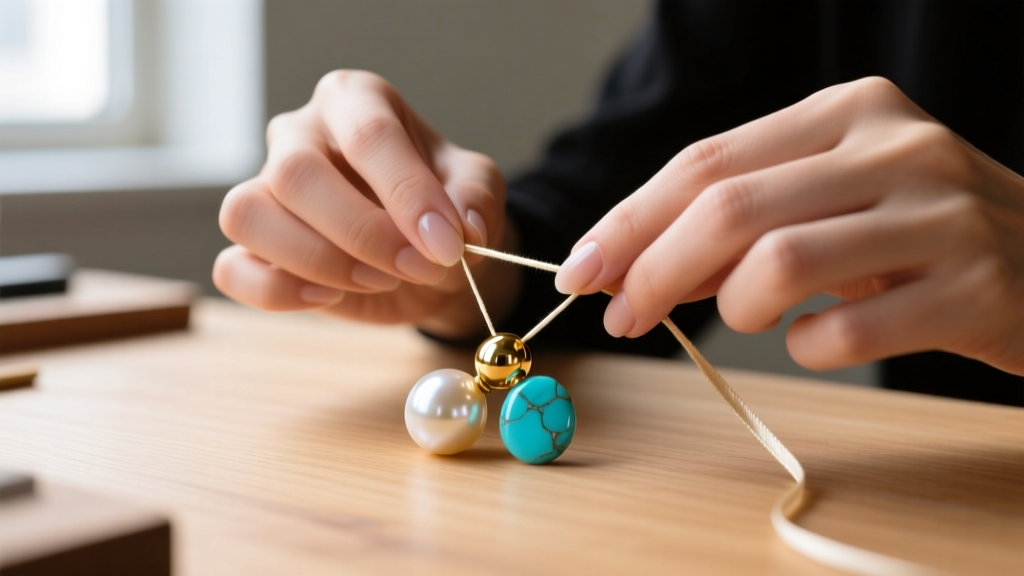
A genuine luxury piece will be hand-knotted on 100% silk thread. For 6mm to 7mm Akoya pearls paired with similarly sized turquoise rondelles, a Size F or Size 10 silk thread is optimal. The knots serve two critical functions: they prevent catastrophic loss if the strand snaps, and they provide a micro-buffer between the beads. However, silk alone is not enough to prevent the Mohs hardness abrasion mentioned earlier.
The Crucial Role of Spacer Beads
To protect the nacre, a physical barrier must be introduced between the pearl and the turquoise. Bench jewelers use 14k or 18k gold spacer beads (typically 1.5mm to 2mm in diameter) or seamless platinum rings. Gold and platinum are softer than turquoise but harder than pearl nacre, acting as a sacrificial buffer that takes the frictional wear while providing a visually stunning metallic accent that enhances the blue and white color palette.
French Wire (Gimp) and Clasp Integration
The terminal ends of the necklace, where the silk thread meets the metal clasp, must be protected with French wire (also known as gimp). This micro-coiled hollow wire prevents the silk from fraying against the metal jump ring. For a high-end turquoise and pearl piece, a 14k or 18k gold box clasp with a double-safety figure-eight catch is the industry standard, ensuring the heavy, multi-material strand remains secure during wear.
Care and Maintenance: Preventing Chemical Degradation
Because both materials are chemically sensitive, the maintenance protocol for a pearl necklace with turquoise is strict. Never use ultrasonic cleaners, steam cleaners, or commercial silver dips. The high-frequency vibrations of an ultrasonic cleaner will shatter the internal crystalline structure of stabilized turquoise and strip the orient from a pearl's surface.
- Routine Cleaning: Wipe the strand down after every wear with a damp, lint-free microfiber cloth to remove acidic skin oils and environmental pollutants.
- Deep Cleaning: Use a soft, natural-bristle brush dipped in distilled water with a single drop of pH-neutral castile soap. Gently brush the turquoise matrix and pearl surfaces, then immediately pat dry.
- Storage: Store the necklace flat in a breathable cotton pouch. Never store it in an airtight plastic bag or a safety deposit box for extended periods; pearls require ambient moisture to prevent the nacre from cracking and peeling (a process known as crazing).
Pricing Tiers and Market Valuation
Understanding the pricing architecture helps buyers avoid overpaying for commercially assembled pieces disguised as luxury goods. A genuine, hand-knotted 18-inch necklace featuring AAA-grade 7mm Akoya pearls and high-grade natural Sleeping Beauty turquoise, separated by 14k gold spacers and finished with a diamond-accented box clasp, typically commands a market valuation between $3,500 and $6,500. Conversely, commercial-grade necklaces utilizing heavily treated block turquoise, dyed freshwater pearls, and un-knotted nylon stringing usually retail in the $150 to $400 range. Always request a detailed gemological breakdown of the pearl nacre thickness and turquoise treatment status before investing in the higher tiers.


