Technical Guide: Choosing a Special Necklace for Daughter
Discover the metallurgy, chain weaves, and clasp mechanics behind choosing a special necklace for daughter that lasts a lifetime. Expert sizing guide.

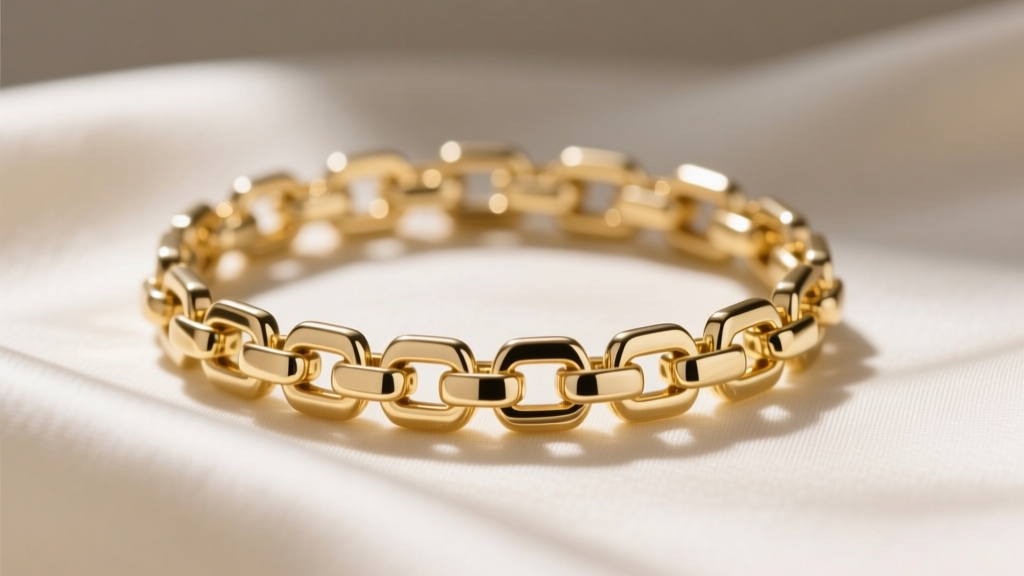
The Metallurgy of Heirloom Jewelry: Choosing the Right Alloy
When selecting a special necklace for daughter, the base metal dictates the piece's structural lifespan and biological compatibility. Sentimental value must be backed by material science. 18-karat gold (75% pure gold) offers a rich, buttery yellow hue but possesses a Vickers hardness (HV) of roughly 90-110. This relative softness makes it prone to micro-scratches and link deformation under daily mechanical stress. For a piece meant to survive decades of daily wear, 14-karat gold (58.3% pure gold) is the metallurgical sweet spot. Alloyed with copper, silver, and zinc, 14k gold achieves an HV of 120-140, providing superior tensile strength for delicate chain links without sacrificing the prestige of fine jewelry.
If opting for white gold, be acutely aware of the alloy composition. Many commercial white gold alloys utilize nickel as a bleaching agent to achieve a silver-like color. According to the American Academy of Dermatology, nickel is a leading cause of allergic contact dermatitis, which can manifest as severe rashes along the neckline. For a developing teenager or anyone with sensitive skin, mandate a nickel-free white gold alloy (often palladium-based) or choose Platinum 950. Platinum’s density (21.45 g/cm³) and unique work-hardening properties mean that when a platinum chain link is stressed, the metal displaces rather than fractures, making it the ultimate heirloom metal, albeit at a 40-60% price premium over 14k gold.
Chain Weave Engineering: Durability vs. Aesthetics
The structural integrity of a necklace relies entirely on its weave geometry and wire gauge. A common mistake when buying a special necklace for daughter is prioritizing the visual weight of the pendant while ignoring the chain's load-bearing capacity. For pendants weighing between 2 to 5 grams, a chain gauge of 0.9mm to 1.2mm is strictly required to prevent stress-induced snapping.
| Chain Weave | Tensile Strength | Snag Risk | Best Application |
|---|---|---|---|
| Soldered Box | High | Low | Everyday wear, heavy pendants |
| Cable (Round) | Medium | Medium | Lightweight charms, classic aesthetics |
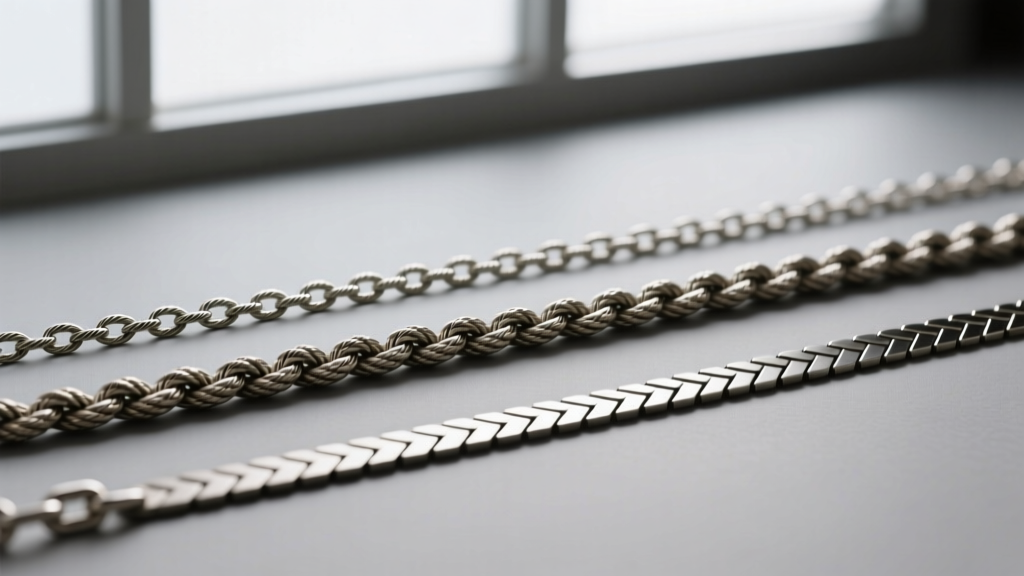
| Rope | Medium-High | High | Textured standalone pieces, no pendants |
| Herringbone | Low | Very High | Occasion wear only, highly fragile |
Box chains, constructed from interlocking square links, distribute tensile stress evenly across four flat planes per link. This geometry prevents the localized stress fractures common in round-wire cable chains. Conversely, herringbone chains, while visually striking, consist of flat, flush-soldered links that possess virtually no lateral flexibility. A single sharp bend will permanently kink a herringbone chain, rendering it unrepairable. For an active daughter, a soldered box or curb chain is non-negotiable.
Clasp Mechanics: Securing the Investment
The clasp is the most frequent point of catastrophic failure in fine jewelry. Spring ring clasps, characterized by their circular shape and tiny internal coil spring, are mass-produced and typically fail when the internal tension spring fatigues or the tiny trigger mechanism snaps under a mere 2 to 3 pounds of lateral force.
Always upgrade to a solid-body lobster claw clasp. A high-quality lobster clasp features a forged lever and a heavy-duty internal spring capable of withstanding up to 15 pounds of lateral tension before yielding. For chains thicker than 2.0mm, a fold-over safety clasp with a secondary figure-eight security latch provides redundant protection against accidental unclasping.
Anatomical Sizing: Getting the Drop Length Right
Anatomical sizing is critical for both comfort and safety. A necklace that sits too high will cause sensory irritation, while one that hangs too low risks catching on objects during daily activities. The Jewelers of America standardizes chain lengths, but individual anatomy requires precise adjustments based on age and growth trajectories.
- Ages 8-12: 14 to 15 inches. This sits comfortably as a choker or high collarbone piece for younger, smaller frames.
- Ages 13-18: 16 inches. The universal standard for teens and adults, resting precisely on the clavicle and accommodating most standard necklines.
- Adult/Heirloom Sizing: 18 inches. Drops below the collarbone, ideal for wearing over thicker fabrics or crew-neck tops.
Crucially, always specify a 2-inch extender chain. This allows the necklace to adapt to varying neckline depths and accommodates rapid growth spurts during adolescence, ensuring the piece remains wearable without requiring immediate, costly resizing by a bench jeweler.
Gemstone Setting Techniques and Engraving Depth
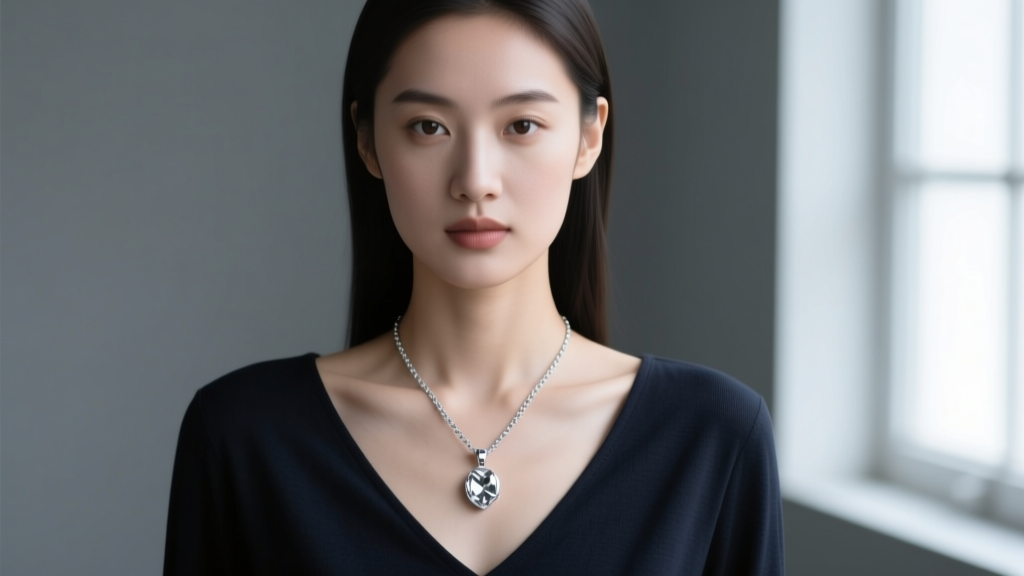
If the special necklace for daughter features a birthstone or diamond, the setting engineering is paramount. Avoid traditional four-prong or six-prong settings for daily wear. Prongs are essentially tiny metal wires that catch on textiles, eventually lifting and releasing the gemstone. Instead, specify a bezel setting. A full bezel setting encircles the gemstone's girdle with a continuous rim of metal, securing the stone while reducing the risk of impact damage by over 80%. According to the Gemological Institute of America (GIA), bezel settings may allow slightly less light to enter the stone from the sides compared to prongs, but the trade-off in sheer mechanical security is invaluable for a young, active wearer.
For personalized touches, opt for laser engraving over rotary drag engraving. Laser engraving vaporizes the metal at a precise depth of 0.1mm to 0.3mm, preserving the structural integrity of thin pendant backs. Rotary bits, conversely, apply physical torque that can warp or puncture delicate gold plates under 1.5mm in thickness.
Maintenance and Ultrasonic Cleaning Risks
Finally, educating your daughter on proper maintenance ensures the necklace's longevity. Many consumers mistakenly believe ultrasonic cleaners are safe for all fine jewelry. These machines operate at frequencies of 40-45 kHz, creating cavitation bubbles that implode with immense localized pressure. While excellent for removing sebum and lotions from diamond bezels, this cavitation can fracture treated gemstones (like fracture-filled emeralds or opals) and shake loose micro-pave stones. Recommend a simple maintenance routine: warm water, a few drops of mild dish soap, and a soft-bristle baby toothbrush to gently agitate dirt from behind the gemstone setting. This low-impact method preserves both the metal's polish and the gemstone's internal integrity for generations to come.


