The Anatomy of a Pearl Chain Necklace: An Expert's Technical Guide
Discover the technical anatomy of a pearl chain necklace. Learn about nacre grading, metal alloys, drill-hole engineering, and linking methods.

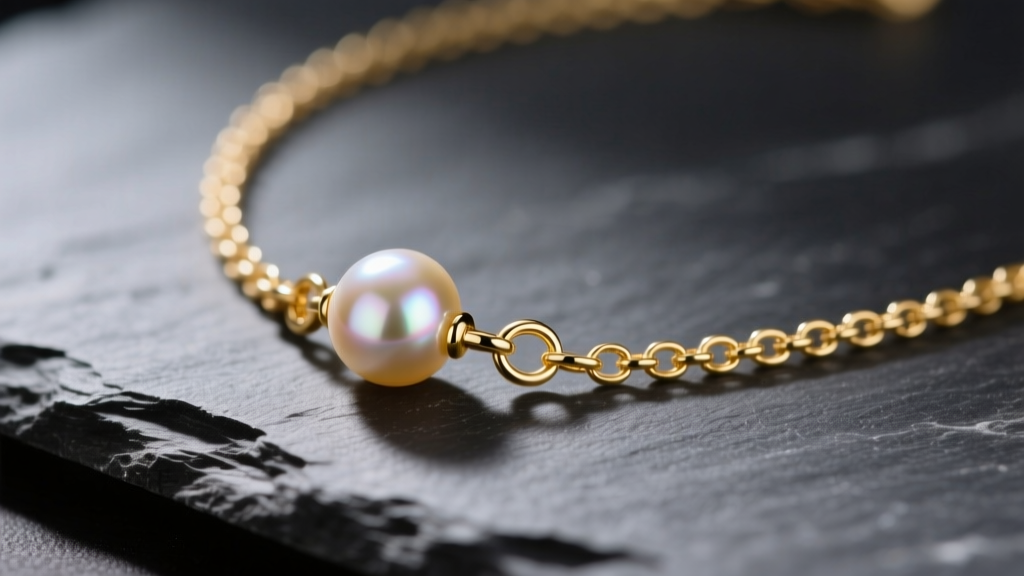
The Engineering of Mixed-Media Pearl Chains
A pearl chain necklace is not merely a decorative accessory; it is a complex exercise in mixed-material engineering. When designing or evaluating these pieces, jewelers must reconcile the organic, relatively soft nature of nacre (Mohs hardness 2.5 to 4.5) with the rigid, high-tensile properties of metal alloys. The primary structural challenge lies in the junction points where the metal chain interacts with the pearl stations. Without precise tolerances, the metal acts as a micro-abrasive, slowly sawing through the pearl's drill hole and compromising the necklace's integrity.
According to the Gemological Institute of America (GIA), the longevity of any cultured pearl jewelry depends heavily on how the gemstone is mounted and worn. In a continuous chain design, the coefficient of friction between the metal jump rings and the pearl surface must be mitigated through exact drill-hole geometry and specialized linking methodologies.
Pearl Selection: Nacre Thickness and Drill-Hole Geometry
Not all pearls are structurally viable for chain integration. The critical metric is nacre thickness. For a pearl to withstand the lateral stress of a metal chain pulling against its drill hole, it requires a minimum nacre thickness of 0.8mm. Thin-nacre pearls (often found in lower-grade freshwater or early-harvested Akoya batches) are prone to 'blowout'—a catastrophic flaking around the drill hole entry and exit points.
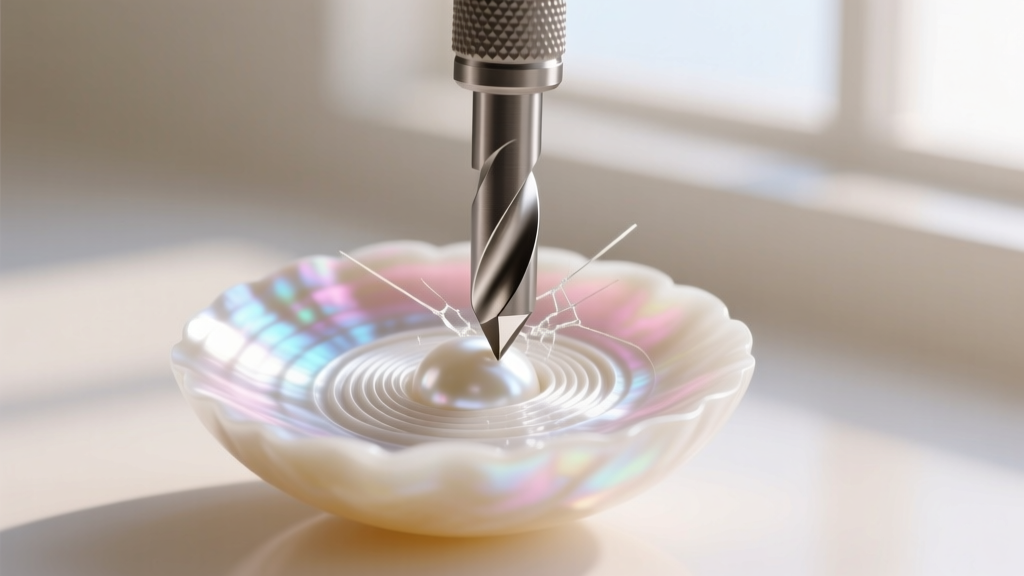
The drill-hole diameter is equally critical. Standard pearl drilling ranges from 0.8mm to 1.2mm. When threading a metal chain, the hole must accommodate the chain's jump ring or wire wrap while leaving enough margin for a microscopic buffer of jeweler's epoxy. If a 20-gauge wire (0.81mm) is used for linking, the pearl must be drilled to exactly 0.95mm to allow for adhesive clearance without creating excessive 'play' that leads to rotational wear.
| Pearl Type | Avg Nacre Thickness | Standard Drill Hole | Chain Compatibility Rating |
|---|---|---|---|
| Akoya (High Grade) | 0.8mm - 1.2mm | 0.85mm | Excellent (Requires 22g wire) |
| Freshwater (Round) | 1.5mm - 3.0mm (Solid) | 1.0mm | Superior (Highly durable) |
| South Sea | 2.0mm - 4.0mm | 1.2mm - 1.5mm | Good (Requires heavy gauge chains) |
| Tahitian | 1.5mm - 3.0mm | 1.0mm - 1.2mm | Very Good (Monitor for halo wear) |
Metal Chain Alloys and Gauge Specifications
The choice of metal chain dictates both the aesthetic drape and the chemical interaction with the pearl. The American Gem Society (AGS) emphasizes that pearls are highly porous and susceptible to chemical damage. This makes alloy selection paramount.
- 14k and 18k Gold: The industry standard. The copper and silver alloys in 14k gold provide excellent tensile strength for 18-gauge to 22-gauge chains. 18k gold offers superior luster that matches the orient of high-grade pearls but is slightly softer, requiring thicker gauges (18g or 19g) to prevent stretching.
- Sterling Silver (925): While cost-effective, sterling silver contains 7.5% copper. When exposed to moisture and skin acids, the copper can oxidize and leach into the porous nacre surrounding the drill hole, creating a permanent dark 'halo' stain. If using silver, the chain and jump rings must be heavily rhodium-plated to create an inert barrier.
- Platinum: The ultimate choice for structural integrity. A 22-gauge platinum chain offers the tensile strength of a much thicker gold wire, allowing for ultra-fine drill holes that preserve the pearl's structural core.
Linking Methodologies: Knotting vs. Wire-Wrapping vs. Micro-Crimping
How the pearl is secured to the chain defines the necklace's failure rate. Traditional silk knotting is rarely used in modern metal pearl chain necklaces because silk degrades rapidly when subjected to the friction of metal jump rings. Instead, master jewelers rely on three primary mechanical linkages:
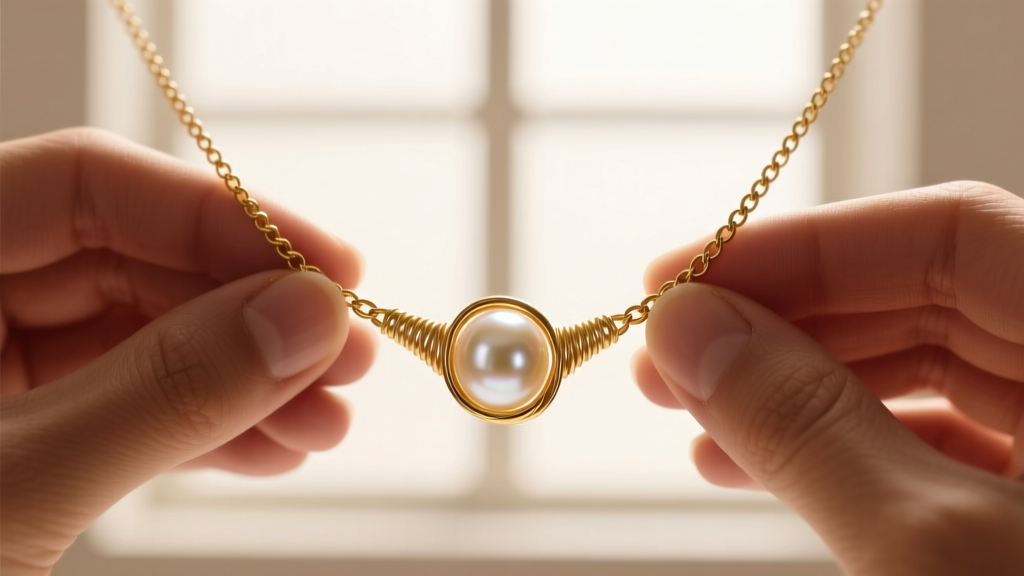
1. The Wrapped Loop (Wire-Wrapping)
This involves using a 22-gauge or 24-gauge dead-soft wire passed through the pearl, creating a wrapped loop at both ends that connects to the main chain. This is the most secure method, distributing tension evenly across the wire wraps. However, it adds visual bulk and requires precise calibration to avoid work-hardening the wire to the point of snapping during the wrapping process.
2. Micro-Crimping with Tube Crimps
For a seamless 'floating' pearl look, jewelers use 1.5mm seamless tube crimps over a 20-gauge cable chain. The crimp is compressed using a specialized micro-crimping plier that folds the metal inward, gripping the chain links without crushing them. This requires a two-part jeweler's epoxy (not cyanoacrylate, which becomes brittle and shatters under impact) applied inside the pearl's drill hole to bond the chain link to the nacre wall.
3. Bezel-Cup Stations
For half-drilled pearls, a metal bezel cup with a central post is soldered directly into the chain link. The pearl is bonded to the post using high-viscosity epoxy. This completely eliminates drill-hole friction, as the metal never passes entirely through the gemstone, but it restricts the design to specific, uniform pearl sizes.
Maintenance and Structural Failure Points
Even a perfectly engineered pearl chain necklace requires rigorous maintenance protocols. The most common failure point is the 'halo'—the microscopic ring of nacre immediately surrounding the drill hole entry. Owners should inspect this area bi-annually under 10x magnification. If a powdery residue or micro-fissures are visible, the metal link is abrading the pearl, and the hole must be reamed and fitted with a Teflon or silk micro-sleeve buffer.
Cleaning must never involve ultrasonic machines or steam cleaners. The high-frequency vibrations of an ultrasonic cleaner can cause internal nacre delamination, especially in pearls with thin nacre or pre-existing micro-fractures from the drilling process. Instead, use a lint-free microfiber cloth and a mild, non-ammonia-based soap solution, ensuring the metal chain is dried immediately to prevent moisture from wicking into the pearl's drill channel.


